When you search “antique appraisal near me”, you’re usually trying to solve two problems fast: (1) identify what you have, and (2) get a value that matches your purpose (sell, insure, estate, donate). The best “near me” appraiser is rarely the closest person with a sign outside—it’s the specialist who appraises your category and can document the result.
In practice, most credible antique appraisals are priced by hourly, per-item, or flat-fee models, and many single-item jobs land somewhere around a market-dependent range depending on research needs. The most important rule: fees should never be a share of value. A value-contingent quote is a conflict of interest and a red flag.
This guide focuses on choosing a reputable local appraiser (or a credible online option), what to photograph or bring, what fees mean, and how real comparable-sale records anchor market value.
Free instant estimate
Not sure if your item is worth appraising? Let us take a look.
Upload a photo, tell us what you know, and get a free first read. If a full appraisal makes sense, we will say so.
Free. No card needed. Takes about two minutes.
A quick cost reality-check (what appraisers charge)
Fees vary by region and category, but reputable antique appraisers typically quote in predictable ways. Use ranges as a sanity-check, not a promise.
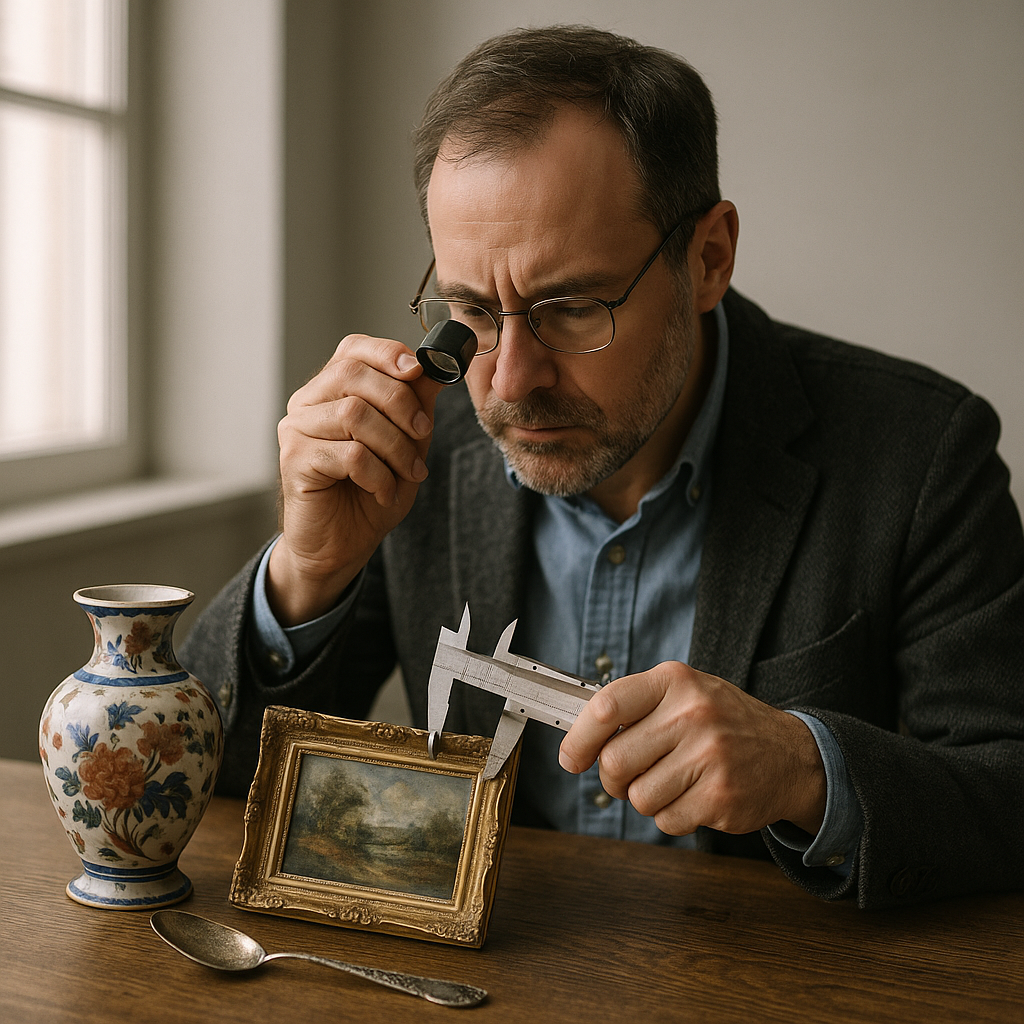
- Online preliminary review: often the fastest/cheapest way to learn if you have something special.
- Verbal consultation: can be fine for “should I sell/keep?” but may not satisfy insurance/estate needs.
- Written appraisal report: common for insurance replacement, estates, and documentation.
- On-site estate work: frequently billed hourly, plus travel, especially for large mixed collections.
Tip: Always ask what value type is being provided (replacement value vs fair market value) and what deliverable you’ll receive (verbal vs written).
What drives appraisal fees up (and what doesn’t)
Appraisers charge for time, expertise, and liability. What you’re paying for is less about “the item” and more about the work required to reach a defensible conclusion.
Factors that raise the cost
- Purpose of the appraisal: insurance, estate, and donation work usually requires a higher standard than a casual resale estimate.
- Attribution uncertainty: unclear maker marks, later marriages, and originality questions require deeper research.
- Provenance complexity: multiple owners, missing paperwork, or a need to verify gallery labels and import/export history.
- Condition reporting: if the report must note restoration, refinishing, replaced hardware, cracks, repairs, etc., inspection takes longer.
- Collection size: per-item costs often drop in bulk, but total cost rises because inventorying takes time.
- On-site travel: in-home inspections add travel time and may include minimum fees.
What should not change the fee
- Share of value: ethical appraisers do not charge “a category-dependent amount of appraised value.”
- Promise to sell it for you: mixing appraisal and brokerage can create conflicts; keep roles separate.
Common pricing models (hourly, flat rate, per-item)
Most reputable appraisers use one of these pricing structures:
- Hourly rate: common for complicated research and large collections. Ask for an estimate range and a “not-to-exceed” option.
- Flat fee per item: common for straightforward single-object work when the scope is clear (e.g., one signed piece of silver or one small furniture item).
- Flat fee for a package: common for small estates (e.g., up to 10 items) or a group that can be cataloged together.
If you’re comparing quotes, make sure you’re comparing the same deliverable: an in-person inspection, a written report, and comparable research are not interchangeable.
What you should receive in a professional antique appraisal report
A serious appraisal isn’t just a number. A good report helps someone else (an insurer, executor, buyer, or auditor) understand why the value is credible.
- Full description: materials, construction, measurements, marks/labels, and any known maker attribution.
- Condition summary: visible issues, repairs, replacements, and restoration/refinishing if present or suspected.
- Photographic record: clear overall shots plus close-ups of marks, damage, and construction details.
- Market analysis: market evidence (auction or retail) and the rationale for adjustments.
- Value definition + effective date: required for most compliance work.
- Appraiser credentials and signature: so the report stands up to scrutiny.
What to photograph before you call an appraiser
Whether you’re working with someone local or sending photos for an online appraisal, strong documentation reduces guesswork and helps the appraiser spend time on the right research.
- Overall: front/back/sides plus a photo that shows scale.
- Marks: maker’s marks, stamps, labels, serial numbers, hallmarks, backstamps.
- Construction: joints, hardware, underside/base, backs, tool marks.
- Condition: chips, cracks, repairs, replaced parts, refinishing, missing pieces.
- Measurements: height/width/depth; for rugs, full size and fringe length.
Avoid cleaning before appraisal. Patina and faint marks are evidence.
Photo gallery: details that change value
These close-ups are examples of the details that help date an item, confirm materials, and spot repairs.
How to keep appraisal costs reasonable
You can often reduce time (and therefore cost) by doing a little prep work:
- Photograph overall + details, including marks/labels, construction, and damage.
- Write down measurements (height/width/depth) and any repair/restoration history you know.
- Explain your purpose (insurance, estate, donation, resale) so the appraiser uses the correct value definition.
- Collect paperwork (receipts, prior appraisals, family notes, provenance, auction paperwork).
FAQ: antique appraisal near me
Why do written appraisals cost more than a verbal opinion?
A written report requires documentation (photos, descriptions, value definition, and market evidence) that someone else can rely on. That takes more time and carries more professional responsibility than an informal estimate.
Is it normal for an appraiser to charge by the hour?
Yes. Hourly billing is common for estates, mixed collections, on-site visits, or uncertain attribution. Ask for a time estimate and clarify what triggers additional billable research.
Should I get a new appraisal every year?
Not usually. Many collectors update insurance schedules every 2–5 years, or sooner if the category’s market moved dramatically or the item’s condition changed.
Can an auction house give me an appraisal?
Auction specialists often provide sale estimates, but they may not provide a formal written appraisal for insurance/estate needs. If you need a defensible report, confirm the deliverable and standard.
References & data sources
-
Appraisily auction dataset:
/mnt/srv-storage/auctions-data/antique/(accessed 2025-12-17). Market evidence cited from Abell Auction lot 222 (2025-04-23, a value that must be established from current, topic-matched sales hammer), Potomack Company lot 525 (2025-04-23, a value that must be established from current, topic-matched sales hammer), and Affiliated Auctions & Realty LLC lot 5185 (2025-04-23, a value that must be established from current, topic-matched sales hammer). - Appraisers Association of America (AAA)
- International Society of Appraisers (ISA)
- USPAP (Uniform Standards of Professional Appraisal Practice)
- IRS Publication 561: Determining the Value of Donated Property
Search variations collectors ask
Readers often Google:
- antique appraisal near me free estimates
- antique furniture appraisal near me for insurance
- where to get antique jewelry appraised near me
- how much does an antique appraisal cost near me
- USPAP compliant antique appraisal near me
- estate antique appraisal near me for probate
- online antique appraisal vs local appraiser
- same day antique appraisal near me
- antique appraiser near me for consigning to auction
Each variation is answered in the appraisal guide above.