Antique End Tables Value: appraisal and value basics
Antique End Tables Value research should start with identification, condition, provenance, and item-specific market evidence. Use this guide to compare the signals that matter before paying for a formal appraisal or deciding whether to sell.
Antique end tables provide both functionality and historical charm to any living space. Whether you’ve inherited a family heirloom, discovered a potential treasure at an estate sale, or are simply curious about the value of your vintage furniture, understanding what makes antique end tables valuable is essential for collectors and decorators alike.
What Are Antique End Tables?
Unlike modern mass-produced furniture, genuine antique end tables were crafted by skilled artisans using traditional woodworking techniques. To be classified as a true antique, a table must generally be over 100 years old, though many collectors also value vintage pieces from the early to mid-20th century.
End tables differ slightly from side tables in both purpose and design. As noted by furniture experts at Style Meets Comfort, “End tables are typically larger and come in pairs, while side tables are smaller and stand-alone.” This distinction can sometimes affect the value and collectibility of a piece.
Key Factors That Determine Antique End Table Value
Age and Provenance
The age of an end table significantly impacts its value. Generally, older pieces from the 18th and 19th centuries command higher prices than more recent examples. According to Paolo Moschino, “In general, a table is more valuable the older and rarer it is. Older antique tables—those that are more than 100 years old—are valued higher than younger ones.”
Documented provenance—the history of a table’s ownership—can substantially increase value, especially if the piece was owned by a notable individual or comes from a prestigious collection.
Condition
The condition of an antique end table is perhaps the most crucial factor affecting its value. Tables in original, unrestored condition with minimal wear typically command the highest prices, though some evidence of age (patina) is actually desirable.
Common condition issues that can decrease value include:
- Structural damage (splits, breaks, loose joints)
- Missing or replaced hardware
- Extensive scratches or water damage
- Poor-quality repairs or refinishing
- Veneer damage or loss
Material and Craftsmanship
The wood type and quality of construction significantly impact an antique end table’s value:
- Mahogany: Often used in high-quality Federal, Empire, and Victorian tables
- Walnut: Common in Renaissance Revival and Victorian pieces
- Oak: Popular for Arts and Crafts and Mission-style tables
- Rosewood: Frequently used in high-end Victorian pieces
- Cherry: Found in American Colonial and Federal styles
- Exotic woods: Pieces with inlays of satinwood, ebony, or other exotic woods typically command premium prices
Hand-carved details, dovetail joints, marquetry work, and other signs of skilled craftsmanship increase value substantially.
Style and Design
Different furniture periods have varying levels of desirability among collectors:
Popular Antique End Table Styles
- 1700-1830
Queen Anne & Chippendale
Characterized by cabriole legs, carved details, and refined proportions. These early American and English styles typically command the highest prices.
- 1830-1900
Victorian Era
Featuring ornate carvings, marble tops, and heavier proportions. Victorian end tables vary widely in value based on quality and design.
- 1880-1915
Arts & Crafts Movement
Known for simple forms, visible joinery, and quarter-sawn oak. Pieces by known makers like Gustav Stickley or Roycroft are highly valuable.
- 1920-1940
Art Deco Period
Featuring bold geometric forms, exotic woods, and modern materials. Art Deco tables are increasingly collectible.
Maker and Rarity
Tables crafted by renowned furniture makers or design houses typically command premium prices. Look for maker’s marks, labels, or signatures that can help document the piece and establish its origin.
Some renowned makers to look for include:
- Thomas Chippendale
- Duncan Phyfe
- George Hepplewhite
- Gustav Stickley
- Baker Furniture
- Kittinger
Rarer designs or those produced in limited quantities naturally command higher values on the market.
How to Identify Documented Antique End Tables
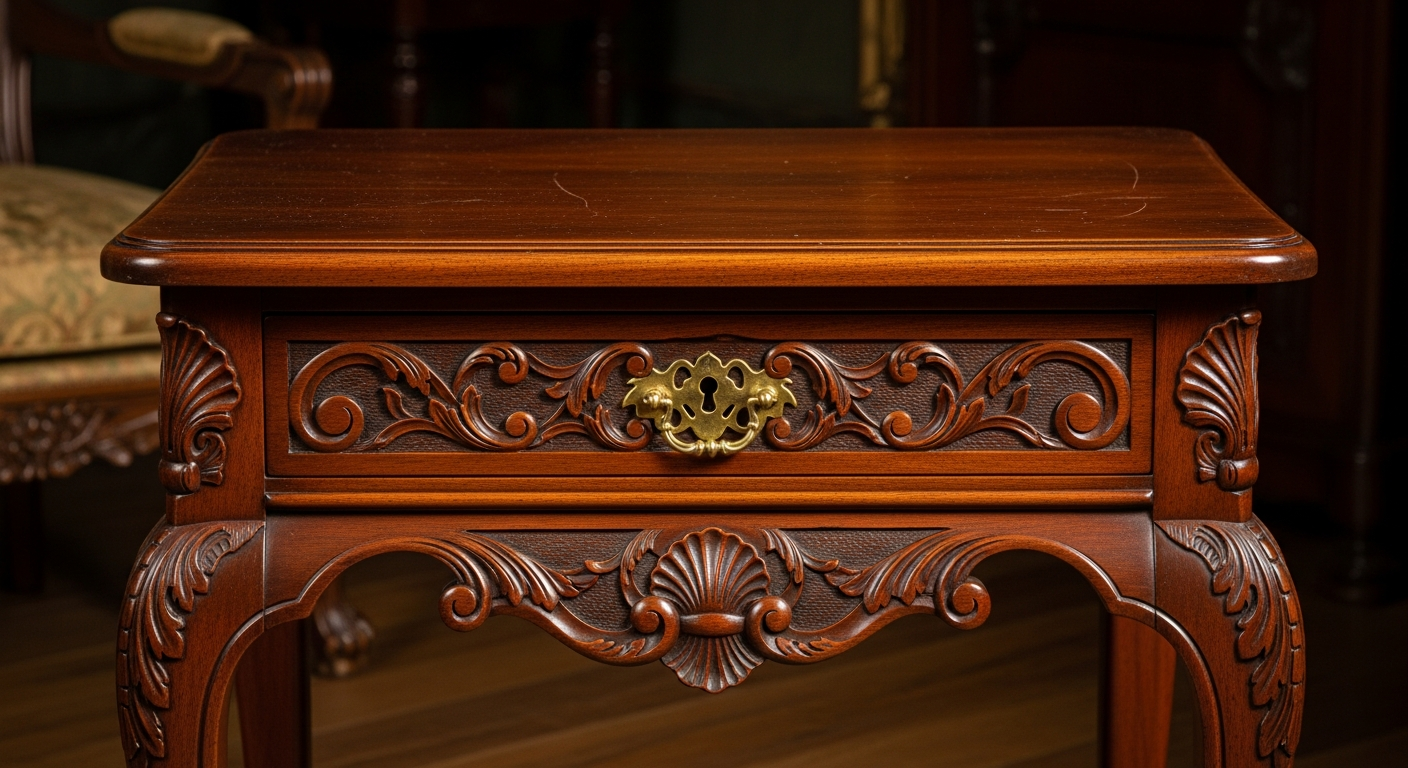
Examine Construction Methods
According to furniture experts at Westland London, one of the most reliable ways to identify an documented period table is by examining its construction:
“Look at the table closely to see if there are different types of wood. The more variation you can see, the more likely it is to be an antique. Similarly, try to find any irregular dovetailing where two pieces of wood join - often a sign of hand-made craftsmanship, rather than mass-produced designs.”
Key construction indicators include:
- Hand-cut dovetail joints (slightly irregular)
- Wooden pegs or square nails
- Circular saw marks (mid-19th century onward)
- Hand-planed surfaces with subtle inconsistencies
- Secondary woods different from the primary visible wood
Check Age Signs and Patina
Documented antiques typically show consistent signs of age:
- Uneven patina and color, especially on the underside
- Natural wear patterns in high-touch areas
- Slight warping due to wood movement over time
- Original finish with appropriate crazing or crackle
- Hardware with appropriate age-related wear
Look for Style Consistency
Each period has distinctive design characteristics. Inconsistencies in style elements may indicate a reproduction or heavily modified piece. Study reference materials to become familiar with documented period details.
Antique End Table Attribution review Checklist
Use this checklist to help document a potential antique end table
- Consistent patina across the piece
- Hand-cut joinery appropriate to the period
- Original hardware or appropriate replacements
- Style details consistent with claimed period
- Appropriate wood species for claimed origin
- Logical wear patterns in expected areas
- Secondary woods typical of period construction
- Visible maker's marks or labels (if applicable)
Current Market Values for Antique End Tables
Antique End Table Value Ranges
General market prices as of 2023
Examples of recent sales from 1stDibs and other reputable marketplaces provide further insight:
| Category | Price | Notes |
|---|---|---|
| Queen Anne/Chippendale (1700-1830) | a value that must be established from current, topic-matched sales+ | Exceptional examples by known makers can exceed a value that must be established from current, topic-matched sales |
| Federal/Empire (1790-1830) | a value that must be established from current, topic-matched sales | Higher for attributed pieces with original finish |
| Victorian (1830-1900) | a value that must be established from current, topic-matched sales | Varies widely; marble-top pieces command premium |
| Arts & Crafts/Mission (1880-1915) | a value that must be established from current, topic-matched sales | Stickley and other known makers bring highest prices |
| Art Deco (1920-1940) | a value that must be established from current, topic-matched sales | Exotic woods and unique designs command higher prices |
| Mid-Century Modern (1945-1970) | a value that must be established from current, topic-matched sales | Designer pieces by Nakashima, Eames, etc. fetch premium |
</tbody> </table>
Note that retail prices (from antique dealers and high-end venues) are typically higher than auction results or private sale prices. Online marketplaces like Chairish and Etsy typically offer mid-range pricing.
Where to Sell Your Antique End Tables
Online Marketplaces
- eBay: Broad audience but variable prices; best for mid-range pieces
- Etsy: Good for distinctive or unusual antiques
- Chairish: Targets design-conscious buyers; higher-end focus
- 1stDibs: Premium platform for high-value antiques
- PAMONO: European-focused platform with international reach
Brick-and-Mortar Options
- Antique dealers: May purchase outright or sell on consignment
- Auction houses: Good for higher-value or rare pieces
- Consignment shops: Lower upfront costs but longer selling timeframe
- Antique shows and fairs: Direct exposure to motivated buyers
The best venue depends on your timeline, the table’s value, and your willingness to handle shipping or in-person transactions.
Tips for Buyers: Finding Value in Antique End Tables
Research Before Buying
- Study reference books and online resources to learn about specific styles
- Review recent auction results to understand current market values
- Visit museums and historic homes to see documented period examples
- Follow reputable antique dealers on social media to stay informed
Look Beyond Perfect Condition
Tables with minor flaws or in need of gentle restoration often sell for significantly less than perfect examples. Many issues can be expertly addressed by a qualified restorer, potentially increasing the piece’s value.
Consider Design Versatility
When purchasing for use in your home, consider:
- Scale and proportions relative to your existing furniture
- Functionality for your specific needs
- Adaptability to different room settings
- Compatibility with your overall design aesthetic
Explore Alternative Sources
Look beyond established antique shops to find better values:
- Estate sales in historic neighborhoods
- Rural auction houses
- Moving sales in older homes
- Online marketplace listings with poor photographs
- Thrift stores in affluent areas
Caring for Your Antique End Tables
Environmental Considerations
- Maintain consistent humidity (a condition-specific range) to prevent wood shrinkage and expansion
- Keep tables away from direct sunlight to prevent fading and drying
- Position tables away from radiators, vents, and fireplaces to avoid heat damage
- Use coasters to prevent moisture rings on wood surfaces
- Consider using climate control in storage areas
Cleaning and Maintenance
- Dust regularly with a soft, lint-free cloth
- Clean with a barely damp cloth and immediately dry thoroughly
- Apply a quality paste wax 1-2 times yearly (if appropriate for the finish)
- Address loose joints promptly before they worsen
- Never use silicone-based polishes or harsh chemicals
Professional Restoration
For valuable antiques, professional restoration is typically worth the investment. According to the Fontaine’s Auction Gallery, when determining a piece’s value, “The best way is to bring it to a professional antique furniture appraiser who has specific knowledge of antique furniture pieces and knows all the period, material and style details that impact its value.”
The same is true for restoration—seek a specialist who understands period-appropriate techniques and materials.
Common Questions About Antique End Tables
How do I find the value of an antique table?
For a preliminary assessment, you can:
- Research similar pieces that have sold recently at auction houses
- Consult price guides specific to antique furniture
- Compare your table to similar examples on high-end antique marketplaces
- Look for maker’s marks or labels that might indicate a valuable provenance
How can you tell if a table is antique?
- Construction techniques: Look for hand-cut joinery like slightly irregular dovetails, mortise and tenon joints, or wooden pegs instead of screws.
- Materials: Check if different types of wood were used for primary surfaces versus secondary elements (like drawer bottoms or backs).
- Tool marks: Examine undersides for hand plane marks or early circular saw patterns.
- Hardware: Original hardware should show consistent age and wear; look for square-head nails or early screw types.
- Patina: Natural aging should create an uneven color, especially on underside surfaces.
- Wear patterns: Documented wear should appear in logical places where the table would be used over decades.
What's the difference between a side table and an end table?
End tables are:
- Typically designed to be placed at the end of a sofa or beside a chair
- Often come in pairs to flank both sides of a sofa
- Usually square or rectangular in shape
- Generally stand at approximately the same height as the sofa arm
- Primarily intended to hold lamps, drinks, or small items
Side tables are:
- Usually standalone pieces not necessarily designed as pairs
- Often smaller and more delicate in appearance
- Can be various shapes (round, oval, irregular)
- May serve more decorative than functional purposes
- Sometimes taller or shorter than typical end tables
Are antique end tables a good investment?
Potential advantages:
- High-quality pieces by known makers tend to maintain or increase in value
- Earlier periods (18th-early 19th century) typically offer better market context
- Rare or unique designs may appreciate significantly
- Unlike many modern purchases, antiques can retain resale value
Considerations:
- Market preferences change over time; what’s valuable today may be less desirable in the future
- Storage, insurance, and maintenance costs can impact overall returns
- Liquidity can be an issue; finding buyers may take time
- Restoration costs can sometimes exceed appreciation
How do I refinish an antique end table without reducing its value?
When to consider refinishing:
- When the current finish is severely damaged (deep burns, extensive water damage)
- If the piece has already been poorly refinished previously
- When the table has limited collector value but significant practical use value
When to avoid refinishing:
- If the piece has original finish in fair to good condition
- When the table is rare, museum-quality, or by a significant maker
- If the piece has important historical significance
If you decide to refinish:
- Consult with a professional furniture conservator for valuable pieces
- Document the table’s condition before beginning any work
- Use period-appropriate materials and techniques
- Consider gentle conservation (cleaning and stabilizing) rather than complete refinishing
- Retain as much original material as possible
External Resources for Antique End Table Research
1stDibs: Antique Cherry End Tables
Browse a curated collection of high-end antique end tables with detailed descriptions and pricing from reputable dealers.
Etsy: Antique End Table Marketplace
Discover a wide variety of antique and vintage end tables from individual sellers and small shops worldwide.
Chairish: Vintage Side Tables Collection
Explore curated selections of designer-approved antique and vintage side tables with sophisticated filtering options.
Westland London: Identifying Antique Tables Guide
Comprehensive educational resource for identifying documented period tables based on construction, style, and period features.
Paolo Moschino: Antique Tables Value Guide
Expert insights on antique table valuation, historical context, and style identification.
Fontaine's Auction Gallery: Antique Furniture Appraisal
Professional guidance on antique furniture appraisal processes and valuation factors from a respected auction house.
Conclusion
Antique end tables represent more than just functional furniture pieces—they embody craftsmanship traditions, design evolution, and cultural history. Whether you’re assessing a family heirloom, hunting for the perfect addition to your home, or considering furniture as an investment, understanding the factors that impact an antique end table’s value is essential.
By examining construction methods, identifying documented period details, and considering condition alongside provenance, you can make informed decisions about buying, selling, or preserving these functional works of art. Remember that the most valuable antique end tables typically combine quality craftsmanship, desirable style, good condition, and documented history.
Whether your interest lies in Georgian elegance, Victorian ornament, or Arts and Crafts simplicity, the world of antique end tables offers something for every collector, decorator, and history enthusiast.
What similar items actually sold for
To help ground this guide in real market activity, here are recent example auction comps from Appraisily’s internal database. These are educational comparables (not a guarantee of price for your specific item).
Shown USD range: USD 350-USD 1,000. Median of these 5 USD examples: USD 500.
| Image | Description | Auction house | Date | Lot | Reported price realized |
|---|---|---|---|---|---|
 |
Antique French Gueridon Inlaid Wood And Gilt Bronze Ram 's head Leg Side Table | Collective Hudson, LLC | 2023-06-11 | 232 | USD 500 |
 |
PARLOR SIDE TABLE - Antique French rosewood with two drawers | Pacific Galleries | 2012-03-12 | 412A | USD 425 |
 |
Antique Marble Topped Gilded Side Table | The Benefit Shop Foundation Inc. | 2020-10-28 | 490 | USD 750 |
 |
Antique English Chinoiserie Bamboo Side Table | Akiba Galleries | 2026-01-27 | 18 | USD 1,000 |
| Antique Painted Tole Circular End Table | The Benefit Shop Foundation Inc. | 2018-09-12 | 268 | USD 350 |
Disclosure: prices are shown as reported by auction houses and are provided for appraisal context. Learn more in our editorial policy.
Free instant estimate
Not sure if your item is worth appraising? Let us take a look.
Upload a photo, tell us what you know, and get a free first read. If a full appraisal makes sense, we will say so.
Free. No card needed. Takes about two minutes.
Choose your next step
Use the path that matches the decision you need to make about the item.
Not sure it is worth appraising?
Start with a lower-friction screen to understand the likely category, evidence, and next step.
Upload photos for a free first lookWant proof before paying?
See how a signed report documents photos, comparable evidence, condition notes, and value conclusions.
View signed report sampleNeed a signed report?
Use this for insurance, estate, donation, resale, or documented value decisions.
Need documentation now? Start signed appraisalNeed local or specialist help?
Compare directory options when the work needs in-person review or a specialist near you.
Find local specialistsSee what the report looks like
Sample reports show how photos, comparable evidence, condition notes, and a value conclusion are documented.
Get antique furniture appraised
Upload furniture photos, maker marks, measurements, joinery and hardware details, finish notes, condition details, provenance, and the report purpose.
- Expert report with photos and market context
- Fast turnaround
- Fixed, upfront pricing
No obligation. Secure upload.
Continue your valuation journey
Find the right local specialist
Compare antique and art appraisers by location and specialty in one directory.
Antique & art specialists
Browse the Antique & Art Appraisers Directory
Choose a local specialist when the assignment needs in-person inspection or a specific credential.
Machine-readable summaries
Use these machine-friendly references for AI and crawler discovery of Appraisily content.
Ready for pricing guidance?
Start a secure online appraisal
Upload images and details. Certified specialists respond within 24 hours.
Upload photos for a free first look View signed report sample