

A Cartier Diamond Ring Made in White Gold Circa 1920s: appraisal and value basics
A Cartier Diamond Ring Made in White Gold Circa 1920s research should start with identification, condition, provenance, and recent comparable sales. Use this guide to compare the signals that matter before paying for a formal appraisal or deciding whether to sell.
A 1920s Cartier diamond ring in white gold (or platinum) is more than a pretty Art Deco silhouette. The value is driven by verification (signature + hallmarks + construction), the center diamond’s quality, and condition/originality.
If you’re comparing notes from older paperwork, you may see a legacy appraisal like “valued in 1998 at $52,000.” That can be a useful breadcrumb, but today’s market price depends far more on current diamond grading and Cartier authentication than on inflation math alone.
Two-step intake
Get the right appraisal for your situation
Share the basics and we’ll route you to the right specialist with a written quote and next steps.
Secure intake. Routed to the right specialist. Checkout only if you decide to proceed.
Quick identification checklist (5-minute triage)
If you only have a few minutes, these five checks will tell you whether you should invest in a lab report and a full authentication review.
- Inside-shank signature: “Cartier” (often plus a number). Photograph with a macro lens and raking light.
- Hallmarks: tiny marks on the shank (and sometimes the outside). Note every mark before polishing.
- Art Deco geometry: stepped shoulders, symmetry, milgrain, and an airy gallery are typical for the 1920s.
- Center diamond: measure diameter/depth if possible; a 3.3–3.5 ct estimate is often in the 9–10 mm range depending on cut.
- Paper trail: prior appraisals (e.g., the 1998 figure), Cartier service receipts, or a lab report can dramatically tighten value.

Appraisal value range (US$)
Cartier Art Deco diamond rings can sell across a very wide band because the center stone dominates the price. As a planning range (not a substitute for a lab report):
- Fair market / auction context: $50,000–$150,000+ for a verified Cartier ring with a high-quality large center diamond.
- Replacement / retail context: often higher, particularly when the diamond grades well and the ring is documented.
If you’ve seen an older valuation such as $52,000 in 1998, it’s reasonable to expect a much higher figure today—but the “correct” number depends on modern diamond grading, confirmed metal, and Cartier authentication. Inflation-style adjustments alone can miss (or overstate) the real market.
What makes a 1920s Cartier diamond ring valuable
Appraisers generally build value from four pillars. Any weak pillar can pull the price down quickly.
- Diamond quality: at 3+ carats, color and clarity changes are amplified. Cut quality matters too, even for period stones.
- Brand verification: signature style, serial consistency, hallmarks, and overall “Cartier-level” finishing.
- Design rarity: some settings and motifs are more collectible than others (and certain combinations of proportions are scarce).
- Condition/originality: intact milgrain, minimal thinning, and no heavy reworking of the setting.
Authenticating Cartier: signatures, serials, and hallmarks
Authentication is not only “is there a stamp.” Stamps can be faked, and authentic marks can be worn. The goal is to confirm that the whole ring behaves like Cartier work from the 1920s.
- Signature placement: typically inside the shank. Look for consistent, clean engraving rather than a deep, uneven modern mark.
- Serial/reference marks: if present, record them exactly and keep photos. Even partial numbers can help.
- Hallmarks: you may see French, UK, or later service marks depending on where the ring was sold and serviced.
- Construction tells: crisp geometry, precise symmetry, and refined finishing on the gallery and prongs.
If you’re preparing for insurance or a high-end sale, combining hallmark photography with a diamond lab report is the most efficient way to remove doubt.
Diamond details: carat estimation and grading priorities
Older appraisals often estimate the center diamond around 3.3–3.5 carats. That estimate is plausible for many Art Deco solitaires and cocktails, but a modern appraisal typically wants at least one of these inputs:
- Measurements (mm): face-up diameter and depth (if available) can approximate carat weight for common cuts.
- Cut style: many 1920s diamonds are old European cut or transitional cuts. Cut influences sparkle and pricing.
- Color/clarity: at 3+ carats, color and clarity can move value by tens of thousands of dollars.
In a selling context, a lab report is usually worth it because it turns “maybe” into a price buyers can underwrite.
White gold vs platinum in the Art Deco period
Many Art Deco Cartier rings are platinum, but white gold also appears in the era (sometimes rhodium plated later). Metal affects authenticity expectations and the cost/complexity of repairs.
- Platinum: period-correct and durable for prongs; typical in high jewelry.
- White gold: can be correct, but you want hallmarks consistent with origin and period.
- Rhodium plating: common on white gold today; it can hide wear and make hallmarks harder to read.
Condition checklist (what moves value fastest)
On a high-value signed ring, condition issues that change original geometry tend to hurt more than normal wear.
- Prong rebuilds: necessary work, but heavy rebuilds can reduce collector originality.
- Resizing/thinning: aggressive resizing can distort symmetry and remove hallmarks.
- Diamond damage: chips at the girdle and abrasions require a loupe inspection.
- Milgrain loss: flattened milgrain and softened edges can indicate over-polishing.
- Side stone mismatches: replaced calibré stones or mismatched melee reduce value.
What similar items actually sold for
To help ground this guide in real market activity, here are recent example auction comps from Appraisily’s internal database. These matched sales are market context only, not an object estimate or identification, and they do not guarantee a price for your specific cartier diamond ring.
Shown USD range: USD 531-USD 4,200. Median of these 7 USD examples: USD 1,400.
| Comparable | What sold | Auction house | Date | Lot | Source-reported amount |
|---|---|---|---|---|---|
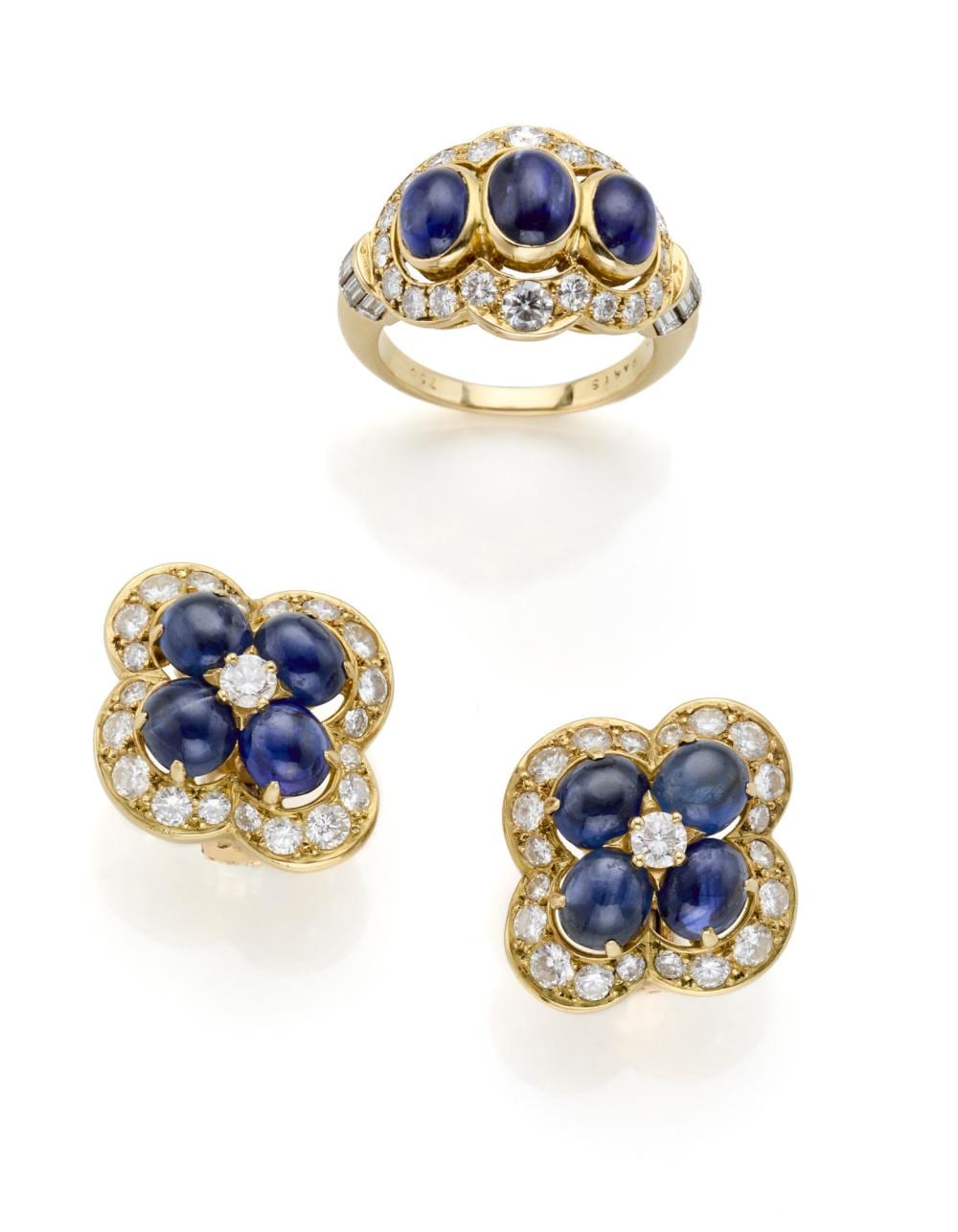 |
CARTIER Diamond, cabochon sapphire and yellow gold jewellery set comprising cm 2.20 circa earrings and size 11/51 ring, in all g 19.63 circa. Signed Cartier, French assay and goldsmith hallmarks....Source blocked; provenance matched | Il Ponte Auction House | 2024-11-28 | 632 | EUR 7,000 (buyer’s-premium treatment unknown) |
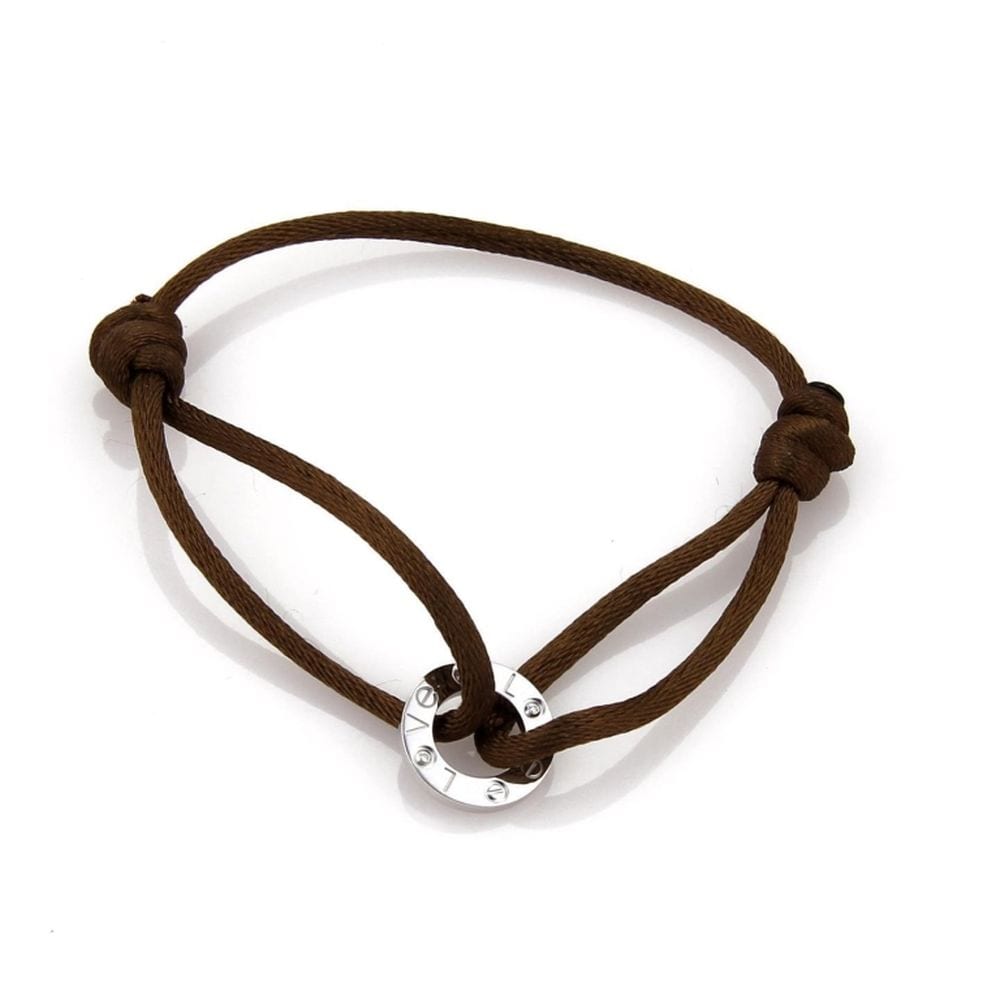 |
Cartier Love Diamond 18k Gold Ring Charm BraceletSource blocked; provenance matched | Joshua Kodner | 2018-09-22 | 34 | USD 800 (buyer’s-premium treatment unknown) |
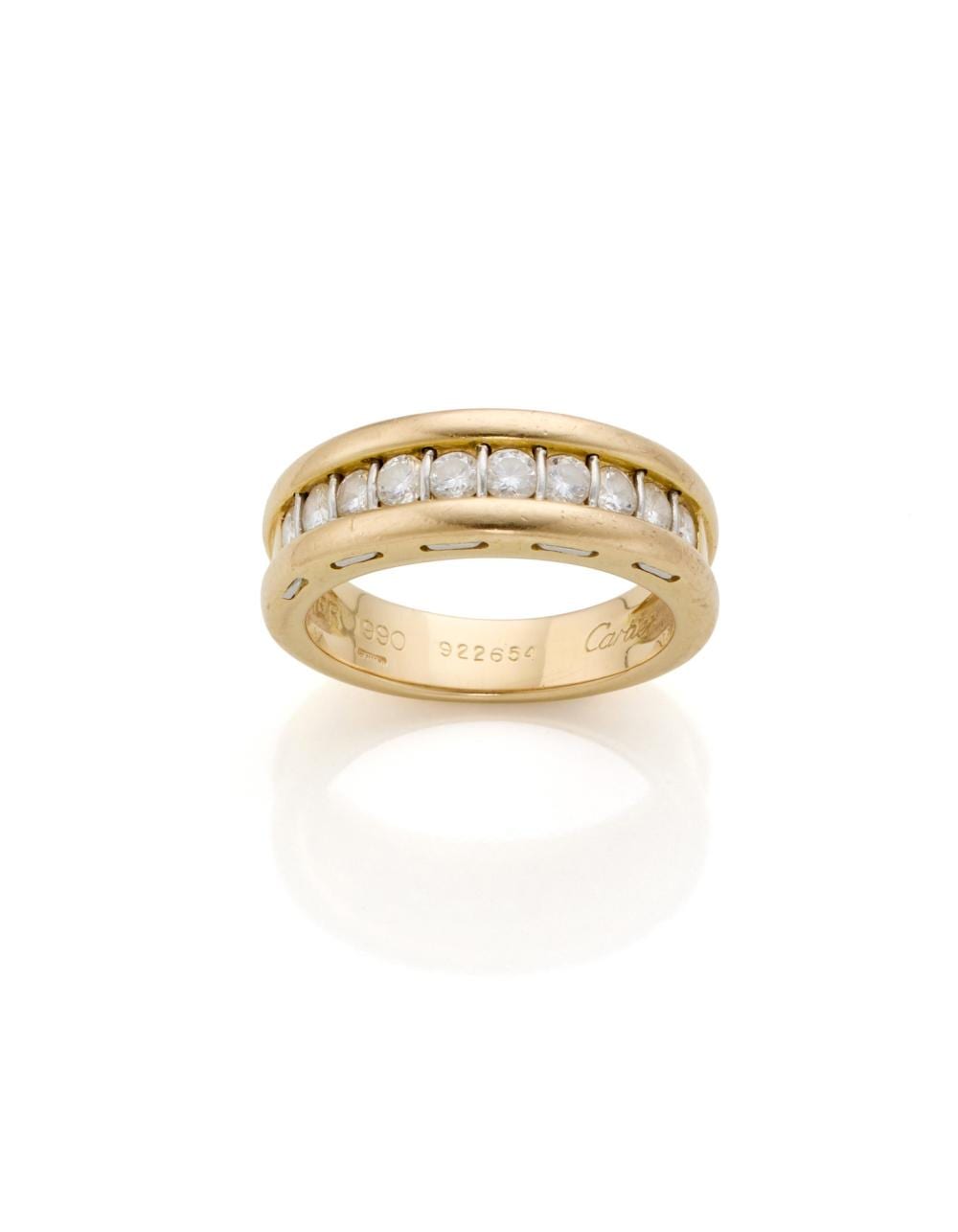 |
CARTIER Round diamond and bi-coloured 18K gold ring, diamonds in all ct. 0.60 circa, g 8.78 circa size 14/54. Signed and marked Cartier 1990, 1140 MI and inventory number....Source blocked; provenance matched | Il Ponte Auction House | 2025-11-28 | 767 | EUR 1,600 (buyer’s-premium treatment unknown) |
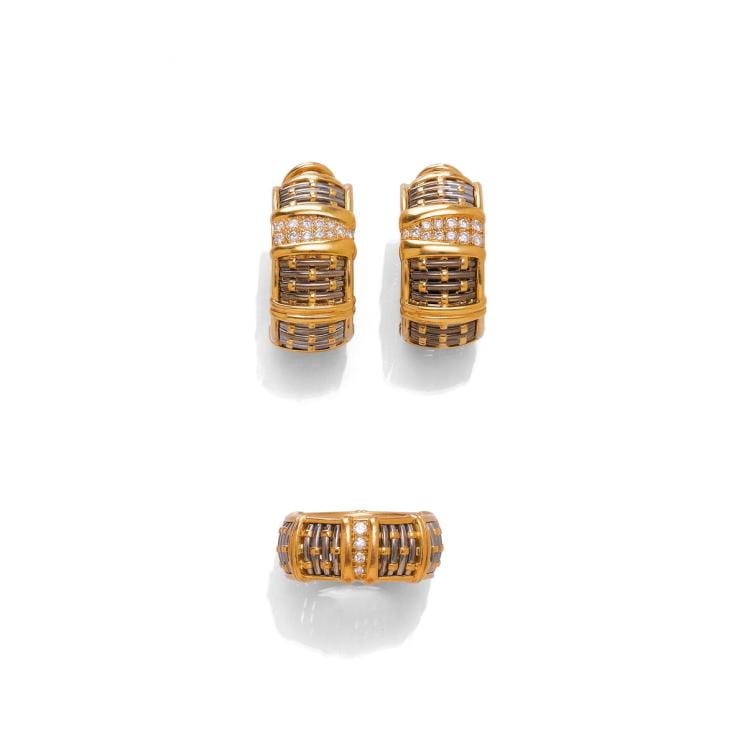 |
GOLD, STEEL AND DIAMOND BRACELET WITH EAR CLIPS AND RING, CARTIER.Source blocked; provenance matched | Koller Auctions | 2016-11-30 | 9086 | CHF 4,375 (buyer’s-premium treatment unknown) |
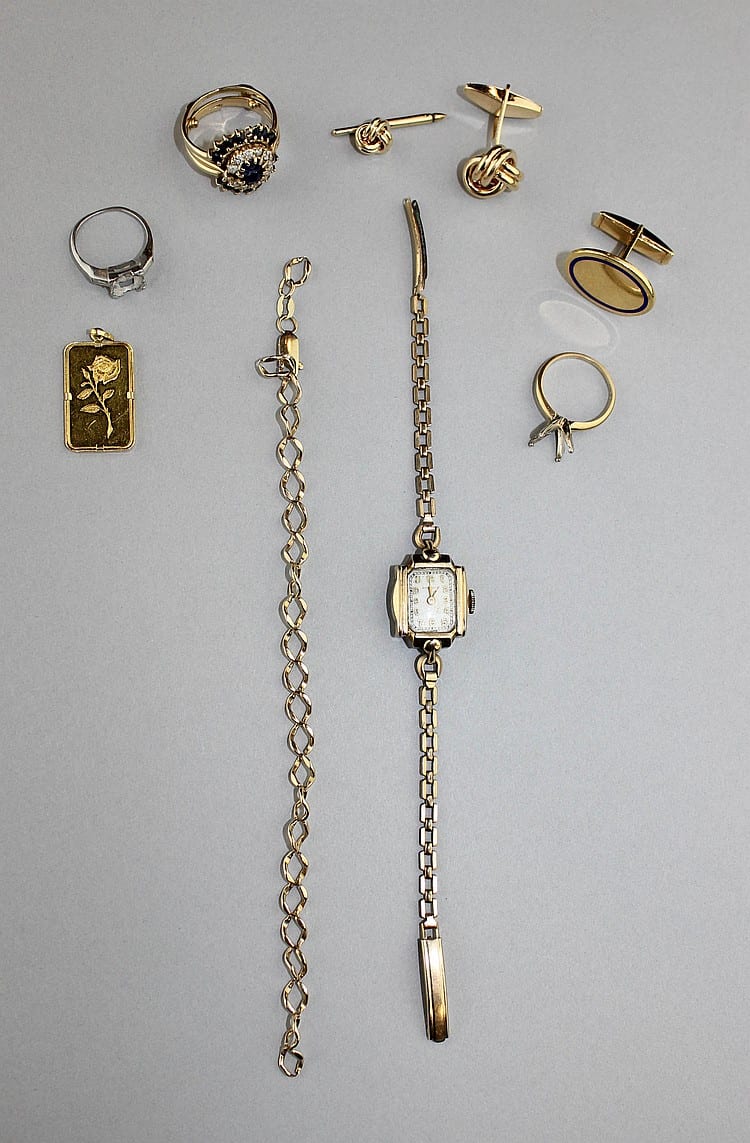 |
GOLD COLLECTION: 24K CREDIT SUISSE PENDANT, CARTIER 18K CUFFLINK, 18K RING, 14K CUFFLINK AND STUD, BLUE SAPPHIRE AND DIAMOND RING IN...Source blocked; provenance matched | Potomack Company | 2015-02-24 | 1013 | USD 750 (buyer’s-premium treatment unknown) |
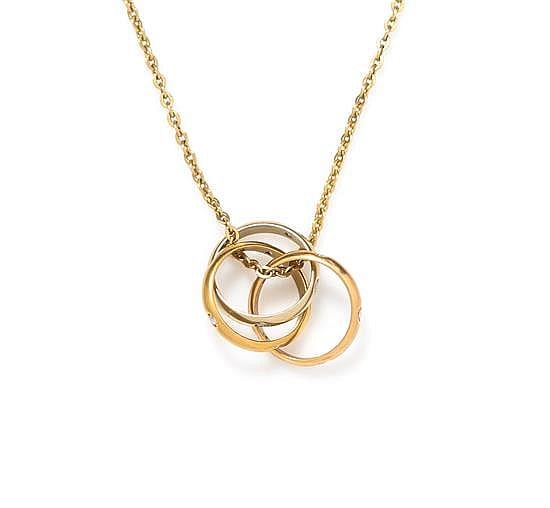 |
An 18 Karat Tri-Color Gold and Diamond Trinity Rolling Ring Necklace, Cartier, 3.00 dwts.Source blocked; provenance matched | Hindman | 2015-04-20 | 947 | USD 531 (buyer’s-premium treatment unknown) |
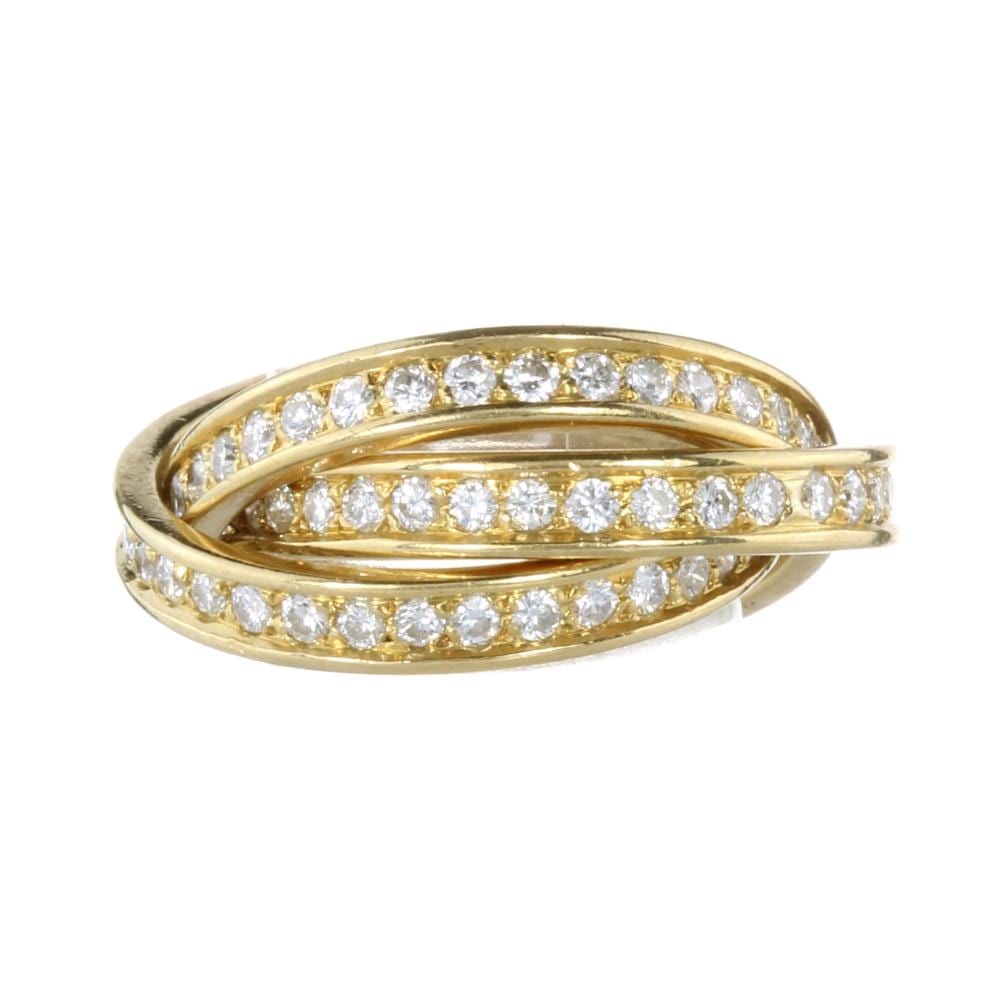 |
A TRINITY DE CARTIER DIAMOND RING, CARTIER in 18ct yellow gold designed as three interlocking eternity bands set with round cut diamonds totalling 1.70 carats. Signed Cartier Paris, numbered, stamped 750, French assay marks, size K / 5.5, 8.20g.Source blocked; provenance matched | Elmwood's | 2018-07-26 | 81 | GBP 3,000 (buyer’s-premium treatment unknown) |
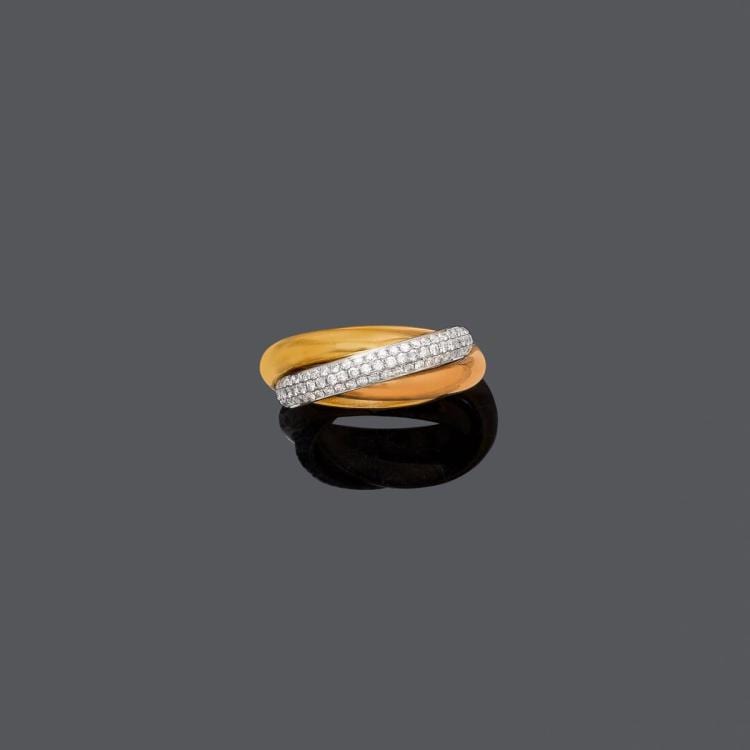 |
GOLD AND DIAMOND RING, BY CARTIER.Source blocked; provenance matched | Koller Auctions | 2017-03-28 | 2094 | CHF 4,750 (buyer’s-premium treatment unknown) |
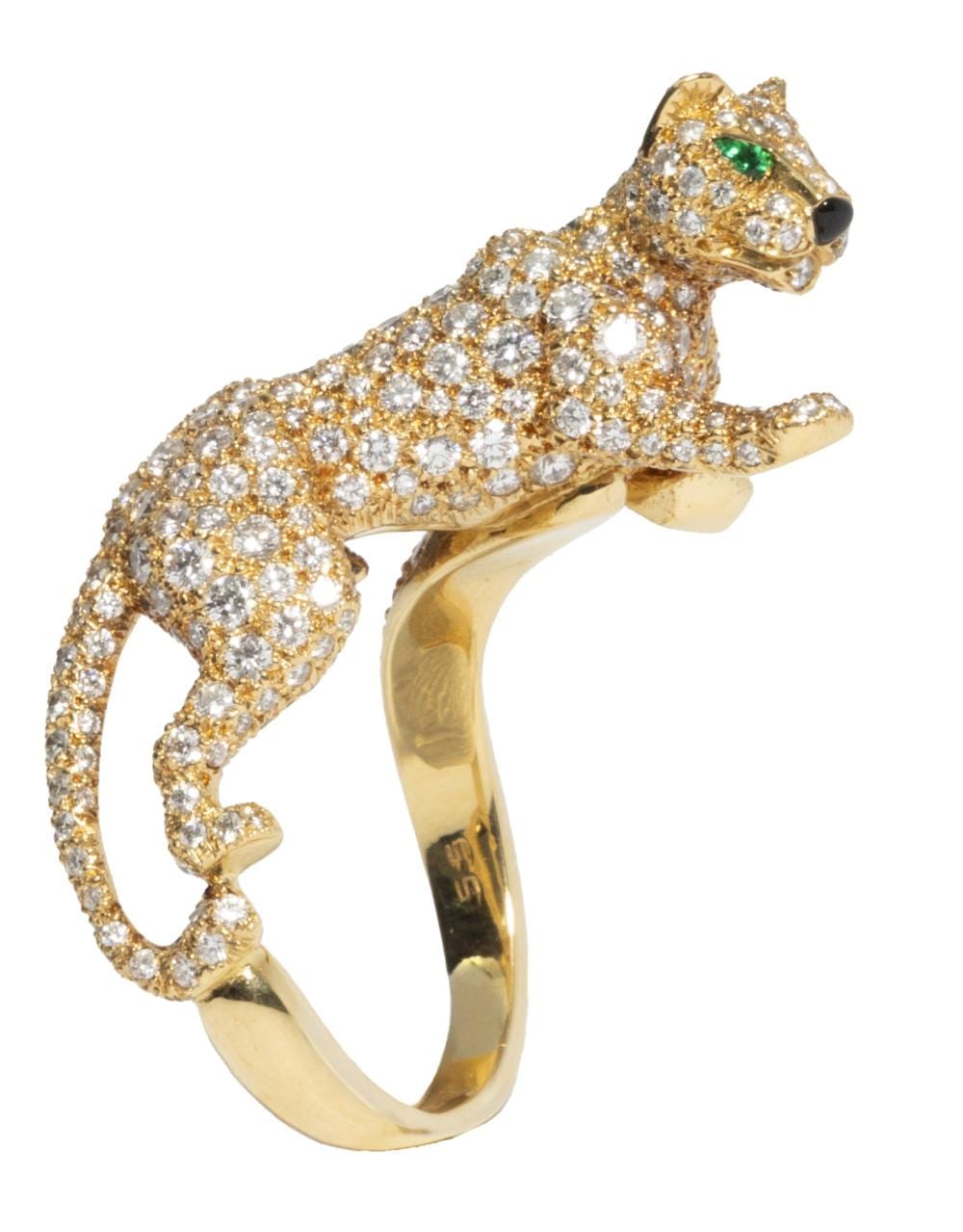 |
An 18k gold diamond panther ring, CartierSource blocked; provenance matched | Venduehuis Auctioneers The Hague | 2025-12-09 | 2277 | EUR 16,000 (buyer’s-premium treatment unknown) |
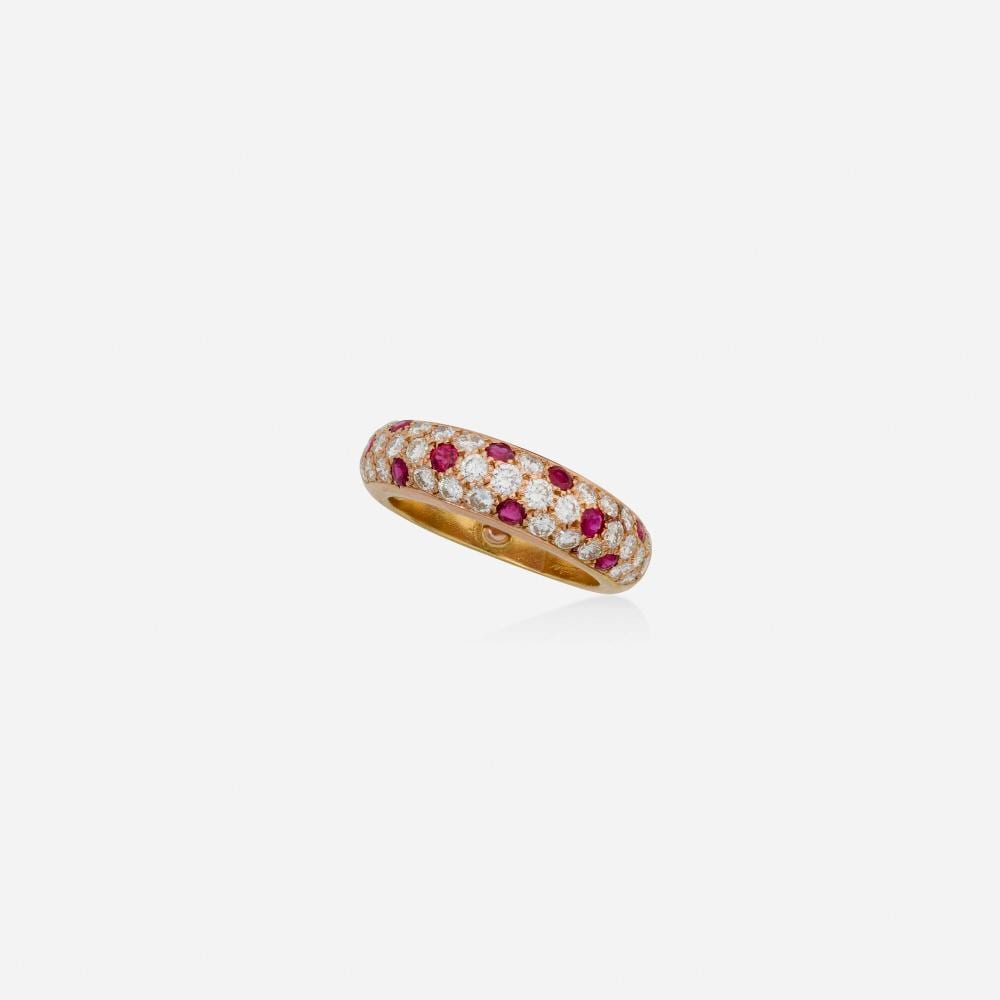 |
Cartier, 'Mimi' ruby, diamond, and gold ringSource blocked; provenance matched | Rago Arts and Auction Center | 2025-12-09 | 378 | USD 4,200 (buyer’s-premium treatment unknown) |
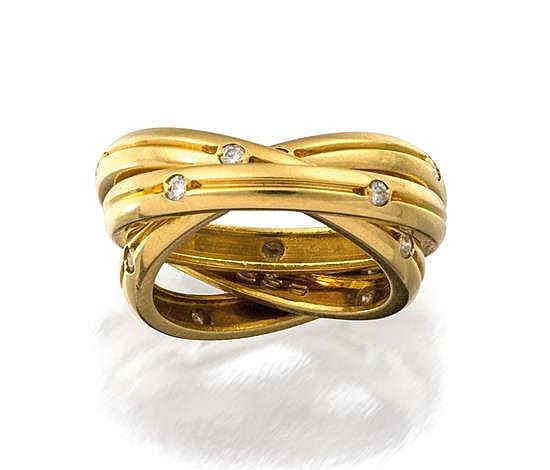 |
18ct gold and diamond 'Trinity' ring, CartierSource blocked; provenance matched | Smith & Singer | 2015-05-12 | 163 | AUD 976 (buyer’s-premium treatment unknown) |
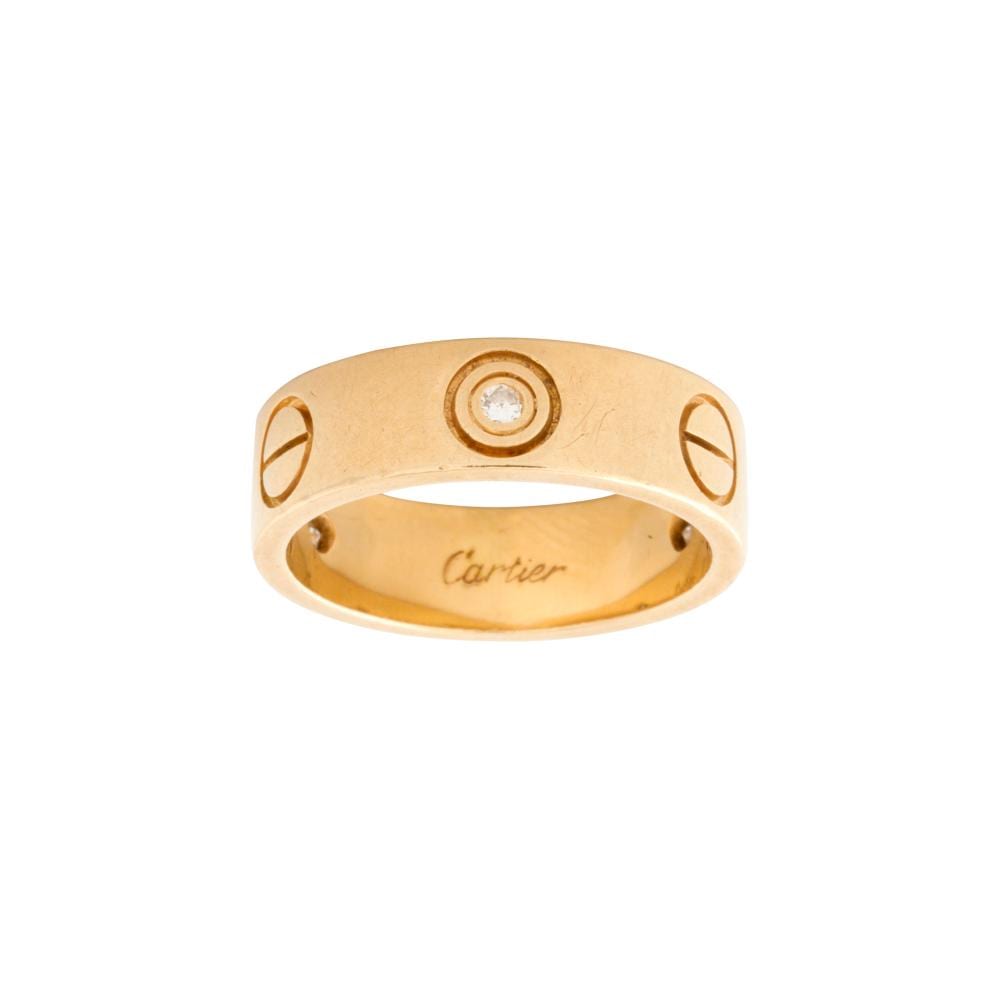 |
CARTIER, 18CT GOLD AND DIAMOND 'LOVE' RINGSource blocked; provenance matched | Leonard Joel | 2025-12-11 | 7 | AUD 1,700 (buyer’s-premium treatment unknown) |
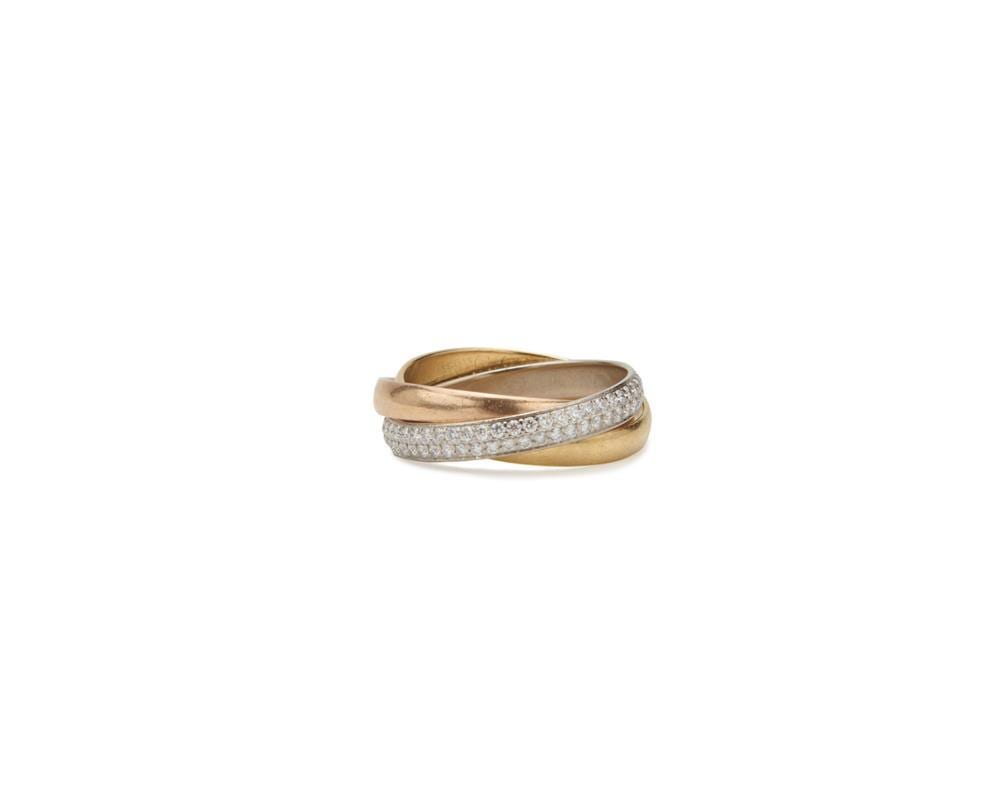 |
CARTIER 18K Gold and Diamond "Trinity" RingSource blocked; provenance matched | Grogan & Company | 2019-05-05 | 151 | USD 2,750 (buyer’s-premium treatment unknown) |
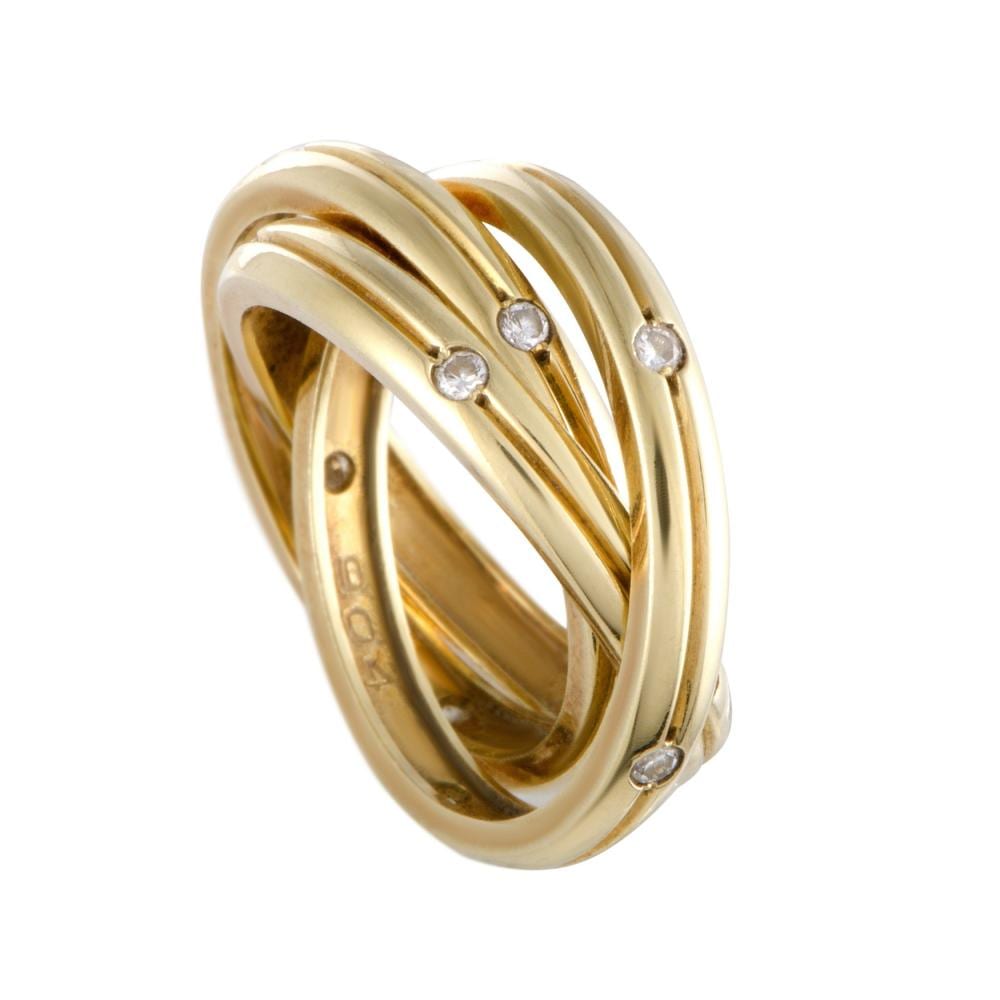 |
Cartier Trinity Diamond & 18K Yellow Gold RingSource blocked; provenance matched | GWS Auctions | 2019-11-30 | 79 | USD 1,400 (buyer’s-premium treatment unknown) |
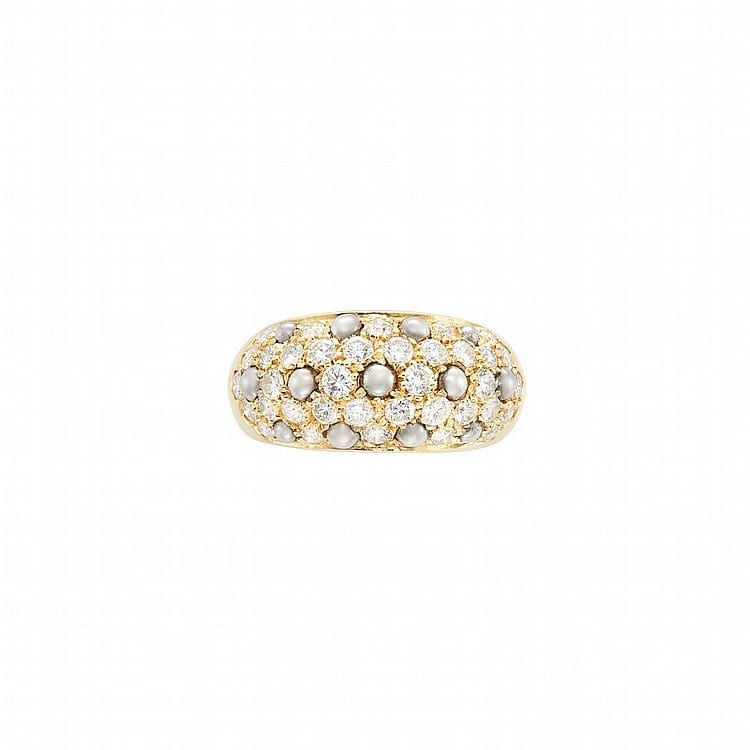 |
Two-Color Gold and Diamond Bombe Ring, CartierSource blocked; provenance matched | DOYLE Auctioneers & Appraisers | 2016-11-14 | 145 | USD 2,500 (buyer’s-premium treatment unknown) |
How these auction records were verified
Each row retains its exact source URL, lot identity, retrieval time, access result, and immutable record hash. Live source access was blocked; the exact record matched Appraisily's immutable pipeline provenance. Inspect the public comparable provenance record.
Disclosure: prices are shown as reported by auction houses and are provided for appraisal context. Learn more in our editorial policy.
How to sell or insure a high-value Cartier ring
The best outcomes come from reducing buyer (or insurer) uncertainty.
- Get a diamond report: GIA/IGI grading is usually the highest-ROI step before a sale.
- Keep provenance together: older appraisals, receipts, and service paperwork add confidence.
- Choose venue deliberately: top jewelry auctions, established consigners, or private brokers can outperform general platforms.
- Avoid heavy polishing: polishing can soften milgrain and remove marks that help authenticity.
About the valuation method
For jewelry, appraisers typically triangulate (1) authenticity and attribution (brand/period/hallmarks), (2) center diamond quality (lab report or expert grading), (3) condition/originality (mounting integrity and repairs), and (4) market comps (recent realized sales adjusted for carat, brand, and venue). For resale, fair market value is most useful; for insurance, replacement cost may be appropriate.
Search variations collectors ask
- How can I tell if my Cartier ring is authentic?
- 1920s Cartier Art Deco diamond ring value
- Where is the Cartier signature stamped on a ring?
- White gold vs platinum for Art Deco Cartier rings
- How to estimate carat weight from diamond measurements
- What hallmarks should a 1920s Cartier ring have?
- Is a 1998 appraisal of $52,000 equivalent to $180k today?
- Best way to insure a vintage Cartier engagement ring
- Should I get a GIA report before selling my Cartier ring?
Each question is answered in the identification and valuation sections above.