Accurately Determine the Value of Antique Mantel Clocks: appraisal and value basics
Accurately Determine the Value of Antique Mantel Clocks research should start with identification, condition, provenance, and item-specific market evidence. Use this guide to compare the signals that matter before paying for a formal appraisal or deciding whether to sell.
Antique Mantel Clock Value and Identification Guide
Antique mantel clocks reward careful observation. With a structured approach—identifying the maker, style, materials, movement, and condition—you can estimate fair market value with confidence. This guide outlines what drives value, how to document originality and date a clock, and how to build reliable comparables for a realistic price range.
Mantel Clock Types, Styles, and Makers
Understanding what you have is step one. The case form, materials, and movement architecture reveal both origin and quality.
- French mantel clocks (c. 1820–1910)
- Movements: round “Pendule de Paris” 8-day movements often with Brocot suspension and visible regulation through the dial; some with rack striking on a bell or gong; higher-end examples use fine platform escapements and complications.
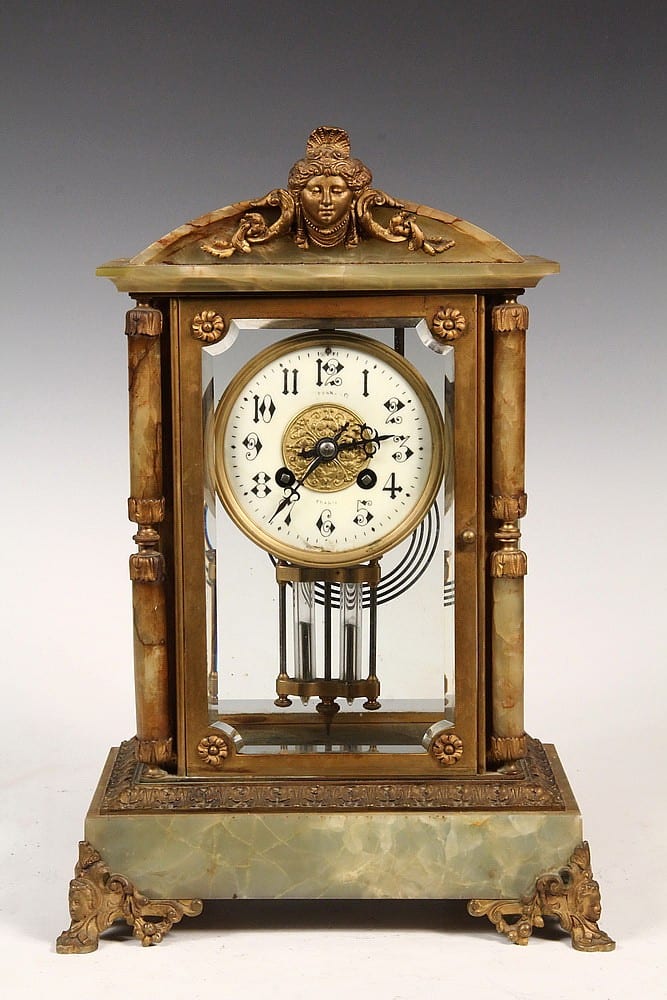
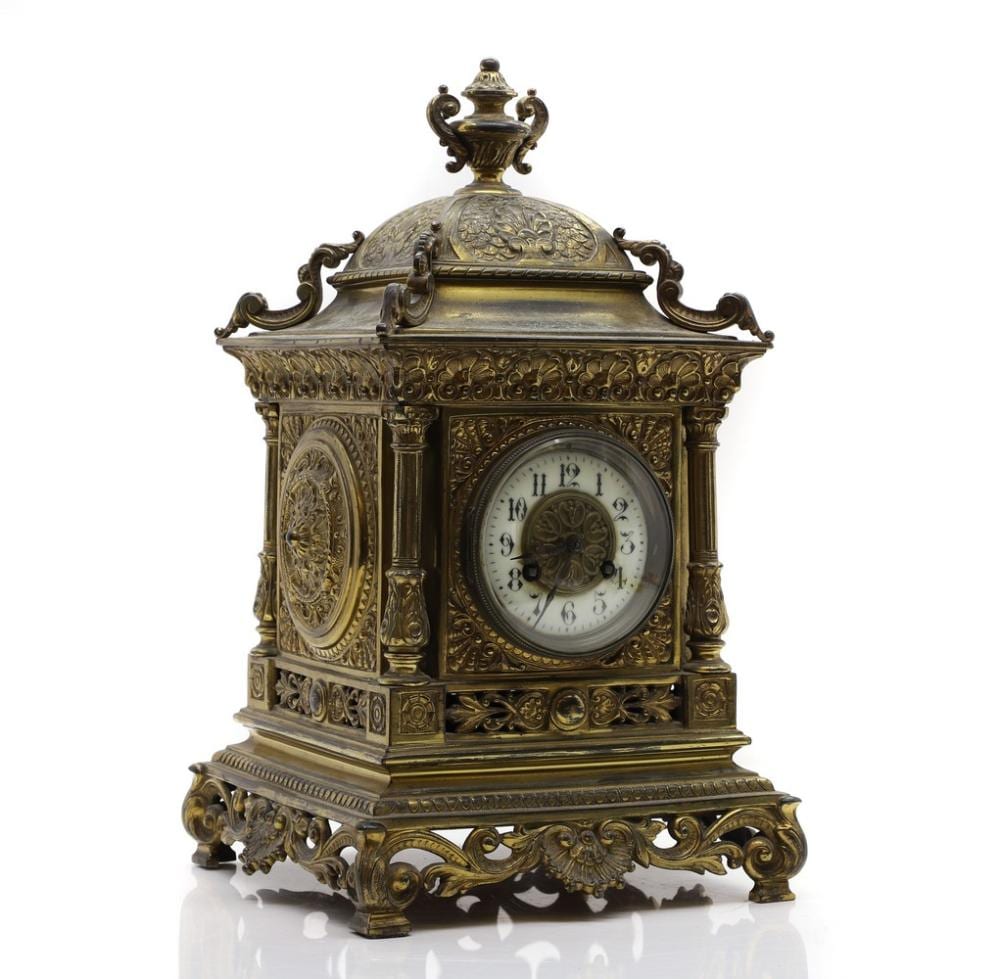
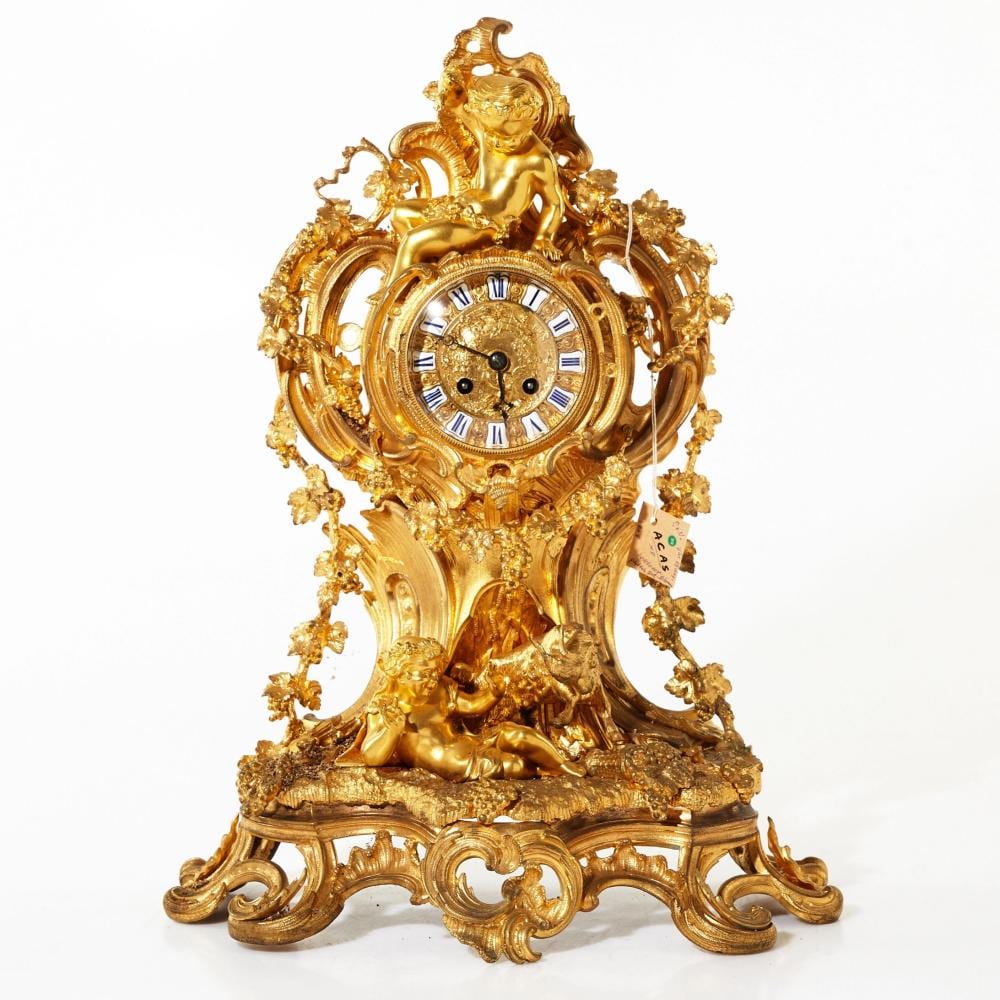
- Cases: gilt bronze (ormolu), patinated bronze, marble/onyx/slate with bronze mounts, Sèvres-style porcelain panels, “four-glass” crystal regulators with mercury pendulums.
- Notable makers/medalists: Japy Frères, Vincenti, Samuel Marti; retailers like Tiffany & Co. or French maisons add premium when documented.
- British bracket/mantel clocks (Georgian to Victorian/Edwardian)
- Movements: often 8-day fusee (single or double), verge or anchor escapements; some with pull-repeat or musical chimes; high craft in brass works.
- Cases: ebonized or mahogany with brass inlay, pagoda or arch-top forms, later Edwardian mahogany with silvered dials.
- Notable names: Vulliamy (rare), Frodsham, Dent, Elliott (later).
- American mantel/shelf clocks (late 19th–early 20th century)
- Movements: mass-produced 8-day time-and-strike; gong-strike common; Westminster chime on some later models.
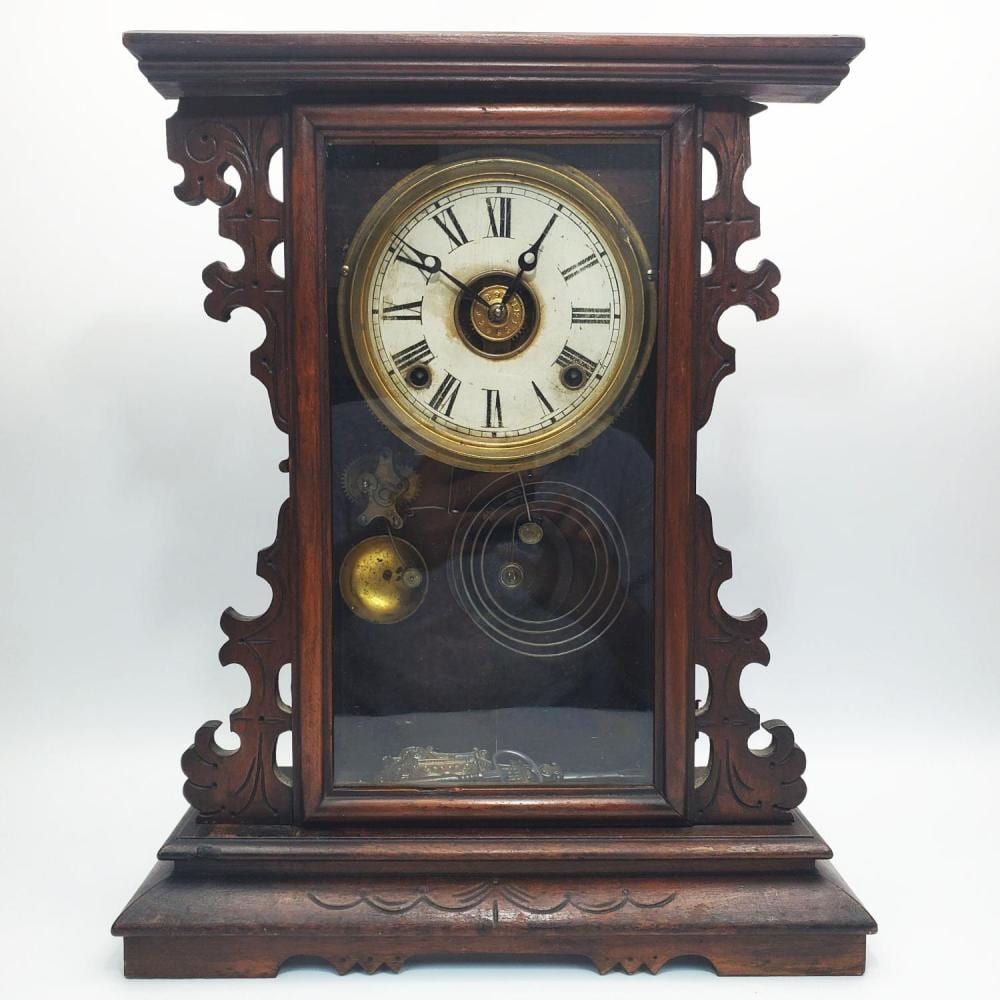
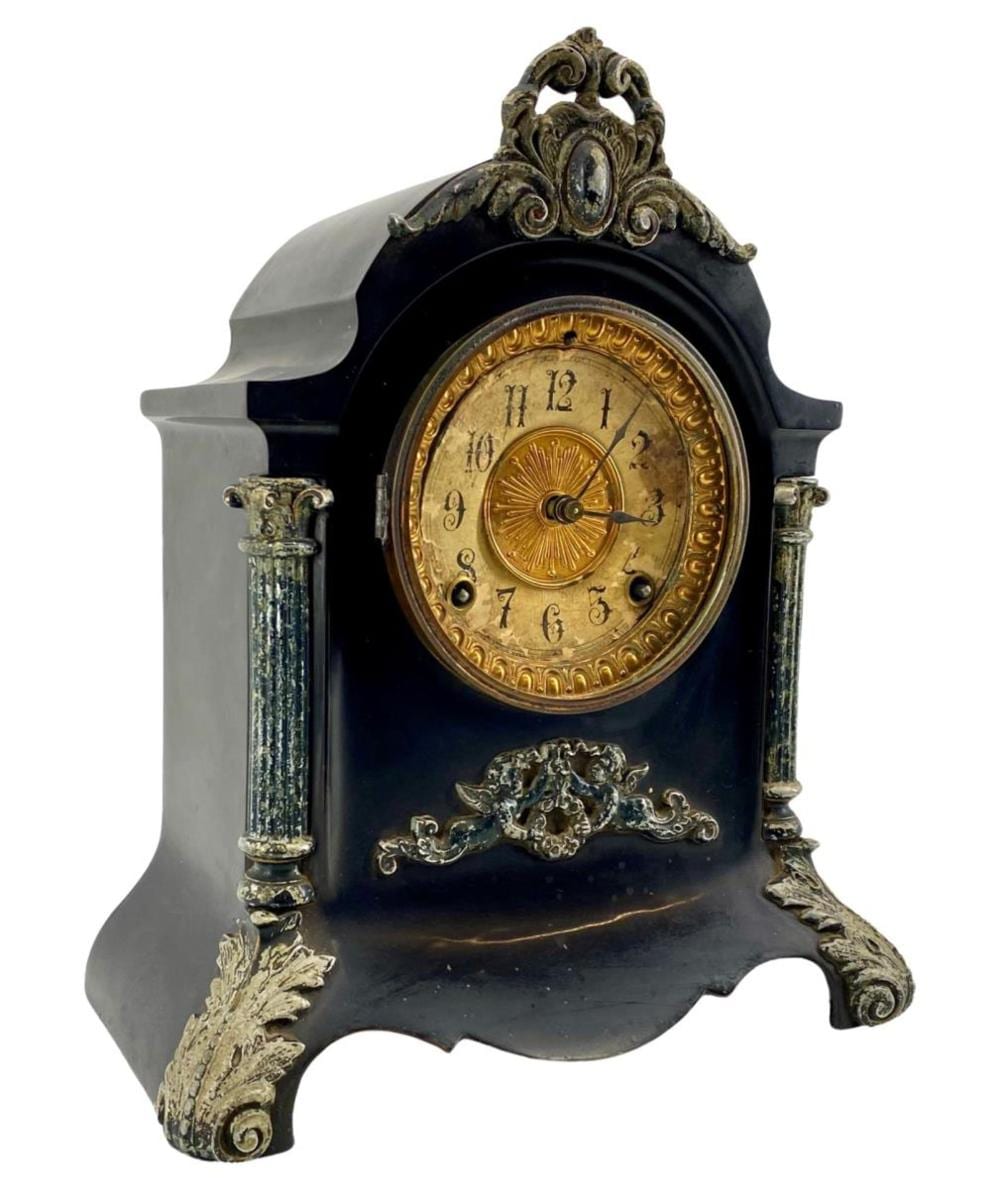
- Cases: “black mantel” (slate/iron or wood painted black with incised gilt), Adamantine celluloid veneers (Seth Thomas), tambour “Napoleon hat,” pressed oak.
- Makers: Seth Thomas, Ansonia, Waterbury, Ingraham, New Haven, Gilbert.
- German mantel clocks (late 19th–early 20th century)
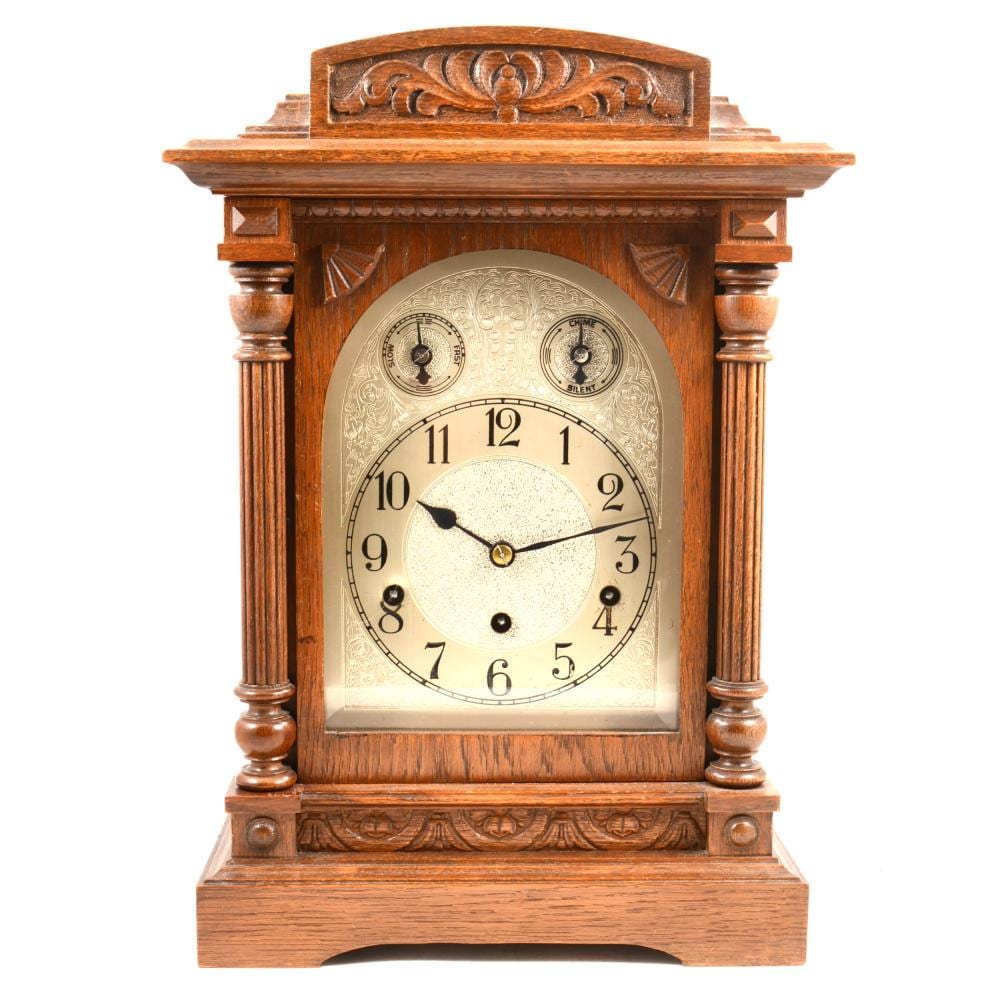
- Movements: quality 8-day, often with bevelled glass doors, sometimes Westminster chime.
- Makers: Lenzkirch (high-end, serial-numbered), Gustav Becker, Junghans, Kienzle, HAC.
- Materials and how they influence perception
- Highest: fine mercury-gilded bronze, crisply chased mounts, Sèvres porcelain, documented retailers.
- Mid: quality marble/onyx with bronze mounts, crystal regulators with original mercury pendulums.
- Lower: spelter (zinc) figures with bronzed paint, common black mantels, mass-market tambours.
Style matters too. Empire and Louis XVI revival forms, high-quality Art Nouveau, or clean Art Deco lines can elevate desirability. Overwrought late reproductions with garish marbles or crude castings typically fetch less.
What Drives Value
Several variables combine to set value. Rank them in this order when analyzing a clock:
- Maker, retailer, and origin
- Signed movements, dial signatures, and documented retailers (e.g., Tiffany & Co.) raise prices. French and English high-end workshops are generally superior to mass-market output.
- Case materials and workmanship
- Crisp chasing, sharp detail, tight joins, and original gilding indicate quality. Marble with fine veining and well-fitted mounts beats porous, chalky stone with sloppy bevels.
- Movement design and complications
- Fusee movements, platform escapements, visible escapements, quarter or Westminster chiming, perpetual calendars, or automata add significantly.
- Condition and originality
- Original finish on bronze or wood, intact enamel dials, matching hands, correct pendulum and key, original back door/bezel. Replacing any of these lowers value.
- Rarity and scale
- Unusual models, exceptional size (very small or monumental), or sets with original garnitures (urns/candelabra) carry premiums.
- Provenance and documentation
- Invoices, service records, or a traceable collection history reassure buyers and help justify the top of a range.
- Market demand
- Tastes shift. Currently, clean lines (Art Deco, elegant French) and documented quality outperform heavy Victorian spelter figural clocks in many regions.
Approximate market tendencies (highly sensitive to condition and region; use only as coarse guides):
- Common American black mantels: usually modest; scarce models or pristine originals sell for noticeably more.
- Seth Thomas Adamantine: plentiful and moderately priced; rare colors or exceptional condition bring more.
- German Lenzkirch mantel clocks: valued for movement quality; standout examples higher.
- French marble/spelter figural: moderate; better bronze-mounted marble sells for more.
- Crystal regulators: strong demand; early high-quality examples with original mercury pendulum sell well above later ones.
- Fine English fusee bracket clocks and top-tier French ormolu: among the most valuable, with best-in-class museum-grade pieces far higher.
Document and Date Your Clock
Accurate identification prevents costly mistakes and anchors your valuation.
- Signatures and stamps
- Movement backplate: look for stamped makers (e.g., “Japy Frères,” “S. Marti,” “Lenzkirch”), medallion award marks (help with dating to within decades), and serial numbers.
- Dial and case: retailer names on the dial or plaques; matching movement and pendulum numbers on French clocks indicate originality.
- Construction clues
- Bronze vs spelter: bronze is heavier, shows clear file/chisel marks and crisp edges; spelter is lighter, softer detail, often with bubbling under finish. A discreet magnet test helps only with iron/steel; do not scratch or abrade.
- Gilding: mercury gilding (ormolu) has a warm, deep appearance with finely chased detail; modern lacquer gilding looks flat and uniform. Uniform bright “gold” with softened detail can mean over-gilding.
- Marble/stone: slate is dense black; French black marble shows fine crystalline structure; onyx/alabaster chip readily at edges—check for filled losses.
- Movement architecture and dating hints
- French round movements with Brocot suspension are typically mid-19th to early 20th century; award medallions can indicate post-1855 exhibitions, narrowing date windows.
- English fusee movements often pre-1900; chain or gut lines and heavy plates signal quality.
- Lenzkirch serial numbers can narrow dates; earlier numbers generally pre-1890s. Keep a reference of published ranges if you have one.
- American movements with pressed plates and paper dials are usually later 19th–early 20th century.
- Dial, hands, and glass
- Enamel dials: hairlines are common; chips at winding arbors reduce value more than fine hairlines. Paper dials are often replacements on American clocks.
- Hands should suit the period (Breguet, spade, moon). Bright modern replacements stand out.
- Bevelled glass in doors/bezels is a quality indicator; wavy glass can signal age; flat modern glass is a common replacement.
- Evidence of marriages and alterations
- Extra/elongated mounting holes, misaligned winding arbors in the dial, different oxidation levels between screws and plates, or unmatched patina between case and mounts are warning signs.
- A movement that doesn’t fit the case recess neatly is a red flag.
Condition and Restoration: How They Affect Price
Condition is the most adjustable part of the valuation because subtle differences compound.
- Grading movement condition
- Running status: non-running clocks are worth materially less but still saleable if original and complete.
- Wear: check pivot grooves, ovalled pivot holes (needs bushing), barrel wear, bent or scored arbors, damaged teeth. Heavy wear implies service costs.
- Completeness: correct pendulum, suspension spring, bell/gong, hands, bezel catch. Missing parts lower value and resale confidence.
- Grading case condition
- Bronze/ormolu: intact original gilding is best; heavy re-gilding or over-polishing reduces value. Losses to mounts or poor solder repairs are penalizing.
- Stone: chips, corner breaks, filled repairs, and cracks lower value; clean, sharp edges bring premiums.
- Wood: veneer losses, splits, and sun fading; original finish beats aggressive refinishing. Adamantine veneer should be free of deep gouges and heat damage.
- Dial and glass: hairlines vs chips; replaced glass is acceptable if well executed, but note it.
- Restoration impact
- Professional movement service (clean/oil/adjust, bushings as needed) typically adds marketability and may raise value more than the service cost on mid-to-upper grade clocks.
- Case conservation (stabilizing stone, in-painting minor losses) is often neutral-to-positive if discreet; invasive stripping, over-gilding, or aggressive polishing can cut value.
- Replaced parts: correct-style replacements are acceptable but should be disclosed; mismatched hands, incorrect pendulums, and modern gongs reduce value.
Budgeting: typical movement service for an 8-day mantel clock may run a few hundred dollars; major overhauls or complex chiming/fusee work can be higher. Don’t invest more than the likely uplift, unless for personal or conservation reasons.
Build Comparables and Determine a Value Range
Arriving at a defensible value range requires market evidence and sensible adjustments.
- Define the valuation premise
- Fair market value (FMV): what a willing buyer and seller agree to in an open market (often referenced by auction or completed online sales).
- Retail replacement value: what it would cost to buy a comparable clock from a dealer today (typically 1.3–2× FMV, sometimes higher for rare, high-condition pieces).
- Liquidation value: quick-sale price; expect a discount to FMV.
- Gather comparables
- Use recent sold prices from regional auctions, horology-focused auctioneers, and completed listings on major marketplaces.
- Match comparables on: maker/retailer, case material and style, movement type and complications, dimensions, condition, originality, and location.
- Adjust and synthesize
- Condition adjustments: deduct for hairline vs chip (minor vs moderate), missing original pendulum (moderate), re-gilded case (significant on high-end).
- Feature adjustments: add for unusual complications, documented provenance, original garnitures.
- Size adjustments: larger or miniature variants often command premiums.
- Geographic adjustments: demand varies; continental European and American markets can differ for the same model.
- Build a range
- Choose 3–6 strongest comparables, normalize them with your adjustments, and calculate a mid-point FMV.
- Express your conclusion as an FMV range, then map to retail replacement if needed.
- Time-to-sale and seasonality
- Quality clocks tend to sell faster in Q4–Q1 and around design/antiques fairs. Factor time horizons into your target pricing.
Documentation increases credibility: clear photos of the dial, movement backplate stamps, pendulum, case details, and any serial numbers or retailers’ marks. Record dimensions (height, width, depth) and any service history.
Practical Checklist
- Identify and record
- Measure the case (H × W × D); photograph front, sides, back, dial, movement, pendulum.
- Note all signatures, serials, award medallions, and retailer markings on movement and dial.
- Classify the clock
- Origin (French/British/American/German), case material (bronze, spelter, marble, slate, wood, Adamantine, porcelain), movement type (fusee, Paris round, platform, chiming).
- Assess originality
- Check for matching pendulum numbers, correct hands, original glass, absence of extra screw holes or misaligned winding arbors.
- Grade condition
- Movement: running status, wear (bushings needed?), missing parts.
- Case: chips, cracks, repairs, finish originality; dial hairlines vs chips.
- Evaluate features and rarity
- Complications (visible escapement, quarter chime), garnitures, exceptional workmanship, retailer provenance.
- Estimate costs
- Obtain a servicing quote; list any parts needed and case conservation costs.
- Build comparables
- Collect 3–6 recent sold examples; adjust for condition, features, and location; compute an FMV range and map to retail replacement if required.
- Decide strategy
- Keep vs sell; auction vs dealer vs private sale; pricing and timing; document disclosures for buyers.
FAQ
Q: My mantel clock doesn’t run. Is it still valuable? A: Yes. Original, complete non-running clocks retain value, especially if by a good maker or in a fine case. Expect a discount for service needs versus a recently serviced example, depending on complexity and condition.
Q: How can I tell bronze from spelter without damaging the finish? A: Weight and detail are key. Bronze is dense with crisp, undercut detail and visible chasing marks; spelter is lighter with softer detail and often shows casting flaws under the finish. Avoid scratching or acid tests. Inspect hidden areas with magnification and compare the sharpness of edges and screw threads.
Q: Should I polish the brass or re-gild before selling? A: Generally, no. Original surfaces are preferred. Gentle cleaning to remove grime is fine, but aggressive polishing or re-gilding can strip value, especially on high-end ormolu. If conservation is needed, use a specialist and disclose the work.
Q: Do matching garnitures increase value? A: Usually, yes. A clock with its original urns or candelabra can command a substantial premium, provided all pieces match in material, finish, and patina. Mismatched or later-added garnitures add little.
Q: Is it worth servicing a clock before listing it? A: On mid-to-high quality clocks, a documented professional service can broaden the buyer pool and raise the realized price. For common mass-produced models, weigh the service cost against the expected uplift; sometimes disclosing accurate running status and pricing accordingly is more economical.
By applying this framework—identify, document, grade, and compare—you can set a defensible value for almost any antique mantel clock and decide the best path to sell, insure, or conserve it.