
A Victorian Rococo Carved Jardiniere Stand Side Table Circa Victorian Era Late 19thc: appraisal and value basics
A Victorian Rococo Carved Jardiniere Stand Side Table Circa Victorian Era Late 19thc research should start with identification, condition, provenance, and recent comparable sales. Use this guide to compare the signals that matter before paying for a formal appraisal or deciding whether to sell.
A jardiniere stand is an elevated pedestal table designed to display a plant, ceramic jardinière, or decorative object in a parlor or hallway. In late-Victorian interiors these stands doubled as occasional tables, and they often appear in Rococo Revival styling: cabriole legs, scrolling apron carving, and decorative inlay on the top.
This guide shows how to evaluate a Victorian Rococo Revival carved jardiniere stand/side table the way a furniture appraiser would: how to confirm age and construction, what condition issues matter most, what style terms mean ("Rococo" vs "Rococo Revival"), and how recent auction sales help bracket value.
Free photo check
Not sure if your item is worth appraising? Let us take a look.
Upload a photo, tell us what you know, and get a free photo check. If a full appraisal makes sense, we will say so.
Free. No card needed. Takes about two minutes.
Quick value snapshot (what most owners want first)
Victorian Rococo Revival plant stands and small side tables are attractive, but they’re also common enough that value is very sensitive to condition, carving quality, and selling channel. As a starting point:
- Typical fair market range (many examples): roughly US50–US00.
- Well-carved examples with intact marquetry/veneer and minimal repairs: often US00–US,200 depending on size and venue.
- Lower-end outcomes: local pickup auctions can land under US00 when shipping is difficult or condition needs work.
A legacy WordPress appraisal stub for this specific object type cited a US50–US50 value band (May 2022). Use that number as a realistic "mid-market" anchor for a solid, attractive example in good condition, then adjust using the factors below.
Description and history: what “Victorian Rococo” usually means
The Victorian era (1837–1901) overlaps with many revival styles. When sellers describe a piece as “Victorian Rococo,” they typically mean Rococo Revival (sometimes called Louis XV Revival): a 19th-century interpretation of 18th-century French Rococo design.
In practical identification terms, Rococo Revival furniture often features:
- Cabriole legs with scroll-like curves.
- Naturalistic carving (acanthus leaves, shells, flowers) rather than geometric motifs.
- Curved aprons and asymmetrical flourishes.
- Decorative tops in veneer, inlay, or marquetry (and sometimes marble).
Many jardiniere stands were made across Europe and the U.S. in the late 19th century. Some have construction touches associated with Italian or Continental production (for example, cross-bracing or X-stretchers), but attribution should be made cautiously unless you have provenance or a maker’s label.
Key identification features to photograph
When you’re trying to confirm age and quality (or preparing for sale), the best photos aren’t the “pretty room shots”—they’re the closeups that show construction. Capture these angles:
- Top surface, straight on: to show the marquetry pattern, veneer seams, and any lifted edges.
- Underside of top: to show whether the top is solid wood, veneered, or built on a substrate.
- Leg/foot profiles: to show carving depth and how the foot meets the floor (wear and replacements show here).
- Apron and stretcher joints: to show joinery and repairs.
- Any marks/labels: paper labels, ink stamps, retailer plaques, or handwritten inventory codes.

Construction and materials: solid wood vs veneer vs marquetry
Many late-19th-century stands present as “solid oak” or “solid walnut,” but the top is often veneered and then decorated with marquetry (a patterned inlay made from contrasting wood species). That is not a negative—veneered tops were a standard way to achieve decorative effects while keeping the top stable.
Here’s what matters for value:
- Marquetry quality: tight seams, crisp geometry/floral work, and minimal filler are positives.
- Substrate stability: warping, bubbling, or delamination indicates moisture or heat damage.
- Carving vs routing: true hand carving often shows slight asymmetry and tool marks; modern machine carving can look overly uniform.
- Wood choice: walnut and mahogany often trade higher than plain oak, but oak can still do well when carving is strong and condition is excellent.
If your stand has an X-stretcher between legs, check each joint for looseness. A wobbly stretcher can make the entire piece feel unstable, and stability is a major buyer concern for plant stands (water + weight are unforgiving).
Condition checklist (the issues that actually move the price)
On small tables and stands, buyers quickly discount price for problems that create daily-use headaches. Inspect these areas carefully:
- Veneer lifting or missing marquetry: especially at the rim and at corners where hands grab the top.
- Water rings and plant damage: common on jardiniere stands; deep staining is hard to erase without refinishing.
- Wobble and racking: test by gently twisting the top. Movement suggests loose joints or failed glue blocks.
- Old repairs: look for filled holes, replaced stretchers, or reglued breaks in carved areas.
- Finish: an honest, even patina is a plus; a thick, glossy “plastic” finish can signal a heavy refinish.
Restoration can be worth it on a high-quality piece, but on mid-market Victorian stands the cost of veneer repair plus refinishing can exceed the value lift. If you’re selling, it’s often better to price honestly as-is and disclose condition clearly.
Auction comps: what similar tables and stands are bringing
Below are three recent auction results from the Appraisily auction dataset that help bracket the market for decorated 19th-century tables (including marquetry examples). These are not identical to every Victorian jardiniere stand, but they show how venue, construction, and style class affect price.

Comp 1 (baseline furniture outcome). Weschler's (8 Jan 2025, lot 352) sold a mahogany tilt-top center table for US50. While a tilt-top form differs from a plant stand, this result is a useful baseline for “decorative but common” 19th-century tables: solid presentation, but not rare enough to break out into the multi-thousand-dollar tier.

Comp 2 (marquetry premium). Auctions at Showplace (9 Jan 2025, lot 96) sold an Early Victorian walnut and marquetry center table for US,300. This illustrates the price bump buyers will pay for well-presented marquetry and strong wood choice. If your jardiniere stand has an especially fine top and crisp carving, this is the “upper behavior” to keep in mind.

Comp 3 (Louis XV / Rococo Revival flavor). Ahlers & Ogletree (15 Jan 2025, lot 238) sold a French Louis XV style marquetry center table for US00. This is a helpful “style neighbor” comp: Rococo Revival-inspired curves and marquetry can perform well in an online sale even when the table is not a rare, signed, or museum-grade piece.
How to apply comps to your stand: If your piece is smaller (plant stand scale) and oak with some veneer wear, you may land closer to Comp 1. If the carving is deep and the top is clean, Comp 3 is a realistic benchmark. If the workmanship is exceptional (or you can attribute the maker), the Comp 2 tier becomes more plausible.
Fair market value vs insurance value
Owners are often surprised that an “insurance value” can be higher than a quick auction outcome. That’s because the purpose is different:
- Fair market value (FMV): what a willing buyer and seller agree on in a typical sale, factoring in shipping, timing, and buyer pool.
- Insurance replacement value: what it may cost to replace a similar-quality item quickly in your local retail market, often higher than auction.
For Victorian stands/tables, the difference is often driven by delivery and availability. A local auction might be pickup-only, while a retail replacement has already solved shipping and marketing.
How to sell a Victorian jardiniere stand (best channels by value)
Your choice of selling channel can matter as much as the object itself. For Rococo Revival furniture, consider:
- Local auction: fastest, but can compress price due to pickup constraints.
- Online auction/marketplace: broader buyer pool; you’ll need careful packing and clear condition disclosure.
- Consignment with a decorative arts shop: higher asking prices, slower sale, and commission.
If your stand has fragile marquetry or protruding carving, budget for professional packing. A broken cabriole leg or crushed stretcher can erase the profit from an otherwise good sale.
What similar items actually sold for
Real auction sales of items like your jardiniere stand. Open a sale to see the original listing.
Shown GBP range: GBP 30-GBP 820. Median of these 8 GBP examples: GBP 120.
| Comparable | What sold | Auction house | Date | Lot | Source-reported amount |
|---|---|---|---|---|---|
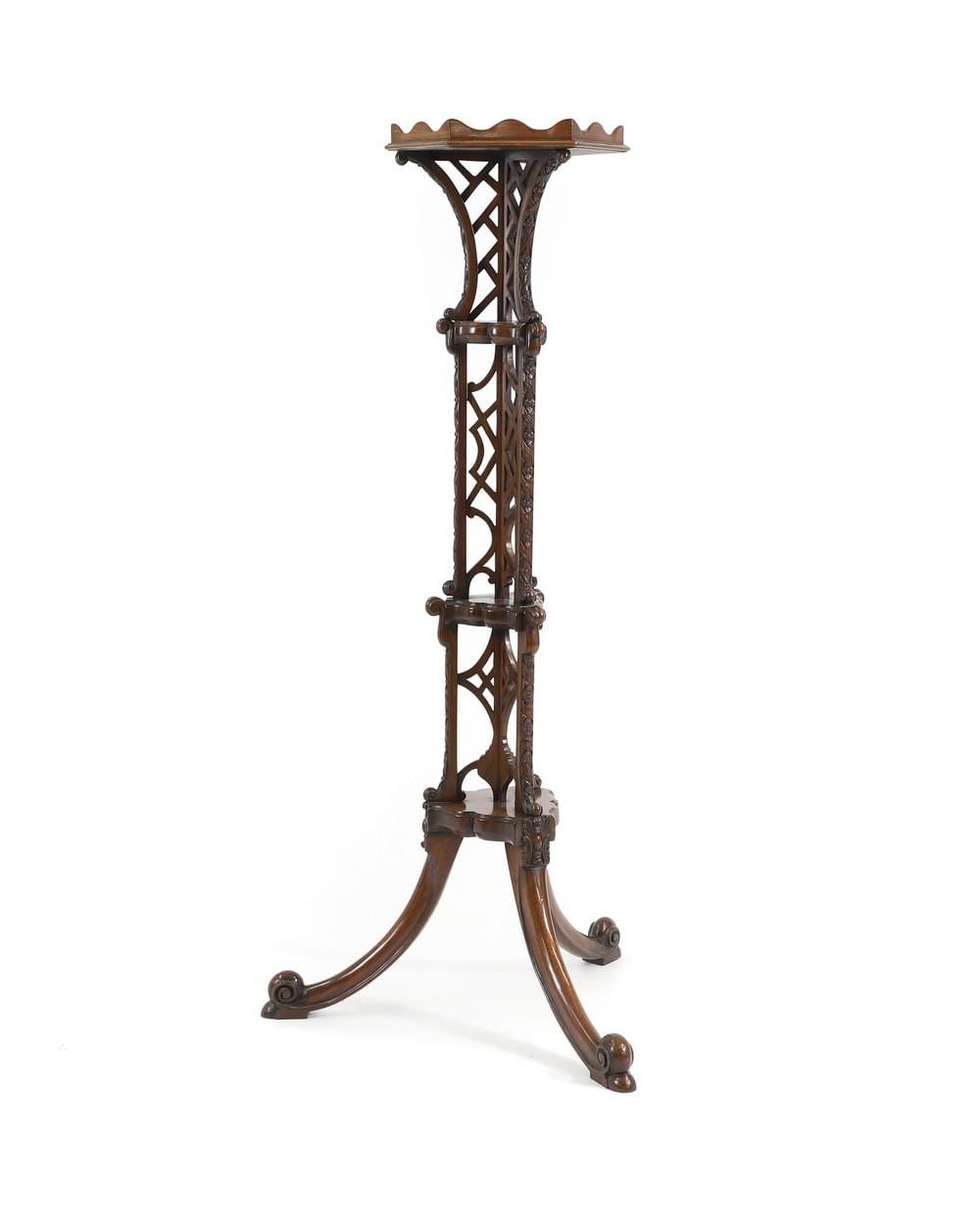 |
A mahogany jardiniere stand, | Sworders | 2024-10-30 | 705 | GBP 30 |
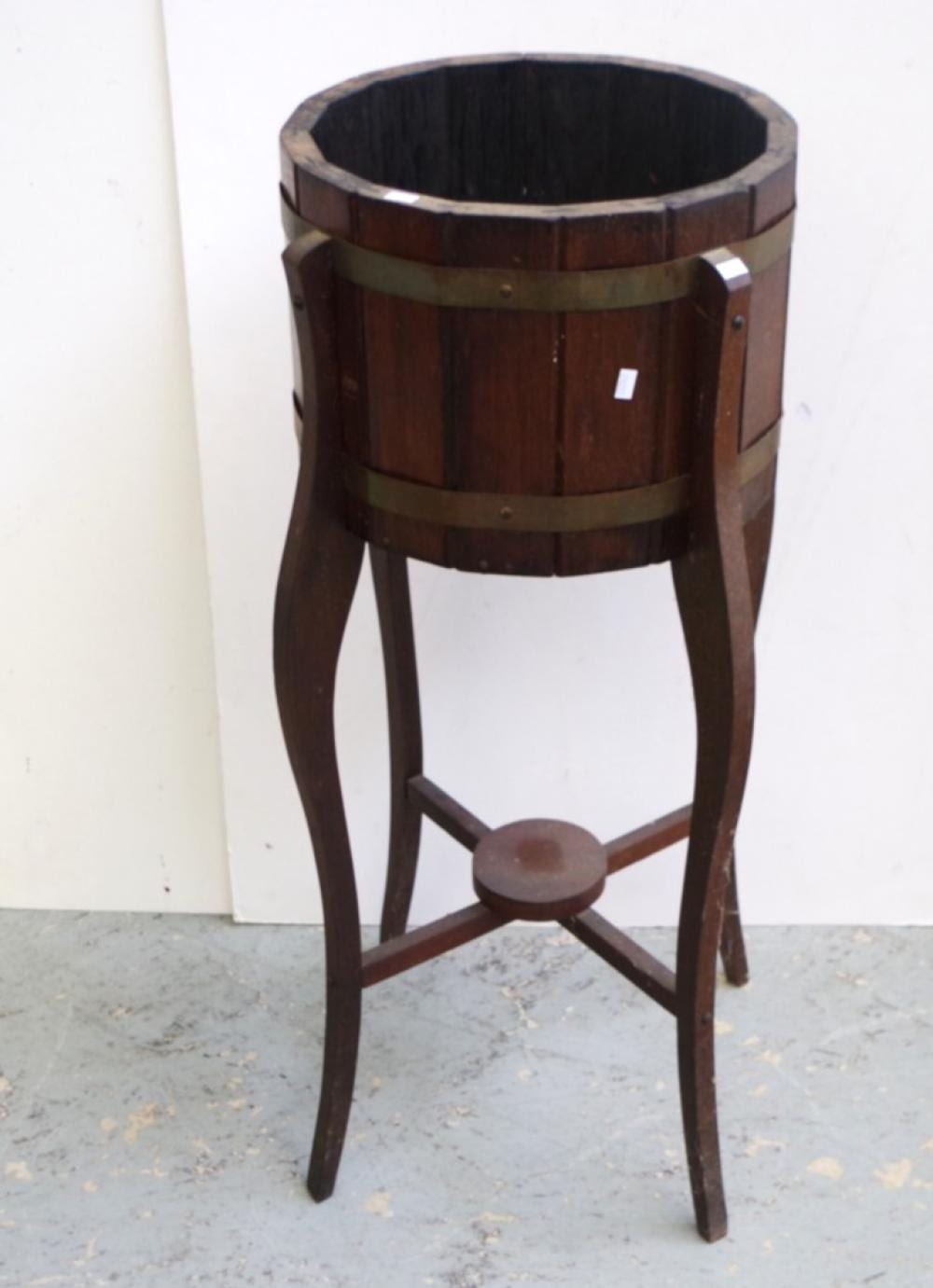 |
Brass bound barrel jardiniere stand | Barsby Auctions | 2026-02-15 | 1815 | AUD 70 |
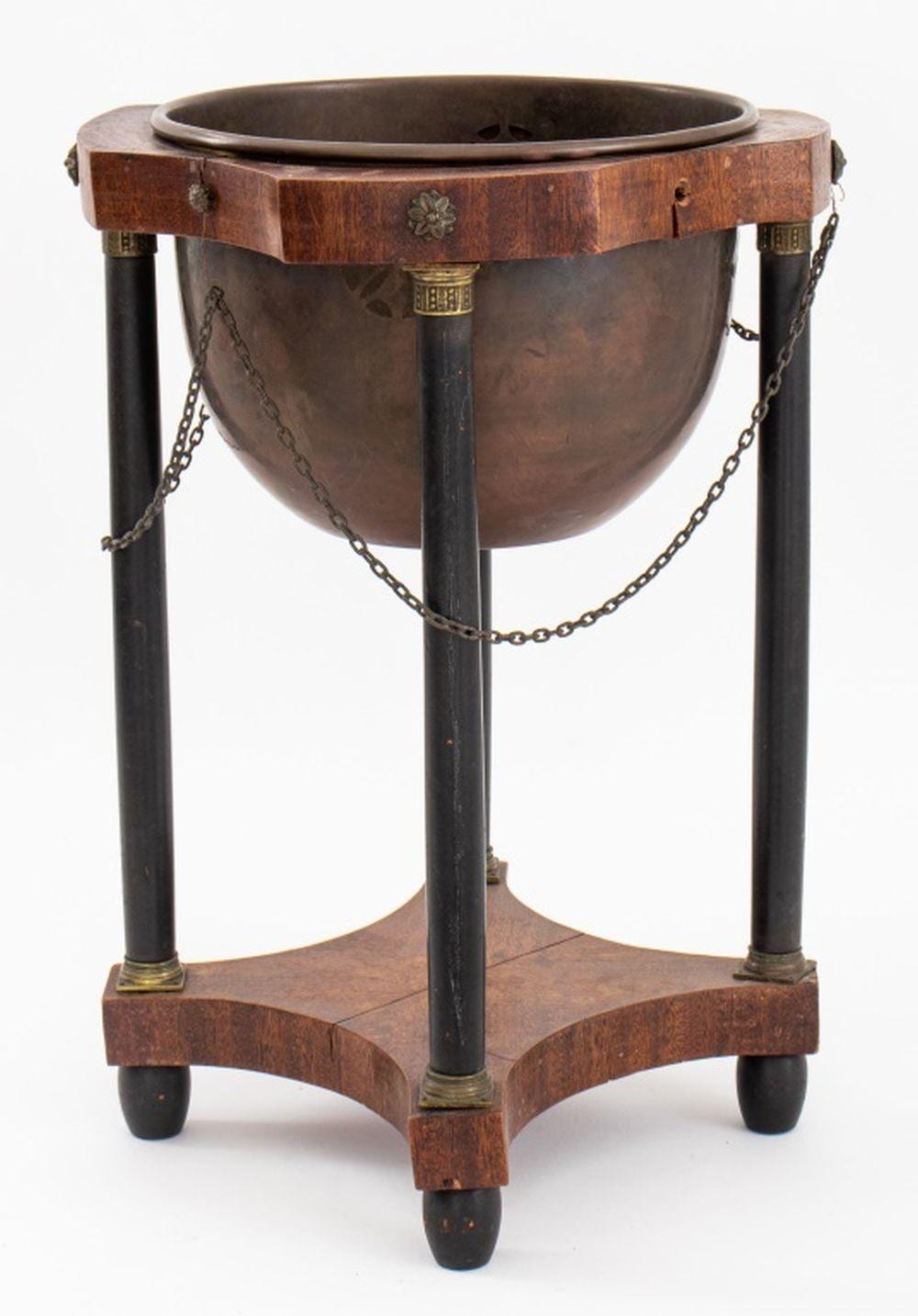 |
Empire Revival Wood Jardiniere Stand | Auctions at Showplace | 2026-05-07 | 231 | USD 200 |
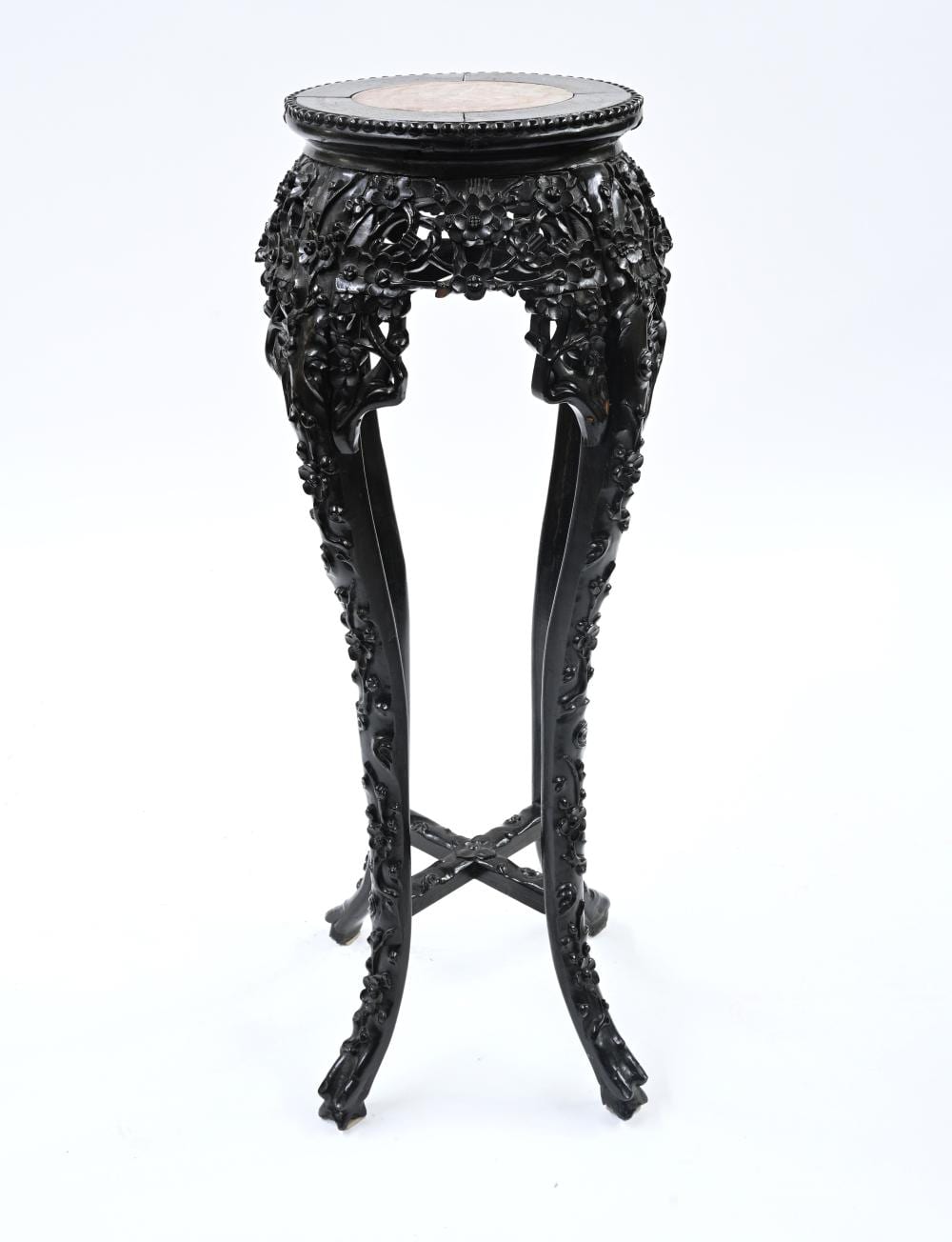 |
A Chinese hardwood jardiniere stand, lat | Kinghams Auctioneers | 2025-05-15 | 385 | GBP 150 |
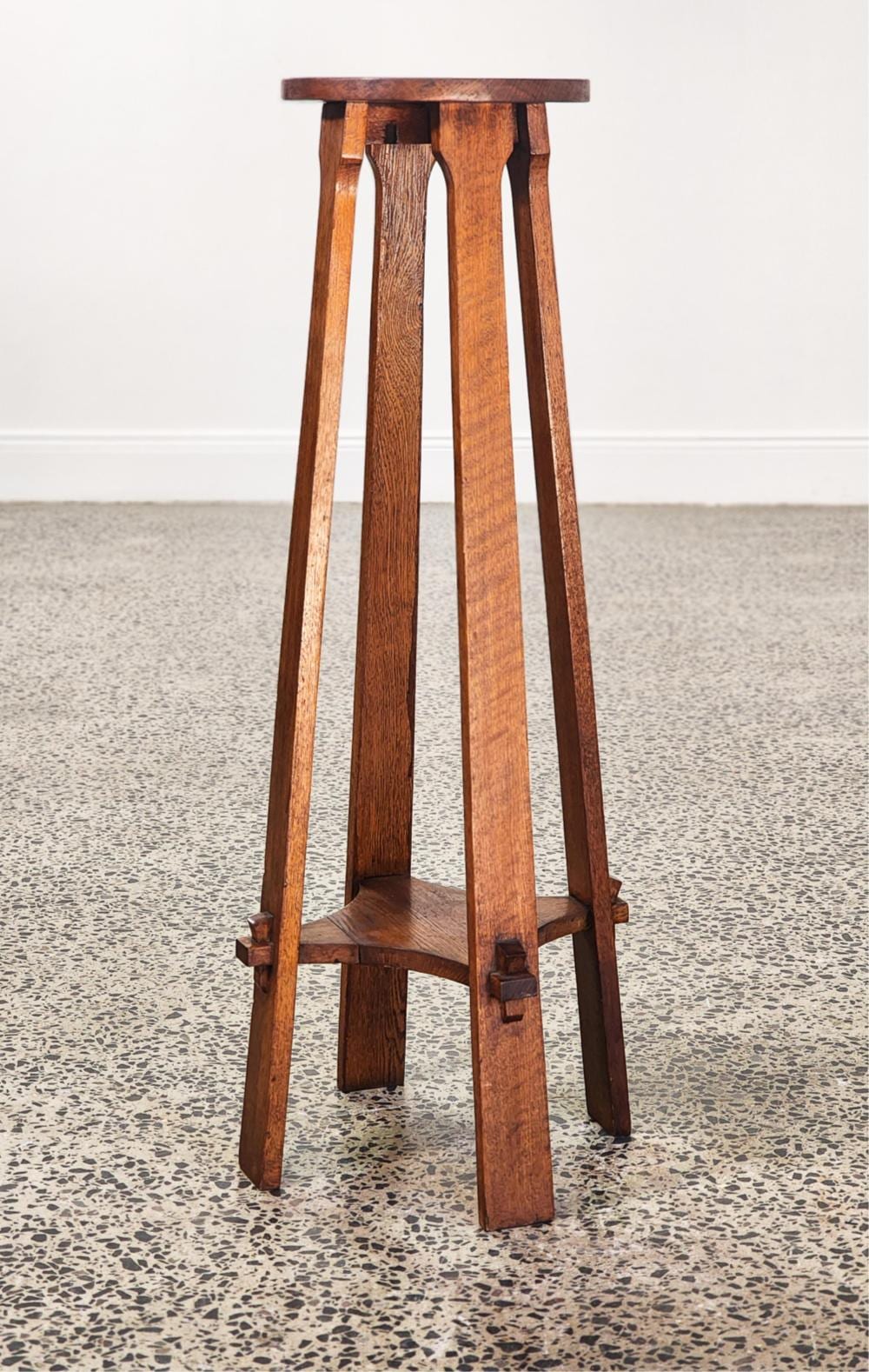 |
Arts & Crafts oak jardiniere stand (110 x 42cm) | Lawsons | 2025-11-20 | 1346 | AUD 90 |
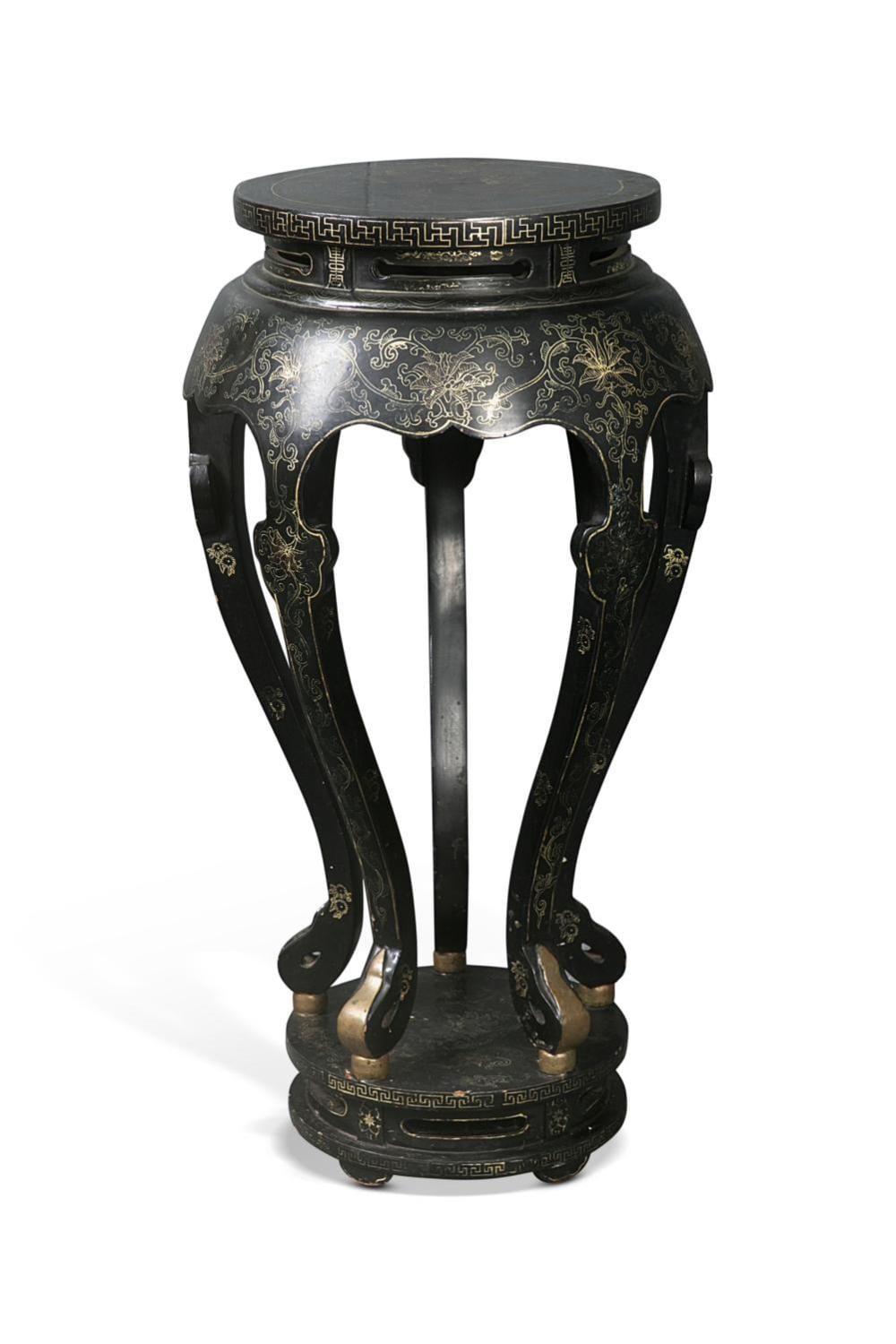 |
A Chinese lacquered jardiniere stand, circa 1920, | Cheffins | 2026-02-12 | 56 | GBP 90 |
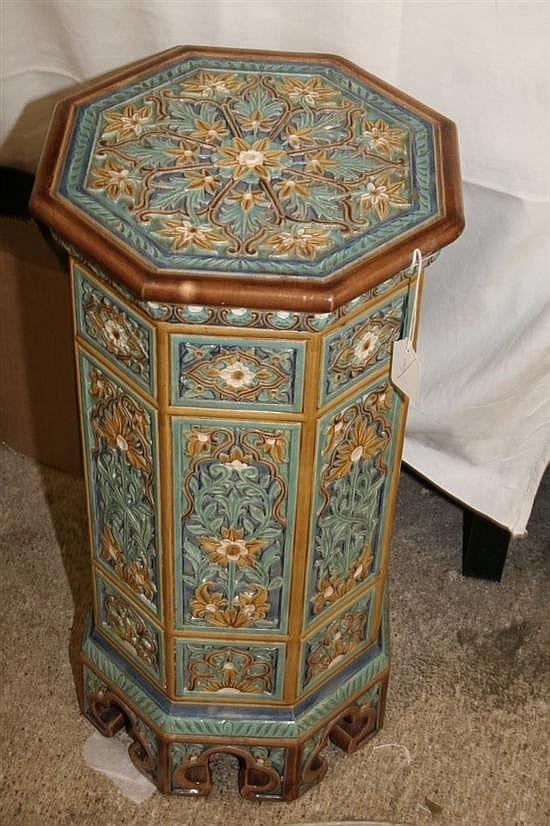 |
A Doulton Lambeth stoneware jardiniere stand, 26in. | Gorringes | 2007-10-23 | 221 | GBP 220 |
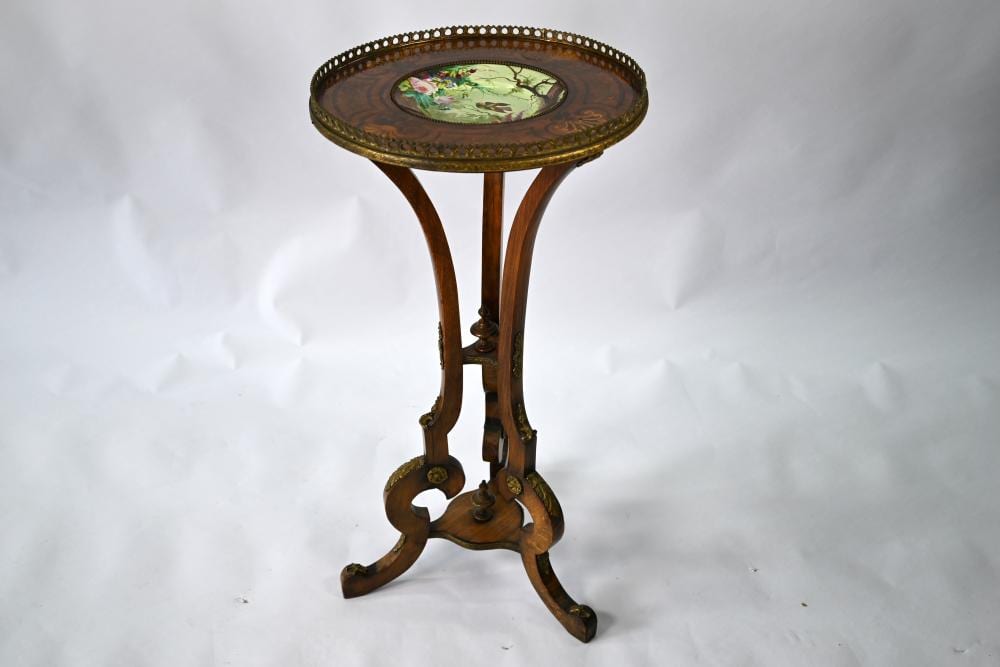 |
A19th century ormolu mounted jardiniere stand | Andrew Smith & Son | 2021-07-29 | 662 | GBP 150 |
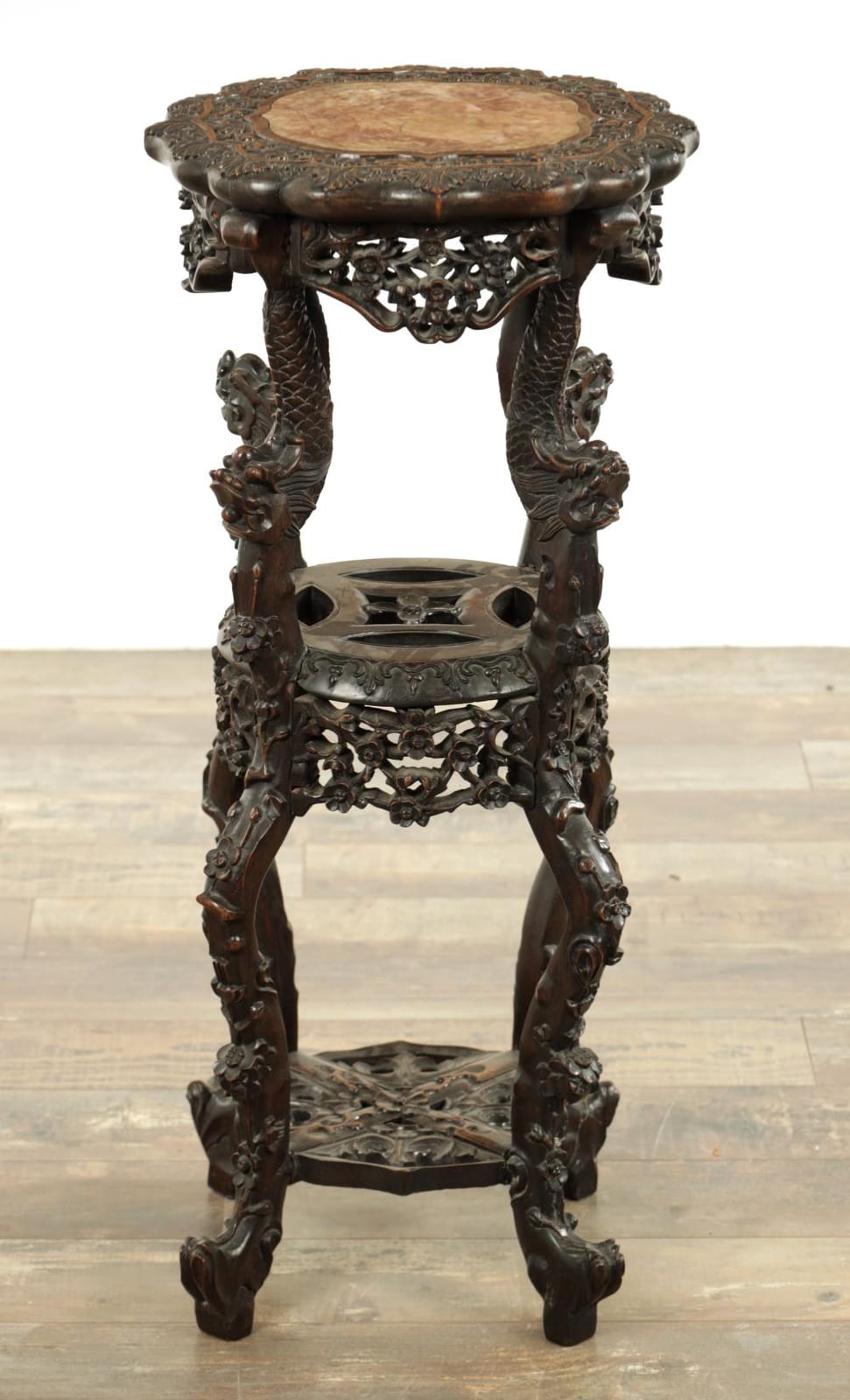 |
A 19TH CENTURY HARDWOOD CHINESE JARDINIERE STAND | Hutchinson Scott Limited | 2025-10-14 | 166 | GBP 820 |
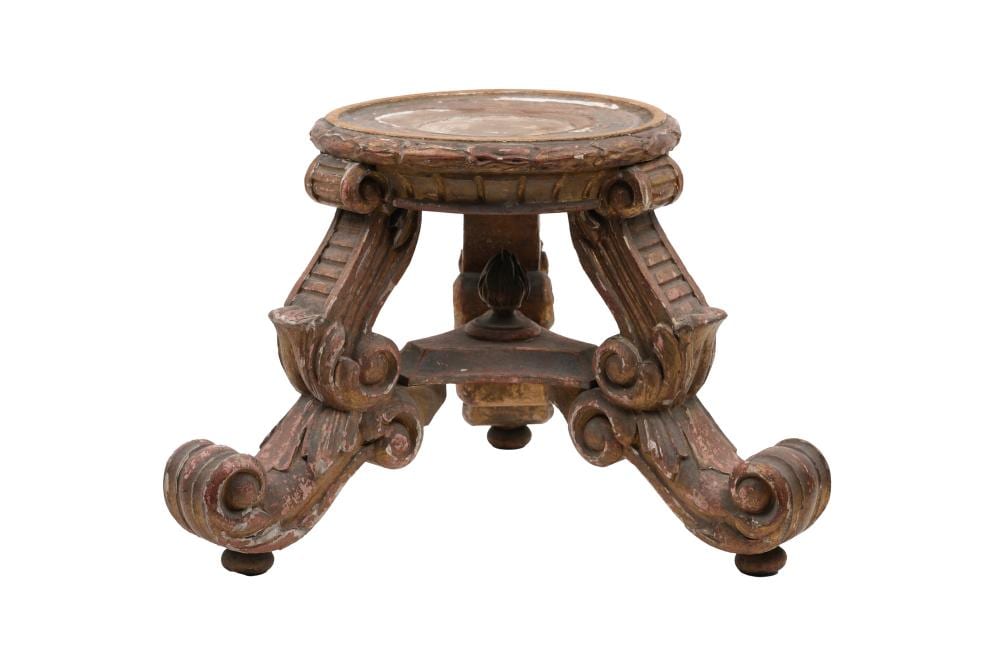 |
A LATE 19TH CENTURY GILT-WOOD JARDINIERE STAND | Azca Auctions | 2025-12-09 | 188 | GBP 40 |
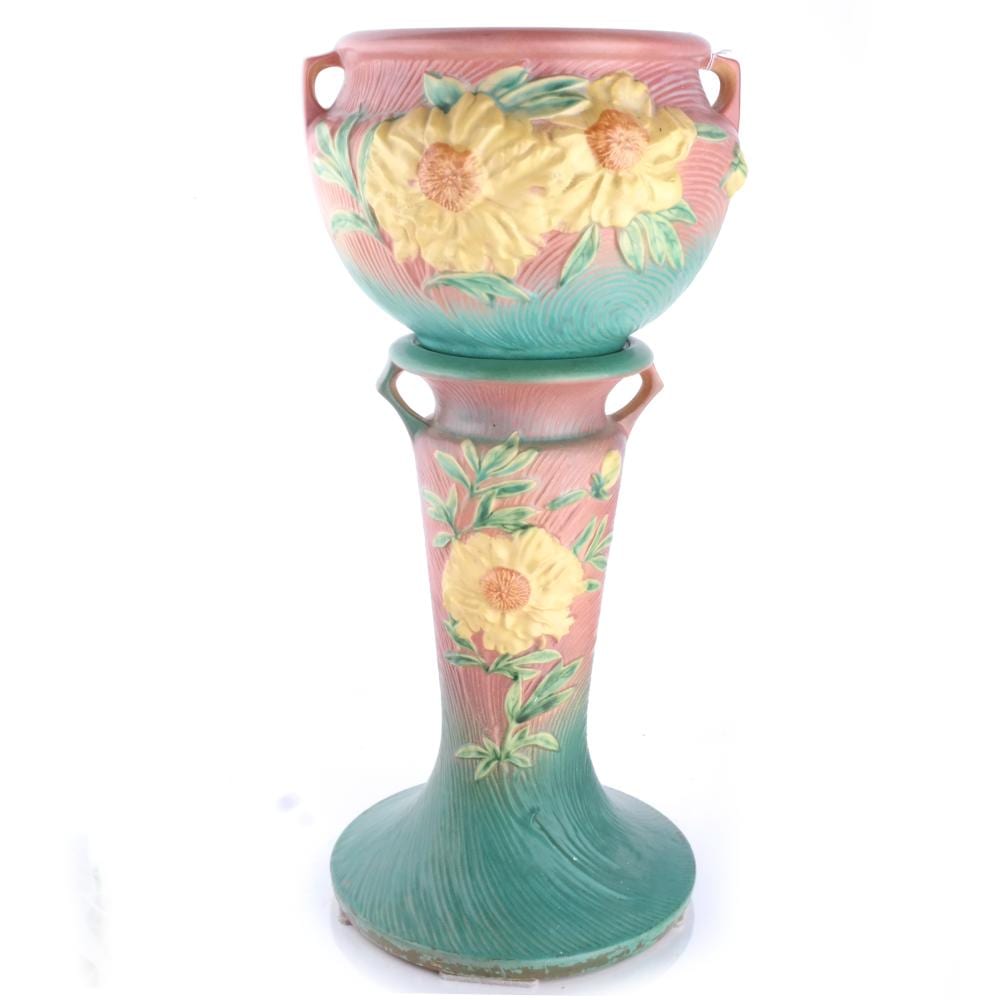 |
Roseville USA Pottery Jardiniere Stand | Roland Auctions NY | 2019-02-09 | 453 | USD 225 |
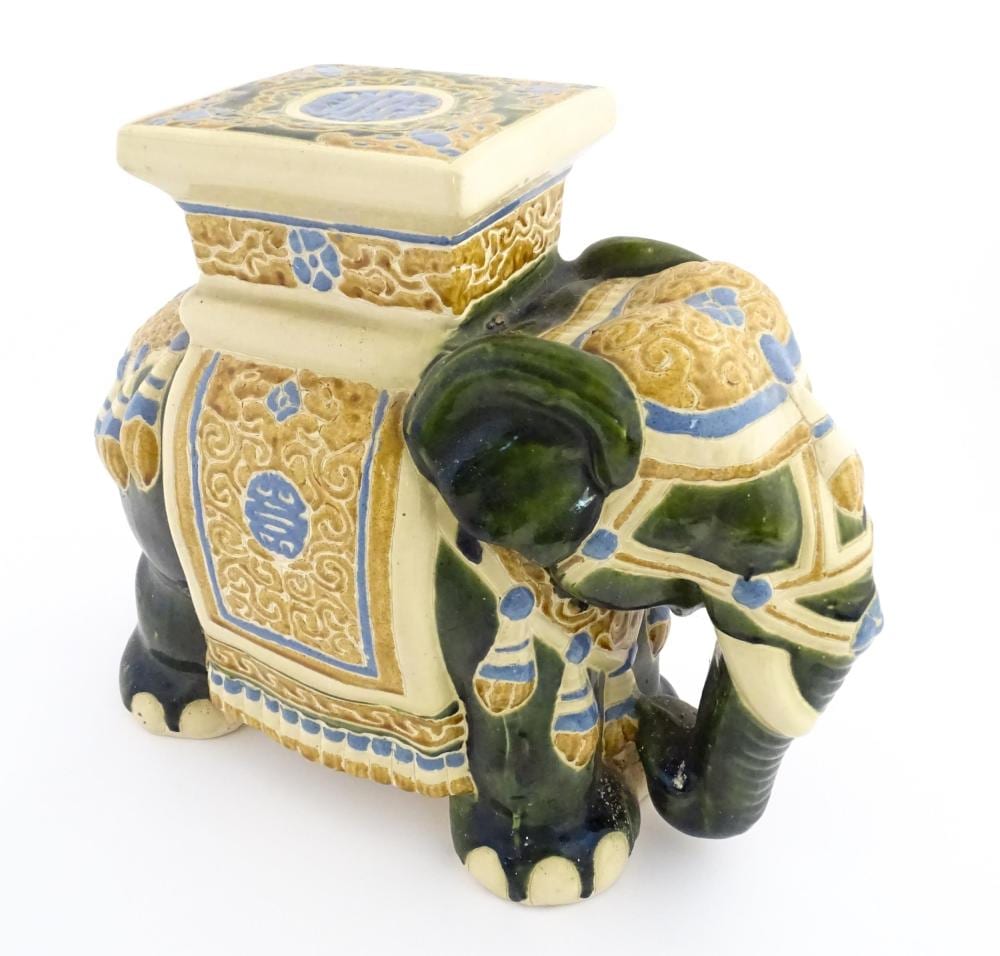 |
A ceramic jardiniere stand modelled as an elephant… | Claydon Auctioneers | 2025-12-31 | 1269 | GBP 65 |
How these auction records were verified
These sales are market context, not an object estimate.
Each row is tied to its lot identity, retrieval time, access result, and immutable record hash. Live source access was blocked; the exact record matched Appraisily's immutable pipeline provenance. Inspect the public comparable provenance record.
Search variations collectors ask
Readers often Google:
- how to tell if a jardiniere stand is Victorian or reproduction
- Victorian Rococo Revival plant stand value range
- what is marquetry on a Victorian side table top
- best way to price a carved oak plant stand for sale
- how to clean and protect veneer from plant water damage
- insurance appraisal vs auction price for Victorian furniture
- where to sell a Rococo Revival occasional table near me
- late 19th century carved side table identification checklist
Each question is addressed in the identification, condition, comps, and selling sections above.
References
- Legacy WordPress appraisal stub for “A Victorian Rococo Carved Jardiniere Stand/Side Table circa Victorian Era late 19thC” (May 2022) citing a US50–US50 value band.
- Appraisily auction dataset entries used for comparables: Weschler's lot 352 (Jan 8, 2025), Auctions at Showplace lot 96 (Jan 9, 2025), Ahlers & Ogletree lot 238 (Jan 15, 2025).
- General Rococo Revival/Victorian furniture construction terminology (standard appraisal practice; included for collector guidance).