Start with this six-part value check
A Western art print is worth what buyers will pay for the specific artist, image, edition, print type, and condition in the sale channel you can actually reach. An edition number alone does not create value. A famous subject alone does not create value either.
- Artist and exact title: establish who made or authorized the image.
- Print type: distinguish an original etching or lithograph from a reproduction, giclée, poster, or open-edition print.
- Signature and edition: record whether the signature is hand-applied or printed, plus the full fraction and any proof notation.
- Subject and size: match the same image and format whenever possible.
- Condition and documentation: note fading, foxing, mat burn, tears, trimming, publisher labels, and provenance.
- Comparable sales: use several recent sold lots that align on those facts, not one attractive listing price.
The practical value range starts with the closest sold results and widens as the evidence becomes less exact. Signature, edition, medium, condition, provenance, and comparable auction evidence all matter; the artist-specific market usually carries the most weight.
What this guide helps you decide
First, put the artwork in the right print market
“Print” can describe very different objects. An artist may make an original image on a plate, stone, screen, or block and pull an edition from it. A publisher may reproduce a painting as a signed limited edition. A printer may also issue an open-edition decorative image or poster. Those categories can look similar behind glass, but buyers do not price them as one market.
Original print: the printmaking process is the artist’s intended medium, such as an etching, lithograph, woodcut, or serigraph. The sheet is one impression from that matrix.
Limited-edition reproduction: a published copy of an existing painting or drawing, sometimes signed and numbered. Its resale value depends on demand for that artist, title, publisher, edition, and format.
Open edition or poster: a reproduction without a fixed edition limit. Decorative and regional demand may still exist, but scarcity is usually not the selling argument.
Start with the margin and reverse. Record every printed line, copyright notice, publisher label, proof notation, and medium description. Do not remove the sheet from its frame unless it can be done safely; a framer can open sealed backing without damaging the artwork.
Match the artist, signature, and edition as one identity
The artist check happens first because a comparable sale for the wrong artist is not a comparable. Read the complete signature, but treat it as a lead until the title, publisher, print method, and known catalog information agree. A signature printed as part of the image is different from a pencil signature applied to the sheet.
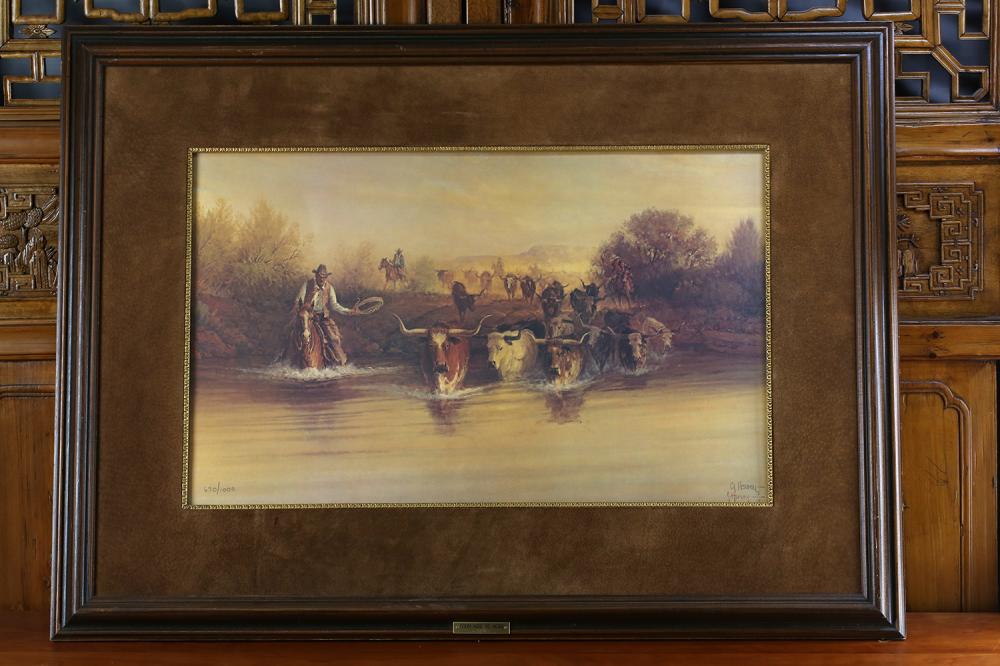
The fraction 670/1000 means that impression 670 belongs to a stated edition of 1,000. It does not mean impression 1 is automatically more valuable, and it does not prove that every impression was sold. Proofs marked AP, EA, PP, or HC may belong to separate allocations; their market effect depends on the artist and how buyers treat that edition.
Build an identity record before you search:
- artist name exactly as signed or printed;
- title, including punctuation and alternate title found on the reverse;
- medium and support, such as lithograph on paper or giclée on canvas;
- edition fraction, proof notation, publisher, and publication year;
- image and sheet dimensions, measured separately;
- labels, invoice, certificate, or prior ownership record.
A smaller edition can help only when demand is present. A 25-copy edition by an unknown maker may sell for less than a 1,000-copy edition by an artist with an active collector base. Scarcity and demand have to meet.
Compare the subject buyers are actually choosing
Artist comes first, but the image still matters. Within one artist’s print market, a well-known title or a scene closely associated with that artist can draw more competition than a less familiar image. Cowboy gatherings, ranch work, town scenes, cavalry subjects, and Western landscapes do not share one demand curve.
Ask three questions:
- Is this exact title represented in sold records? Exact-title evidence beats a broad “Western print” match.
- Does the format match? A small paper lithograph, large canvas transfer, and hand-pulled print may reach different buyers.
- Was it sold in a useful channel? A specialist Western sale, regional estate auction, and general online sale can expose the same image to different demand.
Subject demand is best measured within the artist’s own results. Do not use a multimillion-dollar original painting by a Western master to support the value of a later reproduction. The medium and edition market must match.
Grade the sheet, not just the frame
Condition changes the number faster than many owners expect. Look for fading, uneven color, foxing, water stains, rippling, tears, abrasions, trimming, tape, acidic mat burn, and contact with glazing. A handsome frame may improve presentation, but it does not cancel paper damage.
Photograph the artwork straight on in diffuse light, then capture the lower-left and lower-right margins, edition number, full reverse, publisher label, frame corners, and every defect. Add a ruler for scale. Glare can conceal fading and surface problems, so take one image from a slight angle as well.
Provenance is most useful when it identifies the same artwork: an original invoice, publisher paperwork, gallery label, prior auction record, or a documented chain of ownership. A generic certificate with no title, edition number, or traceable issuer adds little confidence.
Use sold results to set the range, not the story
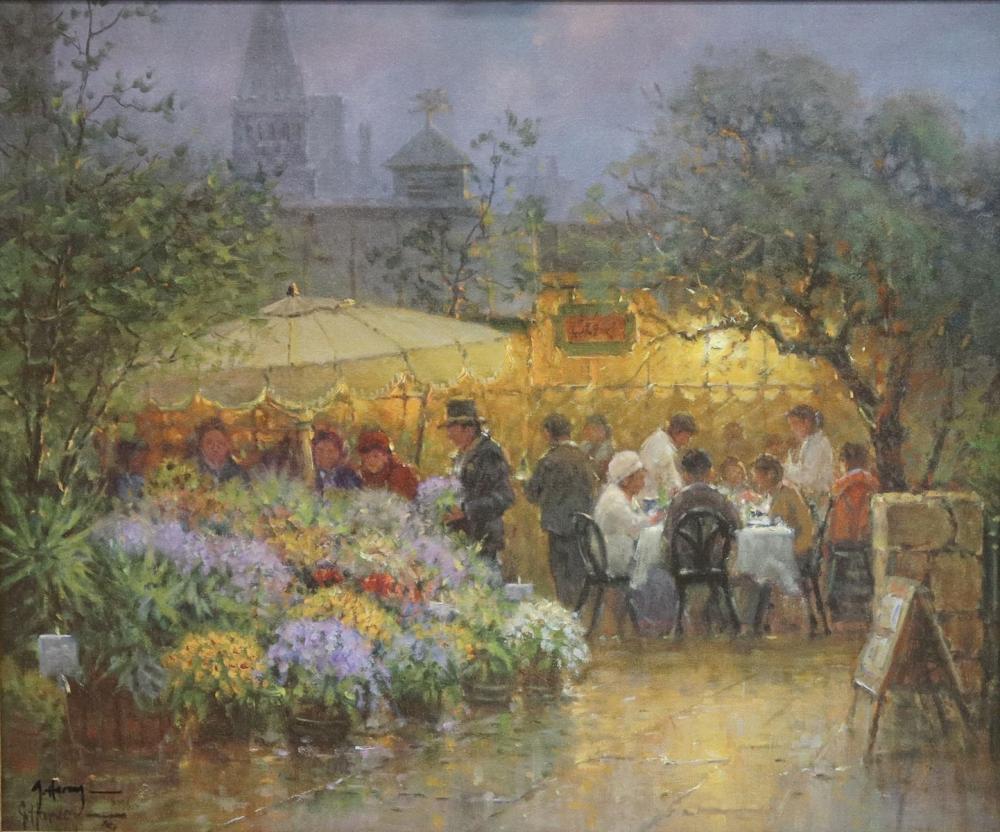
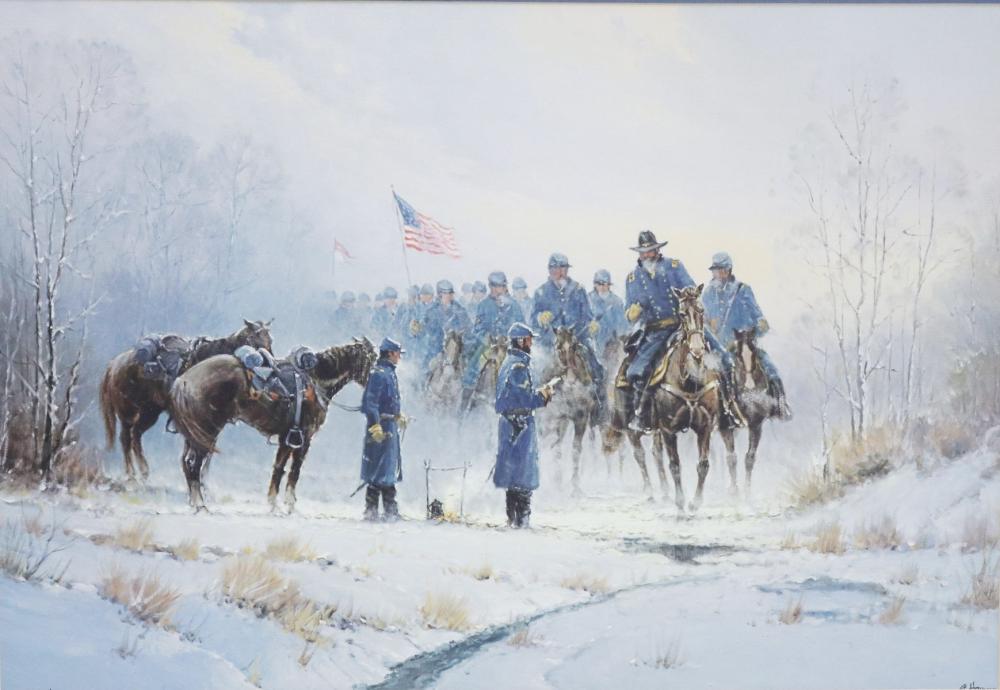
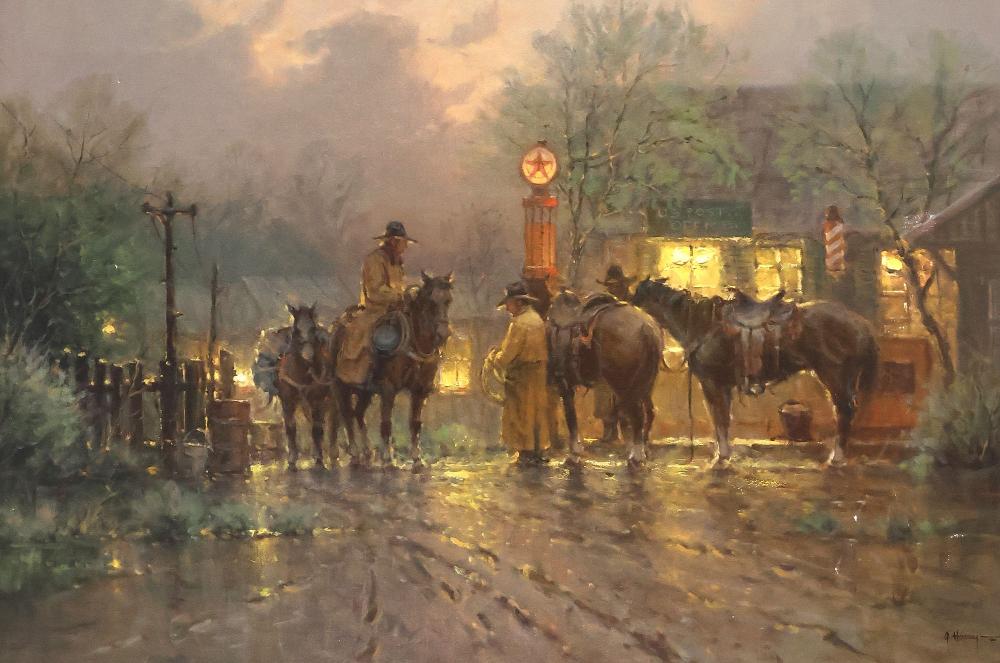
The four exact print results below are all tied to G. Harvey, which makes them useful for showing how one artist’s limited-edition market behaved. They are not a price guide for every Western artist.
One concrete result: Austin Auction Gallery reported G. Harvey’s limited-edition print Pickett’s Report, lot 537, sold for USD 350 on March 20, 2021. That sale should be compared with the same artist, title, format, edition details, condition, and channel—not applied to an unrelated cowboy print.
Across this compact set, the reported realized prices form a narrow band. That pattern is useful evidence for these particular lots, not a universal Western-print value range, and buyer’s premium treatment may differ by source.
Free instant estimate
Not sure what your artwork is worth? Let us take a look.
Upload the front, margins, and reverse for a free first read. If the evidence supports a full appraisal, we will say so.
Free. No card needed. Takes about two minutes.
Build a defensible value range in five moves
- Collect a pool: search the exact artist and title, then broaden to the same artist, print type, edition family, subject, and size only if necessary.
- Reject weak matches: remove asking prices, original paintings, different artists, unidentified reproductions, materially different sizes, and lots with no usable identity.
- Normalize the result: note currency, sale date, whether the result includes buyer’s premium, and whether the lot was framed or sold as part of a group.
- Bracket the artwork: use the lower and upper relevant sold results as evidence boundaries, then adjust for differences in condition, edition, title, size, and channel.
- State the date and purpose: fair market value for resale is not the same as retail replacement value for insurance. A range should identify both its effective date and intended use.
If you have only one weak match, say that the evidence is preliminary. If you have three to five close matches with consistent identity and condition detail, the range becomes easier to defend.
Apply the method to a typical estate-sale find
A common scenario is a framed cowboy print labeled “signed limited edition.” The lower margin shows a pencil signature and a fraction, but the reverse has no visible title. The useful next move is not to search “valuable Western print.” It is to photograph the signature and fraction, identify the publisher or title, measure the image, and then search that artist’s sold records.
If the exact title appears, compare the same print type and format. If it does not, use same-artist results as a wider band and label the uncertainty. That is how an owner avoids both the decorative-print assumption and the famous-artist overreach.
Common Western art print value questions
Does a low edition number add value?
Usually not by itself. Number 1/100 may feel special, but buyers first care about the artist, title, print type, edition size, condition, and demand. A low number can matter in a specific artist market, but it needs comparable evidence.
Does a pencil signature mean the artwork is an original print?
No. A pencil-signed work can be an original print or a signed reproduction. Identify the printing process, publisher, title, and edition history before deciding which market applies.
Does framing add to Western print value?
A good frame can help presentation and protect the sheet, but resale buyers do not always pay back its retail cost. Acidic mats, contact with glass, moisture, or trimming can reduce value even when the frame looks expensive.
Can one sold lot set the value?
No. One exact lot is evidence, not a guaranteed price. Use several results and account for condition, edition, dimensions, sale date, buyer’s premium, and auction audience.
When is a written appraisal useful?
Use one when the decision needs documentation—for example insurance, estate work, a donation, equitable distribution, or a supported sale strategy. If you are only deciding whether the artwork deserves more research, start with the free estimate.
Search variations readers often ask
- How much is a signed Western art print worth?
- Does a low edition number make a Western print valuable?
- Western cowboy print value before selling or consigning
- How do I identify a limited-edition Western print?
- G. Harvey limited-edition print auction prices
- Original Western lithograph versus reproduction value
- Does fading or foxing reduce Western print value?
- What sold comps should I use for a Western art print?