
Sterling silver commemorative tray: appraisal and value basics
Sterling silver commemorative tray research should start with hallmarks, maker, date letter, weight, engraving, condition, provenance, and item-specific market evidence. Use this guide to compare the signals that matter before paying for a formal appraisal or deciding whether to sell.
A sterling silver commemorative (or “presentation”) tray is a classic 20th-century gift: a civic organization, club, company, or family purchases a handsome tray, then engraves a dedication to mark a term of service, retirement, or milestone.
The good news is that British hallmarks can be extremely informative—often telling you the purity, the assay office, the year, and the maker. The key to valuation is combining those marks with practical factors like weight, condition, and the quality of the design.
What similar items actually sold for
To help ground this guide in real market activity, here are recent example auction comps from Appraisily’s internal database. These matched sales are market context only, not an object estimate or identification, and they do not guarantee a price for your specific sterling tray.
Shown USD range: USD 35-USD 1,400. Median of these 7 USD examples: USD 700.
| Comparable | What sold | Auction house | Date | Lot | Source-reported amount |
|---|---|---|---|---|---|
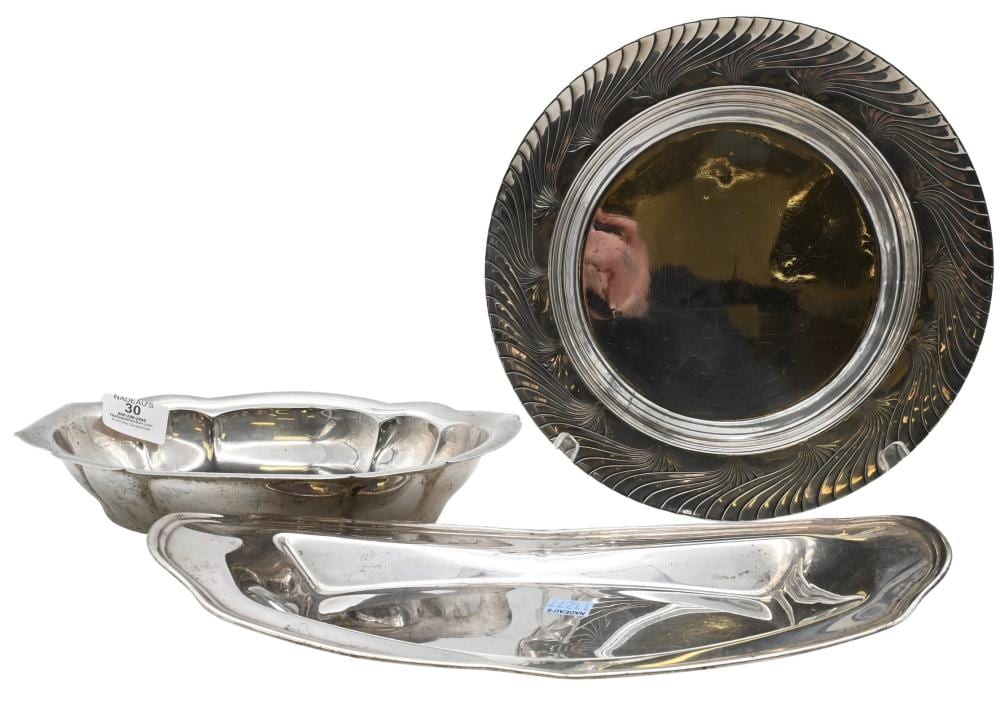 |
Three Piece Sterling Silver Tray Lot, to include one Rugers scalloped rectangular tray, one Wallace open vestille bowl, and one circular International tray, longest 13 inches, weight 32.6 troy ounces, Provenance: A co... | Nadeau's Auction Gallery | 2026-05-02 | 30 | USD 1,400 (buyer’s-premium treatment unknown) |
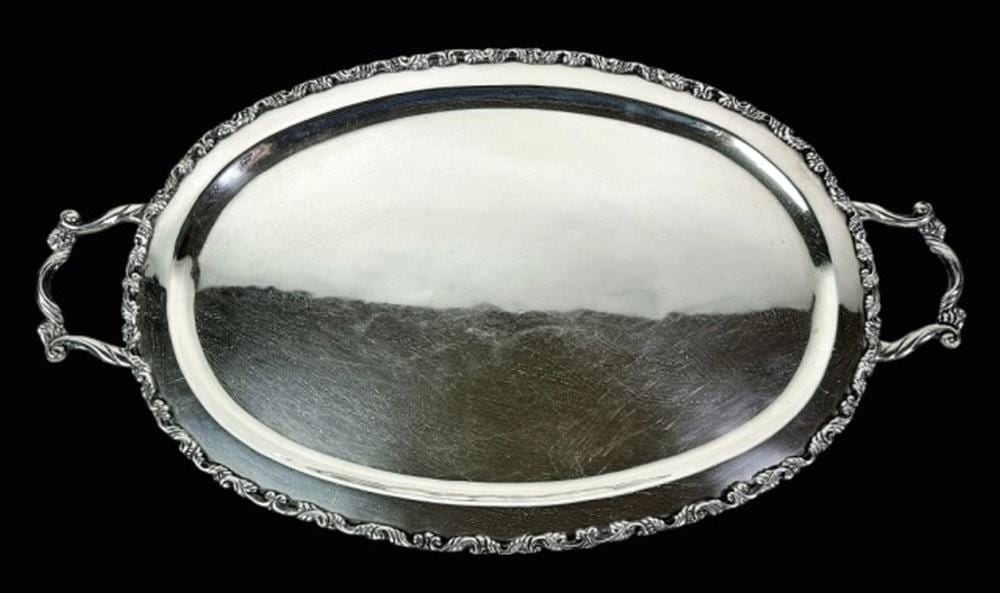 |
Large Sterling Silver Tray | J. James Auctioneers and Appraisers | 2024-11-23 | 2 | USD 800 (buyer’s-premium treatment unknown) |
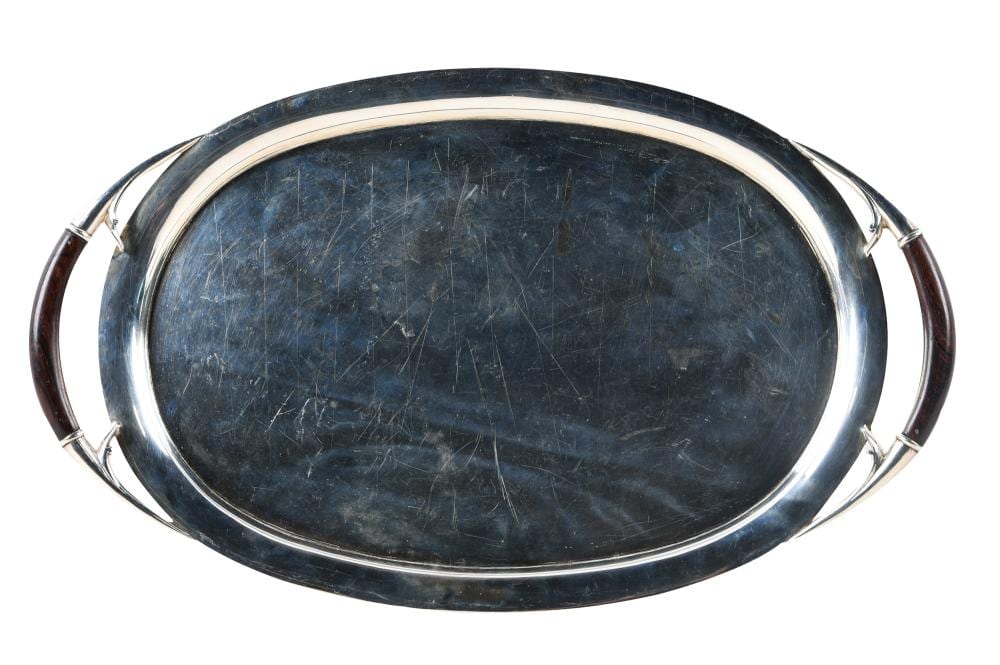 |
MEXICAN STERLING SILVER TRAY | Abell Auction | 2020-09-03 | 49 | USD 700 (buyer’s-premium treatment unknown) |
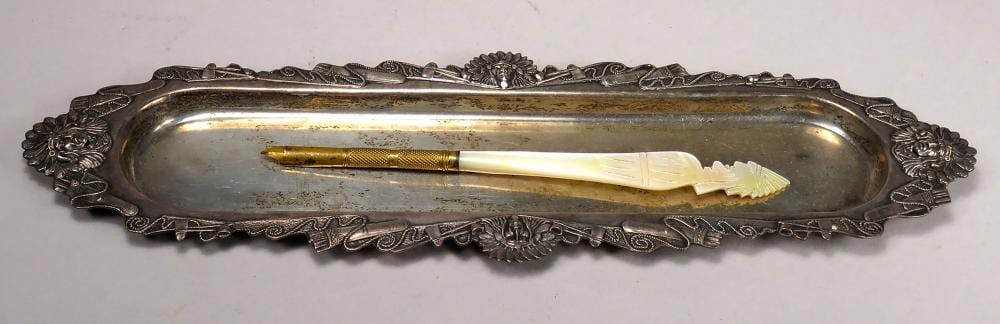 |
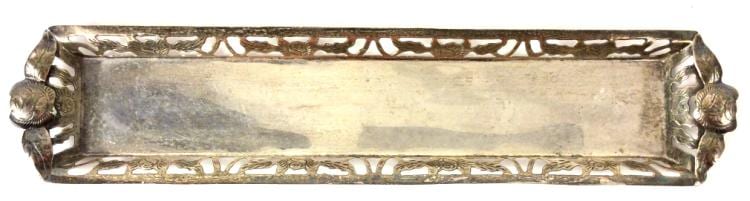
Antique Sterling Silver Pen Tray | Showtime Auction Services | 2020-09-18 | 591 | USD 125 (buyer’s-premium treatment unknown) |
 |
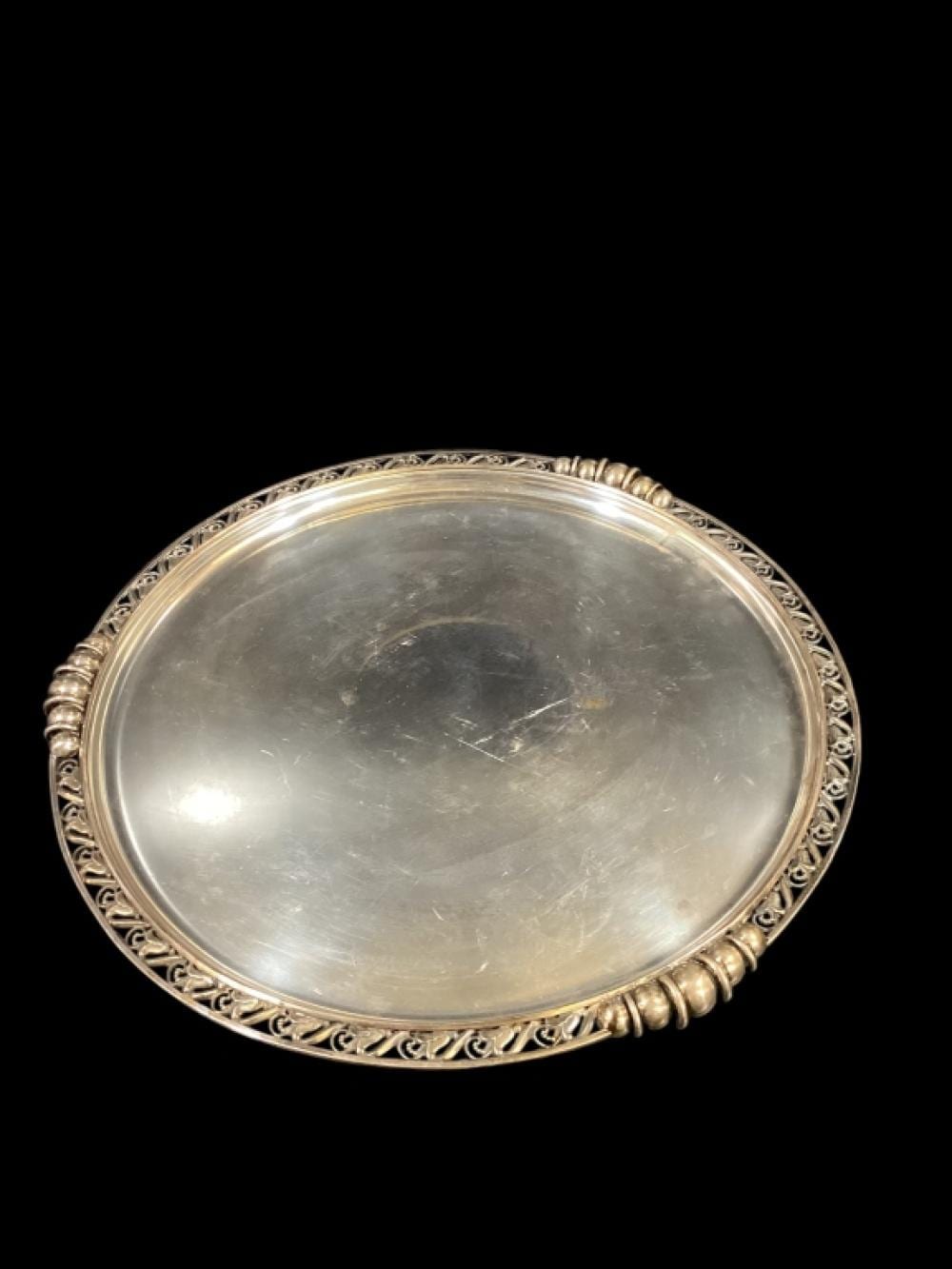
Mexican Sterling Silver Tray | EJ'S Auction & Appraisal | 2015-09-05 | 1197 | USD 35 (buyer’s-premium treatment unknown) |
 |
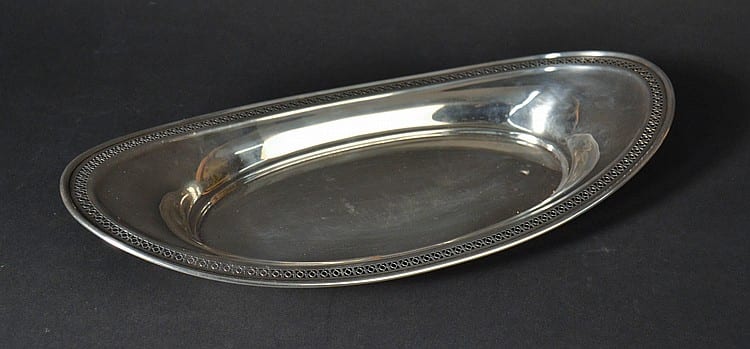
International Sterling Silver Tray | Broken Arch Auction Gallery | 2024-11-04 | 1344 | USD 1,350 (buyer’s-premium treatment unknown) |
 |
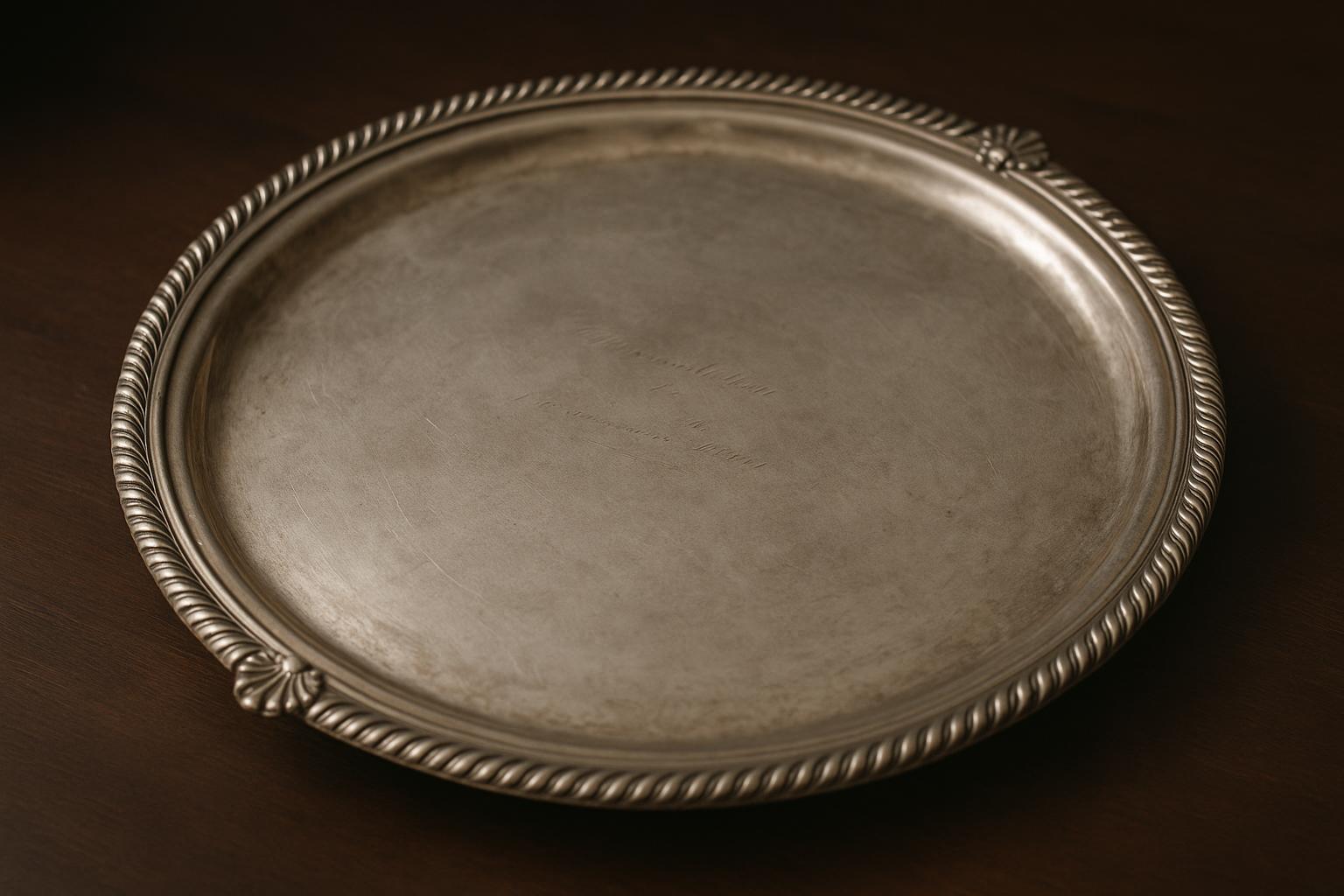
20TH CENT. INTERNATIONAL STERLING SILVER BREAD TRAY | Keene Auctions | 2015-05-02 | 72C | USD 60 (buyer’s-premium treatment unknown) |
How these auction records were verified
Each row retains its exact source URL, lot identity, retrieval time, access result, and immutable record hash. Inspect the public comparable provenance record.
Disclosure: prices are shown as reported by auction houses and are provided for appraisal context. Learn more in our editorial policy.
Free instant estimate
Not sure if your item is worth appraising? Let us take a look.
Upload a photo, tell us what you know, and get a free first read. If a full appraisal makes sense, we will say so.
Free. No card needed. Takes about two minutes.
How We Research Valuation Data
Our appraisal guides are based on auction results, dealer pricing data, and professional appraiser insights. We may earn a commission when you use our free professional appraisal service . Learn about our editorial standards .
Quick facts to document (what appraisers need)
Before you research prices, capture the basics. These details are what a buyer or appraiser will ask for and they also help you avoid underpricing a tray that deserves a premium.
- Diameter: measure across the widest point (rim to rim), in inches and centimeters.
- Weight: weigh in grams if possible. Silver is commonly discussed in troy ounces.
- Hallmarks: take a sharp, close photo of every stamp (maker, lion, town mark, date letter).
- Engraving: photograph the dedication and any crests/arms.
- Construction: check for a weighted base, wooden core, or applied rim (common on some forms).
In the original appraisal notes for this tray, the measurements were reported as approximately 11.81 inches and a weight of 34.56 oz. If you’re re-checking at home, confirm whether 11.81 inches refers to the diameter (most likely) and whether the ounces are avoirdupois (kitchen scale) or troy ounces.
Reading the hallmarks (London, sterling, and 1932)
British hallmarks are a system: each stamp answers one question. For many 20th-century London pieces you’ll typically see (1) a sterling standard mark, (2) an assay office mark, (3) a date letter, and (4) a maker’s mark.
The marks described for this tray are consistent with: Goldsmiths & Silversmiths Company (maker), London Assay Office (leopard’s head), sterling 0.925 (lion passant), and a date letter “R” used for 1932 in the relevant London cycle.
- Maker’s mark: identifies the registered silversmith or firm (often the biggest premium driver).
- Lion passant: sterling standard, generally 92.5% silver.
- Leopard’s head: London Assay Office.
- Date letter: a letter in a specific shield shape; the shape + font matters as much as the letter.
About Goldsmiths & Silversmiths Co. (G&S Co.)
Goldsmiths & Silversmiths Company was a major London retailer and manufacturer founded in the late 19th century. The firm is associated with well-made silver in popular Edwardian and interwar styles, and its hallmark is widely recognized.
The company’s name also appears in the history of other British luxury firms; however, for valuation purposes the key point is practical: recognized maker + London assay + substantial weight is usually more sellable than anonymous sterling.
Does the commemorative engraving add value?
Engraving can help or hurt value depending on the buyer. A dedication such as “Mayor of Wallasey, 1932–1933” makes the tray more specific, which can narrow the audience. Most buyers are paying for silver quality, design, and maker rather than a local officeholder.
That said, engraving isn’t automatically a negative. It can:
- Support originality (period-appropriate script, consistent wear).
- Add provenance when tied to a notable person, event, or institution.
- Reduce flexibility for gift buyers, which sometimes trims the top-end premium.
What is a sterling silver commemorative tray worth?
In many cases, a 20th-century British sterling tray falls into two value bands: bullion-driven pricing when design or maker interest is limited, and collector pricing when maker, form, engraving, and condition are strong. Recent auction comps for commemorative sterling trays range from about $300 to $450 for smaller 7.6-9.0 ozt examples, up to GBP 650 and EUR 1,200 for stronger presentation pieces.
A tray reported around 34.56 oz needs careful unit checking. If that is kitchen-scale avoirdupois weight, convert to grams and then troy ounces before estimating melt. If it is already troy ounces, the silver floor is materially higher. Either way, the formula is the same: pure silver content = sterling weight x 0.925, then multiply by the current silver spot price and apply a buyer/refiner discount.
- Near melt is likely when the tray is plain, dented, heavily engraved for an unknown recipient, or hard to sell locally.
- Above melt is realistic when the maker is recognizable, the tray sits flat, hallmarks are crisp, and the engraving has provenance interest.
- Specialist auction or dealer review is warranted when the weight is substantial, the maker is Goldsmiths & Silversmiths Co., and the condition is strong.
Baseline melt value (how to estimate)
Melt value is your floor. Use a current silver spot quote when you calculate it; do not rely on old appraisal notes because spot silver changes daily.
- If your scale reads avoirdupois ounces, convert to grams (1 oz = 28.3495 g) then to troy ounces (1 ozt = 31.1035 g).
- If your scale reads troy ounces, you can use the number directly.
- Expect a refiner payout discount below theoretical melt depending on buyer, lot size, and fees.
What creates a collector premium?
Buyers pay above melt when the tray is appealing as an object, not just as silver. Premium drivers include:
- Maker and period: recognized London makers and interwar dates can boost confidence.
- Form and decoration: ornate rims, shaped borders, shell work, or a strong coat of arms.
- Size and presence: larger diameters and heavier gauge often feel more important.
- Condition: no wobble, no splits, no crude repairs, and crisp hallmarks.
Upload the hallmark row, full tray, underside, weight reading, and engraving. The free screener can tell you whether the tray is likely bullion-led or worth a formal silver appraisal.
Upload photos for a free first lookCondition checklist (what to inspect)
- Warping: sight across the rim; a minor wave is common, but a rocking tray reduces value.
- Dents: especially on the rim and the center field; deep dents often require professional planishing.
- Cracks or splits: check near joins, edges, and any applied gallery.
- Monogram removal: look for “ghosting” or thin spots where engraving was removed.
- Hallmark sharpness: over-polishing can soften marks; crisp stamps are a selling point.
Cleaning and care (avoid expensive mistakes)
For collectible trays, avoid aggressive polishing. A soft patina is not “dirt”—it’s evidence of age. For routine care:
- Dust first: use a microfiber cloth to avoid dragging grit across the surface.
- Wash gently: warm water + mild dish soap, then dry immediately (especially around engraved areas).
- Polish sparingly: if needed, use a reputable silver polish and stop early; don’t chase a mirror finish.
- Avoid dips: chemical dips can strip patina unevenly and sometimes leave a flat, “too new” look.
How to sell a sterling silver tray safely
Because silver attracts both collectors and bullion buyers, you have multiple exit paths. The best choice depends on your timeline and how your tray presents.
- Best for top price: specialist auction house, reputable silver dealer, or curated marketplace listing.
- Fast and simple: a refiner or bullion buyer (but you give up the collector premium).
- Local sale: meet in a public place and use secure payment methods; avoid risky meetups.
For shipping, package silver carefully (bubble wrap + rigid box + double-boxing for larger trays), and always use insured shipping with a declared value.
How to photograph and describe your tray listing
A strong listing answers buyer questions in images first, text second. Include:
- Overhead shot in diffused light (shows shape and engraving)
- Underside shot (often where marks and construction clues live)
- Macro shots of hallmarks (in focus, fill the frame)
- Side angle (shows rim detail and whether it sits flat)
- Photo on a neutral surface with a ruler/tape for scale
In the description, lead with maker + assay + date letter, then give dimensions and weight, then mention engraving. Example: “London sterling tray by Goldsmiths & Silversmiths Co., date letter R (1932), approx. 12 in diameter, approx. 34.6 oz, presentation inscription to Mayor of Wallasey.”
Search variations collectors ask
Readers often Google these questions when researching sterling trays:
- what is a sterling silver presentation tray worth
- how to read London sterling silver hallmarks date letter R
- Goldsmiths and Silversmiths Co sterling tray value
- does engraving reduce the value of sterling silver trays
- how to calculate melt value of sterling silver by weight
- best place to sell sterling silver serving trays
- how to clean a vintage sterling silver tray without damage
- 1932 London hallmark on silver meaning
Each question is answered in the valuation, hallmark, and selling sections above.
References
- London Assay Office (hallmarking background)
- SilverCollection.it (British hallmarks reference)
- 925-1000.com (maker marks and hallmarking resources)
Wrap-up
A sterling commemorative tray is one of the easiest silver forms to document because the hallmarks do so much of the work. Confirm the maker, assay office, and date letter; document diameter and weight; then evaluate condition and presentation. With that checklist, you can decide quickly whether the best buyer is a collector market (often higher) or a refiner (often faster).