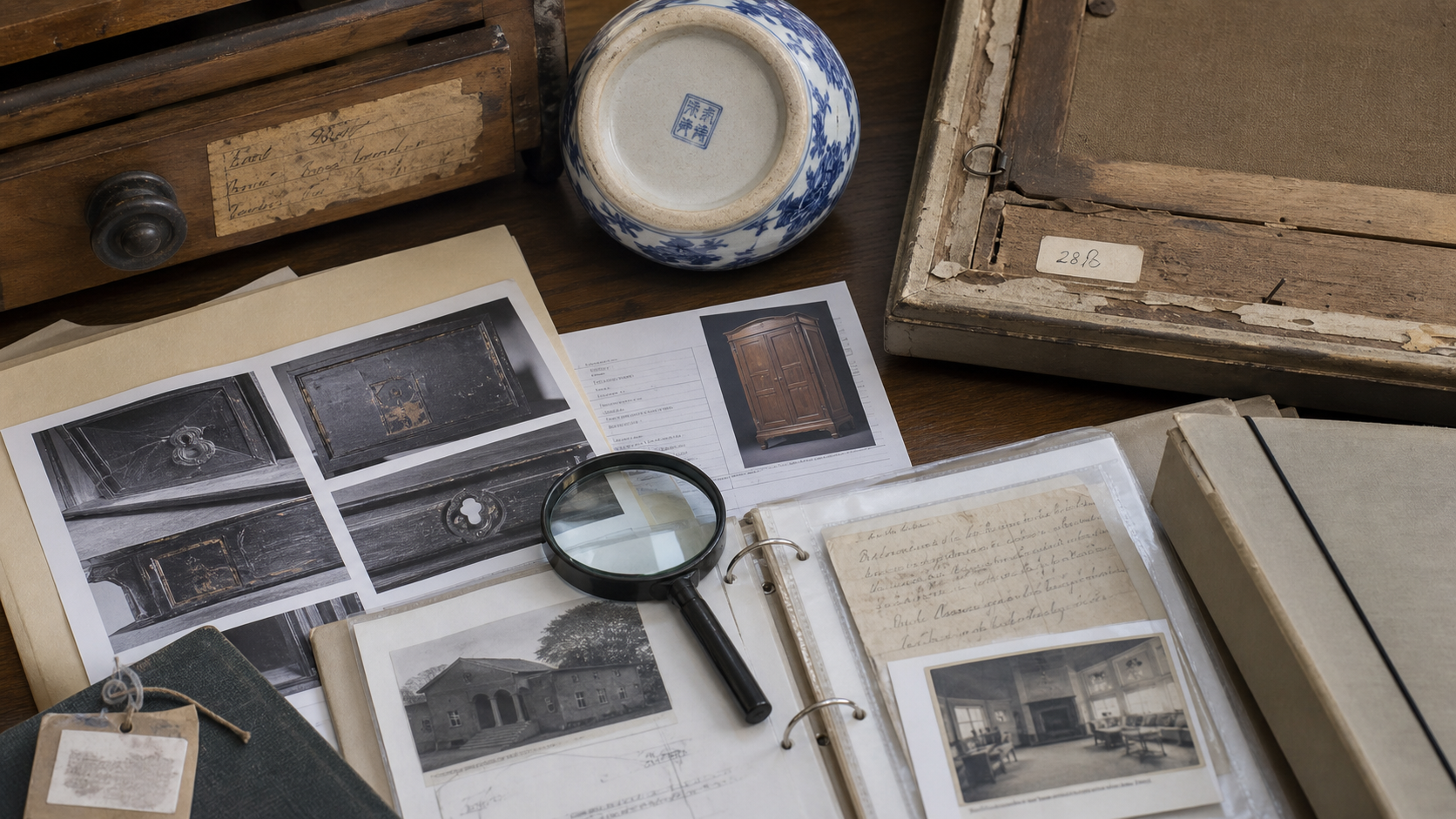
Marks, labels, and numbers: appraisal basics
Marks, labels, and numbers can identify a maker, retailer, exhibition, owner, framer, shipper, auction house, or collection. The appraisal task is to decide what kind of evidence each clue provides and whether it changes attribution, provenance, condition, comparable sales, or value.
Free first read
Check whether a mark or label matters
Upload close photos, full-object images, backs or bases, and documents. The free screener can flag whether a mark looks like maker evidence, provenance, inventory, or later handling.
Start with a free screener. Use a signed report when marks, provenance, or value need formal documentation.
1. Sort the clue into the right family
Maker marks, hallmarks, accession numbers, dealer stock numbers, auction labels, exhibition tags, shippers labels, framer labels, edition marks, and collection inventory numbers do different jobs. Start by recording where the mark sits, how it was applied, and whether it is part of manufacture or later handling.
2. Connect marks to provenance only when supported
A label or number becomes provenance evidence when it matches a document, known institutional format, dealer archive, exhibition record, catalogue entry, or prior sale record. Without that match, it remains a lead that should be preserved but not overvalued.
Note: We couldn’t find enough auction records that directly match Marks, Labels, and Numbers in Antique Appraisals to publish a defensible price table. If you are valuing a specific item, include its maker, model, material, photos, and condition so the search can be narrowed.
What similar items actually sold for
The current auction search does not contain at least three clean, directly matched sales for Marks, Labels, and Numbers in Antique Appraisals yet. If you’re valuing a specific item, use the free estimate flow so the search can be narrowed by maker, material, photos, and condition.
| Image | Description | Auction house | Date | Lot | Reported price realized |
|---|---|---|---|---|---|
| No relevant auction comps found for this topic right now. | |||||
Disclosure: prices are shown as reported by auction houses and are provided for appraisal context. Learn more in our editorial policy.
3. Let condition and authenticity qualify the mark
Look for overpaint, disturbed varnish, replaced backing boards, relabeled frames, fresh ink, inconsistent adhesive, or marks sitting on later repairs. A mark that is real but later may still be useful for provenance, but it should not be treated as maker evidence.
4. Translate evidence into value carefully
Marks can affect value by changing attribution, date, provenance confidence, edition status, or market category. They can also be neutral. Avoid applying a premium unless comparable sales show buyers reward that specific mark, label, or provenance tier.
5. Report confidence levels
Use clear wording: observed, consistent with, likely, unresolved, unsupported, or not consistent with. Keep photographs, transcriptions, source searches, and rejected interpretations in the workfile.
FAQ
Are labels and inventory numbers proof of authenticity?
No. They are research leads until they match documents, known collection systems, dealer records, or object-specific evidence. Treat isolated labels and numbers as clues, not proof.
Can provenance labels increase value?
Yes, when the label connects the object to a notable collection, exhibition, dealer, or prior sale and the object details match. Generic retail or shipping labels may have little direct value impact.
Should labels or pencil marks be removed before appraisal?
Usually no. Photograph and document them first. Removing labels or numbers can erase provenance evidence and make later research harder.
Search variations people ask
Collectors often search for antique labels appraisal, numbers on back of painting, antique inventory number, dealer label provenance, maker mark vs label, and do marks affect antique value.
References
Wrap-up
Marks, labels, and numbers are strongest when they are treated as evidence, not decoration. Record them exactly, protect them from removal, connect them to independent records, and explain how they do or do not affect value.