Read the instrument before you read the price
If you donate a centrifuge, spectrometer, or teaching microscope, the real valuation signal is rarely the label. It is how much practical utility still exists, how easily it can be redeployed, and whether risks are documented for a donor review.
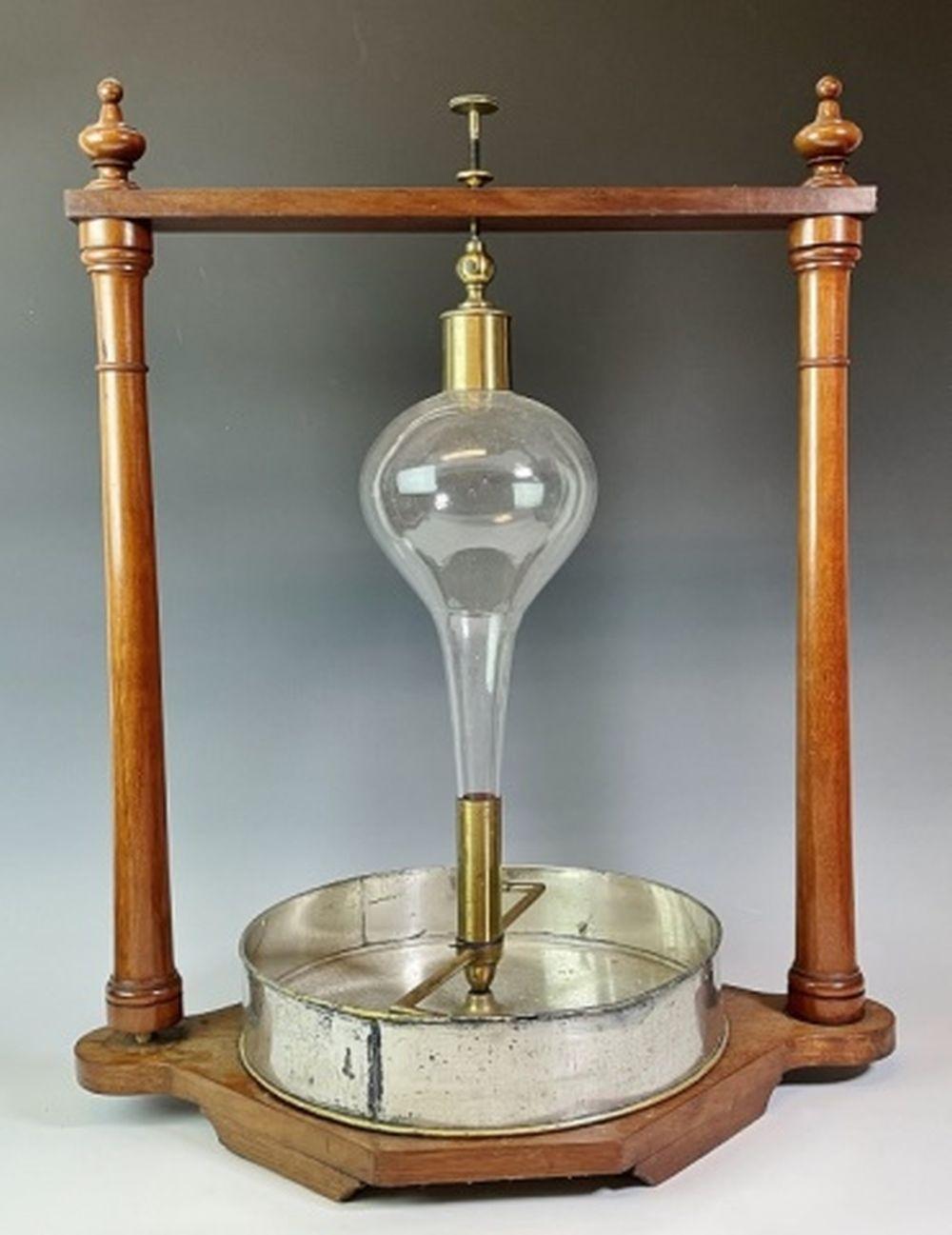
Specialized educational equipment is evaluated differently from household collectibles. Buyers and appraisal reviewers care about model identity, calibration status, and resale path, then they discount for parts, safety status, and legal constraints.
This guide keeps the process operational. You will decide value by reading the equipment itself, then checking market evidence against clear records.
Use this practical lane first
Your first move is to decide the valuation lane: are you trying to estimate quickly, or are you preparing a donation file for formal support?
For IRS-oriented donation work, your proof package still starts with three anchors:
- Can the item be identified as a distinct model with serial-level confidence?
- Can function, calibration history, and condition be demonstrated with records and photos?
- Does any restriction materially reduce who can buy or use the equipment?
If any item in this sequence is weak, narrow your estimate and say so clearly. Hidden assumptions are more dangerous than a lower number with the right notes.
Use the same logic specialists apply in qualified-donation cases:
- Model proof: exact make, model, year, and known revision family.
- Functional proof: calibration history, service state, and use-readiness.
- Condition proof: wear, corrosion, missing parts, and required consumables.
- Market proof: sold-lot outcomes with date context and category fit.
- Restriction proof: legal, transport, and resale limitations that reduce buyer access.
When these five are present, your note file becomes stronger than a simple “looks expensive” claim.
Use this scenario before you estimate
A private school is donating a set of optical lab pieces: a binocular microscope, one calibration rig, and assorted glassware holders. The unit can be identified and photos show serial plates, but no calibration sticker appears in the last two years. The coordinator has a donor letter and wants a fast value estimate.
In this case, the realistic FMV range is narrower when the calibration and parts story is missing. The team should decide in one pass: either gather a servicing log and photo updates, or proceed with a discounted estimate that explicitly states the evidence gap.
The right move is not to guess a premium number. It is to mark what changed, what is confirmed, and what is missing.
How model age and calibration status shift FMV
For scientific instruments, model age is a floor, not a ceiling. A 10-year-old piece can be valued higher than a 30-year-old one if it is still calibrated, supported, and usable for training or testing workflows.
A practical rule: calibration status changes value faster than most owners expect. Two units with similar condition can diverge because one can be safely used in training contexts and the other cannot.
School and lab equipment also carries resale restrictions that are often overlooked. The buyer universe is usually narrower than general collectibles, so your valuation should show whether the asset is directly deployable now or requires meaningful setup cost.
When drafting your file, avoid generic claims like “works fine.” Use concrete language: calibration date, missing consumables, safety notes, and replacement lead times.
Build the proof file your reviewer can verify
Donors and advisers do not need perfect evidence on day one. They need enough evidence to remove the biggest unknowns quickly.
- Inventory block: model, serial number, and visual model plate shots.
- Calibration block: last known verification, service dates, and what was tested.
- Condition block: missing parts, missing safety kits, wear on moving surfaces.
- Use block: last documented function, deployment scope, and limits.
- Market block: sold-lot links with date and channel context.
If you are missing one block, state that gap immediately and reduce asserted confidence. Precision in uncertainty is often better than false precision.
What buyers and appraisers inspect in practice
Buyers and reviewers inspect the same checklist, usually in this order:
- Maker markings and model plate legibility.
- Calibration sticker history and last service date.
- Operational wear on moving parts and critical moving tolerances.
- Accessory completeness: lenses, trays, software keys, manuals, stands.
- Transport, installation, and consumables needed for safe operation.
This is where donation claims often get overstated. A polished exterior does not prove readiness. The valuation should be tied to records that can be rechecked later.
A good value note says exactly what category the item serves, and what stops it from serving a broader market.
Comps as the proof checkpoint, not decoration
Comps are useful because they show how the market has treated similar inventory, not because they predict a single target number.
For this lane, internal comp data currently shows a broad spread: similar lab items have appeared near USD 350, USD 456, and EUR 300 in nearby comparable categories. That spread usually reflects missing context in condition and redeployability.
Use these examples only as anchor points:
- 19th C. Laboratory Scientific Equipment with outcome near USD 350.
- Collection of Measuring and Laboratory Equipment with similar benchmark context near EUR 300.
- Miscellaneous selection of laboratory equipment with outcomes near USD 456.
- Student microscope and slide bundle in related school-category context near GBP 380.
A wide range does not automatically mean uncertainty. It usually means condition and context are not directly comparable yet.
After reviewing the table, your next step should be documentation. That is where the deduction narrative becomes stable.
Free instant estimate
Not sure if your item is worth appraising? Let us take a look.
Upload a photo, tell us what you know, and get a free first read. If a full appraisal makes sense, we will say so.
Free. No card needed. Takes about two minutes.
How people usually check this topic
- How is fair market value set for old microscopes and lab glassware?
- Do outdated school lab instruments qualify for donation valuation support?
- Can I claim a deduction for equipment I cannot calibrate anymore?
- What records are required for a school donation appraisal request?
- How much does resale restriction matter for donated scientific gear?
- Which auction comparables help with lab equipment donation value?
- Is a free review enough before requesting a signed appraisal?
Prepare your documentation before you submit anything
Use this checklist to reduce back-and-forth with the appraisal and tax preparation team:
- Item inventory: model, serial, condition notes, and photo set with clear labels.
- Condition records: calibration log, service history, safety status.
- Use records: where used, last functional test date, current operational limits.
- Resale scope: what can and cannot be done with the unit.
- Comparable list: sold-lot links or screenshots showing final outcomes.
If records are weak, reduce your confidence wording and state what is missing. Honest gaps are easier to review than elegant guesses.
FAQ
When does school or lab donation usually move toward a written appraisal?
Higher-value, specialized, or uncertain equipment usually benefits from a written appraisal path early, especially when records are incomplete or the charity will need a defensible value rationale.
What changes valuation most in donation context?
Documented function does. Model verification, calibration records, and resale limits usually move value more than cosmetic condition alone.
Can I use only a screenshot of an auction lot?
No. Screenshots help as a directional input, but valuation should include records, inventory details, and condition evidence from your own files.
Is valuation different for school lab instruments than other used equipment?
Yes. School and lab assets are often valued more on deployment readiness and safety constraints than decorative appeal or style cues.
Can I publish donation value without a signed appraisal?
You can estimate internally, but don’t treat that as final filing support. Many donation pathways require stronger documentation and a qualified report when values are material.
Is this legal or tax advice?
No. Confirm filing requirements and thresholds with a tax professional. This guide is valuation strategy, not legal instruction.