
How to identify bronze sculpture marks
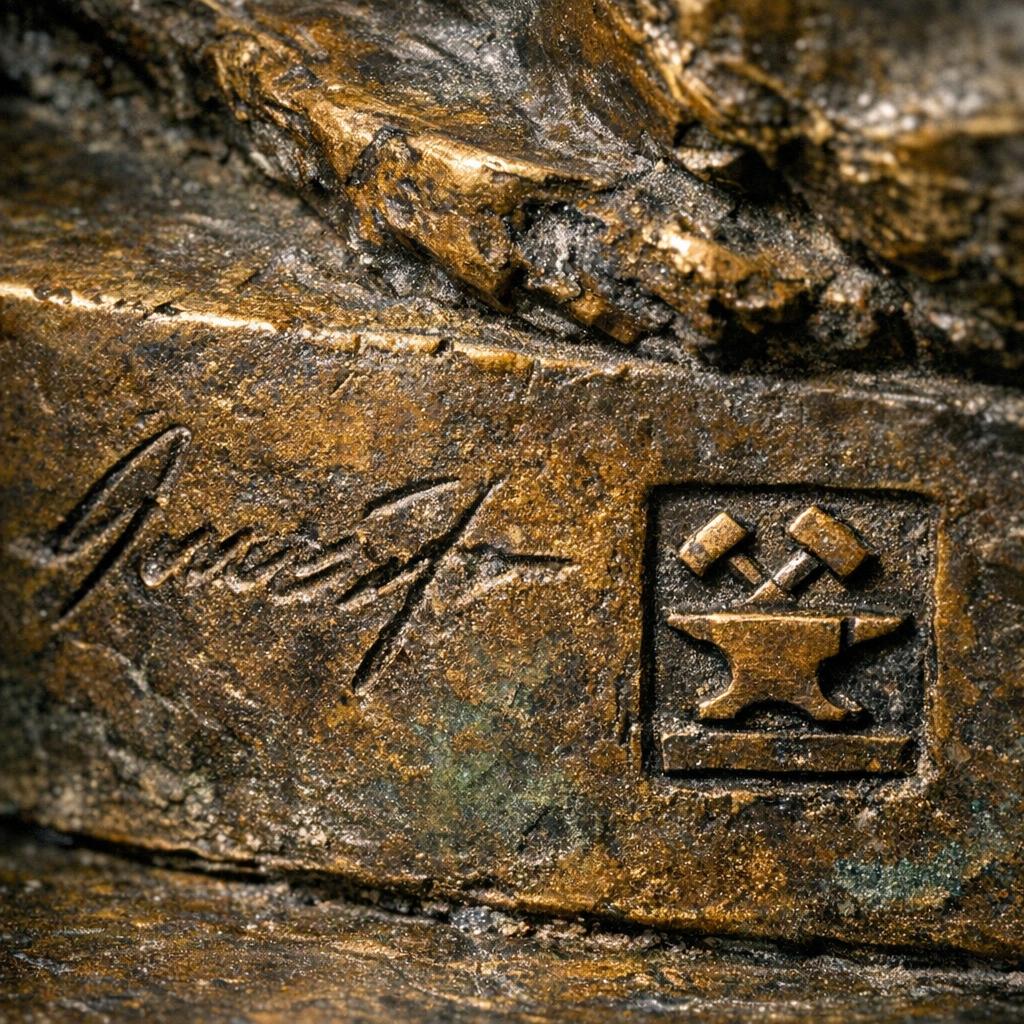
Bronze sculpture marks can include artist signatures, foundry stamps, edition numbers, inscriptions, plaques, copyright marks, and later labels. They need to be read with the sculpture itself.
Found artwork and want to know if it matters?
Upload photos. We identify the object, check real sales, and show the right appraisal path.
Upload photos for a free first lookArt appraisalsStart an appraisalOne clear answer
Start with the base, underside, back, side, plaque, edition number, foundry mark, patina, casting quality, and provenance. A mark is evidence, not proof by itself.
Auction records are market evidence, not a final appraisal. Condition, authenticity, provenance, size, medium, edition, subject, and demand can materially change value.
Evidence checklist
- Photograph the whole object, close details, back, frame or base, signatures, labels, condition issues, and scale.
- Include medium, dimensions, provenance, receipts, certificates, gallery labels, and prior appraisal records.
- Show the evidence that could prove or disprove the first assumption: texture, paper, canvas, plate mark, edition, foundry mark, surface, or damage.
What changes the answer
- Artist signature, foundry, edition, casting quality, patina, subject, and provenance affect value.
- After-casts and reproductions can carry marks that require close review.
- Polishing, repainting, repairs, and missing bases can affect both marks and value.
Note: We couldn’t find enough auction records that directly match How to identify bronze sculpture marks to publish a defensible price table. If you are valuing a specific item, include its maker, model, material, photos, and condition so the search can be narrowed.
What similar items actually sold for
To help ground this guide in real market activity, here are recent example auction comps from Appraisily’s internal database. These matched sales are market context only, not an object estimate or identification, and they do not guarantee a price for your specific bronze sculpture.
Shown USD range: USD 45-USD 7,500. Median of these 14 USD examples: USD 720.
| Comparable | What sold | Auction house | Date | Lot | Source-reported amount |
|---|---|---|---|---|---|
 |
MIA KRANTZ BRONZE SCULPTURE | Midnight Sun Antique Auction | 2015-01-17 | 206 | USD 45 (buyer’s-premium treatment unknown) |
 |
Morris Singer Foundry Toddler Bronze Sculpture | EJ'S Auction & Appraisal | 2020-08-15 | 1238 | USD 600 (buyer’s-premium treatment unknown) |
 |
Dumaige- Large Bronze Sculpture | Antique Reader | 2015-02-09 | 117 | USD 2,100 (buyer’s-premium treatment unknown) |
 |
DAVID MANUEL (OR, 1940 - ); "High and Mighty", cast bronze sculpture, signed on base, numbered 19/19, with copyright of 1981, having foundry seal from Maiden Bronze Foundry, Walla Walla, Wash | Thomaston Place Auction Galleries | 2015-02-08 | 1227 | USD 2,750 (buyer’s-premium treatment unknown) |
 |
Bruno Luna (b. 1963) Bronze Sculpture | Helmuth Stone | 2022-12-04 | 242 | USD 100 (buyer’s-premium treatment unknown) |
 |
Geo Verbanck: elegant bronze sculpture 'female nude', Vindevogel foundry | Veilinghuis Loeckx | 2025-11-21 | 259 | EUR 2,400 (buyer’s-premium treatment unknown) |
 |
SWEDISH BRONZE SCULPTURE LENA CRONQVIST | Palm Beach Auction Gallery | 2015-03-11 | 27A | USD 1,800 (buyer’s-premium treatment unknown) |
 |
Vassili Yacovlevitch Grachev, Russian (1831-1905) Bronze Sculpture "Troika" on Wood base. Signed and Woerffel Foundry mark. Minor Losses to Reins Otherwise Good Condition or Better. Measures 7-1/2 Inches Tall and 12 Inches Long. Shipping $145.00 | Kodner Galleries | 2015-03-25 | 56 | USD 7,500 (buyer’s-premium treatment unknown) |
 |
DAVID ADICKES COWBOY BRONZE SCULPTURE | Lewis & Maese Antiques & Auctions | 2024-09-08 | 179 | USD 4,500 (buyer’s-premium treatment unknown) |
 |
"Macho Indian" Bronze Sculpture by Barry Coffin | J Levine Auction & Appraisal LLC | 2015-01-22 | 4330A | USD 160 (buyer’s-premium treatment unknown) |
 |
JAPANESE MEIJI PERIOD BRONZE SCULPTURE | DuMouchelles | 2020-08-20 | 3300 | USD 150 (buyer’s-premium treatment unknown) |
 |
Nude Female Large Abstract Bronze Sculpture | The Benefit Shop Foundation Inc. | 2020-08-05 | 12 | USD 750 (buyer’s-premium treatment unknown) |
 |
Bronze Sculpture of an Indian on the Hunt | Fontaine's Auction Gallery | 2025-11-22 | 93 | USD 690 (buyer’s-premium treatment unknown) |
 |
Bust of Artemis Patinated Bronze Sculpture | Auctions at Showplace | 2025-04-10 | 66 | USD 275 (buyer’s-premium treatment unknown) |
 |
LOET VANDERVEEN "CHEETAHS" BRONZE SCULPTURE | Cordier Auctions & Appraisals | 2024-11-14 | 56 | USD 2,000 (buyer’s-premium treatment unknown) |
How these auction records were verified
Each row retains its exact source URL, lot identity, retrieval time, access result, and immutable record hash. Inspect the public comparable provenance record.
Disclosure: prices are shown as reported by auction houses and are provided for appraisal context. Learn more in our editorial policy.
Free instant estimate
Not sure if your bronze sculpture is worth appraising? Let us take a look.
Upload a photo, tell us what you know, and get a free first read. If a full appraisal makes sense, we will say so.
Free. No card needed. Takes about two minutes.
Choose your next step
Use the path that matches the decision you need to make about the item.
Not sure it is worth appraising?
Start with a lower-friction screen to understand the likely category, evidence, and next step.
Upload photos for a free first lookWant proof before paying?
See how a signed report documents photos, comparable evidence, condition notes, and value conclusions.
View signed report sampleNeed a signed report?
Use this for insurance, estate, donation, resale, or documented value decisions.
Need documentation now? Start signed appraisalNeed local or specialist help?
Compare directory options when the work needs in-person review or a specialist near you.
Find local art specialistsSee what the report looks like
Sample reports show how photos, comparable evidence, condition notes, and a value conclusion are documented.
Need a clearer art answer?
Upload photos. Appraisily identifies the artwork, checks real sales where available, and shows whether a free screen or professional report makes sense.
Upload photos for a free first lookStart a professional appraisalSee a sample report