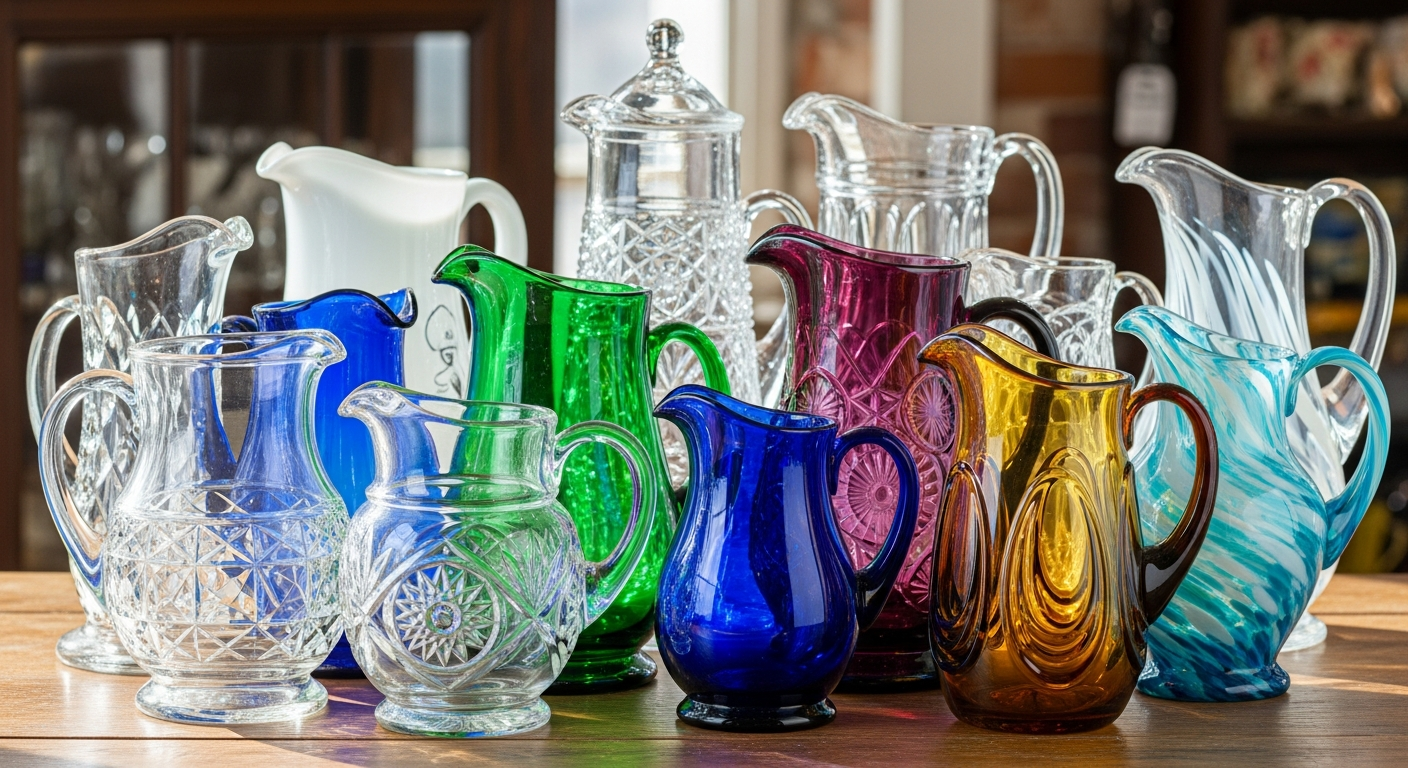
Value antique glass pitchers by documenting glass type, maker, pattern, color, mold marks, pontil, rim, handle, damage, rarity, and market demand.
Antique glass pitcher value reference with glass type, maker, pattern, color, mold marks, pontil, rim, handle, damage, and demand. Reference image; item-specific appraisal depends on submitted photos and documentation.Contextual appraisal image for documenting antique glass pitchers; not a representation of a specific comparable sale.
Antique glass pitcher value starts with identification. Record the glass type, maker or pattern, color, mold marks, pontil evidence, dimensions, handle form, decoration, and any matching set pieces.
Small condition differences can matter. Chips on the rim or spout, handle cracks, bruises, clouding, grinding, and repaired breaks should be photographed under strong light.
Identify the glass before pricing
Pressed glass, cut glass, milk glass, art glass, carnival glass, and pattern glass attract different buyers. Color and pattern scarcity should be tied to documented identification.
Use condition language buyers understand
Describe damage by location and severity. A tiny base nick and a spout chip are not equal because the most visible or functional areas usually affect demand more.
Consider how it will sell
Single pitchers, pitcher-and-tumbler sets, and decorative display pieces may perform differently depending on maker, pattern completeness, and current collector interest.
No public market evidence are asserted here. Treat any value conclusion for antique glass pitcher value as evidence-dependent until the object, condition, provenance, and market context are reviewed.
Get a documented appraisal path
Upload clear photos and background details so Appraisily can review condition, identity, and market context before you rely on a value.
To help ground this guide in real market activity, here are recent example auction comps from Appraisily’s internal database. These matched sales are market context only, not an object estimate or identification, and they do not guarantee a price for your specific glass pitchers.
Shown USD range: USD 6-USD 150. Median of these 11 USD examples: USD 40.
Source-reported amounts. Buyer’s-premium treatment is stated in each row when known; otherwise it is unknown. Native currencies are not normalized.
Each row retains its exact source URL, lot identity, retrieval time, access result, and immutable record hash. Inspect the public comparable provenance record.
Disclosure: prices are shown as reported by auction houses and are provided for appraisal context. Learn more in our editorial policy.
Free instant estimate
Not sure if your item is worth appraising? Let us take a look.
Upload a photo, tell us what you know, and get a free first read. If a full appraisal makes sense, we will say so.
Free. No card needed. Takes about two minutes.
Choose your next step
Use the path that matches the decision you need to make about the item.
Not sure it is worth appraising?
Start with a lower-friction screen to understand the likely category, evidence, and next step.