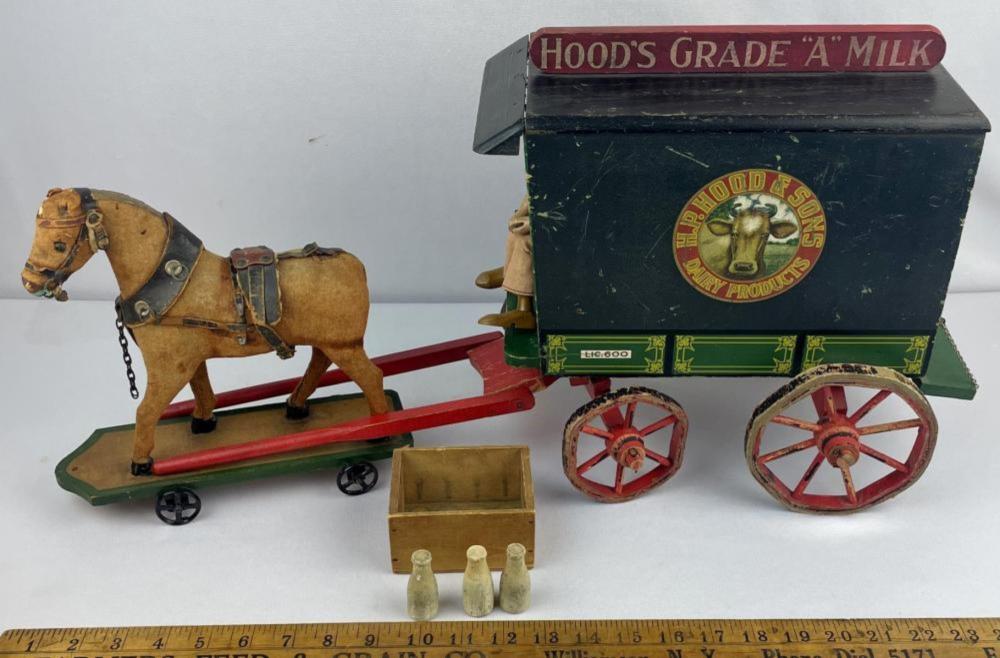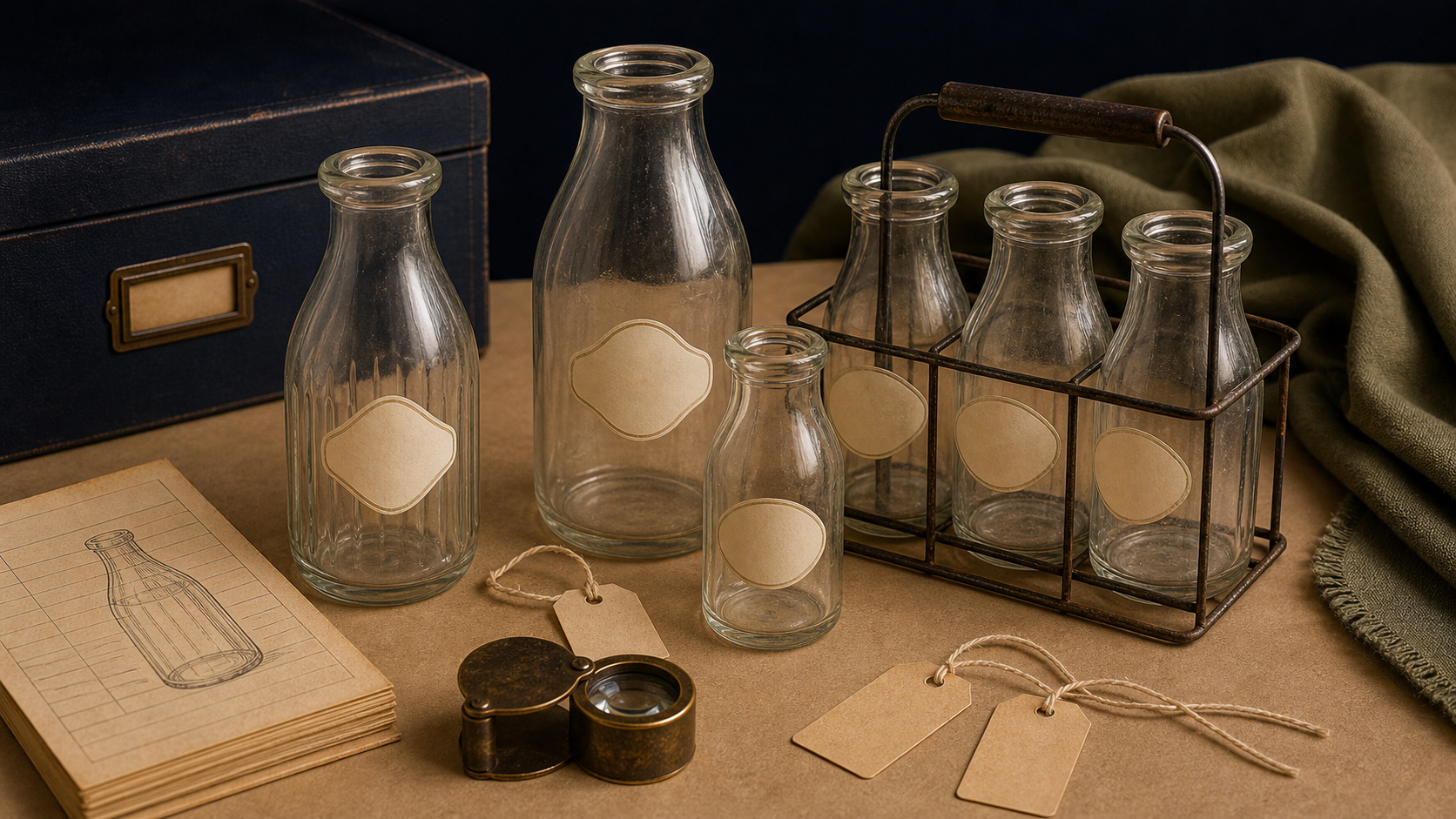
Old milk bottles are usually valued by the dairy, town or state, glass type, label or embossing, size, age, and condition. A bottle from a scarce local dairy can be more interesting than a cleaner but common generic example.
Read the dairy and location
Embossed names, pyroglaze labels, town names, and state marks help identify the issuing dairy. Local demand can matter, especially when collectors focus on a specific region or creamery.
Check form and condition
Size, closure style, glass color, base marks, and label quality should be recorded. Chips, cracks, staining, case wear, and faded pyroglaze can reduce value quickly.
Use local sold records
Compare bottles from the same dairy, city, size, and label type when possible. Broad milk-bottle prices are less useful than matched examples with similar condition.
What a defensible value needs
Photograph the front label or embossing, base, mouth, side profile, and any damage. Local names and condition details usually decide the range.
Need a documented value?
Upload photos and details. Appraisily checks identity, condition, and market evidence, then prepares a signed appraisal report you can share.