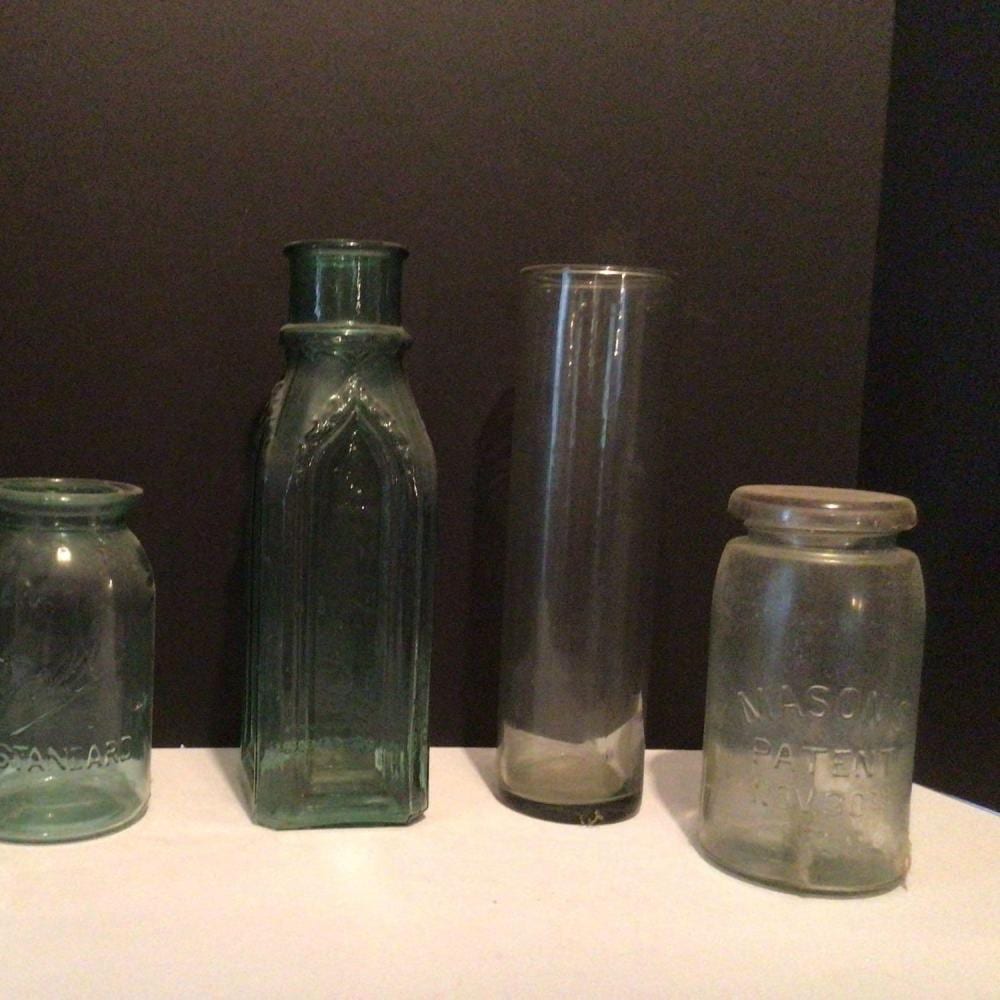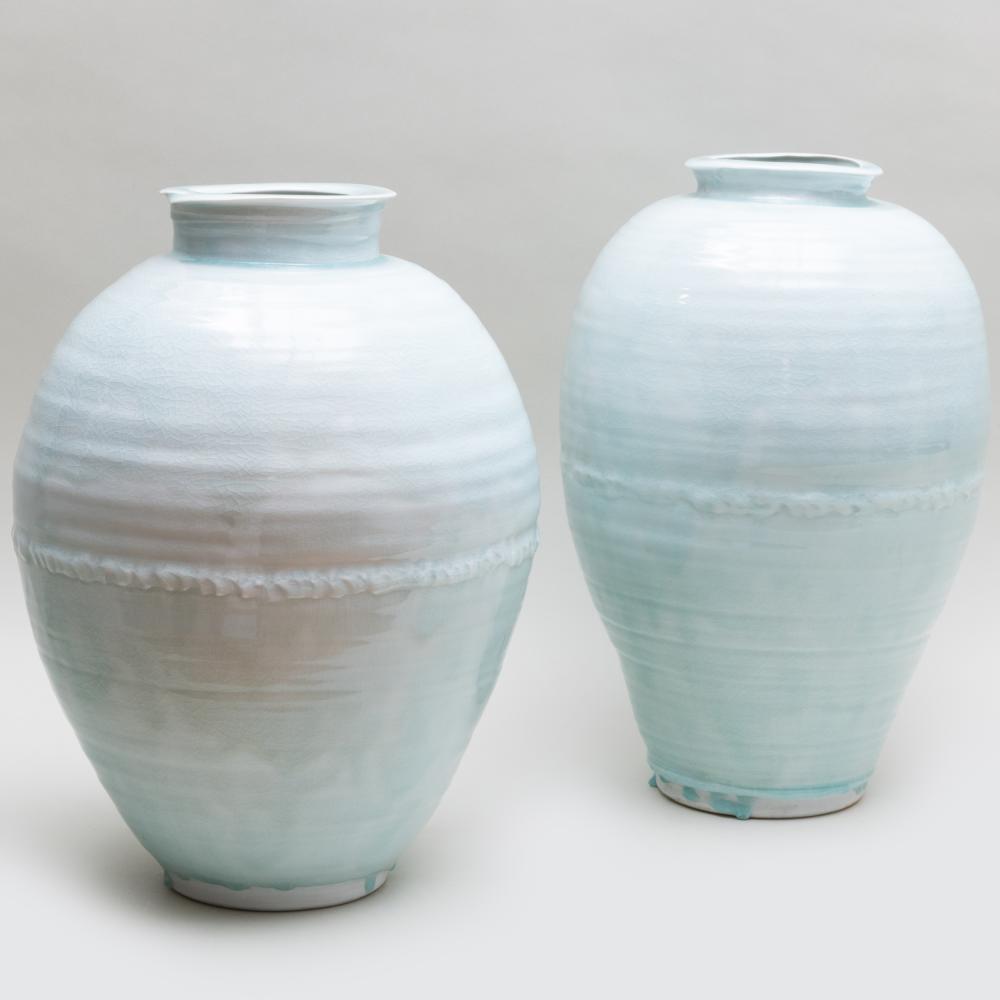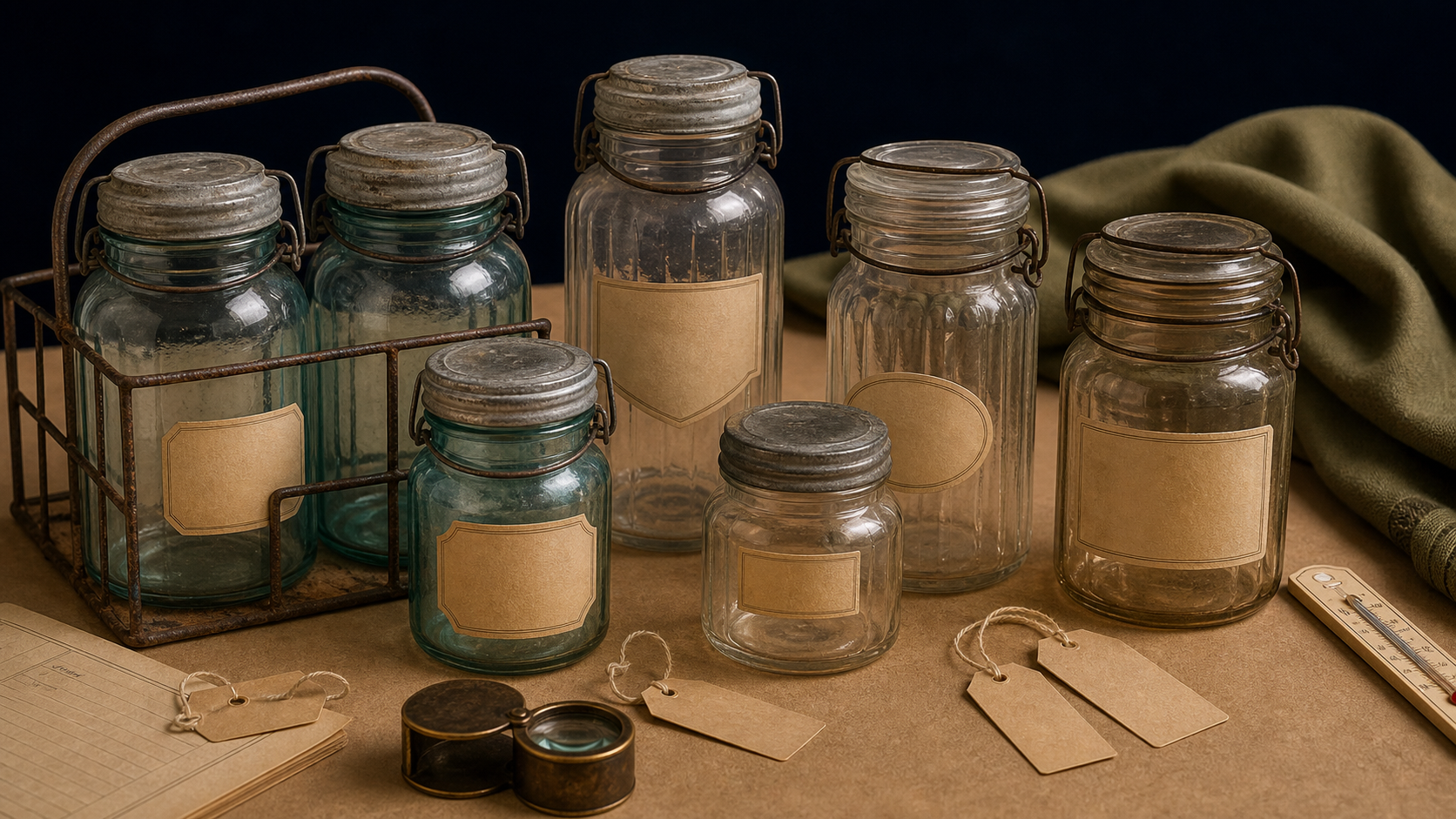
Old Mason jars are often saved in boxes, barns, and kitchens, but only some carry notable collector value. The strongest clues are brand embossing, color, closure type, mold details, age, condition, and rarity.
Read the embossing carefully
Ball, Mason, Atlas, Kerr, and other marks changed over time. Letter style, logo placement, mold seams, base numbers, and patent wording can help narrow a jar to a period.
Color and closure can matter
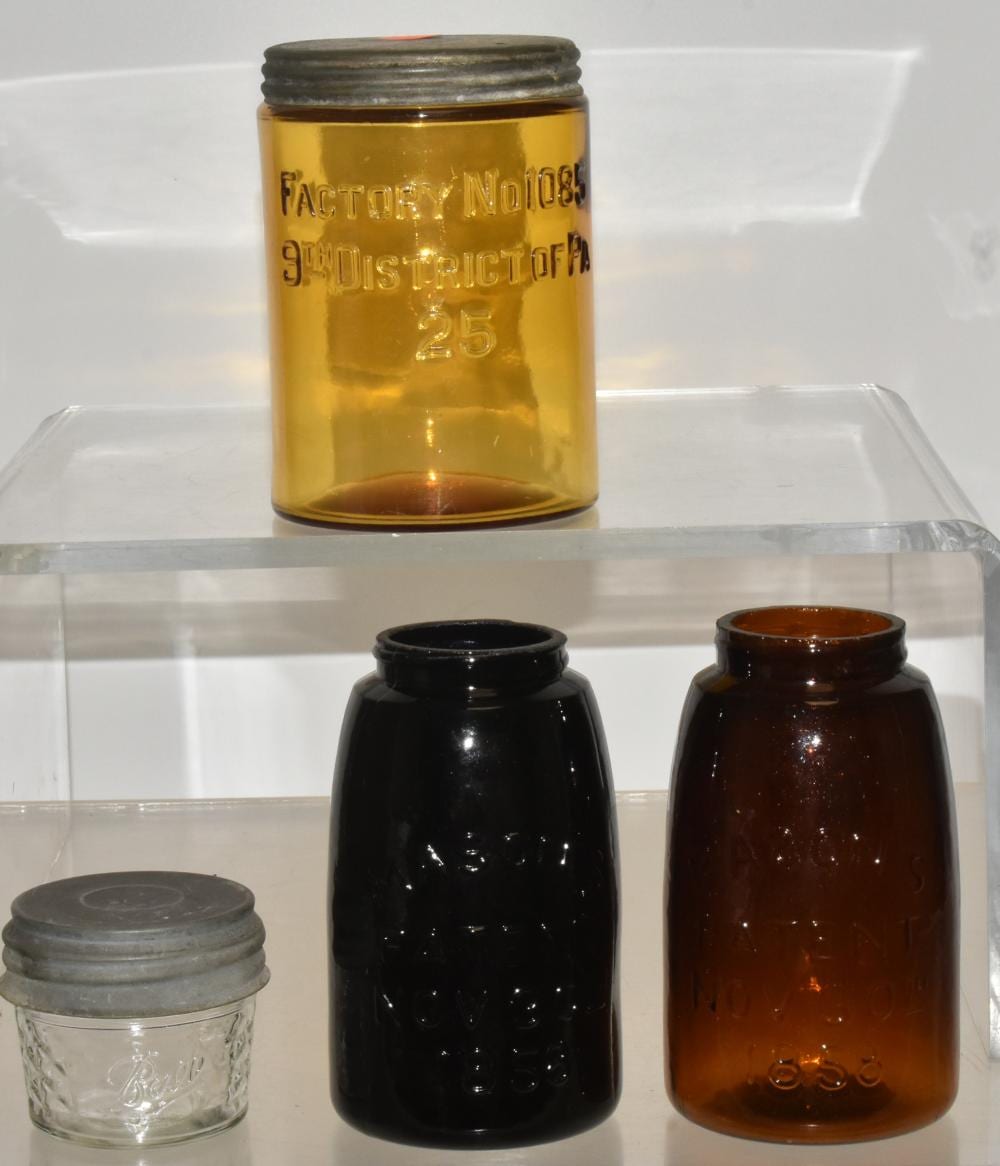
Aqua and clear jars are common in many forms, while certain amber, cobalt, olive, and unusual shades may attract more attention. Zinc lids, glass inserts, clamps, and closures should be matched to the jar when possible.
Condition sets the usable range
Cracks, rim chips, bruises, cloudy glass, ground lips, and mismatched lids reduce value. Clean glass, strong embossing, scarce color, and original closures improve the case.
What a defensible value needs
Photograph the front embossing, base, mouth, lid, side seam, and glass color in daylight. Small identification details can change the value range.
Need a documented value?
Upload photos and details. Appraisily checks identity, condition, and market evidence, then prepares a signed appraisal report you can share.
![RARE MASON FRUIT STONEWARE CANNING JARS, 3 [159898] sold by Holabird Western Americana, lot 2403 — auction record photograph](https://assets.appraisily.com/comps/auction-lots/176782280/thumb/h19286-l315105599.jpg)