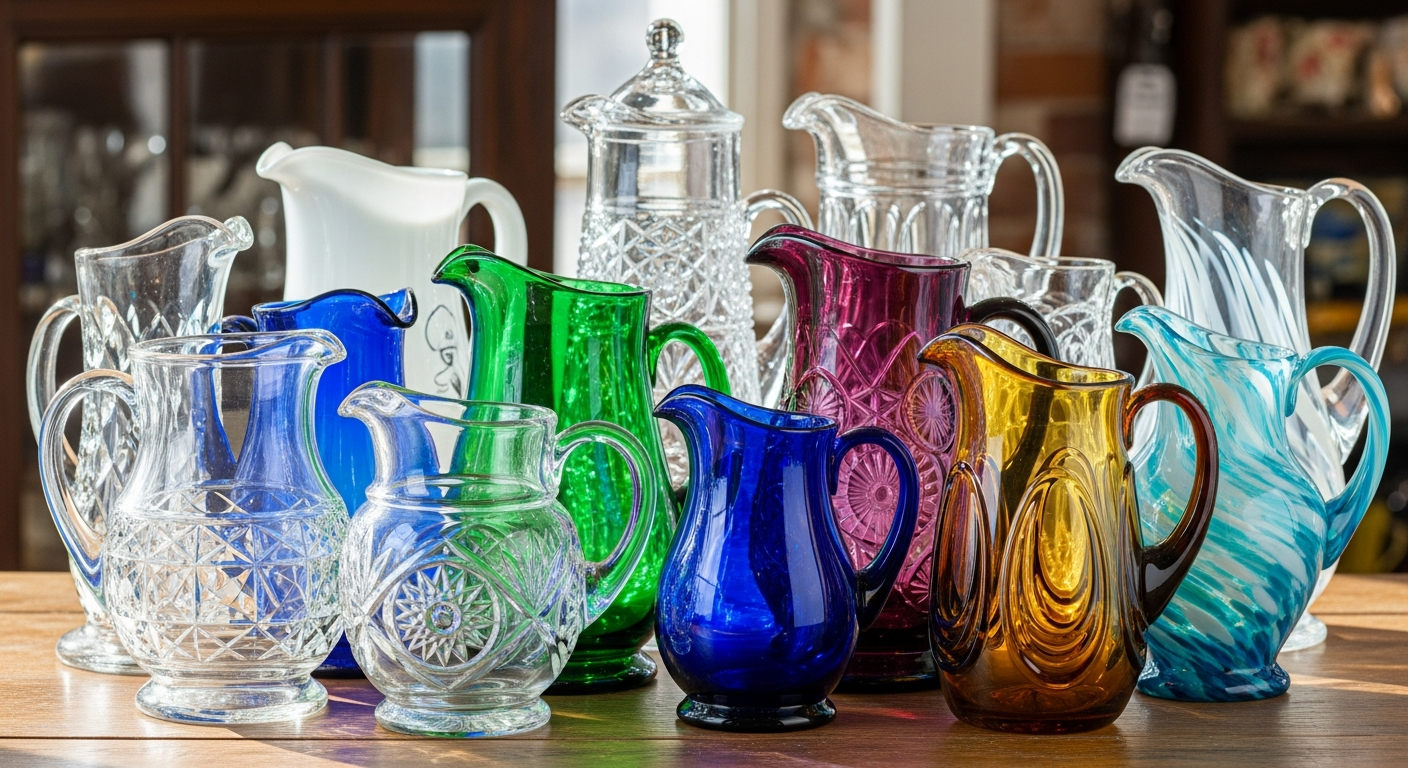
Antique glass pitcher identification starts with form and manufacture. Pattern, color, mold lines, pontil marks, rim finish, handle attachment, glass quality, and wear all help separate cut, pressed, blown, and later decorative pieces.
Check how it was made
Mold seams, polished pontils, applied handles, ground rims, wheel cutting, and pressed pattern details can narrow the process and period. Use several clues together.
Pattern and glass type matter
Cut glass, pressed glass, EAPG, milk glass, carnival glass, art glass, and utility pitchers have different buyer pools. A named pattern or maker mark can help only when verified.
Condition is easy to underestimate
Rim chips, handle cracks, base wear, cloudiness, scratches, staining, and polished repairs affect value. Photograph damage clearly before comparing prices.
Quick appraisal checklist
- Photograph side, base, rim, handle, spout, and pattern closeups
- Record height, color, weight, and glass type
- Check for mold seams, pontil marks, and maker marks
- Inspect rim, spout, handle, and base for chips or repairs
- Compare sold pitchers by pattern, maker, size, and condition
Get a free first read on your glass pitcher
Upload photos of the full pitcher, base, rim, handle, spout, mold seams, pontil mark, pattern, color, and damage. Start with a free screen before choosing a written appraisal.
Auction evidence from Appraisily's database
These records are market examples, not final appraisals. Form, color, maker attribution, pattern, size, handle condition, rim damage, and current demand can materially change value.
| Category | Sale | Date | Lot | Realized | What it shows |
|---|---|---|---|---|---|
| Attributed art glass pitcher | Winfield Auction Gallery | May 7, 2026 | Loetz attributed Creta Papillon green oil spot art glass and silver pitcher | USD 200 | Attribution, surface treatment, metal mounts, and period guide stronger comparisons. |
| Victorian opalescent pitcher | Winfield Auction Gallery | May 7, 2026 | Antique Victorian green and opalescent glass pitcher with ruffled rim | USD 75 | Color, ruffled rim, age, and condition shape the category baseline. |
| Pressed syrup pitcher | Winfield Auction Gallery | May 7, 2026 | Antique pressed glass syrup pitcher with Zipper pattern | USD 10 | Pressed utility forms usually need pattern rarity and condition to rise above modest values. |
Use these examples as a filter: cut glass, pressed glass, art glass, and utility pitchers should not be priced from one generic pitcher comparison.
Screen your pitcher before pricing it
A quick screen can separate form, pattern, mold seams, pontil marks, rim damage, handle repairs, color, and maker clues before you rely on a sale comparison.
Use the free screenerChoose your next step
Use the path that matches the decision you need to make about the item.
Need a signed report?
Use this for insurance, estate, donation, resale, or documented value decisions.
Start a signed reportNot sure it is worth appraising?
Start with a lower-friction screen to understand the likely category, evidence, and next step.
Use the free screenerNeed local or specialist help?
Compare directory options when the work needs in-person review or a specialist near you.
Find local specialistsSee what the report looks like
Sample reports show how photos, comparable evidence, condition notes, and a value conclusion are documented.
Need a documented value?
Upload clear photos, marks, measurements, condition notes, and any provenance so Appraisily can review the item against relevant market evidence.
Start glass appraisal