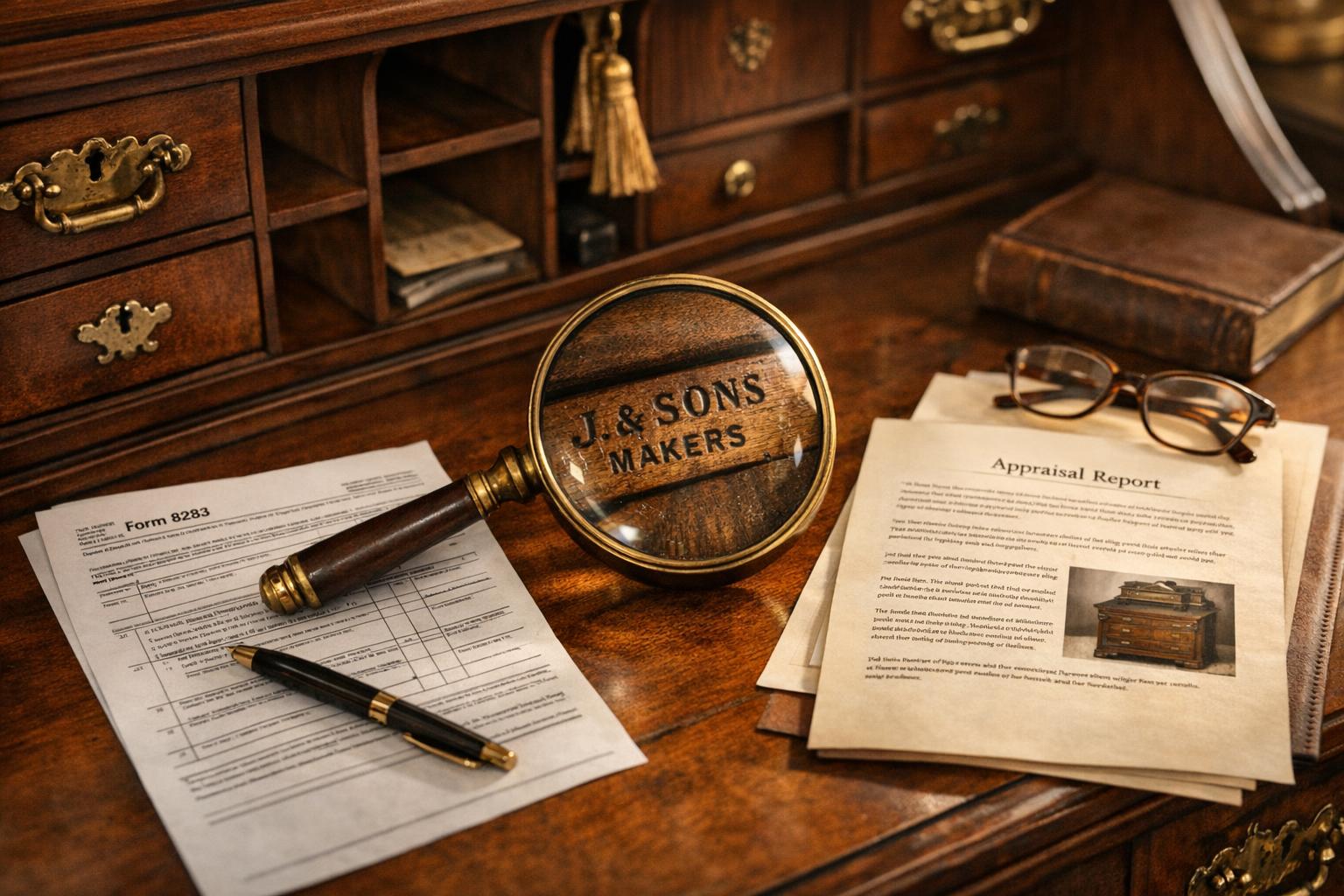
Antiques Donation Appraisal Guide What the Irs Expects: appraisal and value basics
Antiques Donation Appraisal Guide What the Irs Expects research should start with identification, condition, provenance, and recent comparable sales. Use this guide to compare the signals that matter before paying for a formal appraisal or deciding whether to sell.
Why the IRS Cares About Your Antique Donation
When you donate antiques to a qualified charitable organization, the IRS allows you to deduct the fair market value of those items from your taxable income. But this benefit comes with strict substantiation rules — and the agency has been increasing scrutiny of non-cash charitable deductions since the 2024 tax season.
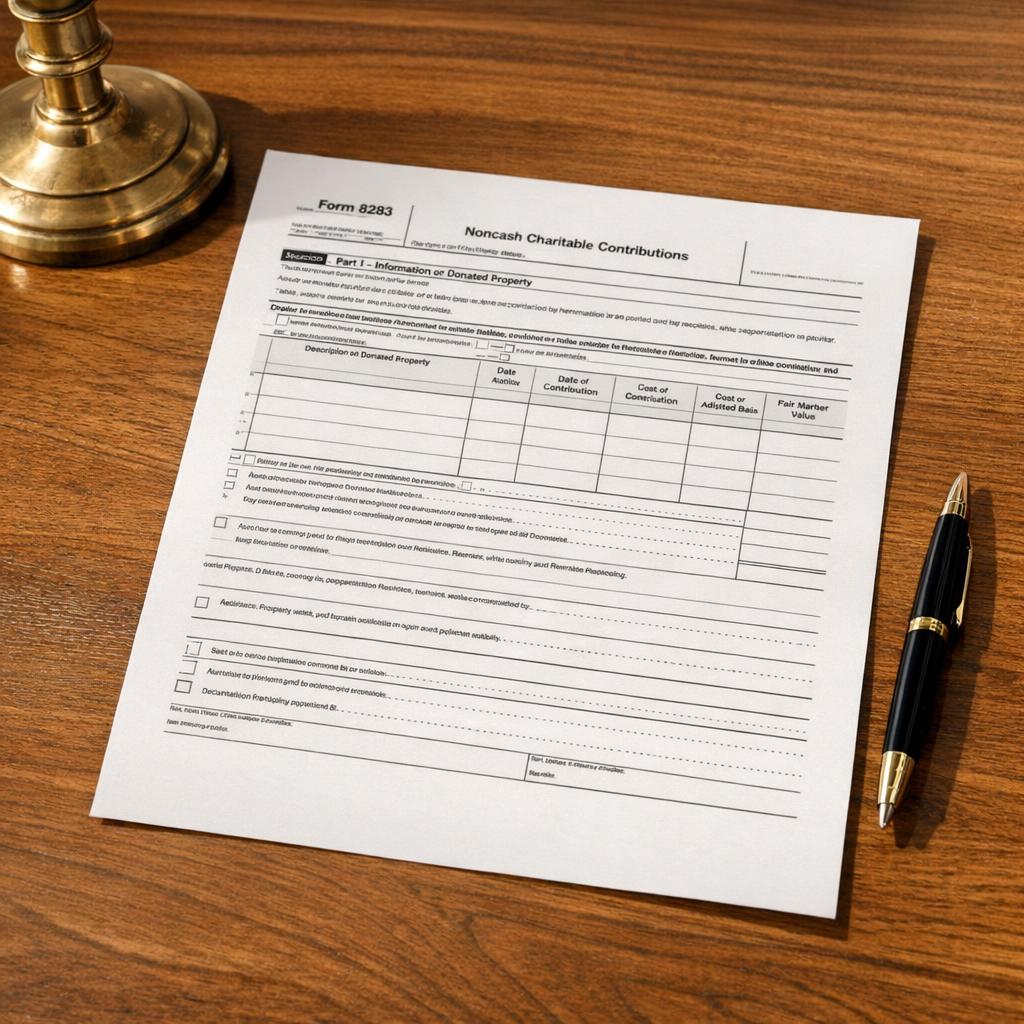
The December 2025 revision of Form 8283 (Noncash Charitable Contributions) updated reporting requirements that affect every donor of collectibles, art, and antiques. If you are planning a donation of vintage furniture, decorative arts, ceramics, silver, or any antique valued above the thresholds described below, understanding what the IRS expects from your appraisal is not optional — it is essential to protecting your deduction.
This guide walks you through every requirement: when an appraisal is mandatory, what makes an appraiser "qualified" in the eyes of the IRS, how fair market value is calculated for antiques, and the common mistakes that trigger audits and penalties.
Donation Appraisal Thresholds: When Do You Need One?
The IRS uses two key dollar thresholds to determine what documentation you must provide with your tax return. Understanding the difference between them prevents both under-documenting and over-engineering your filing.
Non-cash donations over $500 — Section A of Form 8283
If your total non-cash charitable contributions for the year exceed $500, you must file Form 8283 with your return. Section A covers individual items or groups of similar items valued at $5,000 or less. You report a brief description, the date of the contribution, and the fair market value.
Important nuance: if a single antique item is valued between $500 and $5,000 and is in less than "good" condition, the IRS requires a qualified appraisal even though the value falls below the $5,000 threshold. This catches many donors off guard.
Non-cash donations over $5,000 — Section B and qualified appraisal
Once a single antique item or a group of similar items exceeds $5,000 in claimed value, you must complete Section B of Form 8283 and attach a qualified appraisal. This is the threshold where the IRS expects a full, professional valuation — not a receipt, a dealer's verbal estimate, or a self-assessed value.
For donations exceeding $20,000, the IRS requires you to attach a copy of the signed appraisal to your return. And if any single item or group exceeds $500,000, the qualified appraisal must be attached as well — no exceptions.
What Makes an Appraiser "Qualified" for Antiques
The IRS definition of a "qualified appraiser" is specific and non-negotiable. Not every person who appraises antiques meets the standard. For your donation appraisal to withstand IRS scrutiny, the appraiser must satisfy all of the following criteria:
- Professional designation: The appraiser must hold a recognized appraisal designation from an accredited professional organization such as the American Society of Appraisers (ASA), International Society of Appraisers (ISA), or Appraisers Association of America (AAA). These designations require demonstrated competency through testing and peer review.
- USPAP compliance: The appraiser must be compliant with the Uniform Standards of Professional Appraisal Practice, the ethical and performance framework adopted by major appraisal organizations and federal regulators.
- Specialty experience: The appraiser must have verifiable education and experience in valuing the specific type of property being appraised. An appraiser who specializes in jewelry is not qualified to appraise Victorian furniture. The IRS expects relevant expertise.
- Not excluded from IRS practice: The appraiser must not be barred from practicing before the IRS under Circular 230 or other disciplinary proceedings.
- Independence: The appraiser cannot be the donor, the donee organization, or a party to the transaction. They must be an independent third party compensated for the appraisal service — not paid a percentage of the appraised value.
When in doubt, ask the appraiser directly: "Are you a qualified appraiser under IRS regulations for this type of property?" A legitimate professional will answer confidently and provide credentials on request.

How Fair Market Value Works for Antiques
Fair market value (FMV) is defined by the IRS as the price at which property would change hands between a willing buyer and a willing seller, neither being under any compulsion to buy or sell and both having reasonable knowledge of relevant facts. For antiques, this is more nuanced than pulling a number from a price guide.
What drives FMV for antiques
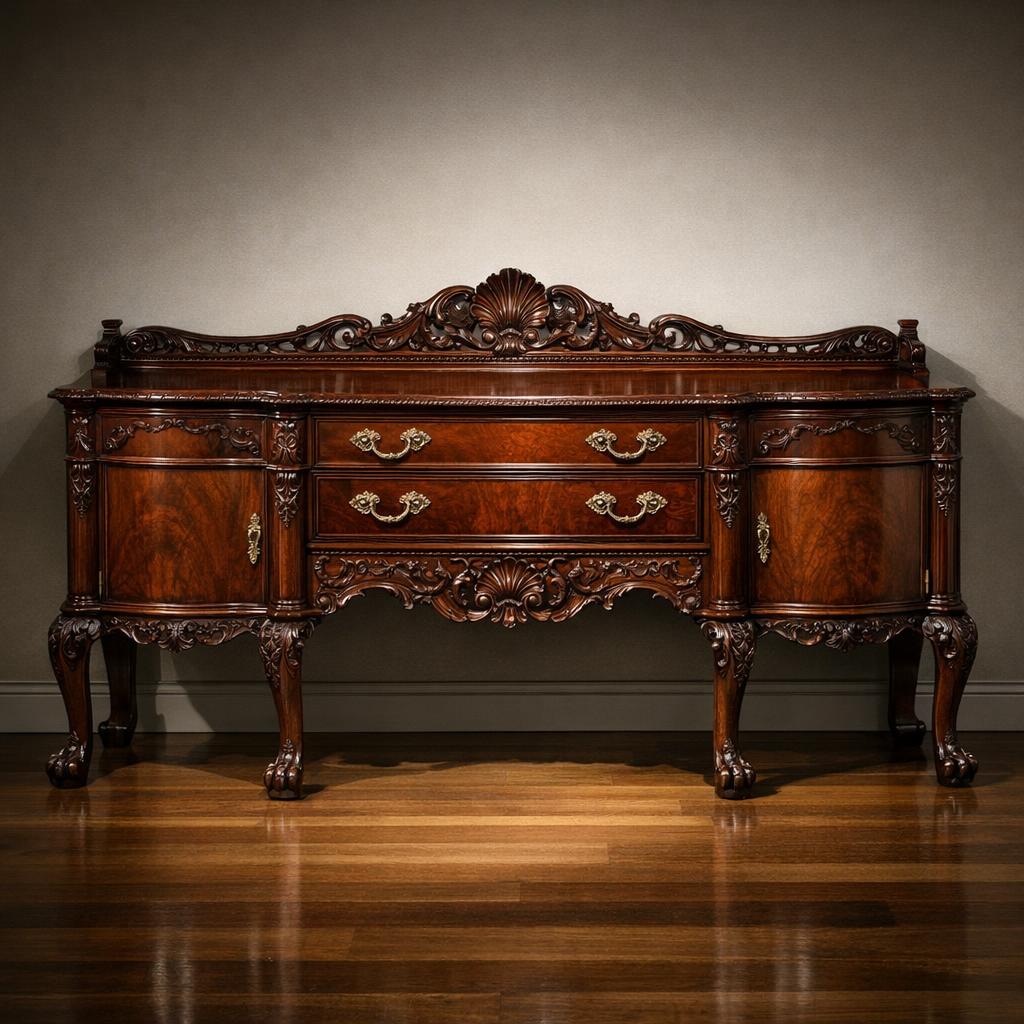
- Auction comparables: Recent sales of similar items at established auction houses provide the strongest evidence of FMV. A Chippendale mahogany sideboard with documented provenance and maker attribution commands a different price than an unattributed example in fair condition.
- Condition and restoration: IRS Publication 561 specifically notes that "the physical condition and extent of restoration are both relevant in determining the valuation of art and antiques." Heavy restoration, replaced parts, or damage reduces FMV significantly.
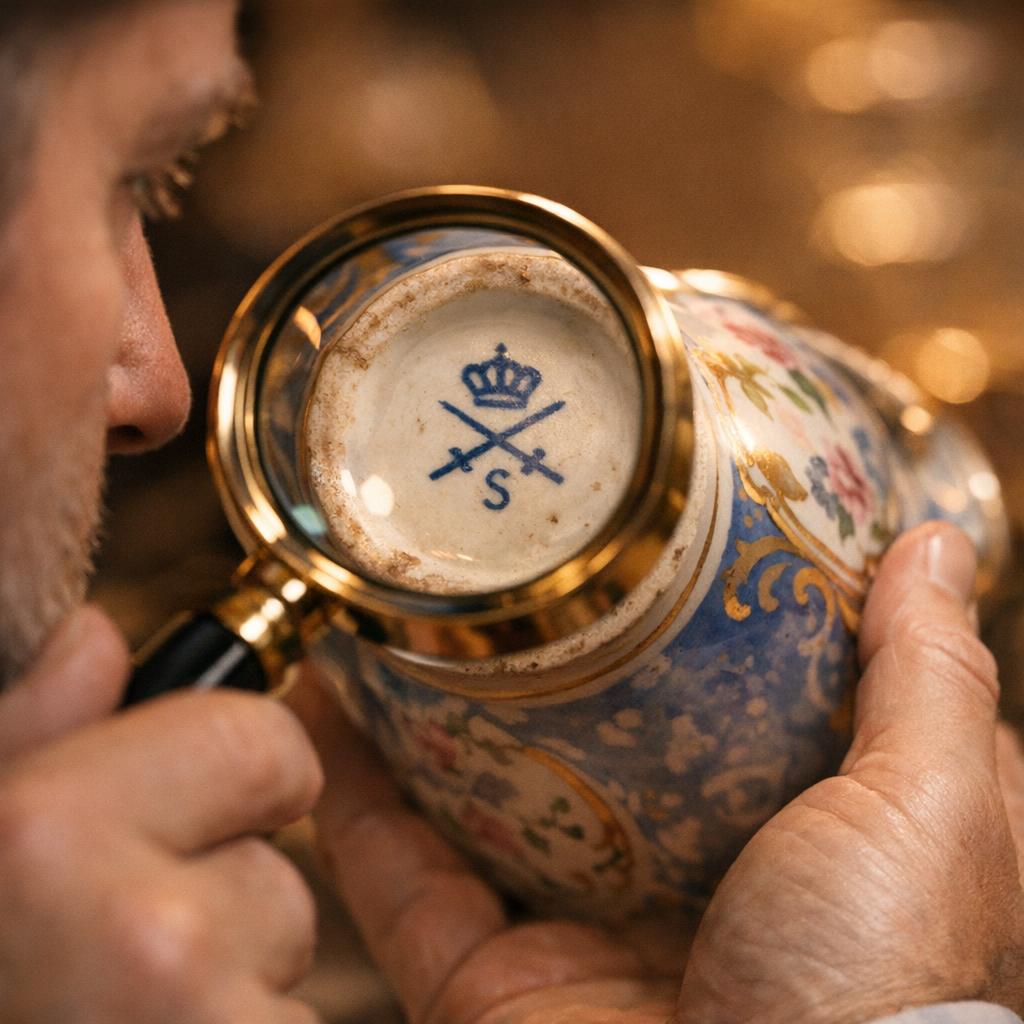
- Provenance and attribution: Documented maker attribution, original bills of sale, exhibition history, and previous ownership by notable collectors can increase FMV by 30% to several hundred percent.
- Market demand: The antiques market fluctuates. Mid-century modern furniture has seen strong demand, while Victorian heavy furniture has softened in many markets. A qualified appraiser considers current market conditions, not historical retail prices.
FMV is not what you paid
A common and costly mistake is assuming that the original purchase price or an insurance replacement value equals the deductible amount. Insurance values reflect replacement cost in a retail context; FMV reflects what the market would actually pay for your specific item in its current condition. The two figures can differ by orders of magnitude.
What the Qualified Appraisal Must Contain
IRS regulations specify exactly what must appear in a qualified appraisal. If any of these elements is missing, the document does not qualify and your deduction is at risk. The appraisal must include:
- Detailed description of the property — including maker's name, title or subject matter, medium (for art), date of creation, approximate age, and physical condition.
- Date of contribution — or a statement that the appraisal was prepared for donation appraisal purposes within 60 days before the contribution.
- Appraised fair market value — on the date of contribution, for each specific item.
- Method of valuation — the appraiser must state the approach used (e.g., comparable sales, income approach, cost approach) and explain why it was selected.
- Appraiser qualifications — name, address, taxpayer identification number, professional designations, and a statement of qualifying experience in the specific property type.
- Appraiser's signature and date — the appraisal must be signed and dated by the appraiser, with a declaration that it was prepared in accordance with USPAP.
- Statement of fees — confirmation that the appraiser was not paid a percentage of the appraised value.
Additionally, the donee organization must sign Part IV of Section B on Form 8283, acknowledging receipt of the property. If the charity refuses to sign, your deduction cannot be claimed until a different qualified charity accepts the donation.
Penalties for Overvaluation — What Is at Stake
The IRS takes overvaluation of charitable donations seriously. If the agency determines that you claimed more than the property is worth, the following penalties may apply:
- Substantial overvaluation (200% or more of correct value): A penalty equal to 20% of the resulting tax underpayment, if the underpayment exceeds $5,000.
- Gross overvaluation (400% or more of correct value): A penalty equal to 40% of the resulting tax underpayment.
- Complete disallowance: If no qualified appraisal is provided when one is required, the entire deduction for that item is disallowed — regardless of the item's actual value.
These penalties are in addition to any interest charges on unpaid tax. The good news is that relying on a qualified appraisal from a credentialed, independent appraiser provides a strong "reasonable cause" defense if the IRS challenges your deduction.
Step-by-Step Checklist for a Compliant Antique Donation
Use this checklist to ensure every requirement is satisfied before filing your return:
Antique Market Context: Why Current Comps Matter
A qualified appraisal for antiques cannot rely on outdated price guides or generic valuations. The appraiser must reference current market data — recent auction results, dealer asking prices, and private sales of comparable items. This is especially important in a market that has shifted noticeably since 2024.
A formal valuation should rely on exact, item-specific comparable sales that identify the object, maker or attribution, auction house, sale date, lot, currency, realized amount, and relevant condition differences. Broad market anecdotes or price bands are not evidence for a donation value conclusion.
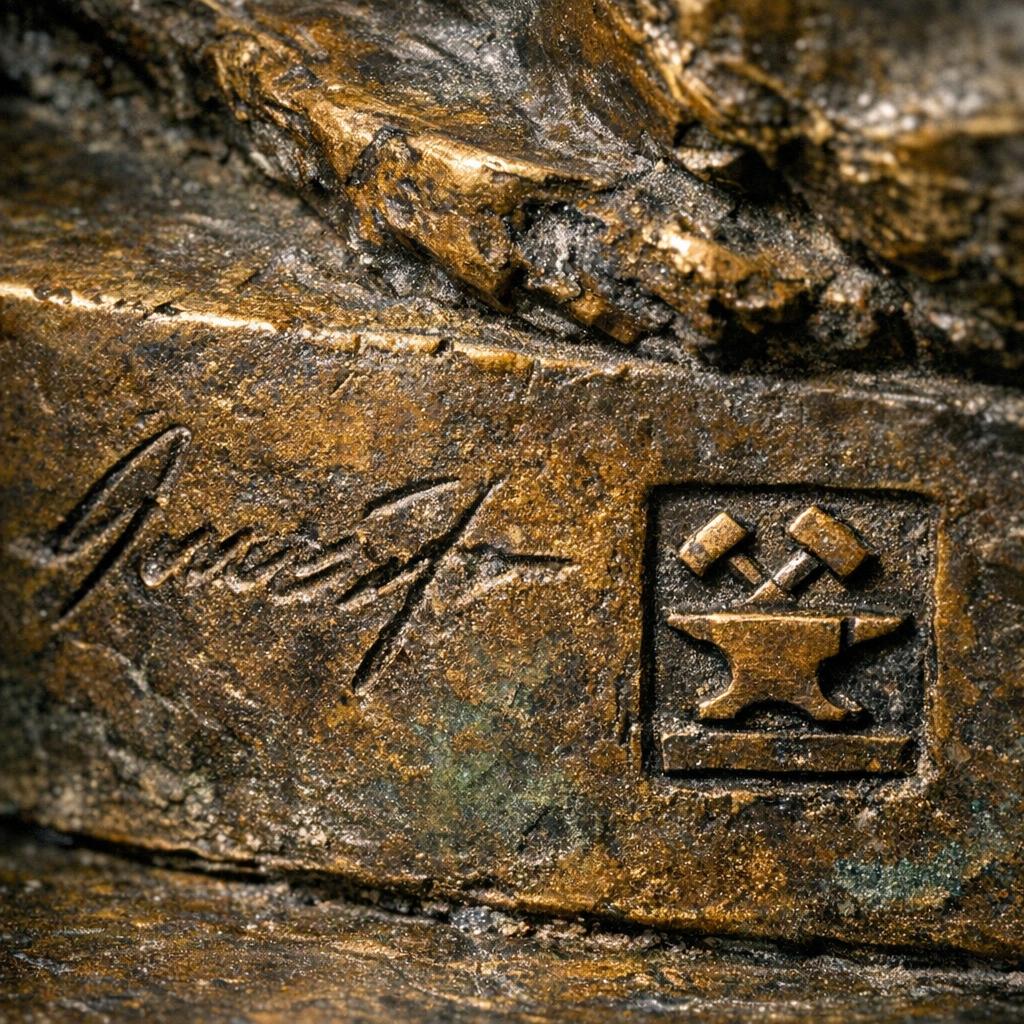
For donors, the lesson is clear: an antique's provenance, maker marks, and documented history are not just interesting details — they are the foundation of your defensible tax deduction. An appraiser who invests the time to research these factors protects both you and the IRS from disputes down the line.
The Donee's Role: Contemporaneous Written Acknowledgment
In addition to the qualified appraisal, the IRS requires a contemporaneous written acknowledgment from the charitable organization that received your donation. This document must:
- Name the charity and confirm it is a qualified 501(c)(3) organization.
- Describe the property donated (without necessarily stating a value — the charity is not required to agree with your appraisal).
- State whether any goods or services were provided in exchange for the donation (and if so, describe and estimate their value).
- Be obtained by the time you file your tax return (or the extended due date).
Do not assume the charity will provide this document automatically. Request it in writing at the time of donation and follow up if it is not delivered before tax season.
Common Mistakes That Trigger IRS Problems
Even well-intentioned donors make errors that jeopardize their deduction. Here are the most frequent ones we see:
- Using a non-qualified appraiser. A generalist appraiser without specialty expertise in the specific type of antique does not satisfy IRS requirements. Always verify credentials.
- Aggregating unrelated items. You cannot group a set of antique silver candlesticks with a Victorian desk and claim a single value. Each item or group of similar items requires separate treatment on Form 8283.
- Relying on insurance values. Replacement cost for insurance purposes is almost always higher than FMV. The IRS explicitly distinguishes between the two.
- Missing the 60-day rule. The qualified appraisal must be obtained no earlier than 60 days before the donation date and no later than the filing date of your return.
- Donating items in poor condition without disclosure. Damage, pest infestation, or significant restoration reduces FMV. Failing to disclose these factors inflates your claimed deduction and invites scrutiny.
- Skipping the donee signature. Without the charity's acknowledgment on Part IV of Section B (for items over $5,000), the deduction is incomplete and likely to be disallowed.
How to Find a Qualified Appraiser for Your Antique Donation
Start with the major professional organizations' online directories. Each maintains a searchable database of credentialed appraisers filtered by specialty and geographic region:
- American Society of Appraisers (ASA): Personal Property specialty with sub-specialties in Antiques, Decorative Arts, and more. Members at the ASA and Fellow levels meet IRS qualified appraiser standards.
- International Society of Appraisers (ISA): Offers a "Find an Appraiser" tool filtered by category. ISA AM and CAM designations signal qualified appraiser status under IRS rules.
- Appraisers Association of America (AAA): Particularly strong in decorative arts, furniture, and fine art. Their members undergo rigorous peer review.
When contacting a prospective appraiser, ask these three questions:
- "Do you hold a current designation from ASA, ISA, or AAA in antiques/decorative arts?"
- "Are you USPAP-compliant and experienced in preparing IRS-qualified donation appraisals?"
- "Can you provide references or examples of recent donation appraisals for similar items?"
If the answer to any of these is hesitant, keep looking. A proper donation appraisal is a compliance document, not a courtesy opinion.
Tax-deduction valuation support · from $399 for one item
Current service provides signed fair-market-value support for adviser review; it is not represented as a federal qualified appraisal. Property-specific appraiser eligibility, scope, timing, inspection needs, and any Form 8283 support are confirmed in writing before purchase.
- Item-specific scope and appraiser eligibility confirmed first
- Documented comparable evidence and stated assumptions
- Delivery timing is confirmed after the required item information is received
Review the scope before deciding whether to purchase.
Questions collectors also search for
Readers often Google these variations — each is addressed in the guide above:
- Does the IRS require an appraisal for antique donations over $5,000?
- What qualifies as a "qualified appraiser" for charity donations?
- How to fill out Form 8283 for donated antiques
- Can I deduct antique furniture donation at fair market value?
- IRS penalties for overvaluing charitable donation appraisals
- Where to find a qualified antique appraiser near me
- Do I need a separate appraisal for each donated antique item?
- Contemporaneous written acknowledgment requirements for donations
Each question is answered in the guide above. Confirm unusual filing facts with a qualified tax adviser and the appraiser who accepts the assignment.
References & sources
- IRS Instructions for Form 8283 (Rev. December 2025) — irs.gov/instructions/i8283
- IRS Publication 526 (2025), Charitable Contributions — irs.gov/publications/p526
- IRS Publication 561, Determining the Value of Donated Property — irs.gov/pub/irs-pdf/p561.pdf
- IRS Form 8283 (Rev. December 2025), Noncash Charitable Contributions — irs.gov/pub/irs-pdf/f8283.pdf
- American Society of Appraisers — Charitable Giving & Donations — appraisers.org