Antiques Donation Appraisal Guide Common Mistakes to Avoid: appraisal and value basics
Antiques Donation Appraisal Guide Common Mistakes to Avoid research should start with identification, condition, provenance, and recent comparable sales. Use this guide to compare the signals that matter before paying for a formal appraisal or deciding whether to sell.
Quick answers before you donate
- Over $5,000? The IRS requires a qualified written appraisal — not a verbal estimate, not your own guess.
- Wrong appraiser costs everything. Percentage-based fees, self-appraisals, and missing Form 8283 signatures are the top reasons deductions get denied.
- Don't clean or restore. Patina, maker's marks, and natural wear are evidence of authenticity. Removing them can lower your deduction.
- Timing matters. The appraisal must be dated within 60 days of the donation and received before you file.
Donating an antique to charity sounds straightforward: drop it off, get a receipt, claim the deduction. The reality is more complicated. The IRS disallows thousands of charitable deductions every year because donors skipped one or two appraisal steps that seem minor but are actually dealbreakers.
The difference between a properly documented donation and one that gets rejected can be hundreds or thousands of dollars in lost deductions. Here are the seven most common mistakes donors make with antique appraisals — and what to do instead.
Mistake 1: Valuing Your Own Antiques
It is tempting to look up comparable sales online, spot a similar piece that sold for $8,000, and claim that number on your return. The IRS does not accept self-appraisals for charitable donations, period.
Why it matters: For any single donated antique or collection valued over $5,000, the IRS requires a qualified written appraisal from an independent appraiser. "Qualified" means the appraiser holds a recognized professional designation, regularly appraises the property type you are donating, and has no financial stake in the outcome.

If you self-appraise, the IRS can reduce your entire deduction to zero, even if the donation was legitimate. A real Tax Court case in recent years stripped a donor of their deduction entirely because they failed to obtain a written appraisal — the items were genuinely donated, but the paperwork never existed.
Mistake 2: Hiring a Percentage-Based Appraiser
Some appraisers offer to work for a percentage of the item's appraised value — say, 25% of whatever they say it is worth. The IRS explicitly prohibits this arrangement for qualified donation appraisals.
Why it matters: When an appraiser's fee rises with the value they assign, they have a direct financial incentive to inflate the number. The IRS calls this a conflict of interest, and any appraisal based on percentage fees is disqualified. You lose the deduction, and the appraiser faces penalties too.
Always agree on a flat fee or hourly rate before the appraisal begins. A qualified appraiser will quote you a fixed price for the written report.
Mistake 3: Appraising at the Wrong Time
Timing is not just about convenience. The IRS requires the appraisal to be dated no earlier than 60 days before the donation date. If you had your collection appraised in January and donate in June, that January appraisal is stale for tax purposes.

Market timing matters too. Antique auction results across 2025 showed notable softness in mid-tier decorative items — Victorian furniture lots at regional auction houses reported 15% to 30% declines compared to 2023 peaks. An appraisal from 2022 that valued your sideboard at $6,500 might only support $4,800 today. Claiming the older, higher number invites IRS scrutiny.
Mistake 4: Skipping the Written Appraisal Report
A verbal estimate — even from a qualified appraiser — is not enough for the IRS. The agency requires a written appraisal report that includes: a detailed description of the item, the fair market value at the time of donation, the appraiser's qualifications, and a signed declaration that the appraiser understands the penalties for overstating value.

The Tax Court has repeatedly ruled that substantial compliance is not enough: if the written report is missing required elements, the deduction fails. Do not settle for a phone call or an email estimate. Demand a formal written report.
Mistake 5: Ignoring Form 8283 Signature Requirements
Form 8283 is the IRS form you file with your tax return to substantiate noncash charitable contributions over $500. For items or collections valued over $5,000, the form requires three signatures:
- Your signature (the donor) — acknowledging the donation and the appraised value.
- The qualified appraiser's signature — confirming they performed the appraisal and stand by the value.
- The donee organization's signature — acknowledging receipt of the property.
Missing any one of these three signatures is a fatal defect. In one widely cited case, a donor claimed a $42,000 deduction for donated art and antiques. The IRS disallowed the entire deduction because the donee organization never signed Form 8283. The Tax Court upheld the IRS — the donor got zero.
Mistake 6: Donating to a Non-Qualified Organization
Not every organization that accepts donations qualifies as a charitable recipient under IRS rules. The organization must be a recognized 501(c)(3) tax-exempt entity. Donating to a private foundation, a political organization, or a non-qualified trust means no deduction at all.
How to verify: Use the IRS Tax Exempt Organization Search tool to confirm the organization's status before you donate. A quick search takes 30 seconds and protects you from a costly mistake.
Mistake 7: Restoring or Cleaning Before Donation
Many donors want to "tidy up" an antique before donating it — polish the wood, clean the porcelain, replace a missing hinge. This instinct is well-meaning but often destructive to the item's value evidence.

Patina — the natural surface aging that develops over decades — is one of the primary cues appraisers use to verify age and originality. Stripping it away makes the piece look newer, not better. Maker's marks, hand-tool marks, and natural wear patterns are all evidence. Removing them weakens the case for high value.
If you are unsure whether an item needs conservation, consult a qualified appraiser or conservator before doing anything to the piece. A good appraisal starts with the item in its untouched, as-found condition.
What the IRS Actually Requires for Donation Appraisals
The rules come from IRS Publication 561 (updated February 2026). Here is the plain-language summary:
| Requirement | What it means |
|---|---|
| Qualified written appraisal | Must come from an independent appraiser with a recognized designation who regularly values the property type you are donating. |
| $5,000 threshold | Required for any single item or collection claimed at more than $5,000. Below $5,000, keep your receipt and a description. |
| Appraisal timing | Dated no earlier than 60 days before the donation. You must receive the report before filing your tax return. |
| Form 8283 signatures | Three signatures required: donor, appraiser, and donee organization. Missing any one voids the deduction for items over $5,000. |
| No percentage-based fees | The appraiser cannot charge a fee based on a percentage of the appraised value. Flat fee or hourly rate only. |
| $20,000+ art rule | If you claim $20,000 or more for donated art (including antiques classified as art), you must attach a copy of the signed appraisal to your return. |
Why 2025–2026 Market Conditions Make This More Important
Antique auction results over the past 18 months tell a clear story: market values have shifted, and outdated appraisals are becoming a liability.
Regional auction houses reported softer results across mid-tier decorative categories in the 2025 spring and fall seasons. Victorian furniture, unattributed porcelain, and generic decorative arts saw realized prices 15% to 30% below 2023 peaks. Meanwhile, pieces with documented maker attribution, provenance records, or publication history held value or appreciated — some by significant margins.

The practical takeaway: if your appraisal is more than two or three years old, the value it states may not reflect current market reality. Overstating a donation deduction — even unintentionally — is one of the clearest ways to trigger an IRS review. A current, qualified appraisal protects you on both sides.
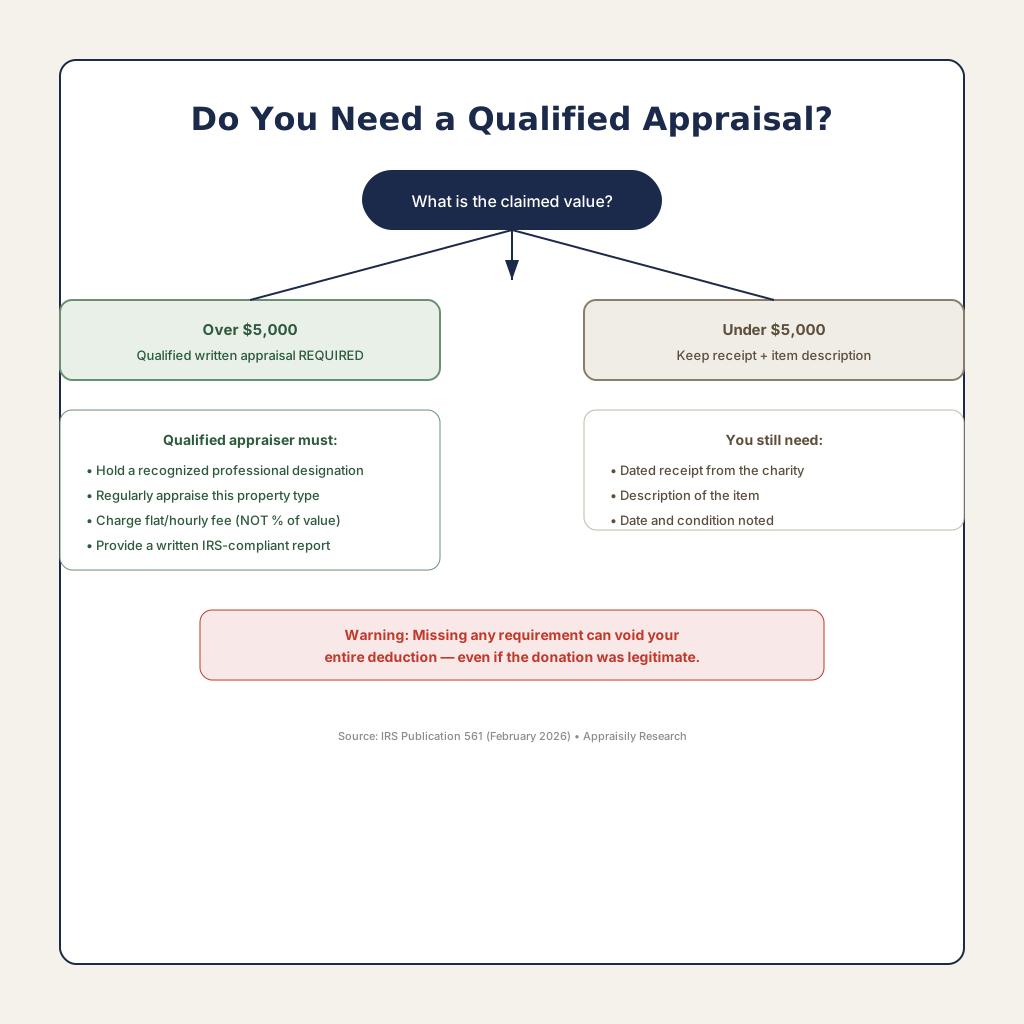
Do You Need a Qualified Appraisal?
Use this quick decision guide to determine whether your donation requires a qualified written appraisal.