

Start with one practical question
If this is a hand tool, saw, firearm accessory, or mixed repair kit, the first mistake is to jump to market price. The practical question is not whether it is old. The practical question is whether buyers care about this specific object for the same reasons they care about original provenance, maker consistency, and condition.
An antique tool can look right from a distance and still be a copy, a rehandle, or a heavily reworked base. The right way to identify it is to stack clues. No single clue should carry the argument.
This guide gives a direct workflow you can apply in three minutes: read marks, confirm age signals, and decide whether to submit for a free instant estimate.
Read what the maker actually left behind
Start with marks before you inspect the finish. Maker marks, signatures, registration numbers, and impressed stamps are your first evidence stream. They answer three questions: origin, maker intent, and likely production period.
- Stamped marks can be direct names, symbols, and city codes. They are useful, but only if they are original and in context.
- Patented marks often appear as stamped words, shield shapes, model numbers, or filing clues. They can indicate novelty and era, especially on mechanism parts.
- Quality marks and inspection stamps suggest internal standards and distribution channel.
Practical filter: if the mark is too clean for the claimed age, or if it is inconsistent with the tool’s expected wear, do not treat it as proof by itself. If the tool is unsigned, the proof burden moves to material quality, handle condition, and provenance chain.
Use patent clues to anchor age without over-promising
Patent-style marks matter more than a lot of people expect, but only when interpreted correctly. A dated patent marking can set a maximum age and can help exclude impossible claims. It does not automatically prove originality of the whole tool.
When the same maker stamp appears across both hand-crafted and later factory-finished pieces, the handle profile and pivot wear often separate genuine survivors from later refurbishes. Older parts can have reworked metal around stamped areas, so compare where the stamp sits: a recently recut edge around a deep stamp is often a warning sign.
If the patent reference points to a known catalog year, pair it with objective condition signals before you draw value conclusions. If the rest of the piece contradicts the date, assume the mark is only partial evidence.
Flip it over: what handle clues say instantly
Handles are where restoration decisions become obvious. A genuine period handle generally matches the object’s intended use and tool wear pattern. Replaced handles can be excellent functional substitutes and still be worth writing up, but they change buyer confidence.
- Material: hard maple, beech, and hornbeams with old finish movement often align with older shop systems; modern synthetic handles can indicate service replacement.
- Grip shape: tapered, hand-fitted grips and tool-specific checkering can support old shop origin.
- Crack patterns: old handle checks run along stress lines and older use; fresh split edges that are clean and straight often point to modern breakage or repairs.
Condition signals beat hype every time. The mark can get you in the right lane. The handle confirms whether the tool was used, repaired, or reset.
Match construction choices to what is likely original
Now confirm how the parts are made. Forged, cast, and turned components each produce a different expected signature. A forged body with hand-fitted screws, file marks, and uneven tool marks often suggests pre-industrial workshop practice; cast and milled forms may point to later runs.
Use these checks in order:
- Inspect screw heads and threading pitch for mismatch with period hardware.
- Check pivot fit: is movement natural from use, or tightened recently?
- Read finish layering: layered shellac, oxidation style, and rust tone help validate age progression.
- Check for mixed materials: old tool with brand-new fasteners is usually not all old.
If the same tool has multiple mismatched materials, it is often still valuable as an object, but only after the repair history is clear.
Free instant estimate
Not sure if your tool is real? Let us take a look.
Upload a few photos and share what you know. We’ll return a clear first read, fast.
Free. No card needed. Takes about two minutes.
Apply this identification workflow before you commit
Use this sequence once you open photos:
- Capture all clues first. One close image of marks, one of handle profile, one of a screw/hinge, one of full wear line.
- Separate certainty levels. Mark what you know, what you infer, and what you cannot conclude.
- Compare three data points. Maker/patent, handle, and provenance timeline. If two conflict, your confidence drops.
- Choose the right next step. If unresolved but promising, use free instant estimate first. If it is clearly unsupported, do not overpay on value assumptions.
If you still cannot tell from the photos, that is exactly when the free estimate helps. It is the practical step because it gives you a focused report instead of guessing with partial proof.
Most expensive mistakes buyers make
- Trusting a single stamp without corroborating handle or hardware wear.
- Assuming patents are modern just because they are clear.
- Ignoring missing pieces in a set and valuing as if complete.
- Calling a repaired tool an intact period tool.
- Skipping market context and comparing only to online photos.
The most useful principle is plain: condition and completeness often change practical value more than brand certainty.
Auction comps and current market ranges
Use the table below as directional context. Update this section regularly and treat each lot as context, not a guarantee.
What similar items actually sold for
To help ground this guide in real market activity, here are recent example auction comps from Appraisily’s internal database. These are educational comparables (not a guarantee of price for your specific item).
| Image | Description | Auction house | Date | Lot | Reported price realized |
|---|---|---|---|---|---|
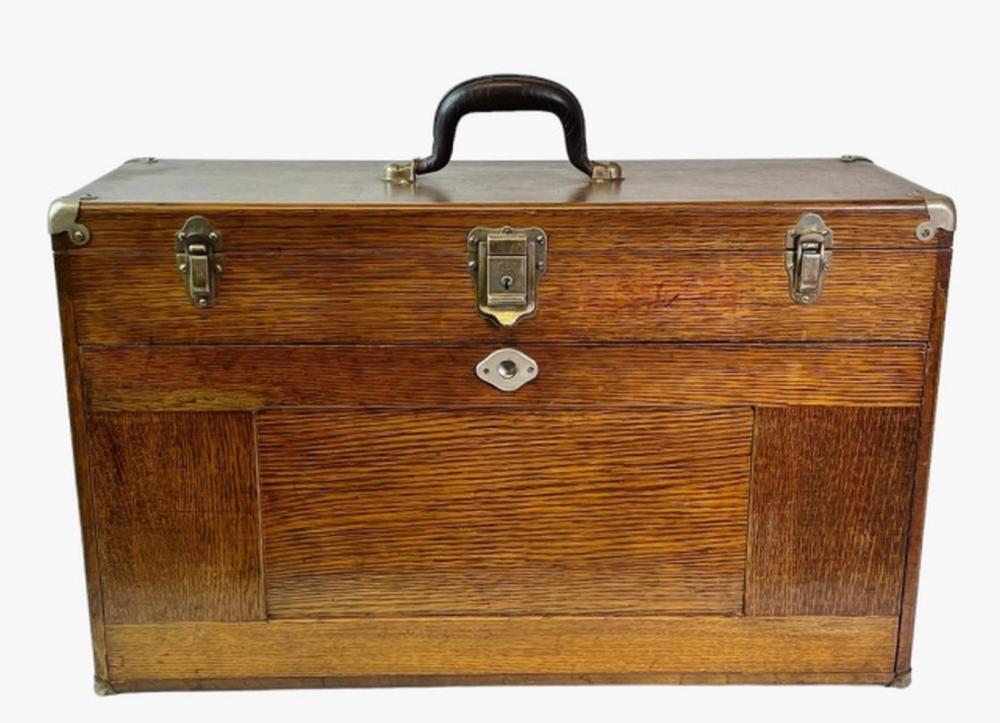 |
Antique Machinists Tool Chest Watchmaking Tools | J. James Auctioneers and Appraisers | 2024-04-06 | 320 | USD 1,200 |
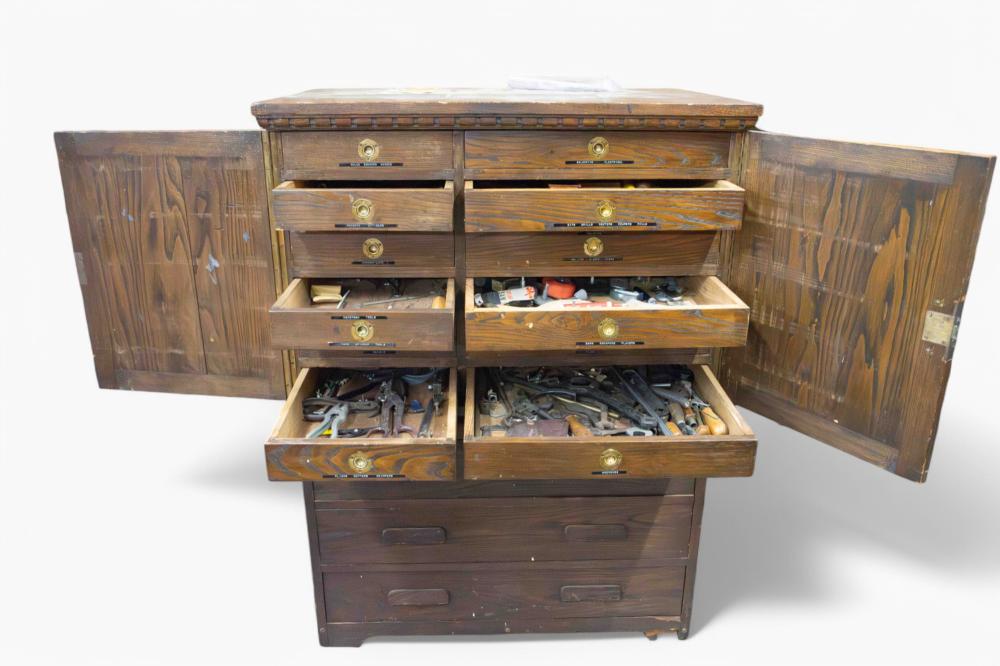 |
Antique Wooden Machinist Tool Chest or Cabinet. | Direct Auction Galleries, Inc. | 2025-04-12 | 301B | USD 275 |
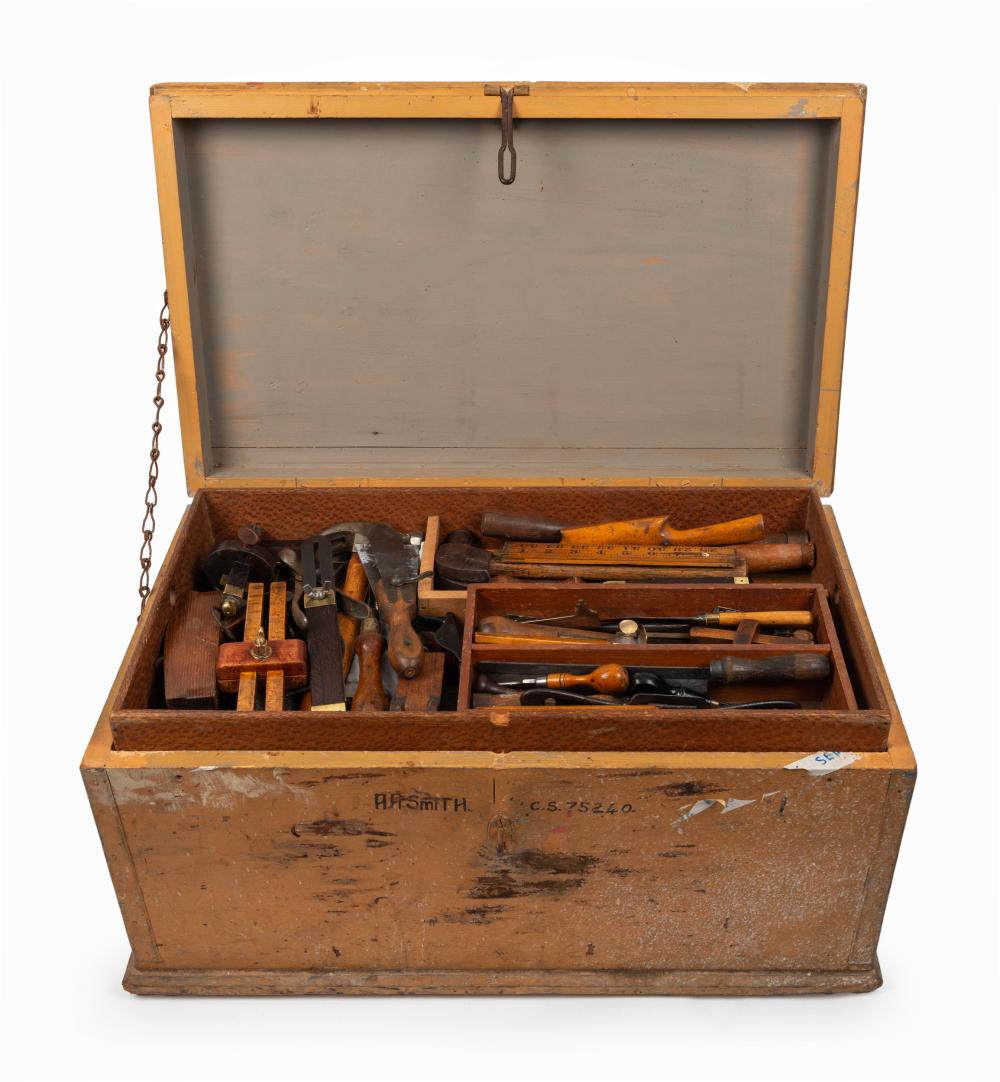 |
An impressive antique tool trunk with a handsome selection of antique cabinet maker's hand tools, 19th/20th century, | Leski Auctions Pty Ltd | 2024-12-07 | 186 | AUD 1,000 |
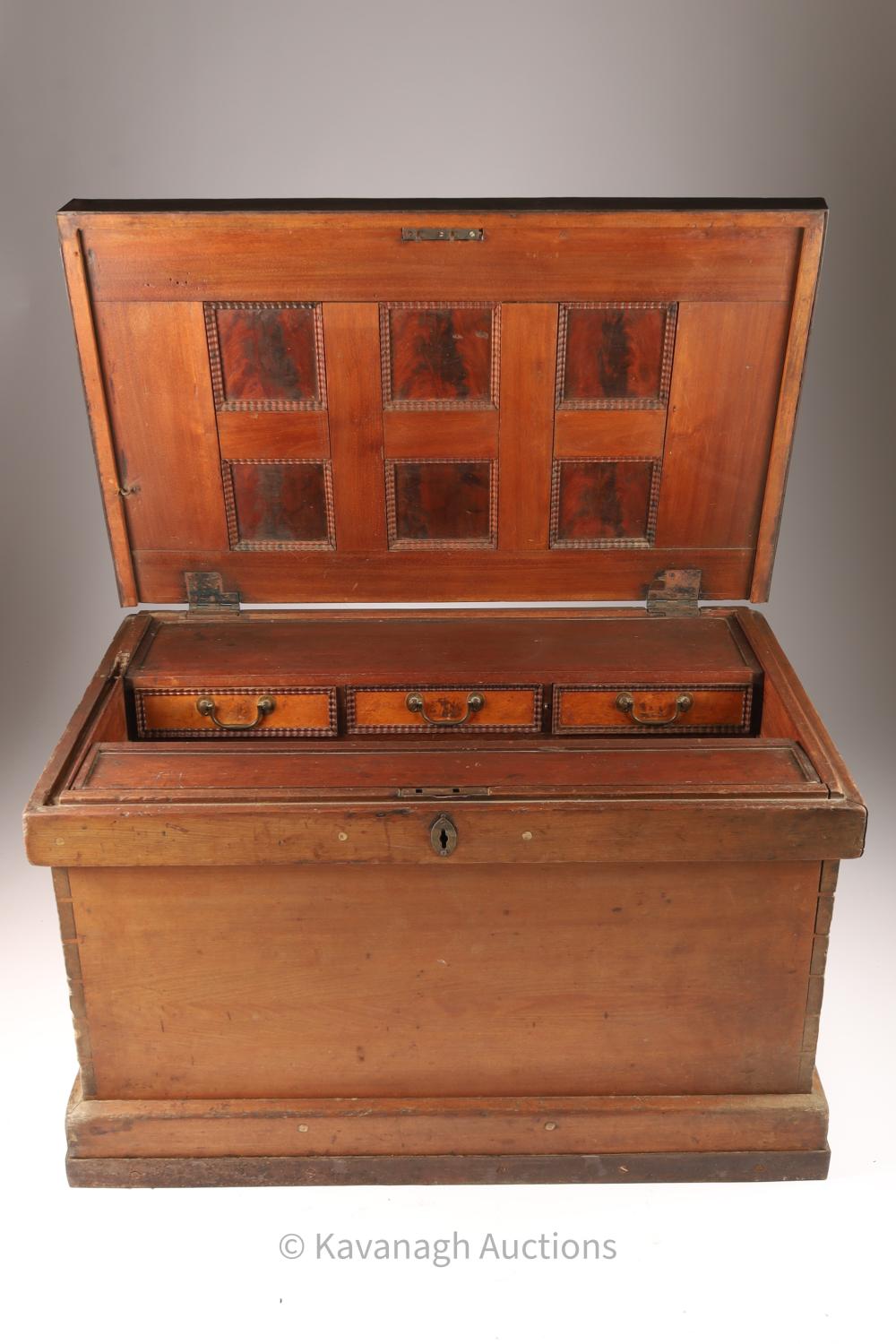 |
Antique Carpenter's or Cabinetmaker's Tool Chest | Kavanagh Auctions | 2024-07-20 | 222 | CAD 550 |
Comparable images are shown at thumbnail scale with source links. Request image review or removal.
Disclosure: prices are shown as reported by auction houses and are provided for appraisal context. Learn more in our editorial policy.
Free instant estimate
Not sure if your item is worth appraising? Let us take a look.
Upload a photo, tell us what you know, and get a free first read. If a full appraisal makes sense, we will say so.
Free. No card needed. Takes about two minutes.
FAQ: fast answers for tool identification
Can age be proven from one clue alone? Usually not. The best path is to stack corroborating signs.
How much does condition matter? More than people expect. Condition can change value by multiples when marks are partial or contested.
When should I request a paid appraisal? When identity is stable, completeness is clear, and buyers need documented support for a transaction or legal use case.
Search variations
- How to identify antique tool marks and stamps
- What does a forged tool handle look like
- How to spot a patent mark on antique tools
- Do tool handle replacements affect value
- Antique tool age clues before buying
- How to tell reproduction tools from originals
- How makers' marks influence appraisal
- What does an appraised antique tool set sell for
References and next checks
- How to identify antique furniture marks, materials, and age clues
- How to identify silver marks and age clues
- How to identify antique silver marks
Appraisily editorial policy explains sourcing, methods, and update standards.
Need a quick identity check?
Upload photos and get a free instant estimate
Get my free estimate Upload photos for a free first look View signed report sampleChoose your next step
Use the path that matches the decision you need to make about the item.
Not sure it is worth appraising?
Start with a lower-friction screen to understand the likely category, evidence, and next step.
Upload photos for a free first lookWant proof before paying?
See how a signed report documents photos, comparable evidence, condition notes, and value conclusions.
View signed report sampleNeed a signed report?
Use this for insurance, estate, donation, resale, or documented value decisions.
Need documentation now? Start signed appraisalNeed local or specialist help?
Compare directory options when the work needs in-person review or a specialist near you.
Find local specialistsSee what the report looks like
Sample reports show how photos, comparable evidence, condition notes, and a value conclusion are documented.