
Quick answer: what does an antique porcelain figurine actually depend on?
If you are trying to decide value fast, use this order: identify the maker and era first, then score condition, then place your item against close auction examples. A piece can shift from collectible to ordinary simply through restoration, missing parts, or weak provenance. For high-confidence decisions, gather your photos and maker marks first, then test the item in Appraisily’s free review flow.
In practical terms, figurines with clear maker attribution, older production, intact glaze and paint, and good provenance support stronger outcomes than decorative look-alikes without documentation. The goal is a defensible value band, not a single guaranteed number.
Antique porcelain valuation at a glance
Table of Contents
- How value is built
- Maker, era, and family of marks
- Condition and restoration rules
- Comps as proof, not promises
- How to authenticate before you decide
- Prepare your item for sale
- Frequently asked questions
How value is built
Antique porcelain figurine value behaves like an equation, not a single data point. The strongest results come from aligning four inputs: identity, condition, market demand, and evidentiary confidence.
At the highest level:
| Driver | Why it matters | Common valuation effect |
|---|---|---|
| Manufacturer / maker origin | Signals artistic lineage and market demand | Can raise baseline by multiple bands |
| Condition state | Repairs and loss reduce buyer confidence | Often reduces realized price before liquidity is affected |
| Material and technical quality | Porcelain body type, glaze clarity, handwork | Improves durability and auction appeal |
| Comparable outcomes | Recent market data by category | Provides directional validation, not guarantees |
| Provenance | Ownership history and paperwork | Raises trust and can increase buyer competition |
Maker, era, and what to verify first
Start with three photos: base mark, full front and back, and any close-up flaw or wear area. If these already conflict, pause sales listing decisions and seek authentication first.
Well-known manufacturing families can anchor demand, but your item still needs age- and condition-fitting evidence. In practice, collectors usually price in descending confidence: clearly attributable examples at the top, then less verified variants.
What to verify from the base and marks
- Whether the mark style is historically consistent with the supposed maker window.
- Whether the glaze and base finish show period-appropriate wear patterns.
- Whether decorative lines appear hand-finished rather than machine-cleaned.
- Whether the object style aligns with documented catalog families for that maker.
Condition and restoration: the hidden value multiplier
Condition is the most practical valuation factor for owners. You can have a desirable maker and style, but if restoration is extensive, expected outcomes move down a range quickly.
Use this grading scale before sharing a number publicly:
- Mint-like (A): minimal wear, full details, base and paint coherent with expected age signals.
- Solid (B): cosmetic wear with stable structure and clear paint retention.
- Watch list (C): chips, cracks, missing details, or uncertain glaze work that need specialist review.
- High-risk (D): substantial repairs, major losses, unclear origin; should not be sold as premium collectible.
When uncertainty remains, route the item as “needs authentication” before channel selection.
Comps as proof, not promises
Our internal comp scan surfaced several porcelain outcomes in the auction record stream, including:
- An Eldred’s porcelain bowl example near USD 400.
- Rookwood-attributed pieces in recent Toomey & Co. sales around USD 500–800.
- Other examples including a Weschler’s lot and a Nadeau’s lot in the low-to-mid hundreds.
These examples are useful to calibrate expectations, but they are not your item yet. Your outcome depends on size, provenance, and documented condition. Use these results as educational anchors, especially to separate a “high-value candidate” from a “common decorative piece.”
How to authenticate before you publish
Before posting a valuation claim publicly, confirm each of these five checks.
Five-check authentication workflow
1) Mark and model consistency
Match the mark family with known shape families and production period. Mismatches here usually lower confidence significantly.
2) Proportional accuracy and details
Review fingers, flowers, and fabric imitation where hand finishing can be visible. Uniform machine regularity is less likely on older collectible examples.
3) Back and base signals
Bases are often where age and handling clues appear first. Base color drift and rim construction often provide reliable timing clues.
4) Restorable damage map
Document all damage locations and restoration signs in writing before listing. Buyers ask about these first.
5) Provenance file
Keep any receipts, photos, auction records, or family papers ready. Provenance can change confidence more than owners expect.
Free instant estimate
Not sure if your item is worth appraising? Let us take a look.
Upload a photo, tell us what you know, and get a free first read. If a full appraisal makes sense, we will say so.
Free. No card needed. Takes about two minutes.
Seller preparation before asking a price
- Photograph in diffuse light, front/side/back, and close crop of the mark.
- Record measurements in cm (height, width, base diameter).
- Document all damage with location and estimated timeline (inheritance-era vs modern impact).
- Keep storage notes and any sale/repair documents with the file set.
- List the top three comparable outcomes only after identity confidence passes 70%.
When this checklist is complete, channel choice becomes clearer. Premium, well-supported pieces often justify a specialist-led channel. Mid-range, less certain items usually benefit from a lower-friction screen and targeted guidance before listing or consigning.
If you already have photos, start here
A signed appraisal is useful for sales planning, documentation, and records where value confidence must be high.
- Detailed valuation with maker and condition notes
- Evidence-based value context
- Clear next-step recommendations
Secure upload.
Frequently Asked Questions
How can I tell if my porcelain figurine is likely antique?
Start with the maker mark family, glaze behavior, and hand-finished surfaces. If these are inconsistent, treat it as potentially modern until verified.
Which factors reduce value most quickly?
Inconsistent provenance, missing model elements, major repairs, and undocumented restorations usually affect outcomes before style preference does.
Do small figurines have meaningful resale value?
Many do, particularly when attribution and condition are clear. Smaller size is not automatically low value.
How quickly can I get a useful estimate?
For a useful first estimate, usually within a couple of minutes for the form and a short expert review window depending on image clarity.
Should I list without an appraisal?
That is possible for some pieces, but a signed valuation can improve confidence for high-value items and disputed provenance cases.
Do restoration and chips usually eliminate value?
Not always. Light wear may be absorbed in pricing, while heavy repainting, structural loss, or major replacements usually reduce collectible premium quickly.
What similar items actually sold for
To help ground this guide in real market activity, here are recent example auction comps from Appraisily’s internal database. These matched sales are market context only, not an object estimate or identification, and they do not guarantee a price for your specific porcelain figurine.
Shown USD range: USD 2-USD 200. Median of these 9 USD examples: USD 20.
| Comparable | What sold | Auction house | Date | Lot | Source-reported amount |
|---|---|---|---|---|---|
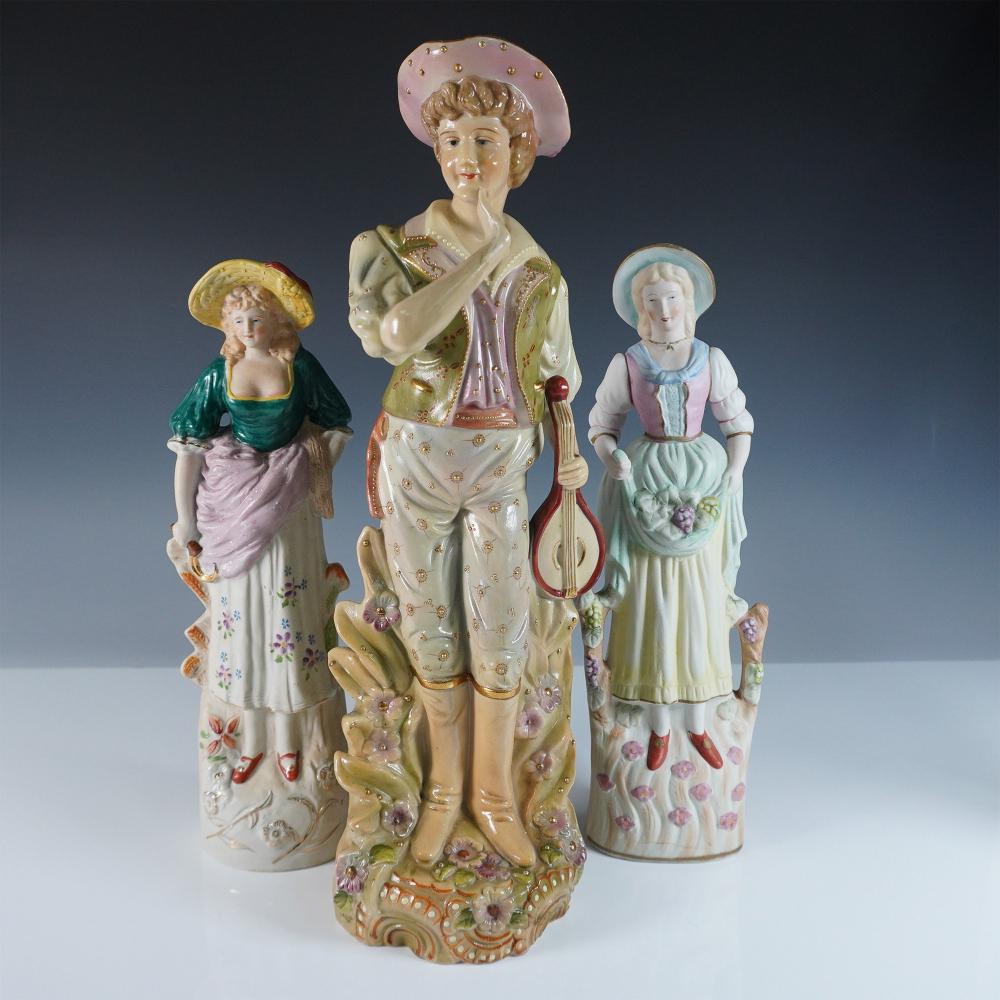 |
3pc Occupied Japan Porcelain Figurine Set | Lion and Unicorn | 2025-04-22 | 198 | USD 30 (buyer’s-premium treatment unknown) |
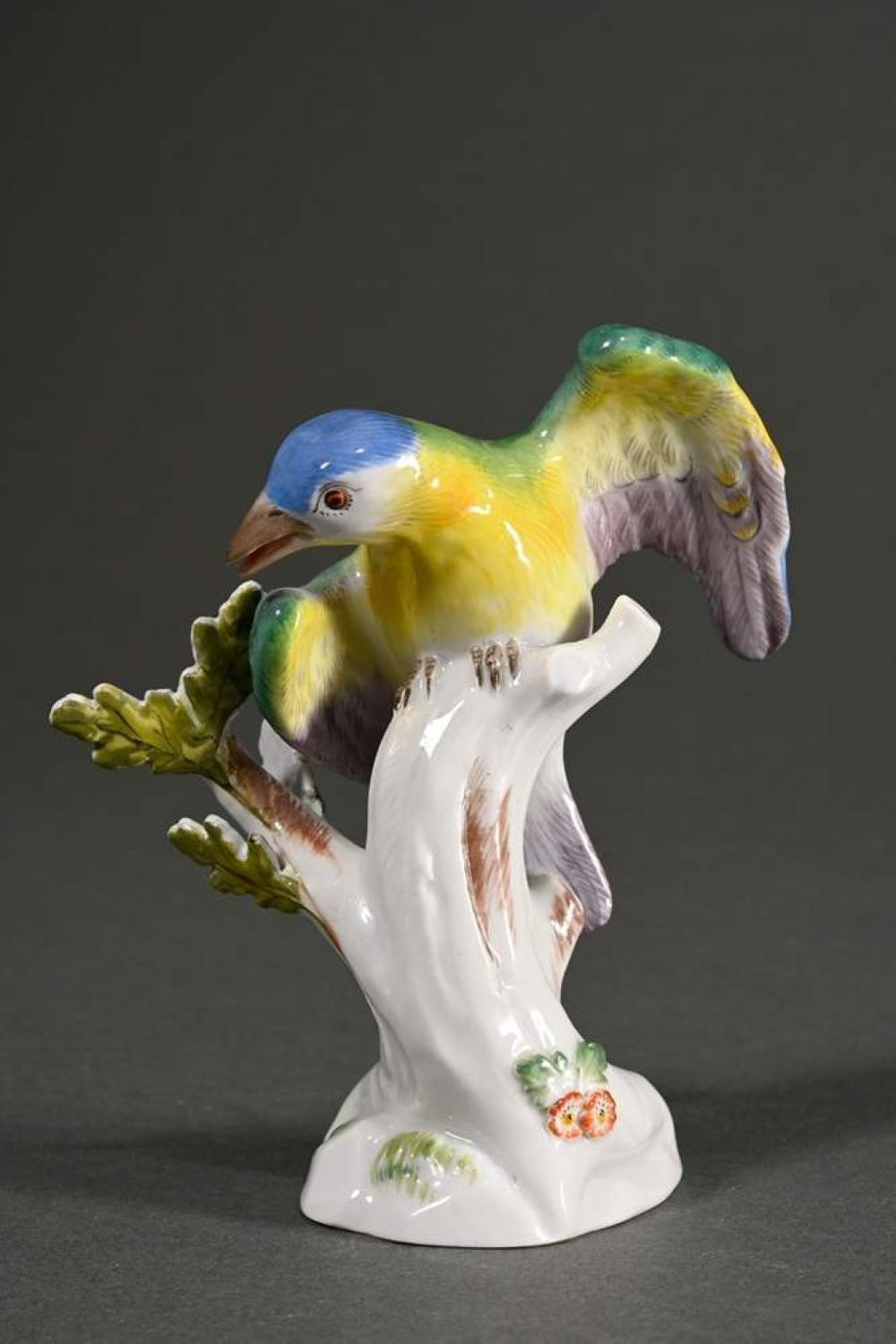 |
Meissen figurine ‘Bird of paradise on a branch base’, porcelain polychrome painting, model no. 135, crossed swords mark, 1956, h. 20cm, branch with leaves restored | Kendzia | 2025-11-21 | 590 | EUR 90 (buyer’s-premium treatment unknown) |
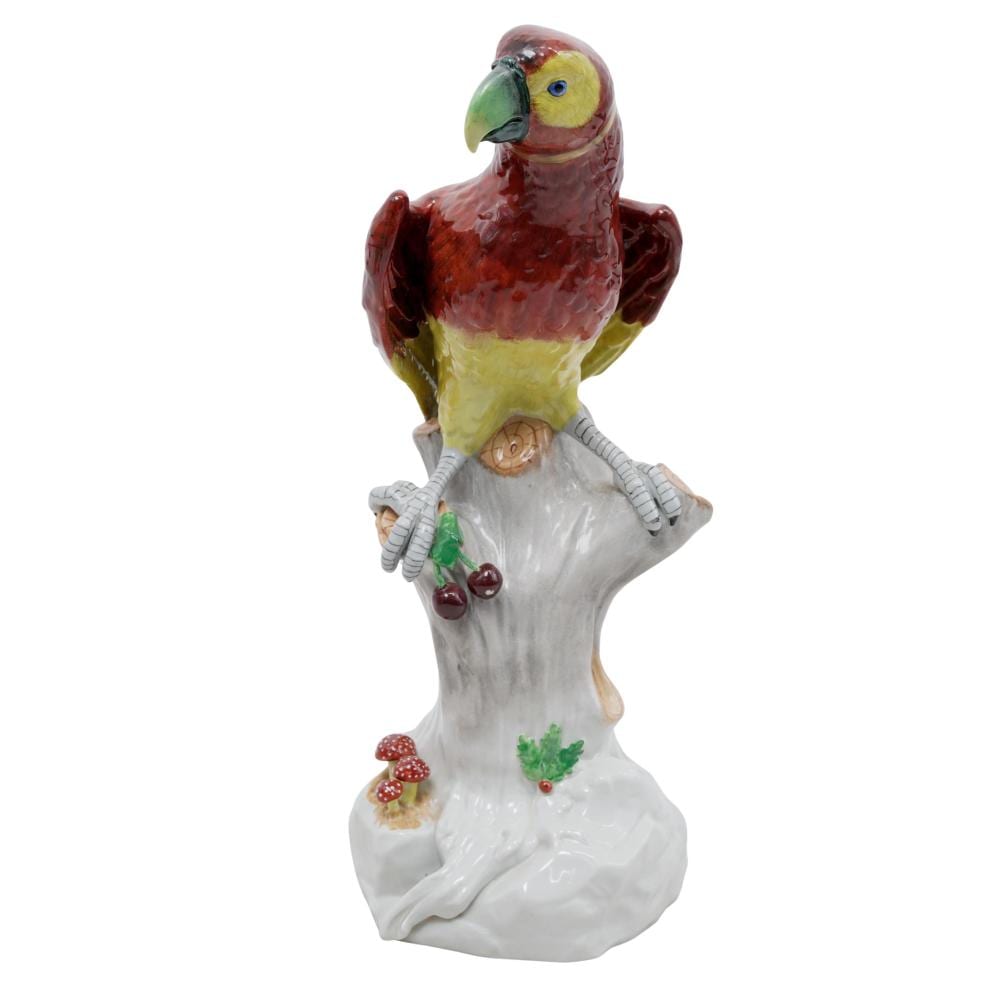 |
Large Dresden Porcelain Parrot Figurine | Akiba Galleries | 2026-03-17 | 363 | USD 200 (buyer’s-premium treatment unknown) |
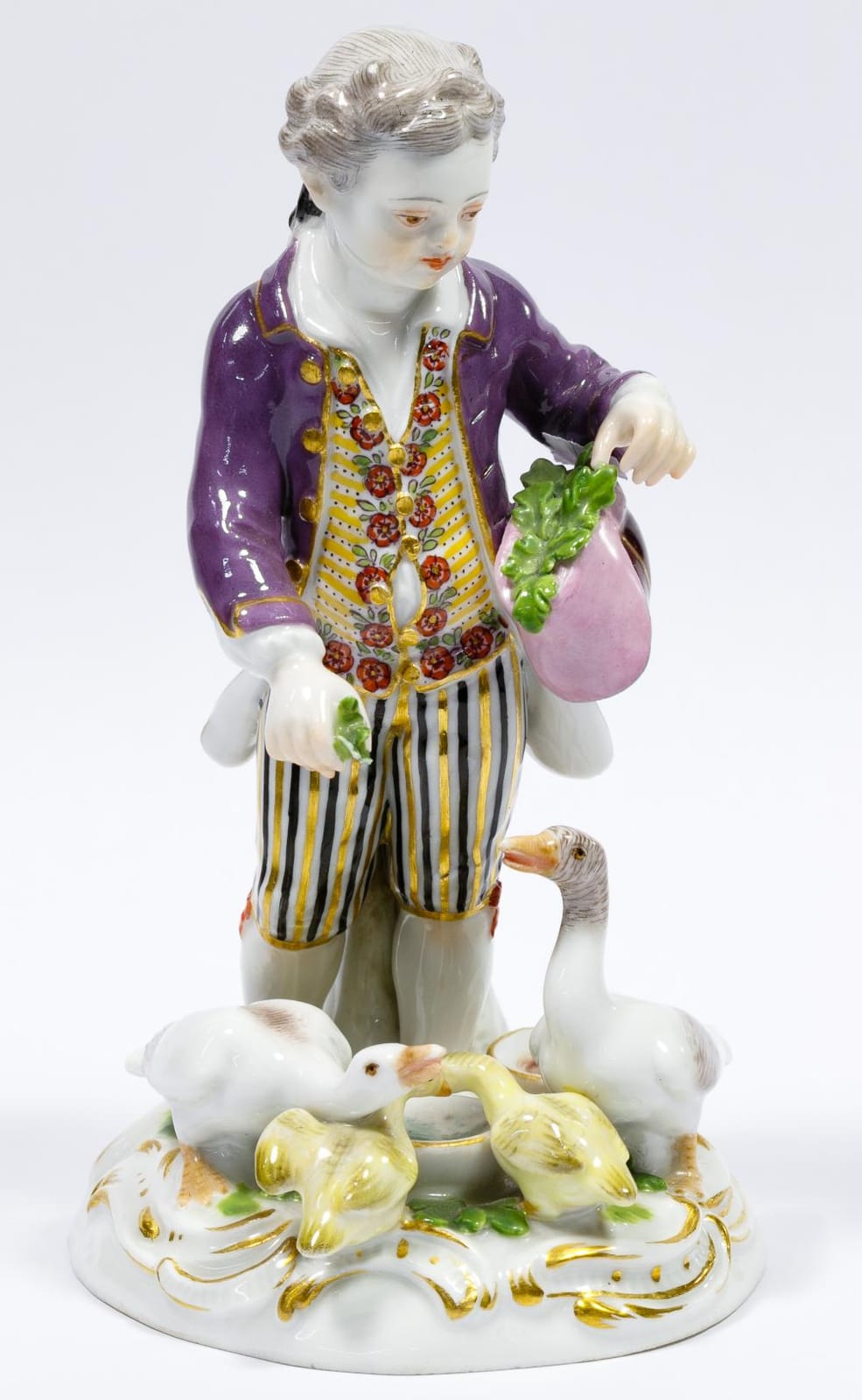 |
Meissen Porcelain Figurine | Leonard Auction | 2018-09-16 | 329 | USD 140 (buyer’s-premium treatment unknown) |
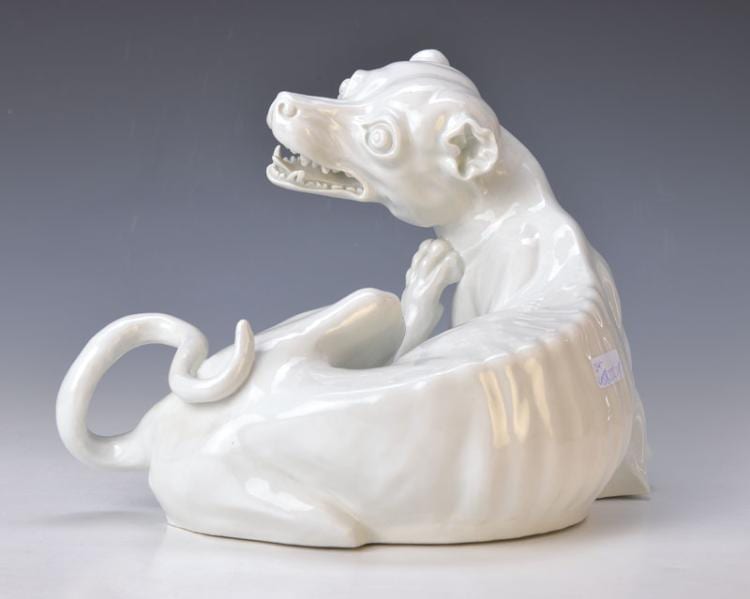 |
porcelain figurine, Meissen, 1920, dog | Henry's Auktionshaus | 2015-04-25 | 5074 | EUR 990 (buyer’s-premium treatment unknown) |
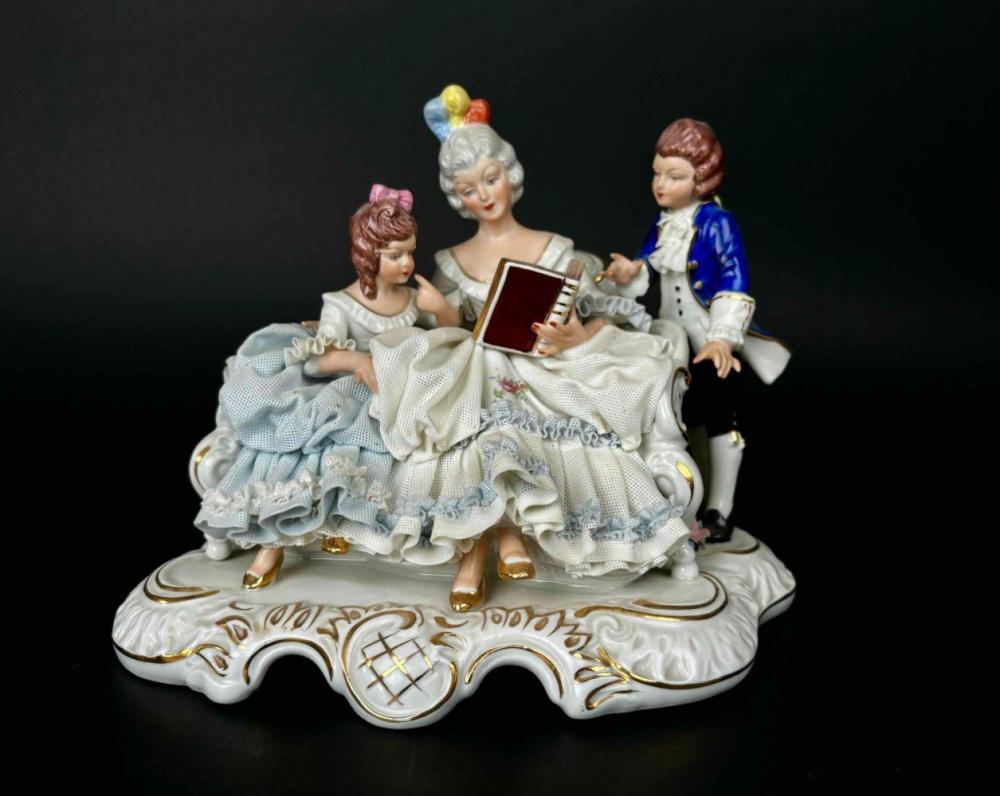 |
Dresden Lace German Porcelain Figurine | Block Auction House | 2024-08-30 | 165 | USD 10 (buyer’s-premium treatment unknown) |
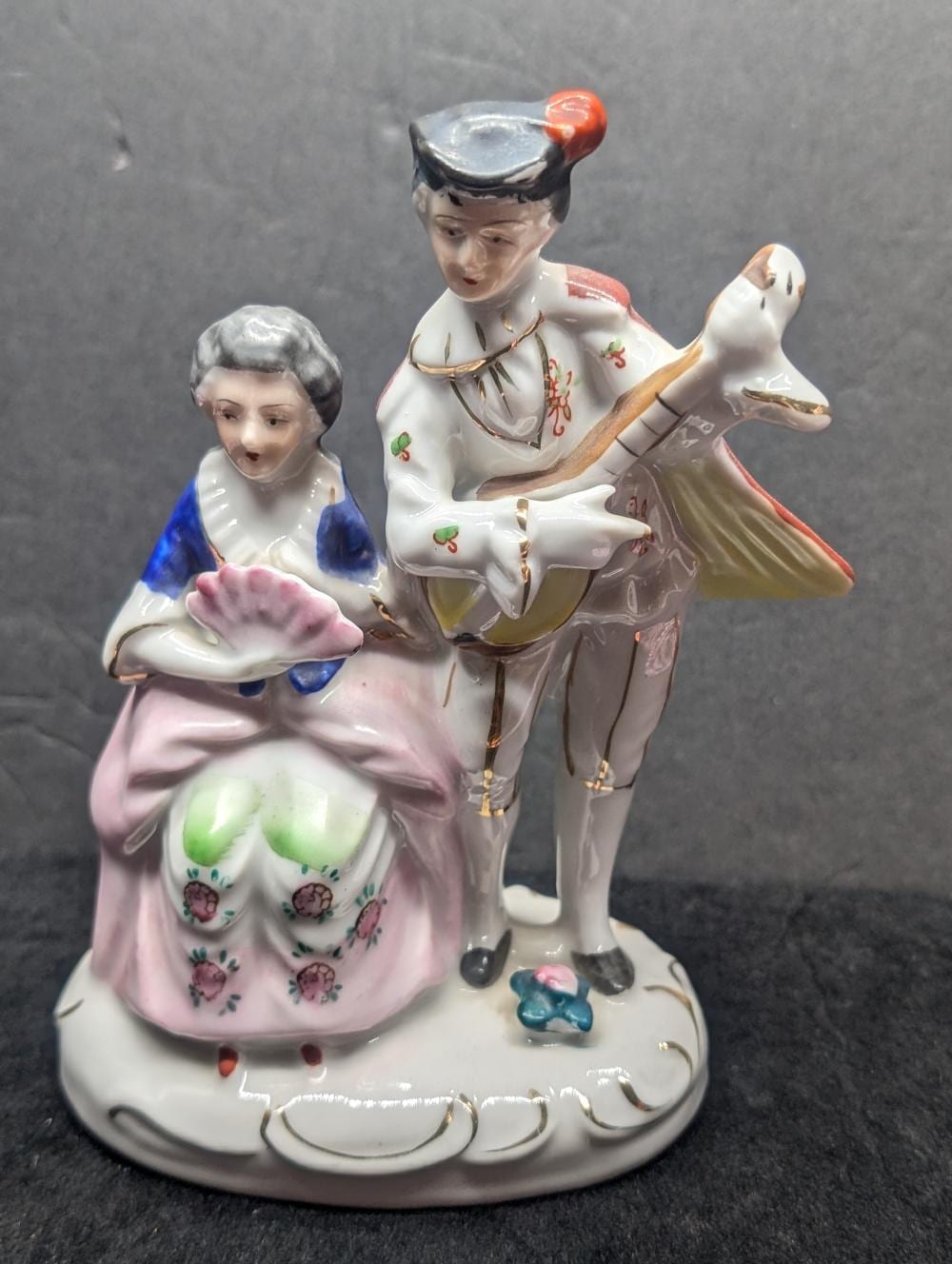 |
Occupied Japan Porcelain Figurine – Courting Couple, ca. 1945–1952 | Richard L. Edwards Auctioneer | 2025-08-26 | 41L | USD 2 (buyer’s-premium treatment unknown) |
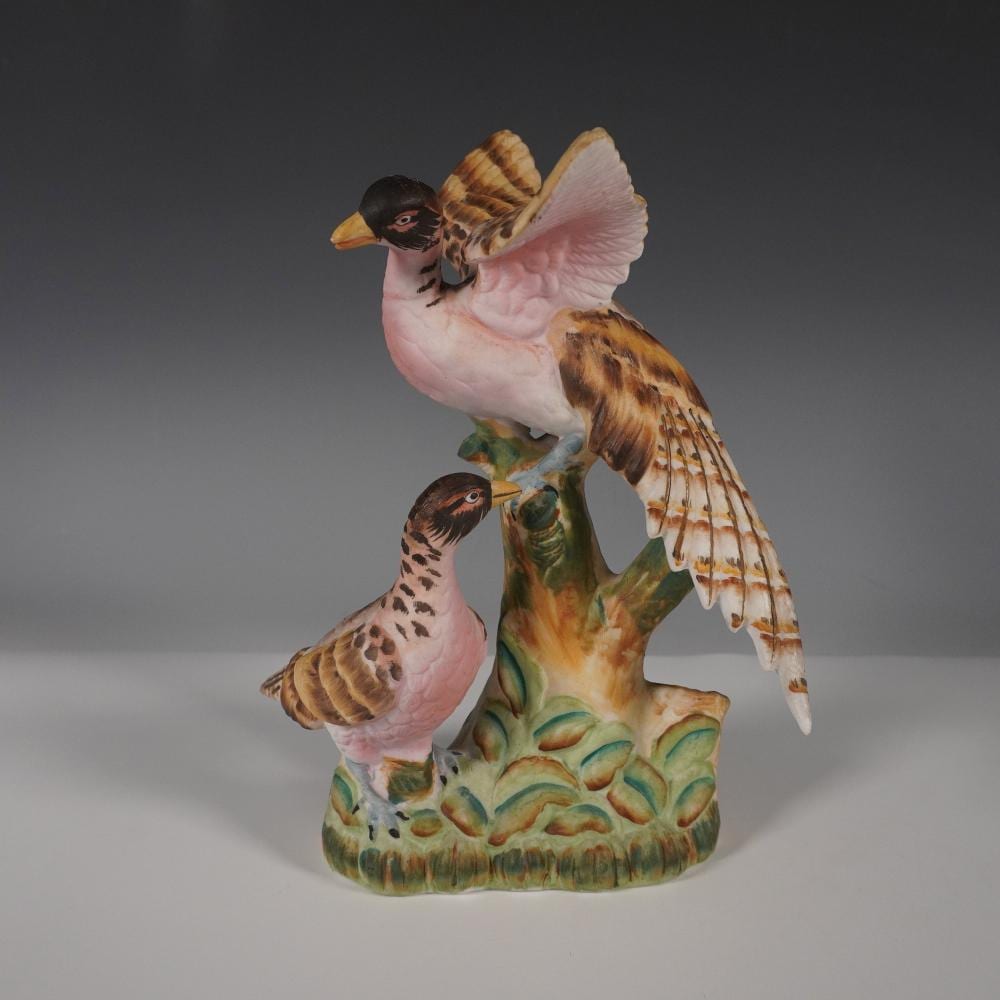 |
Occupied Japan Porcelain Figurine of Two Birds | Lion and Unicorn | 2025-04-01 | 260 | USD 10 (buyer’s-premium treatment unknown) |
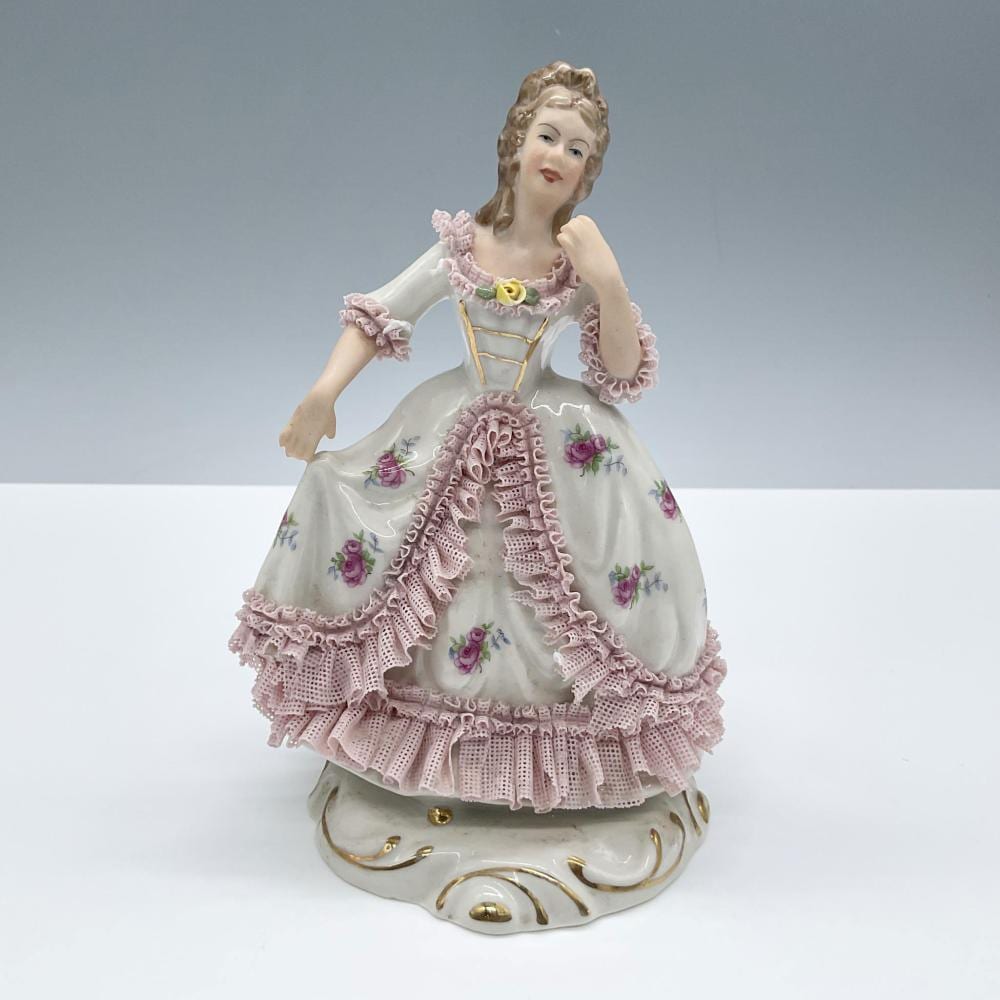 |
Dresden Style Porcelain Lace Figurine | Lion and Unicorn | 2025-01-26 | 580 | USD 10 (buyer’s-premium treatment unknown) |
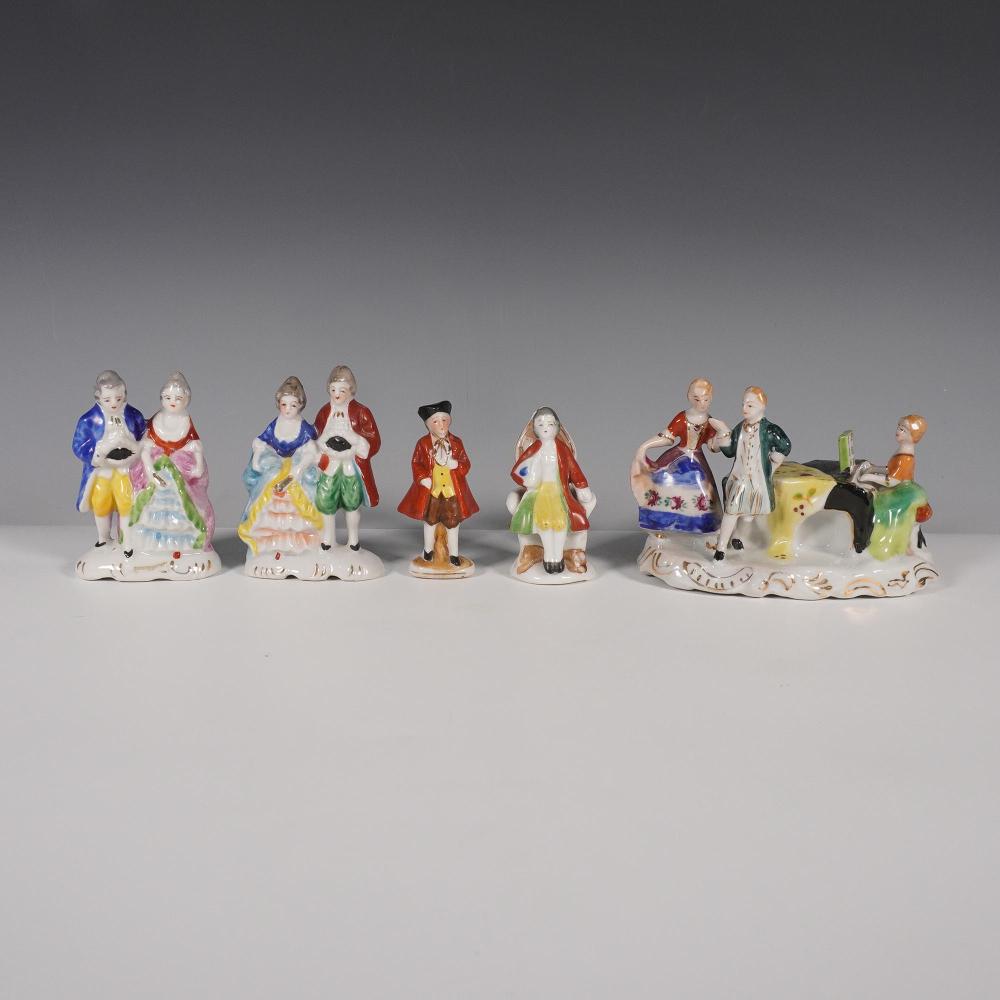 |
5pc Occupied Japan Rococo-Style Porcelain Figurine Set | Lion and Unicorn | 2025-05-15 | 145 | USD 20 (buyer’s-premium treatment unknown) |
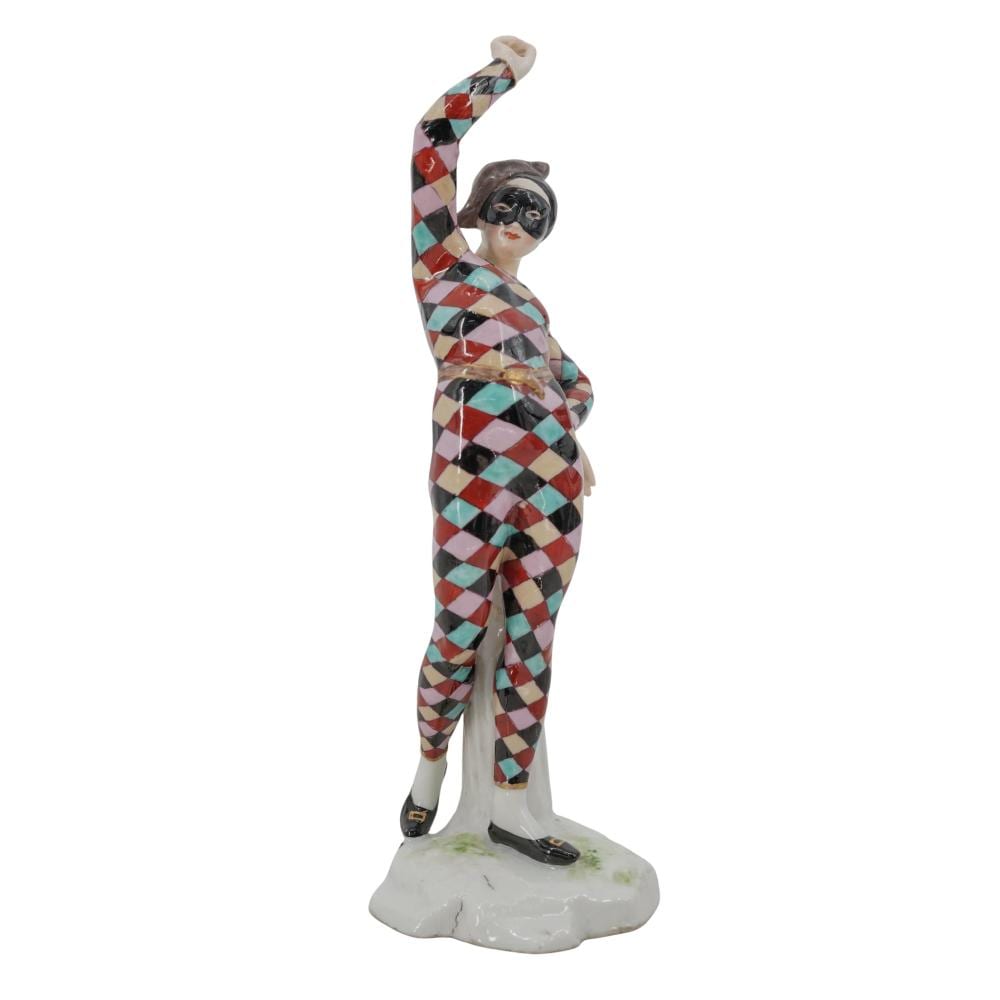 |
Meissen "Commedia Dell'Arte" Porcelain Figurine | Akiba Galleries | 2026-03-17 | 360 | USD 125 (buyer’s-premium treatment unknown) |
How these auction records were verified
Each row retains its exact source URL, lot identity, retrieval time, access result, and immutable record hash. Inspect the public comparable provenance record.
Disclosure: prices are shown as reported by auction houses and are provided for appraisal context. Learn more in our editorial policy.
People also ask
- How much is an antique porcelain figurine worth?
- How to authenticate porcelain figurine marks?
- Do porcelain figurines increase in value over time?
- What repair level is acceptable for resale?
- How do I use auction comps to validate pricing?
- What if a figurine has no maker mark?
- How important is provenance for porcelain valuation?
- Can I list missing-arm figurines and still get a good value?
See what the report looks like
Sample reports show how photos, comparable evidence, condition notes, and a value conclusion are documented.
Choose your next step
Use the path that matches the decision you need to make about the item.
Not sure it is worth appraising?
Start with a lower-friction screen to understand the likely category, evidence, and next step.
Upload photos for a free first lookWant proof before paying?
See how a signed report documents photos, comparable evidence, condition notes, and value conclusions.
View signed report sampleNeed a signed report?
Use this for insurance, estate, donation, resale, or documented value decisions.
Need documentation now? Start signed appraisalNeed local or specialist help?
Compare directory options when the work needs in-person review or a specialist near you.
Find local art specialistsNot ready for a paid report yet?
Use the free estimate to test whether your figurine is likely to qualify for a signed valuation.
- No card needed
- Low-friction first pass
- Clear next-step recommendations