Andy Warhol 1928 1987 Apple From Ads: appraisal and value basics
Andy Warhol 1928 1987 Apple From Ads research should start with identification, condition, provenance, and item-specific market evidence. Use this guide to compare the signals that matter before paying for a formal appraisal or deciding whether to sell.
Andy Warhol Apple from Ads Print Appraisal Guide
Andy Warhol’s Apple (from Ads) is one of the most recognizable images in his late-career printmaking, distilling the sleek optimism of 1980s corporate branding into Pop art. For appraisers, dealers, and collectors, the work sits at the crossroads of art, design, and technology culture—highly sought after, widely reproduced, and frequently misrepresented. This guide focuses on accurate identification, condition assessment, and valuation to support informed appraisals.
What is “Apple” (from Ads)?
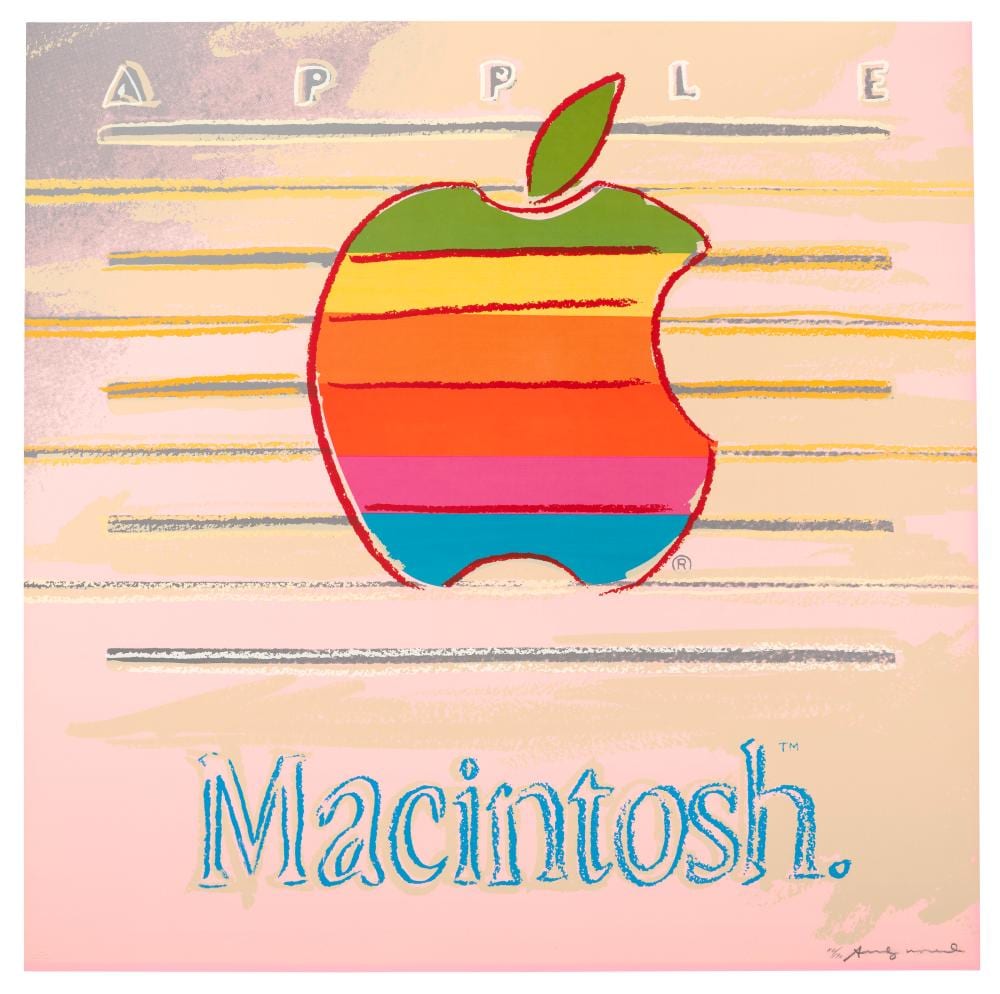
- Year and series: Apple is one plate from Warhol’s 1985 portfolio Ads, a suite of ten screenprints appropriating major American advertisements and brand iconography. Other subjects in the portfolio include Chanel, Paramount, Blackglama (Judy Garland), Volkswagen, Life Savers, and more.
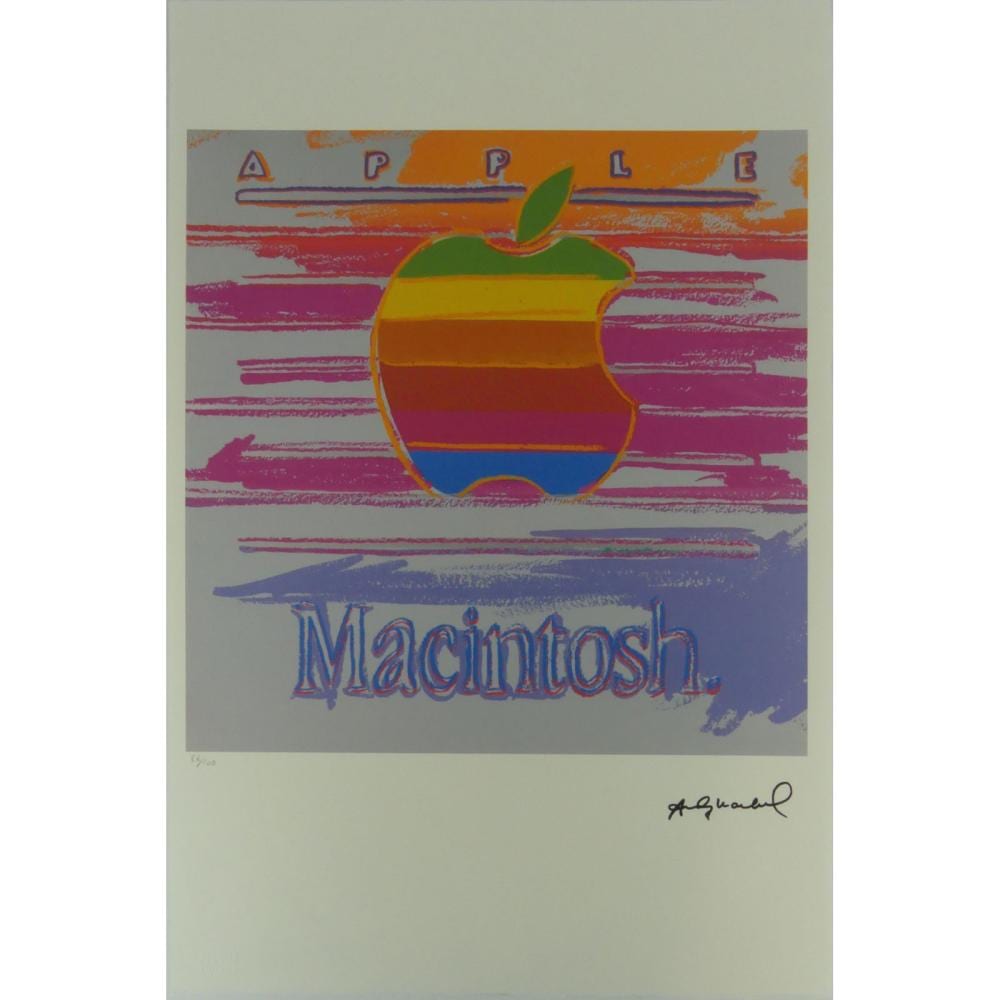
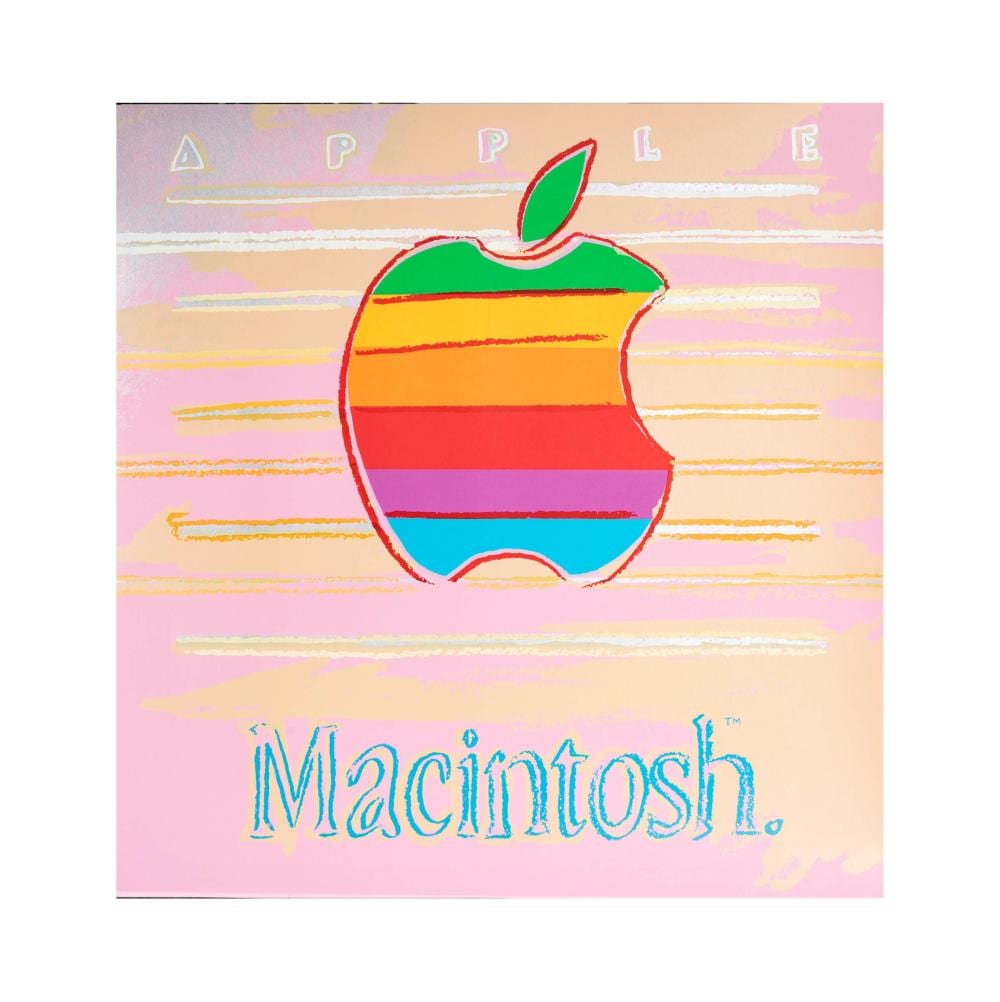
- Visual description: The print features the classic rainbow-striped Apple logo with Warhol’s characteristic high-contrast color fields and a bold, poster-like composition. The image trades on the brand’s clean, modern identity while framing it within Warhol’s ongoing dialogue about consumer culture.
- Cultural context: Warhol had an enduring interest in mass media and advertising. By the mid-1980s, he was reflecting a landscape where luxury brands and tech companies shaped popular imagination. Apple, then a new cultural force thanks to the Macintosh, symbolized innovation and aspirational design—ideal material for Warhol’s Pop lens.
- Portfolio format: Ads was issued as a complete portfolio of ten prints as well as individual sheets. Many examples of Apple on the market are separated from their original portfolio sets.
Key specifications and how originals were produced
While specific technical details can vary slightly between impressions and across sources, the following attributes are standard for documented examples of Apple (from Ads):
- Medium: Screenprint in colors on Lenox Museum Board (a heavy, high-quality paper stock common to Warhol’s 1980s prints).
- Sheet size: Approximately 38 x 38 inches (about 96.5 x 96.5 cm). Minor variance of a few millimeters is normal.
- Editioning:
- Numbered edition of 190.
- Additional proofs typically include artist’s proofs (AP), printer’s proofs (PP), and sometimes hors commerce (HC) impressions. These are usually designated with appropriate notations in pencil.
- Signatures and inscriptions:
- Generally signed “Andy Warhol” in pencil, typically lower right margin.
- Numbered in pencil, typically lower left (e.g., “123/190” or “AP 7/30”).
- Some impressions may include a stamp or blindstamp related to the printer/publisher; presence and position can vary.
- Printer and publisher:
- Printed by Rupert Jasen Smith, New York, Warhol’s primary screenprint collaborator in this period.
- Published by Ronald Feldman Fine Arts, Inc., New York.
- Catalogue raisonné:
- Documented in the Feldman/Schellmann catalogue raisonné of Warhol prints (FS II. entry for Ads). Always verify the exact entry in the most current edition.
- Portfolio colophon:
- Complete portfolios were issued with a colophon page detailing edition size and publisher/printer information. A single Apple print separated from the set won’t include a colophon, but any documentation tying it back to a portfolio provenance can be helpful.
Notes for appraisers: If you encounter an example outside the ~38-inch square format, on thin poster paper, or lacking pencil signature/numbering, it merits immediate scrutiny. Warhol’s screenprints of this era were not issued in postcard, small poster, or open-edition formats by the artist; those are reproductions.
Attribution review and how to spot reproductions
Warhol’s prints are heavily faked and frequently confused with authorized reproductions or promotional posters. A careful, methodical approach is essential.
- Physical attributes
- Paper stock: Documented impressions are on thick Lenox Museum Board. The board is rigid and can stand upright; it does not curl easily like poster paper. Under magnification, the surface is relatively smooth with occasional minor fibers; it is not glossy.
- Ink layer: Silkscreen ink often sits slightly on top of the sheet, with flat, even color fields. You may see very subtle edge buildup where colors overlap. Offsets/lithographs usually show dot patterns (rosette) under magnification; Warhol’s screenprint color areas do not.
- Size and margins: Documented sheets are near 38 x 38 inches with full margins. Trimming occurs but should raise questions. Small-format “Warhol Apple” items are reproductions.
- Edition markings and signature
- Pencil signature and numbering in the margins are hallmarks. The pencil line quality should be natural and vary in pressure—machine-printed signatures are uniform.
- Proofs use standard designations (AP, PP, HC) in pencil. Notations should be consistent with period practices and the artist’s hand.
- Watch for printed or “facsimile” signatures as part of the image layer—these are not documented signings.
- Impressions and workshop traces
- Blindstamp or workshop stamp: Many impressions carry the Rupert Jasen Smith blindstamp. Presence, absence, or exact look can vary, but an embossed mark is a positive sign when consistent with known examples.
- Verso notations: Some impressions bear inventory numbers or labels from the publisher or later galleries. Labels alone are not proof of originality, but good corroborating evidence.
- Documentation and provenance
- Strong provenance includes invoices from reputable galleries, auction catalogs listing the specific impression, and documentation referencing the Ads portfolio, publisher, or printer.
- The Warhol Attribution review Board ceased operations in 2011 and no longer issues opinions. Contemporary attribution review relies on connoisseurship, catalogue raisonné references, workshop records, and market-recognized experts.
- Red flags
- Thin poster paper or canvas prints in small sizes.
- High-gloss surfaces and visible CMYK dot patterns under a loupe.
- “Signed” within the image in ink that doesn’t sit on the paper, or signatures identical to printed reproductions.
- No numbering, wrong edition captions, or strange inscriptions (e.g., “limited edition 2500”).
- Too-good-to-be-true pricing with no paper trail.
When in doubt, a comparison under magnification with a known documented Warhol screenprint from the mid-1980s can clarify print method, ink quality, and paper.
Condition grading and conservation risks
Condition is a prime driver of value. Warhol’s 1980s screenprints are robust, but Lenox Museum Board and flat, saturated inks are unforgiving of mishandling.
Common issues
- Handling creases and corner bumps: Often visible in raking light; significantly impact value, especially within the image area.
- Surface scuffs and abrasions: Flat color fields show marks plainly. Even light scuffing can be distracting.
- Ink loss or scratches: Screenprint ink can chip if flexed or abraded.
- Paper toning and light staining: Exposure to UV can cause overall warmth or localized fade lines at former mat windows.
- Tape stains and adhesive residue: Old hinges or pressure-sensitive tapes can stain or distort the sheet.
- Crease from portfolio storage: Minor pressure marks can occur near edges if portfolios were poorly stored.
Less common but serious
- Color fading: Some pigments are light-sensitive. Prolonged exposure can mute the vibrancy of the Apple logo stripes. Compare suspected fading to known fresh examples or protected margin areas.
- Restoration overpaint: Inpainting on flat fields can be detectable under UV light or raking light. Over-restoration reduces desirability.
Conservation best practices
- Framing: Use a category-dependent amount cotton museum board, spacers to prevent glazing contact, and UV-filtering acrylic or glass. Avoid dry-mounting; Warhol prints should remain fully reversible.
- Environment: Stable temperature and humidity, away from direct sunlight and heat sources.
- Handling: Cotton gloves or clean dry hands; support the entire sheet with a rigid board. Never lift by one corner.
- Documentation: Photograph the sheet unframed, front and back, under even light and raking light. Notate all defects precisely for appraisal files.
Condition grading should be explicit (e.g., Excellent, Very Good, Good, Fair) with defect descriptions, locations, and approximate sizes. Serious collectors and insurers expect clarity.
Market performance and valuation guidelines
Warhol’s Ads portfolio has enjoyed steady demand with periods of strong appreciation. Apple, as a subject linking Pop art and tech history, typically ranks among the more sought-after plates from the set.
Key value drivers
- Condition: Prime, unblemished impressions command a significant premium. Visible creases, scuffs, or stains reduce value, often materially (a condition-specific range depending on severity and location).
- Edition type: Regular numbered edition versus AP/PP/HC can affect pricing. Proofs sometimes carry a modest premium, though in some markets they trade at parity; the effect varies with subject desirability and provenance.
- Provenance and documentation: A clear chain of ownership, gallery invoices, and inclusion in noted exhibitions bolster confidence and pricing.
- Market timing and comparables: Recent auction results for Apple and other Ads plates (Chanel, Paramount, Volkswagen) are useful comparators. Subject popularity can shift, but Apple remains consistently strong due to cross-disciplinary appeal.
- Completeness: A complete Ads portfolio with Apple intact will price differently than single-sheet sales. Splitting a portfolio can extract higher gross in active markets; however, matched, complete sets appeal to institutions and some private collectors.
Price context
- Public auction results for Apple have commonly realized mid-to-high six figures in USD for strong-condition, signed and numbered impressions, with premiums for pristine examples and deductions for condition problems or weak documentation.
- Private treaty sales may exceed auction benchmarks for top-condition works. Conversely, works with condition issues or uncertain provenance often clear below headline estimates.
Appraisal approach
- Start with recent sales of Apple within 12–24 months in a similar edition class and condition.
- Adjust for condition using a clear, value-contingent rationale.
- Cross-check against other Ads plates to ensure relative positioning is logical (Apple generally trades toward the top quartile of the set).
- Note currency, buyer’s premium, and market venue when evaluating comparables.
- When evidence is thin, widen the window to include top Warhol screenprints of the mid-1980s for baseline substitution analysis, then narrow with subject-specific premiums.
Practical appraisal checklist
- Confirm medium, paper, and size: Screenprint on Lenox Museum Board, approx. 38 x 38 inches.
- Verify signature and numbering in pencil; note any proof designations (AP, PP, HC).
- Inspect for printer/publisher marks; record any blindstamps or labels.
- Examine under magnification for screenprint characteristics (no CMYK rosettes).
- Document condition thoroughly with raking light photos; note any creases, scuffs, stains, or restorations.
- Assemble provenance: invoices, catalog references, exhibition history, prior auction listings.
- Pull three to five recent, relevant comparables; adjust for condition and edition type.
- Recommend conservation only when it will measurably improve stability or presentation; avoid irreversible treatments.
- Provide a value range with a rationale tied to specific market evidence and condition adjustments.
FAQ
Q: Is Apple (from Ads) ever unsigned? A: Documented examples from the standard edition and proofs are typically pencil-signed. If you encounter an unsigned sheet, treat it cautiously and seek expert review; exceptions exist but are uncommon and require strong corroborating provenance.
Q: What’s the typical edition size? A: The regular edition is 190. There are additional proofs (AP, PP, and occasionally HC), each designated in pencil. Always record the exact designation on the sheet.
Q: How do I tell a poster from a real screenprint? A: Posters are usually smaller, on thin paper, and show CMYK dot patterns under magnification. Documented Warhol screenprints are on thick board with flat, solid color fields and pencil signature/numbering in the margins.
Q: Does a proof impression change value? A: Often proofs trade near the standard edition, sometimes with a modest premium or discount depending on market sentiment, the specific proof type, and provenance. Condition remains the biggest driver.
Q: Can fading be reversed? A: No. Color fading is irreversible. Prevent further loss with proper UV-filtering glazing, conservative light levels, and stable environmental conditions.
By grounding your appraisal in the work’s production specifics, careful condition analysis, and disciplined use of comparables, you can confidently assess Andy Warhol’s Apple (from Ads)—a quintessential late Warhol image with enduring market appeal.