Bindi signed Aboriginal painting: appraisal and attribution basics
Start by treating the Bindi signature as an attribution question, not proof of a named or culturally authorized artist. Compare signature evidence, reverse labels, story notes, art-centre or gallery provenance, materials, condition, community context, and ethical trade documentation before discussing value.
This page replaces a legacy “appraisal report” stub from our WordPress archive and turns it into a practical valuation guide. The keyword phrase readers search for is typically: “An original Aboriginal painting signed Bindi Australian artist, late 20th / early 21st century.”
If you have a painting signed “Bindi” (sometimes noted as originating from Queensland and occasionally titled on the back, e.g. “Vessel that the spirit contains”), the two biggest value questions are straightforward: is the work genuinely original and attributable, and what market tier does it sit in (local emerging artist vs. established Indigenous art centre market)?
Free instant estimate
Not sure if your painting is worth appraising? Let us take a look.
Upload a photo, tell us what you know, and get a free first read. If a full appraisal makes sense, we will say so.
Free. No card needed. Takes about two minutes.
First-pass originality checklist (signed “Bindi” painting)
Before you hunt for the name “Bindi” online, collect evidence. Most attribution mistakes happen because the seller (or the family story) assumes “Aboriginal art” based on style alone. A better approach is to build a photo dossier that lets a specialist evaluate originality, materials, and provenance.
- Front photo in daylight: Straight-on plus angled shots to show surface texture and dot/brush rhythm.
- Signature close-ups: Photograph the “Bindi” signature at multiple angles; look for matching age and medium (paint vs. marker).
- Back of the canvas: Show stretcher bars, staples/tacks, hanging wire, labels, and any handwritten title or story note.
- Materials notes: Record medium (acrylic vs. ochre), support (canvas/board/paper), and size in cm/inches.
- Provenance: Write down where it was acquired (gallery, art centre, market, private sale) and keep invoices/COAs together.
If the reverse includes a title like “Vessel that the spirit contains”, photograph it clearly. Titles and handwriting can sometimes be matched to local gallery lists or exhibition records.
Materials and technique clues for late 20th / early 21st century works
Dating modern Aboriginal-style paintings is usually about studio materials rather than “patina.” Late 20th century and early 2000s works are often acrylic on commercially primed canvas with modern stretcher bars and staples.
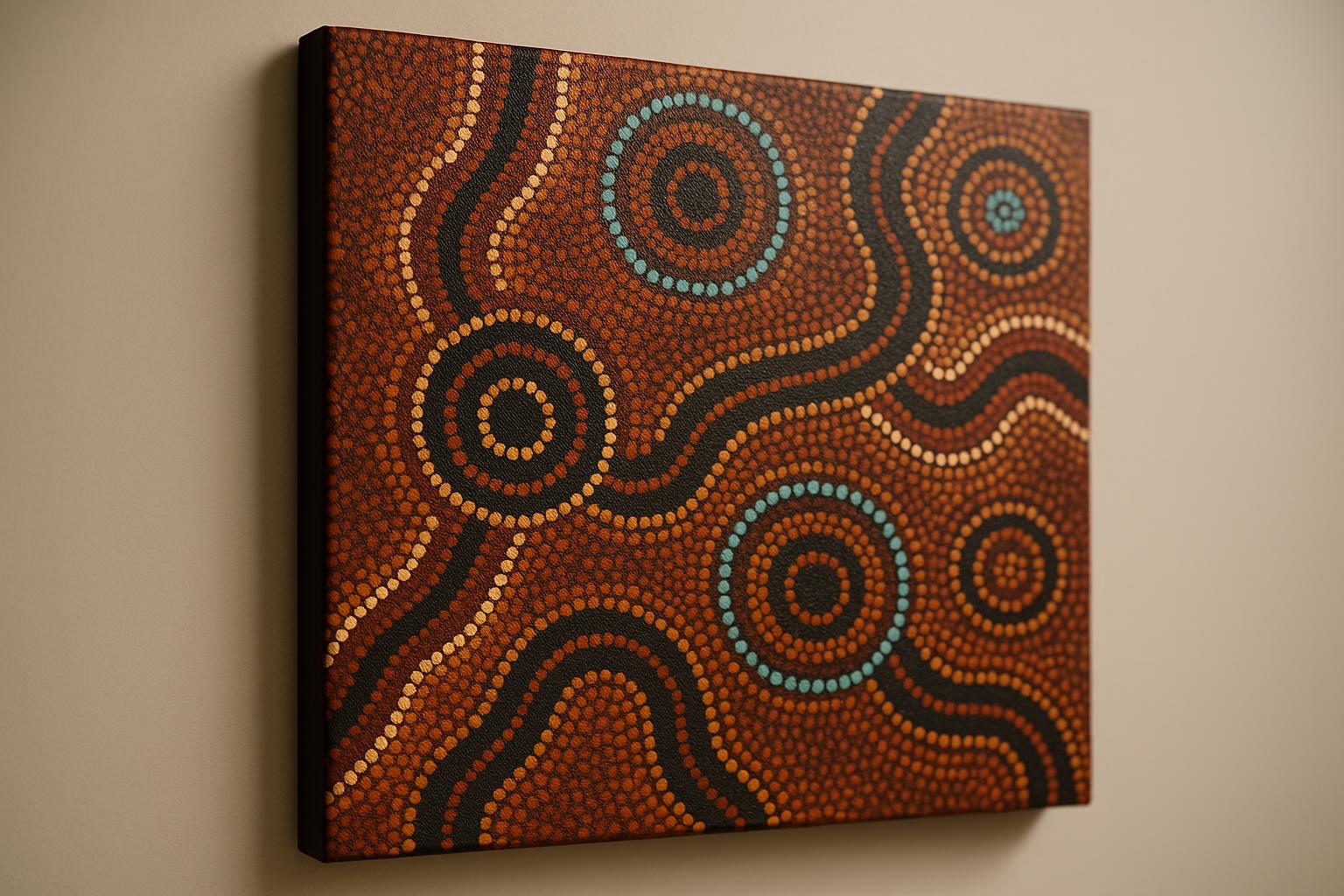
If the work is on canvas, check stretcher construction and staple uniformity. Machine staples and modern hanging wire don’t automatically mean “fake”, but they can contradict claims of earlier periods.
For dot paintings, use raking light to see whether dots sit as distinct raised deposits (common in acrylic) and whether the dot rhythm is consistent across the field. Random spacing or obvious stamping can be a red flag, while steady directional flow often supports an experienced hand.
Signature, story notes, and “who is Bindi?” research
Many readers arrive here because they were told “Bindi is a known Aboriginal artist from Queensland,” yet the name does not show obvious auction track records. That situation is common: local and regional artists may be unlisted in commercial databases, and the name can overlap with unrelated people.
Instead of guessing, use a documentation-first workflow. Photograph the signature and any reverse notes, then build a small research folder:
- Signature variants: note whether it reads “Bindi”, “Bindi (Aust.)”, initials, or includes a date.
- Back labels or stamps: gallery stickers, art-centre tags, framing labels, or collector inventory numbers.
- Title/story wording: copy exact spelling and punctuation; story notes are often reused across catalogues.
- Acquisition facts: where it was bought, approximate year, and who sold it.
Most importantly: do not market a work as “Aboriginal art” unless provenance supports it. If uncertain, “attributed to” is the correct, defensible language.
Attribution review workflow that specialists follow
For contemporary paintings, attribution review is often less about laboratory testing and more about consistent documentation. A typical appraisal workflow looks like this:
- Originality triage: confirm it is hand-painted (not a print) and that signature and paint layers align.
- Provenance review: receipts, gallery labels, art-centre documentation, and prior collection notes.
- Attribution check: compare signature and stylistic markers to any known references; confirm name/location claims when possible.
- Condition assessment: record flaking, warping, smoke damage, overpainting, or varnish issues that affect price.
- Market tiering: benchmark against recent sales of comparable Indigenous Australian paintings (size, medium, and—crucially—artist recognition).
Document the conclusion of each step in writing. That record makes your insurance file defensible and improves buyer confidence if you sell later.
Condition grading, restoration, and red flags
Condition drives price even for modern paintings. Collectors typically pay the most for works that are clean, stable, and clearly documented. The biggest value hits come from paint loss, heavy smoke residue, and unprofessional restoration.
Avoid DIY “fixes.” Don’t seal flaking paint with hardware-store varnish and don’t scrub the surface with solvents. A conservator can consolidate fragile areas with reversible materials—important for both long-term care and resale credibility.
For appraisals, disclose any restoration. Hidden touch-ups can derail a sale when a buyer inspects the work under raking light.
Note: We couldn’t find enough auction records that directly match Bindi Signed Aboriginal Painting Guide to publish a defensible price table. If you are valuing a specific item, include its maker, model, material, photos, and condition so the search can be narrowed.
What similar items actually sold for
To help ground this guide in real market activity, here are recent example auction comps from Appraisily’s internal database. These matched sales are market context only, not an object estimate or identification, and they do not guarantee a price for your specific an original aboriginal painting signed bindi australian artist.
Shown AUD range: AUD 280-AUD 2,800. Median of these 5 AUD examples: AUD 700.
| Comparable | What sold | Auction house | Date | Lot | Source-reported amount |
|---|---|---|---|---|---|
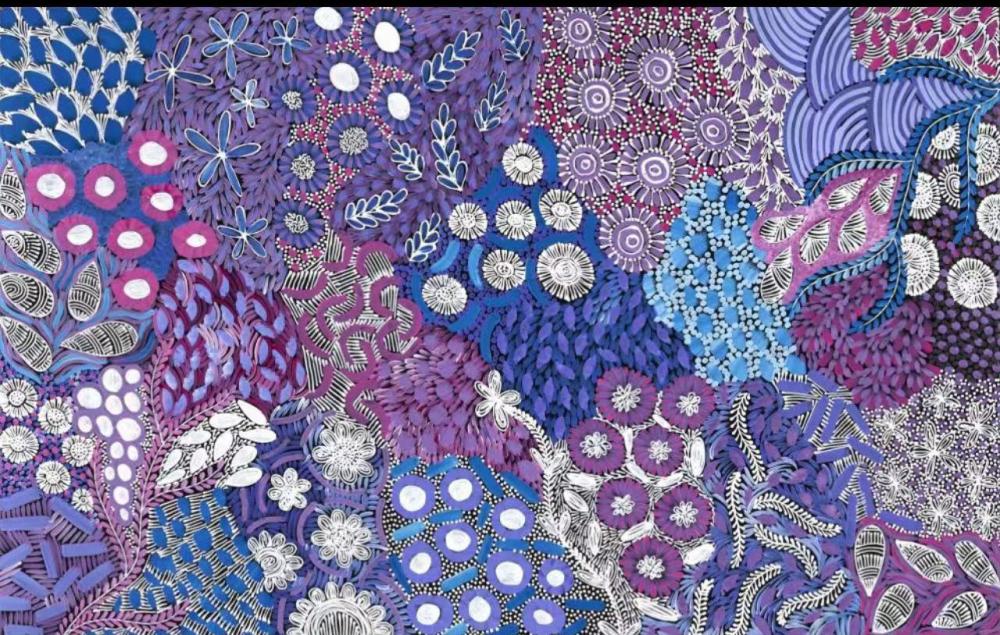 |
Karen Bird Ngale (b.1984) XLarge Original Aboriginal Painting on Canvas 'My Country'Source blocked; provenance matched | Kim's Auction | 2025-06-01 | 144 | AUD 950 (buyer’s-premium treatment unknown) |
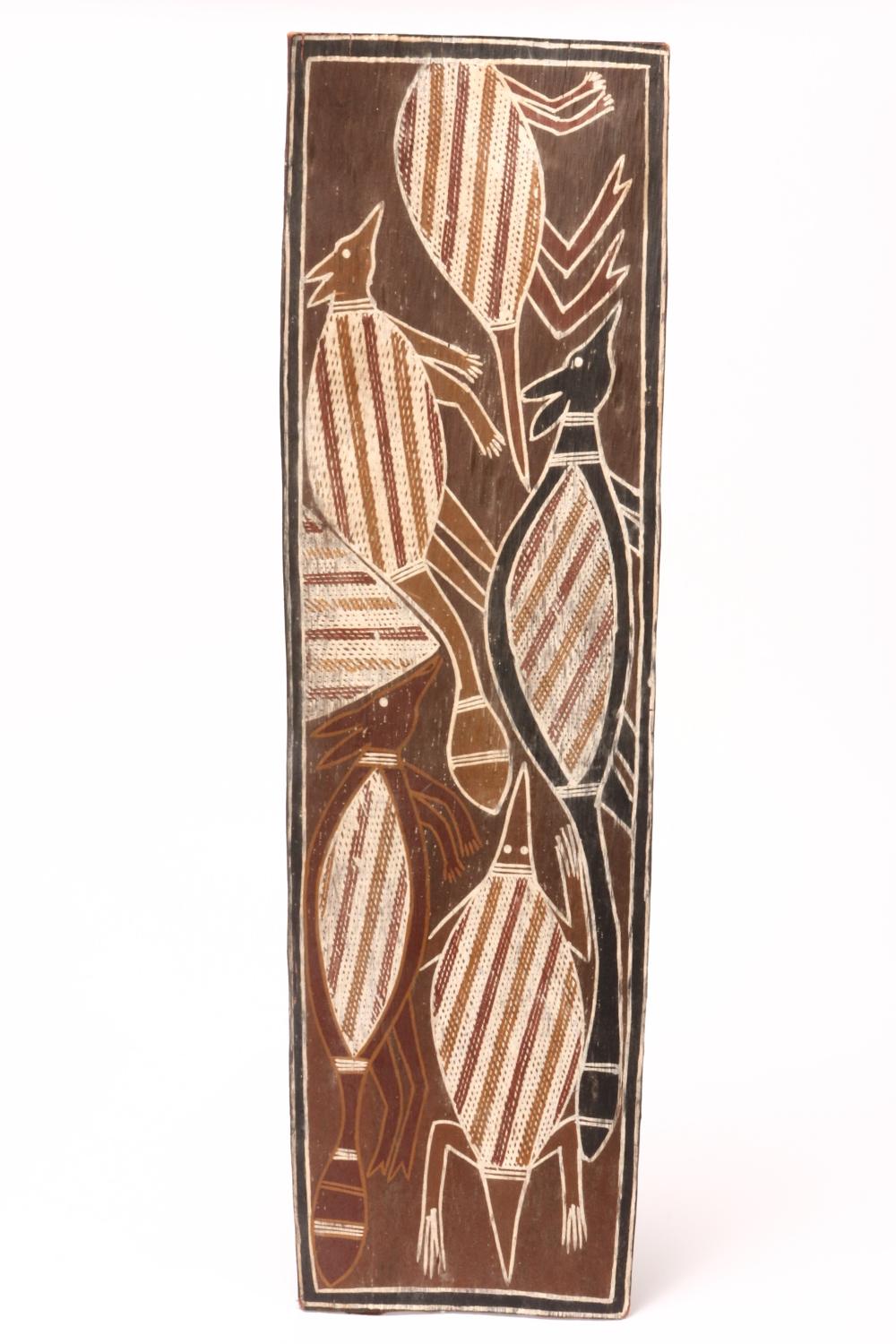 |
Don Gundinga (Australian Aboriginal c.1941-1989),Source blocked; provenance matched | Aalders Auctions | 2025-09-09 | 1039 | AUD 325 (buyer’s-premium treatment unknown) |
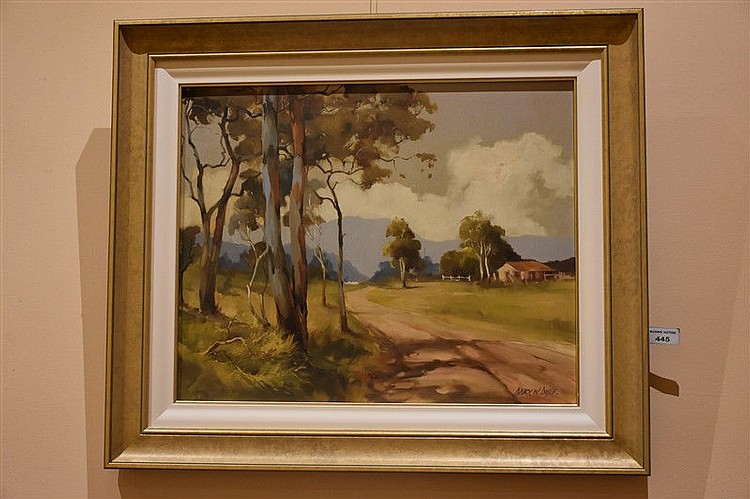 |
Darcy Doyle. A fine original Australian oil painting depicting the old bushSource blocked; provenance matched | Christian McCann Auctions | 2018-03-18 | 445 | AUD 2,800 (buyer’s-premium treatment unknown) |
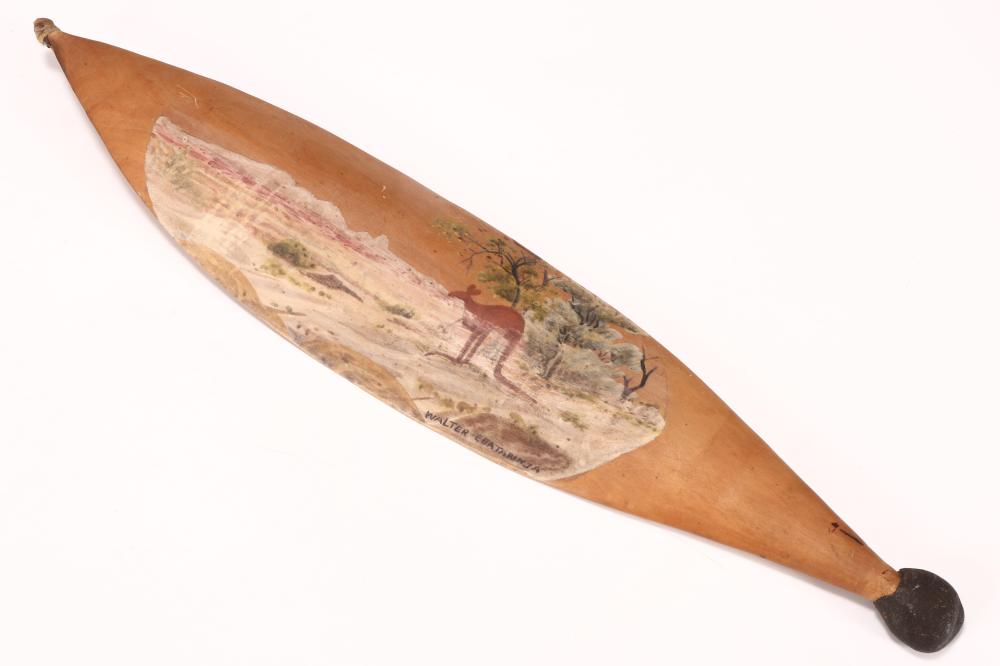 |
Walter Ebatarinja (Australian Aboriginal, 1915-68)Source blocked; provenance matched | Aalders Auctions | 2025-09-09 | 1031 | AUD 280 (buyer’s-premium treatment unknown) |
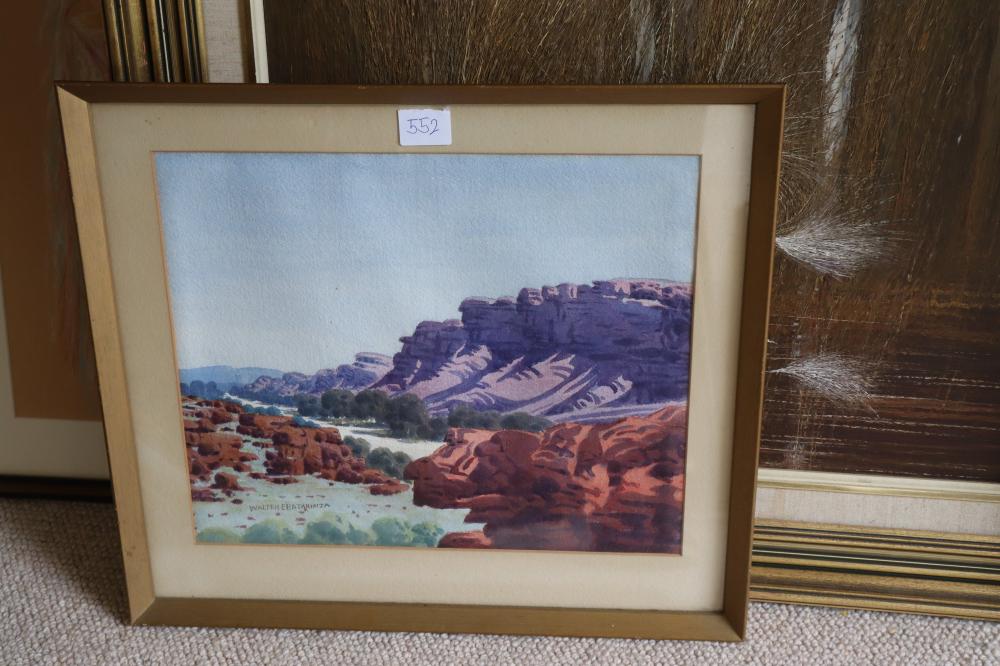 |
Walter Ebatarinja (Aboriginal Australian 1915-1968…Source blocked; provenance matched | Amanda Addams Auctions | 2022-12-11 | 552 | AUD 700 (buyer’s-premium treatment unknown) |
How these auction records were verified
Each row retains its exact source URL, lot identity, retrieval time, access result, and immutable record hash. Live source access was blocked; the exact record matched Appraisily's immutable pipeline provenance. Inspect the public comparable provenance record.
Disclosure: prices are shown as reported by auction houses and are provided for appraisal context. Learn more in our editorial policy.