Does this find belong on the list?
This list is for someone holding a thrift-store bowl, skillet, camera, clock, lamp, silver drawer, or signed print and trying to decide whether it is a named object or ordinary household goods.
The strongest tells are visible from a photo:
- A readable maker mark on the base, back, or dial.
- A complete form: nested set, lid, box, booklet, or a fitted pair.
- Material clues: STERLING versus plate, a cast-iron heat ring, warm Bakelite versus later plastic.
- Honest wear at rims, enamel, and paint, not a ground or refinished surface.
- A surviving label, signature, or edition line on lamps, radios, and paper.
The value gap is the reason to check: Wright sold an Emerson Radio & Phonograph Corp. cathedral radio as lot 155 on 14 April 2026 for USD 2,800.
A sterling service in Appraisily files is proposed at USD 12,500 when the pattern is named and the count is intact. A maker mark is a lead, not proof; completeness and honest surfaces are what change the number.

Start with the kitchen glass
Pyrex nesting bowls and odd color sets
Turn every bowl over. A clean backstamp plus a matching color band is the first filter, not the word Pyrex on a shelf tag.
A three-bowl Americana nest is a set. A single mixed-color bowl is a leftover.
Matthew Bullock Auctioneers sold a Group of 3 Pyrex Americana Blue Nesting Bowls as lot 21 on 11 January 2025 for USD 250.
Check first: Count whether the color band nests as one set before you price a single bowl.
Fire-King jadeite and milk-glass kitchen pieces
Jadeite sells as dinnerware, not as one pretty bowl. Readable Fire-King marks and even color across the group are what buyers photograph.
Rim and handle chips cut a set faster than light utensil marks.
Selkirk Auctioneers & Appraisers sold a fifty-nine piece Fire-King jadeite dinnerware set as lot 171 on 12 May 2023 for USD 500.
Check first: Read the backstamp and run a finger around the rim before you treat jadeite as a group.
What similar items actually sold for
To help ground this guide in real market activity, here are recent example auction comps from Appraisily’s internal database. These matched sales are market context only, not an object estimate or identification, and they do not guarantee a price for your specific 19 overlooked thrift store finds that can be.
Shown USD range: USD 25-USD 70. Median of these 5 USD examples: USD 40.
| Comparable | What sold | Auction house | Date | Lot | Source-reported amount |
|---|---|---|---|---|---|
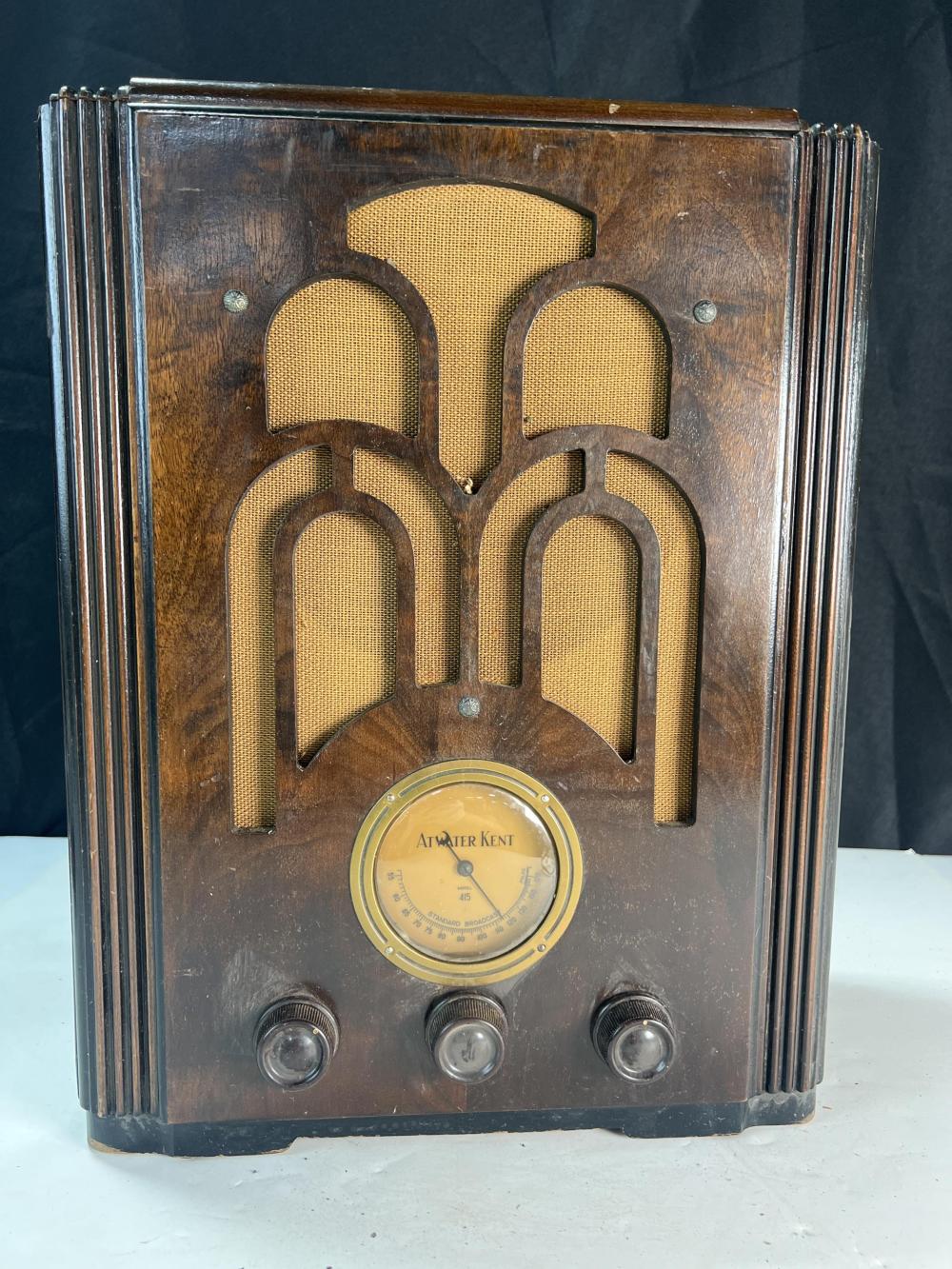 |
Atwater Kent model 415 standard broadcast Cathedral radio All wood untested | Ripley Auctions | 2025-08-12 | 8601 | USD 35 (buyer’s-premium treatment unknown) |
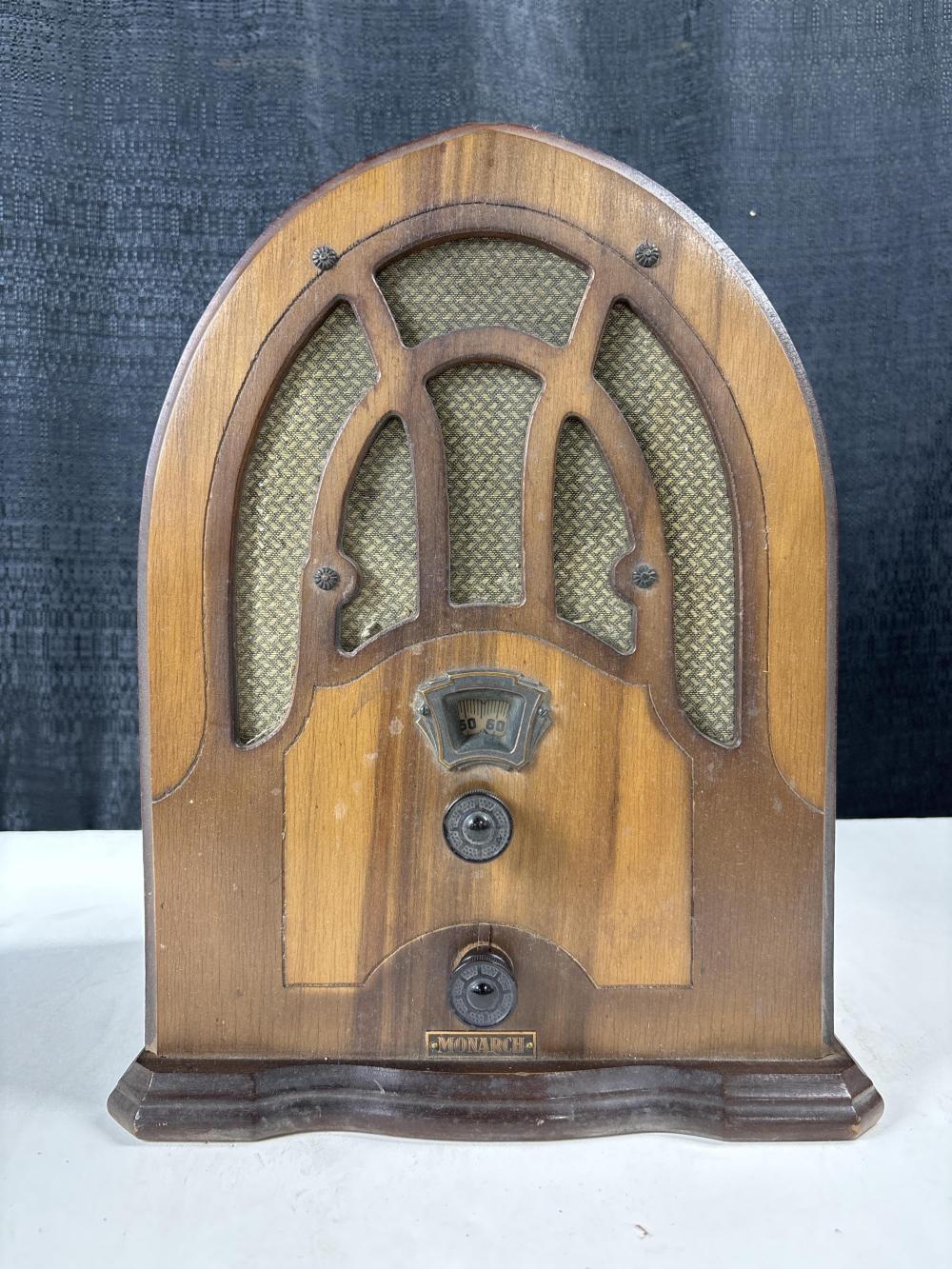 |
Vintage Art Deco Style Antique Monarch Vacuum Tube Cathedral Radio Model 124S, untested, 13” x 10” x 8” | Ripley Auctions | 2025-02-18 | 4635 | USD 70 (buyer’s-premium treatment unknown) |
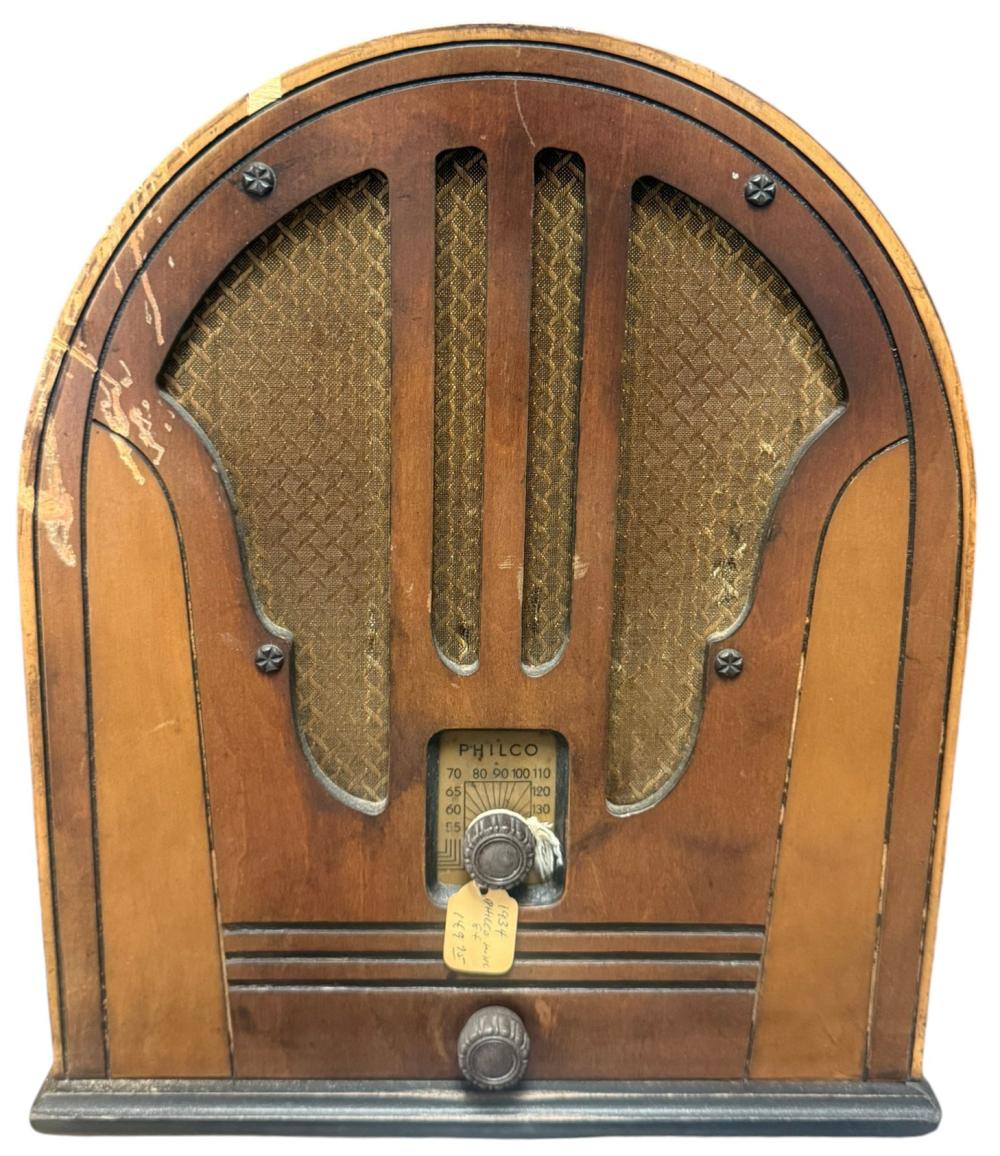 |
1934 Philco Model 54 Cathedral Deco Tube Radio | MiddleManBrokers | 2026-03-26 | 63 | USD 25 (buyer’s-premium treatment unknown) |
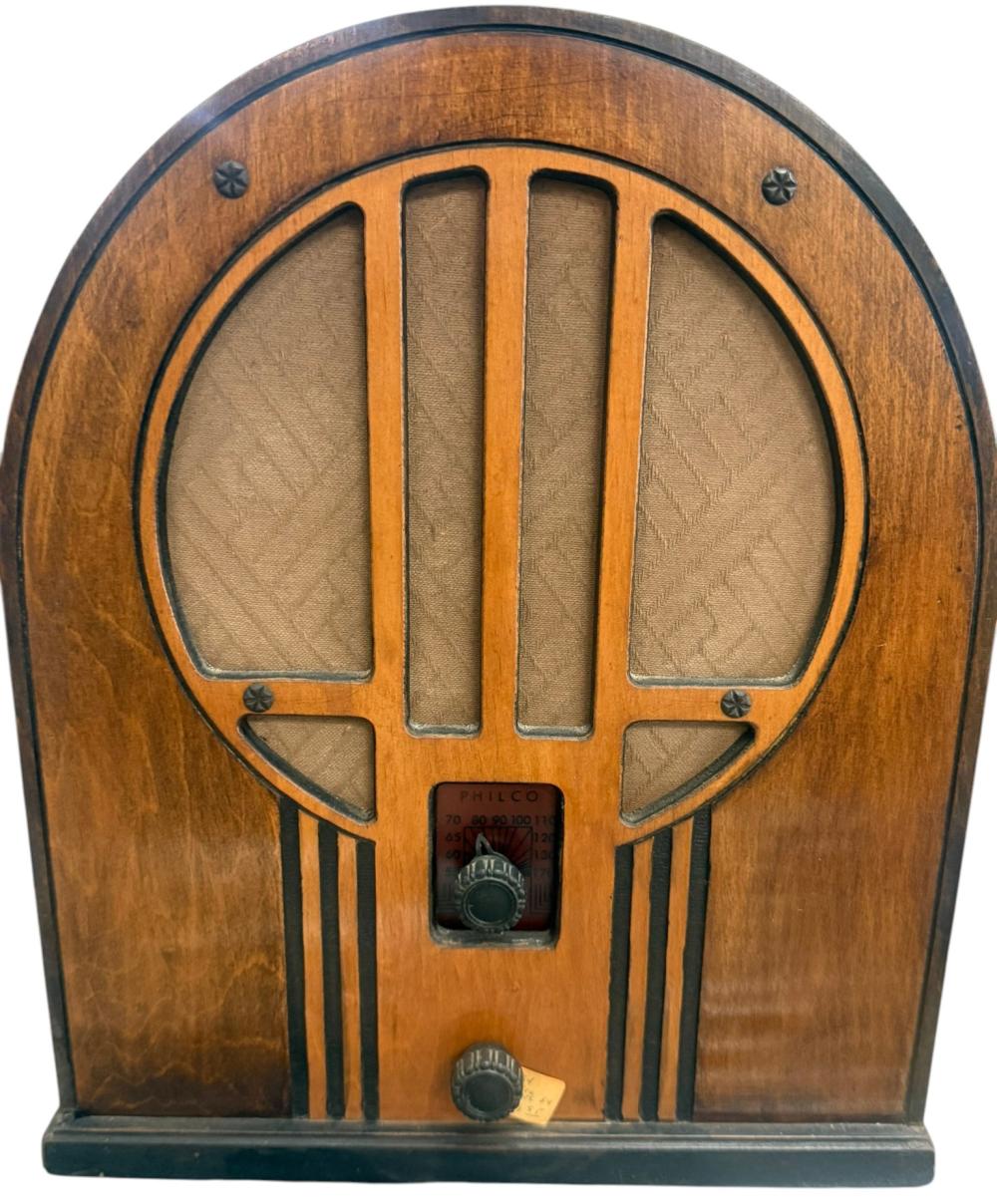 |
1934 Philco Model 54 Cathedral Deco Tube Radio | MiddleManBrokers | 2026-03-26 | 65 | USD 60 (buyer’s-premium treatment unknown) |
| No auction photo supplied | Kadette Cathedral Radio | Donley Auction Services | 2023-04-27 | 1230 | USD 40 (buyer’s-premium treatment unknown) |
How these auction records were verified
Each row retains its exact source URL, lot identity, retrieval time, access result, and immutable record hash. Inspect the public comparable provenance record.
Disclosure: prices are shown as reported by auction houses and are provided for appraisal context. Learn more in our editorial policy.
These auction results are market context, not an object estimate or identification.
From Fiestaware to signed prints
Fiestaware bowls, fridge sets, and stacking pieces
Fiestaware often looks common until you count what is actually there. Completeness is the lever; a missing lid or liner can change the story fast.
A seven-bowl nest is a stacking set. A mixed stack of leftover colors is not.
World Auction Gallery sold a Set of 7 Fiestaware Nesting Bowls as lot 138 on 9 January 2025 for USD 275.
Check first: Count the bowls and look for missing lids or liners before you treat a mixed stack as one set.
Bakelite jewelry and compact accessory lots
Thrift drawers still hide chunky bangles, carved brooches, and odd little purse pieces in Bakelite. Warm color, carved edges, and period hardware are the tells.
Later Lucite in the same lot is a different material and a different number.
Hill Auction Gallery sold a Bakelite and Lucite necklace, bracelet, and earrings lot as lot 92 on 17 June 2026 for USD 225.
Check first: Separate warm carved Bakelite from later Lucite before you price the grouping as one material.
Griswold and Wagner cast-iron skillets
Cast iron is easy to walk past because it looks like cookware. Crisp lettering and a healthy heat ring keep a skillet in the named-maker lane.
A surface that has been ground flat or scrubbed into a blur is a different object.
Dinkys Auction Center sold a Griswold #5 hammered skillet as lot 3 on 27 December 2024 for USD 300.
Check first: Look at the heat ring and whether the logo has been ground flat.
Kodak Brownie cameras and boxed camera lots
Old cameras look decorative until the box and booklet are still with them. Keep the case, the booklet, and any strap.
A camera with no packaging is a different lot than a boxed Beau Brownie.
Blackwell Auctions LLC sold a Rare Kodak Beau Brownie 2A Camera, Box & Booklet as lot 75 on 19 October 2024 for USD 250.
Check first: Keep the box, booklet, and strap with the camera before you photograph it.
Le Creuset and other enameled cast-iron cookware
The thrift-store dutch oven is often chipped. Size and lid fit still matter more than a perfect enamel face.
Honest wear on the rim is not the same as deep enamel loss on the cooking surface.
Westport Auction sold a 34cm Le Creuset round dutch oven as lot 163 on 14 November 2023 for USD 400.
Check first: Seat the lid and look at whether enamel loss is surface wear or deep chips.
Black Forest cuckoo clocks
Carved clocks can look like wall décor to casual shoppers. Movement, weights, and carving depth are the first checks, not the painted dial alone.
A paper label or stamp inside the case is the attribution lead.
Akiba Galleries sold a Black Forest Carved Cuckoo Clock as lot 59 on 2 February 2021 for USD 1,000.
Check first: Open the case for a paper label, then confirm the weights and movement are still with the carving.
Mid-century lamps with the original label
Collectors pay for form, maker, and originality. Even when the shade is gone, a good base and a surviving label can lift a lamp from décor to a named lighting form.
A period glass column with no tag is harder to place than a labeled Murano base.
Akiba Galleries sold a Mid Century Murano Glass Table Lamp as lot 473 on 8 October 2024 for USD 450.
Check first: Photograph any surviving label on the base even if the shade is gone.
Sterling silver flatware and boxed service sets
Silver-plated pieces are common; sterling is the one you want to pause over. Check the pattern, count the pieces, and confirm the marks before you value a drawer by weight.
A named pattern in a counted service is a set. Mixed unmatched spoons are closer to melt value.
Winter Associates, Inc. sold assorted sterling flatware, fifty-five pieces, including International Silver Co. Royal Danish, as lot 199 on 12 January 2015 for USD 800.
Check first: Read STERLING versus plate marks, then count pieces in one pattern.
Milk glass, opaline, and blue glass odds and ends
These shelves can be full of quiet winners: a lidded dish, a vanity piece, a lamp, or a matched pair. The money often sits in a desirable color or a more sculptural form, not in the word milk glass itself.
Look for clean edges, a stable base, and a strong silhouette.
Antiques Supermarket sold an Antique European painted opaline glass vase as lot 55 on 15 July 2015 for USD 1,000.
Check first: Ignore the word milk glass and look at color, silhouette, and whether the form is sculptural.
Weller, McCoy, and other marked pottery
Pottery is easy to miss when the mark is tucked underneath. A readable base mark matters more than a polished display face.
An unmarked vase with a similar glaze is not the same object as a marked Weller form.
Treadway Gallery sold a Weller Pottery vase as lot 182 on 23 April 2023 for USD 800.
Check first: Turn the base for a Weller or McCoy mark before you buy the display face.
Hummel figurines and small porcelain groups
Hummels often look like modest shelf companions until you check for a maker mark and a model number. The original box is a plus, not the first proof.
A grouped lot with clear identification is easier to place than a single unmarked figure.
Premier Auction Galleries sold a Hummel Figurine Collection (8) as lot 535 on 22 June 2024 for USD 675.
Check first: Find the maker mark and model number on the base before you trust the costume.
Early Tupperware, storage lids, and party sets
No matching public sale is cited here. Completeness is still the check: matched bowls, original seals, and one colorway.
Loose lids are easy to ignore. A grouped party set is not the same object as a single bowl with no seal.
Check first: Group lids with bowls in one colorway before you price loose plastic.
Brass candlesticks, lamp parts, and fitted pairs
Pairs sell better than singles. If the footprint matches and the finish is original, the two pieces were made to belong together.
Ignore the word brass and inspect the casting and the threading.
Garth's Auctioneers & Appraisers sold a pair of Spanish brass candlesticks as lot 300 on 25 November 2016 for USD 660.
Check first: Match the footprints and threading; a pair is the selling unit.
Mason jars, closures, and canning-era glass
Most jars are common. The unusual closure, color, embossing, or early lid system is what changes the number.
A midget pint with a named closure can outperform a dozen ordinary clear jars.
Jeffrey S. Evans & Associates sold a Blue Ribbon Goods Midget Pint Improved Mason Style Fruit Jar as lot 282A on 19 June 2024 for USD 892.
Check first: Read the embossing and closure, not just the jar shape.
Vintage toy lots and wagon-branded oddballs
Single toys are easy to overlook. Grouped pressed-steel pieces with original paint are the selling unit.
Polish is not the same as original paint. Packaging and accessories matter more than a cleaned surface.
Leonard Auction sold Pressed Steel Toy Trucks as lot 255 on 24 April 2022 for USD 850.
Check first: Look for original paint on pressed steel, not a polished single toy.
Small radios, clocks, and other labeled desk pieces
Advertising clocks, room clocks, and small radios often get grouped with old stuff until a brand name is visible. Photograph the dial, back panel, plug, and underside.
The better the label, the easier the object is to place.
Wright sold an Emerson Radio & Phonograph Corp. cathedral radio as lot 155 on 14 April 2026 for USD 2,800.
Check first: Photograph the dial, back panel, and maker name together.
Signed ephemera, print pieces, and one-off curios
Do not ignore the shelf object that looks more like a conversation piece than a category. Signed paper with a readable artist name, title, and edition line is not a generic poster.
The market likes a story only when the story is on the sheet.
The Rug Life Auctions sold an M.C. Escher signed lithograph titled Cycle, 22 in x 28 in, as lot 66 on 2 January 2024 for USD 525.
Check first: Read the artist name, title, and any edition line on the sheet before you treat it as a poster.
Typical thrift-aisle scenario
A typical thrift aisle holds nesting bowls priced as kitchen glass, a skillet with a blurred logo, and a boxed Brownie next to a camera with no strap.
The marked nesting set and the boxed camera belong on this list. The ground skillet does not.
Feature gallery: marks and wear patterns to look for
These close-ups show the details that often separate a casual thrift find from a better sale candidate. Use them as a quick visual checklist before you leave the aisle.


Quick second opinion
Start with a free read on the thrift-store find
If you found a bowl, clock, lamp, or box set that feels promising, use the two-step check below before you list it. The goal is to separate a common shelf piece from the version buyers actually pay for.
Start freeSources and notes
Auction examples cited on this page come from Matthew Bullock Auctioneers, Selkirk Auctioneers & Appraisers, World Auction Gallery, Hill Auction Gallery, Dinkys Auction Center, Blackwell Auctions LLC, Westport Auction, Akiba Galleries, Winter Associates, Inc., Antiques Supermarket, Treadway Gallery, Premier Auction Galleries, Garth's Auctioneers & Appraisers, Jeffrey S. Evans & Associates, Leonard Auction, Wright, and The Rug Life Auctions. Condition, completeness, date, and market timing all affect sale prices, so treat every comp as a reference point rather than a guarantee.
For sourcing standards, review Editorial policy. For a faster next step, start with Appraisily’s appraisal flow.
Long-tail search variations
- What thrift store finds are worth the most money?
- How can I tell if Pyrex is vintage?
- Which thrift-store kitchen items sell fastest?
- How do I spot real Bakelite jewelry?
- Is a Griswold skillet worth buying?
- What should I check on a Brownie camera?
- How do I know if Fiestaware is old?
- Is Le Creuset worth picking up secondhand?
- What makes a cuckoo clock valuable?
- Should I buy sterling silver at a thrift store?
These are the same questions readers ask when they want quick, practical clues rather than broad theory. The answer usually comes down to the mark, the set size, and how much original material is still present.
How We Research Valuation Data
Our appraisal guides are based on auction results, dealer pricing data, and professional appraiser insights. We may earn a commission when you use our free professional appraisal service. Learn about our editorial standards.
Choose your next step
Use the path that matches the decision you need to make about the item.
Not sure it is worth appraising?
Start with a lower-friction screen to understand the likely category, evidence, and next step.
Upload photos for a free first lookWant proof before paying?
See how a signed report documents photos, comparable evidence, condition notes, and value conclusions.
View signed report sampleNeed a signed report?
Use this for insurance, estate, donation, resale, or documented value decisions.
Need documentation now? Start signed appraisalNeed local or specialist help?
Compare directory options when the work needs in-person review or a specialist near you.
Find local specialistsSee what the report looks like
Sample reports show how photos, comparable evidence, condition notes, and a value conclusion are documented.
Need a lighter next step?
Get a written opinion on the thrift-store find you almost passed by
If the piece has a mark, a maker, or a story that feels bigger than the sticker price, our start flow is the cleanest way to move it forward.
- Fast written review
- Photo-friendly intake
- Good for single items or sets
No obligation. Private upload. Keep the focus on the object, not the guesswork.