Takashi Murakami Auction Prices and Value Guide
Takashi Murakami auction prices are tracked in Appraisily's artist market index, with source-directory coverage of 7,458 records. Use this page to review sold-lot activity, market context, and valuation factors before requesting a formal appraisal.
Takashi Murakami auction prices: quick answer
Takashi Murakami auction prices depend on medium, size, date, condition, provenance, edition details, attribution confidence, and recent comparable auction sales.
- Artist
- Takashi Murakami
- Source records
- 7,458
- Market update
- 2026-02-06
Takashi Murakami market snapshot
Takashi Murakami shows very deep auction liquidity with 3,263 tracked lots. Median realized sale is around $1,400. Category concentration is still broad or sparse. Last 12 months recorded 410 sales. Latest recorded sale: 2026-02-01.
Realized price distribution
- Under $1,000 (36.0% · 877 sales)
- $1,000 to $10,000 (45.3% · 1,104 sales)
- $10,000+ (18.7% · 455 sales)
- Median sale (last 12 months)
- $850
- Sales recorded (last 12 months)
- 410
- Median shift vs prior year
- 0.0%
- Latest recorded sale
- 2026-02-01
Artist context
About Takashi Murakami
Born
1962
Nationality
Japanese
Also known as
村上隆, Murakami Takashi, Cunshang, Long
Takashi Murakami is a Japanese contemporary artist born in 1962 in Tokyo. He works across fine art, sculpture, film, and commercial media, and is recognized for dissolving the boundary between high art and popular culture. He originated the Superflat concept, which links the visual flatness of Japanese graphic tradition to the aesthetics of postwar consumer culture. In 2001 he founded Kaikai Kiki Co., Ltd., an art production and management company based in Tokyo. His work is held in major institutional collections including the Museum of Modern Art in New York. Murakami's practice encompasses painting, sculpture, printmaking, animation, and high-profile collaborations with fashion labels and musicians, making him one of the most visible contemporary artists in both museum and commercial contexts. Collectors encounter his output at auction worldwide, spanning original paintings, editioned prints, fiberglass sculptures, and collaborative objects.
SuperflatContemporary ArtNeo-Popacrylic painting on canvassculpture (fiberglass, bronze)silkscreen printsfilm and animationsmiling flowersMr. DOB characterotaku and anime-inspired figures
Common works and media
Murakami produces work in acrylic and oil on canvas, often at large or monumental scale; silkscreen and offset lithograph prints in signed, numbered editions; fiberglass and bronze sculptures ranging from tabletop to installation size; and film or animation projects. Recurring subjects include smiling flowers, the Mr. DOB character, manga- and anime-influenced figures, skull patterns, and mushroom motifs. Collaborative projects with fashion brands and musicians have also generated editioned objects and merchandise that appear at auction. Works span intimate works on paper through room-scale installations.
Market and appraisal context
Takashi Murakami maintains one of the most liquid contemporary art markets worldwide, with 3,683 auction lots recorded from May 2002 through April 2026 and 2,601 lots carrying realized prices. Annual volume is stable and substantial: 540 lots in the trailing twelve months versus 526 in the prior twelve-month window, indicating sustained demand and consistent supply. Price dispersion is extremely wide—from $40 at the low end (small merchandise, unsigned multiples) to $21.7 million for top-tier monumental paintings—reflecting the broad range of media and editions Murakami produces. The interquartile range ($700–$4,600) captures the bulk of print, small-sculpture, and editioned-object activity, while the median sits at $1,300. Major houses Christie's, Sotheby's, and Phillips anchor the high end; Bonhams, Forum Auctions, Tate Ward, Chiswick, and numerous regional houses supply mid-market and entry-level liquidity across currencies (USD, GBP, EUR, MYR). Recent lots include original paintings, attributed works, resin multiples (Mr. DOB editions of 750), flower-themed prints and sculptures, and collaborative pieces (Murakami × MADSAKI). The breadth of auction-house participation and the steady lot throughput make Murakami's secondary market highly observable, though the extreme price range means collectors must compare within a narrow medium, scale, and edition band.
Auction categories and appraisal factors
Common auction categories
- acrylic painting on canvas
- sculpture (fiberglass, resin, bronze)
- silkscreen and offset lithograph prints
- editioned multiples and resin figures
- works on paper (drawings, studies)
Value drivers
- Medium and scale: large-scale paintings and monumental sculptures command premium prices
- Edition size and numbering for prints and multiples
- Provenance and exhibition history
- Subject matter: iconic motifs such as flowers and Mr. DOB attract stronger demand
- Authentication documentation from Kaikai Kiki Co., Ltd.
- Condition, especially for sculptural works with fragile components
Appraisal caveats
- Murakami produces work in a wide range of editions and media; market depth and liquidity vary significantly by format, period, and subject.
- Commercial collaborations and merchandise are distinct from fine-art editions; collectors should confirm the work category before comparing auction results.
- Authentication should be verified through Kaikai Kiki or the relevant gallery; unsigned or undocumented lots require additional due diligence.
- Murakami produces work across an unusually wide range of media and price tiers, from $40 merchandise to $21.7 million paintings. Aggregate statistics (median, quartiles) blend categories and should not be applied to any individual work without medium-specific filtering.
Evidence
Sources for artist context
This source-grounded artist context passed Appraisily's promotion threshold: high confidence, strong sources.
- Wikidata library authority
- Wikipedia wikipedia
- VIAF library authority
- Library of Congress library authority
- The Museum of Modern Art museum or university
- RKD Netherlands Institute for Art History library authority
Recent sale records
Selected public auction records currently in the Appraisily lot index. Use them as market context, then request a formal appraisal before you sell, insure, or donate.
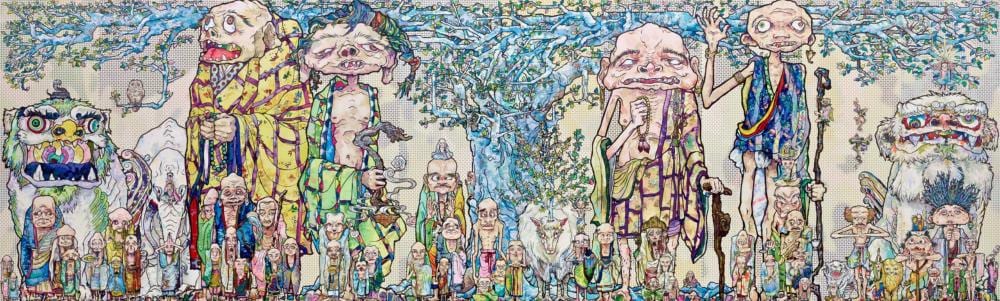
takashi murakami 69 arhats beneath the bodhi tree · Sotheby's · 2022-04-27 takashi murakami 69 arhats beneath the bodhi tree Sotheby's · 2022-04-27
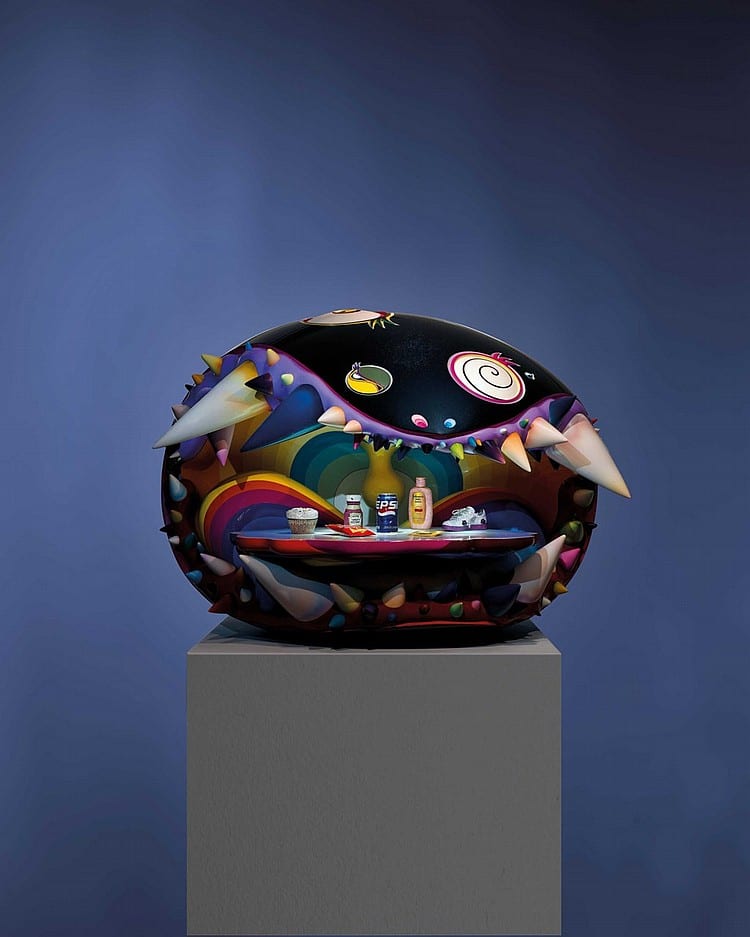
takashi murakami b 1962 pharrell williams b 1973 the simple things · Christie's · 2019-11-23 takashi murakami b 1962 pharrell williams b 1973 the simple things Christie's · 2019-11-23
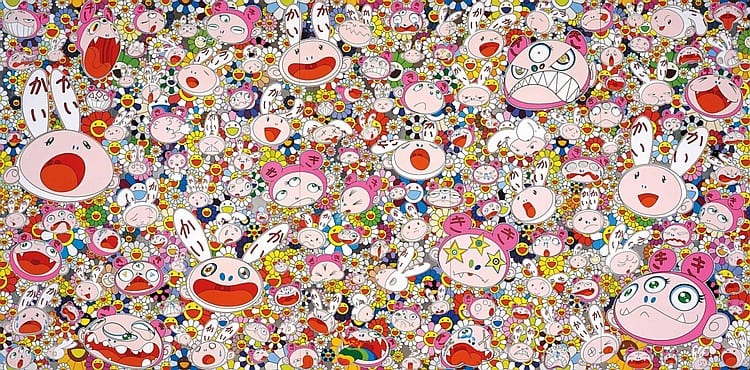
takashi murakami b 1962 wow kaikai kiki · Christie's · 2019-11-23 takashi murakami b 1962 wow kaikai kiki Christie's · 2019-11-23
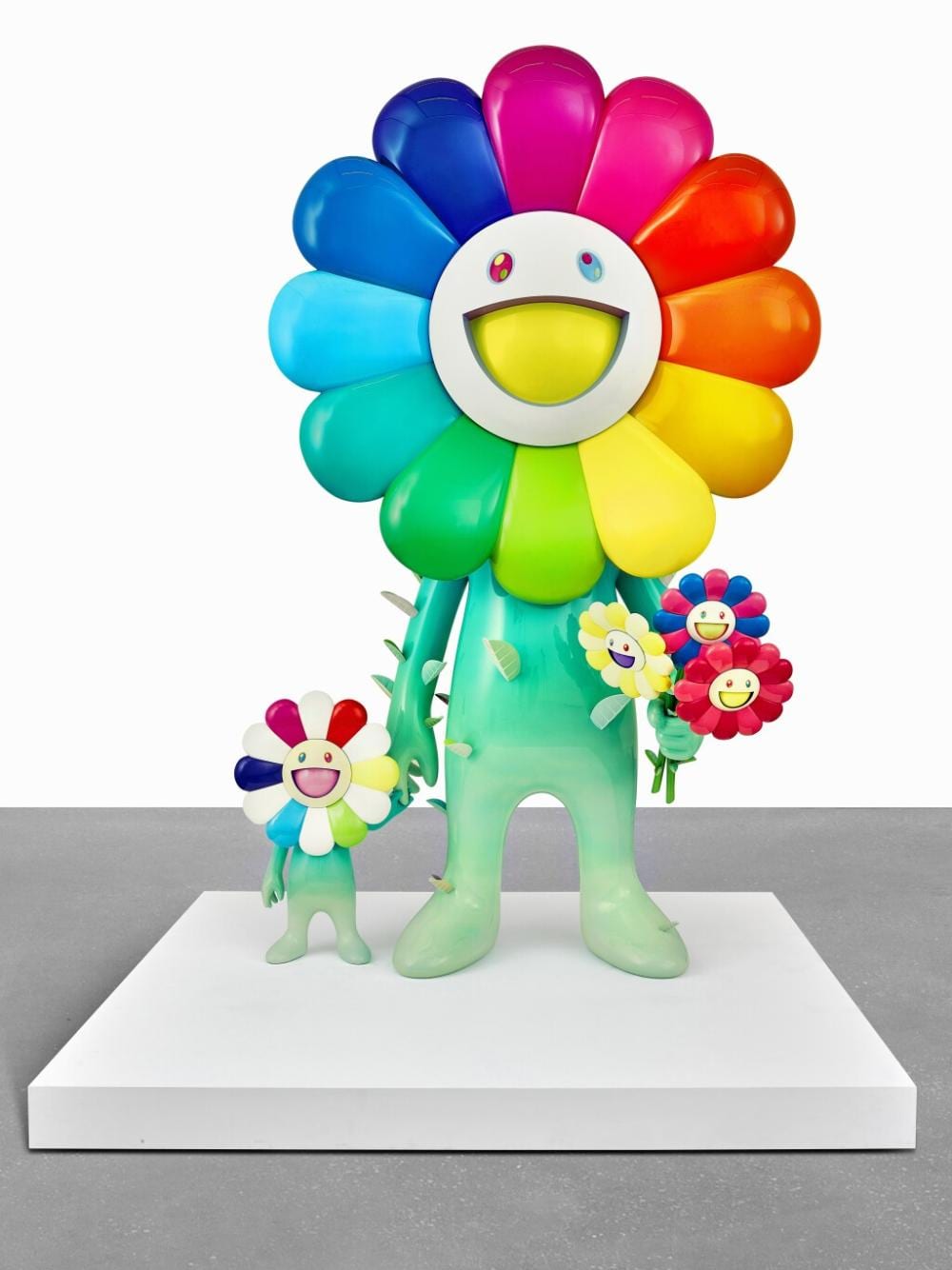
takashi murakami flower parent and child · Sotheby's · 2025-09-28 takashi murakami flower parent and child Sotheby's · 2025-09-28
takashi murakami b 1962 hands clasped acrylic and platinum leaf on canva · Christie's · 2022-11-30 takashi murakami b 1962 hands clasped acrylic and platinum leaf on canva Christie's · 2022-11-30
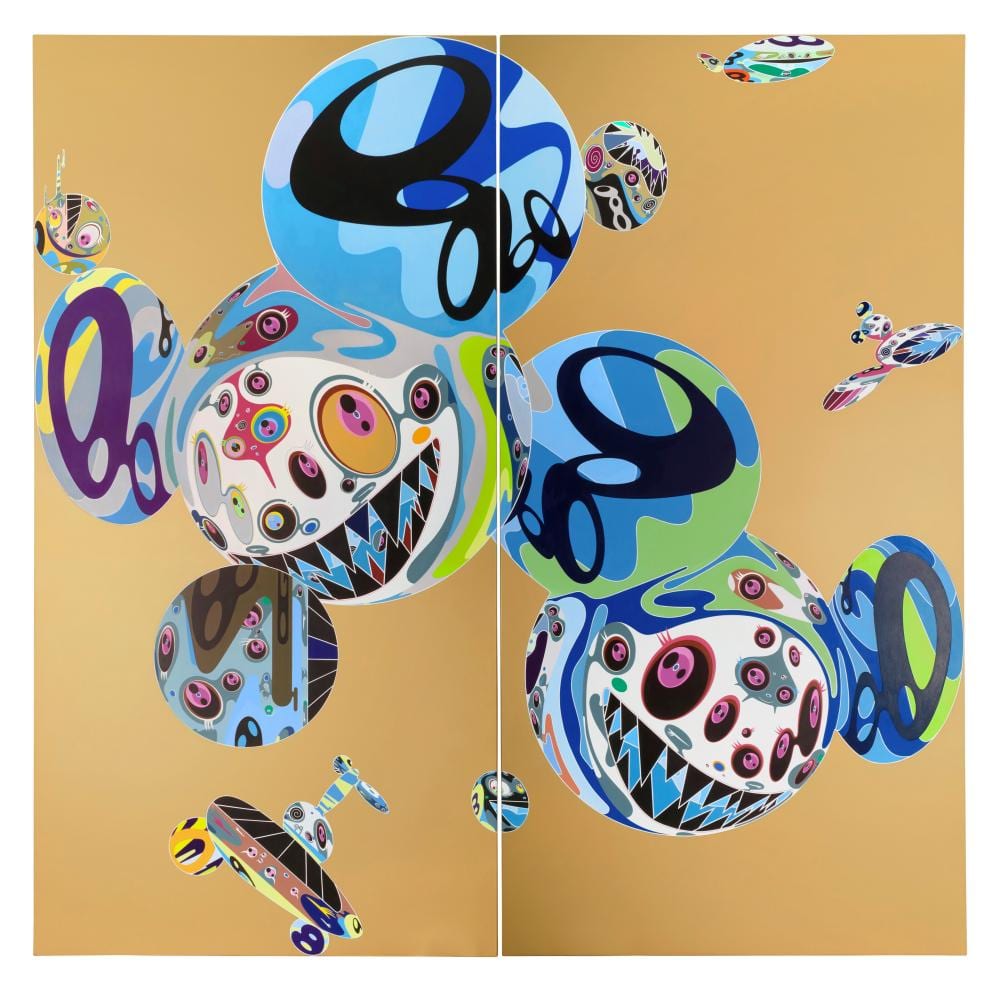
takashi murakami b 1962 the double helix reversal acrylic on canvas m · Christie's · 2025-09-26 takashi murakami b 1962 the double helix reversal acrylic on canvas m Christie's · 2025-09-26
Data basis
This page is built from Appraisily's public auction market index. Private transactions, incomplete sale feeds, and attribution changes may not be fully represented.
Artist value FAQ
How much is Takashi Murakami worth?
Comparable public auction sales are the best starting point, but final value depends on the specific artwork, condition, size, medium, provenance, and attribution confidence.
Can Appraisily value my Takashi Murakami artwork?
Yes. Appraisily can review photos, dimensions, signatures, condition, provenance, and comparable market data to prepare a current valuation.