Gerhard Richter Auction Prices and Value Guide
Gerhard Richter auction prices are tracked in Appraisily's artist market index, with source-directory coverage of 4,677 records. Use this page to review sold-lot activity, market context, and valuation factors before requesting a formal appraisal.
Gerhard Richter auction prices: quick answer
Gerhard Richter auction prices depend on medium, size, date, condition, provenance, edition details, attribution confidence, and recent comparable auction sales.
- Artist
- Gerhard Richter
- Source records
- 4,677
- Market update
- 2026-02-16
Gerhard Richter market snapshot
Gerhard Richter shows very deep auction liquidity with 2,487 tracked lots. Median realized sale is around $12,000. Category concentration is still broad or sparse. Last 12 months recorded 243 sales. Latest recorded sale: 2026-01-14.
Realized price distribution
- Under $1,000 (16.7% · 314 sales)
- $1,000 to $10,000 (30.7% · 579 sales)
- $10,000+ (52.6% · 990 sales)
- Median sale (last 12 months)
- $2,600
- Sales recorded (last 12 months)
- 243
- Median shift vs prior year
- +100.0%
- Latest recorded sale
- 2026-01-14
Artist context
About Gerhard Richter
Born
1932
Nationality
German
Also known as
Gerd Richter, Gerhard Frieder Rudolf Horst Richter
Gerhard Richter, born February 9, 1932, in Dresden, Germany, is among the most influential living visual artists of the postwar era. Working across oil painting, photography, glass, watercolor, drawing, and printmaking, he has maintained a decades-long practice defined by its refusal to settle into a single style. Richter is best known for two seemingly opposed modes: photo-based paintings that translate found or personal photographs into blurred, meditative canvases, and large-scale abstract works built up with squeegees and layered color. From 1971 to 1993 he served as professor of painting at the Staatliche Kunstakademie Düsseldorf. His work is held by major museums worldwide, including the Museum of Modern Art in New York, Tate in London, and the Rijksmuseum in Amsterdam, and has set record auction prices for a living painter. Collectors and institutions alike prize Richter for the intellectual rigor and formal variety that run through every phase of his career.
Contemporary artPhotorealismAbstract paintingOil paintingPhotographyGlass artWatercolorLandscapeAbstractionPhoto-based imagery
Common works and media
Richter's body of work includes large-format abstract oil paintings created with squeegee techniques, blurred photo-paintings based on personal or press photographs, landscapes, portraits, still lifes, and color-chart paintings. He has also produced stained-glass commissions, editioned prints (etchings, screenprints, and lithographs), photographs (both unique and editioned), watercolors, drawings, and collages. With nearly 4,700 works documented in auction databases, collectors most frequently encounter oil paintings, prints, and photographs on the secondary market.
Market and appraisal context
Gerhard Richter maintains one of the deepest and most liquid secondary markets of any living contemporary artist. Appraisily's auction-record index tracks 2,592 lots, of which 1,963 carry a recorded price—spanning from May 1998 through April 2026. Price dispersion is extreme: the recorded range runs from €20 for ephemera and low-edition prints to €140,400,000 for a top-tier original painting, with a median of €10,710 and an interquartile spread of €2,000–€75,000. This breadth reflects Richter's prolific output across media: offset prints, posters, and editioned photographs cluster in the low hundreds to a few thousand euros, while unique oil paintings—particularly large-format abstract squeegee works—routinely achieve six- and seven-figure results. Recent auction-house frequency is led by Christie's, Sotheby's, and Phillips, with strong representation from German houses (Grisebach, Kunsthaus Lempertz KG) and mid-tier specialists (Bonhams, Henry's Auktionshaus, Forum Auctions, Tate Ward Auctions). Liquidity is stable to growing: 267 priced lots appeared in the trailing twelve months versus 257 in the prior period, indicating sustained market participation across price tiers.
Auction categories and appraisal factors
Common auction categories
- Post-War and Contemporary Art
- Editioned Prints
- Photography
- Works on Paper
- Oil Painting
Value drivers
- Medium: large-scale abstract squeegee paintings command the highest prices; editioned prints and photographs trade at lower price points
- Period and series: works from the artist's abstract periods and early photo-paintings are particularly sought after
- Provenance: documented exhibition history and inclusion in major collections strengthen value
- Condition: paint layer integrity is critical for the large abstract works; photographs and prints should be assessed for fading and handling damage
- Authenticity: Richter maintains a catalogue raisonné; verification against published records is essential
- Medium: large-scale unique oil paintings (especially abstract squeegee works) command the highest prices; editioned prints, offset posters, and photographs trade at substantially lower tiers
Appraisal caveats
- Market prices for Richter's work vary enormously by medium, size, and period. Original oil paintings have sold for tens of millions, while editioned prints and photographs trade at substantially lower levels.
- The artist's official website (gerhard-richter.com) was unavailable at time of research; consult the catalogue raisonné and major museum holdings for authoritative work verification.
- No specific auction records or realized prices were available in this source pack. All market observations above are general and should be supplemented with current comparable sale data.
- The maximum recorded price (€140,400,000) represents the top of the observed distribution and should not be treated as a typical valuation; the median of €10,710 is a more representative central tendency for the full body of auction records.
Evidence
Sources for artist context
This source-grounded artist context passed Appraisily's promotion threshold: high confidence, strong sources.
- Library of Congress library authority
- RKD — Netherlands Institute for Art History library authority
- VIAF (OCLC) library authority
- Wikidata library authority
- The Museum of Modern Art museum or university
- Tate museum or university
Recent sale records
Selected public auction records currently in the Appraisily lot index. Use them as market context, then request a formal appraisal before you sell, insure, or donate.
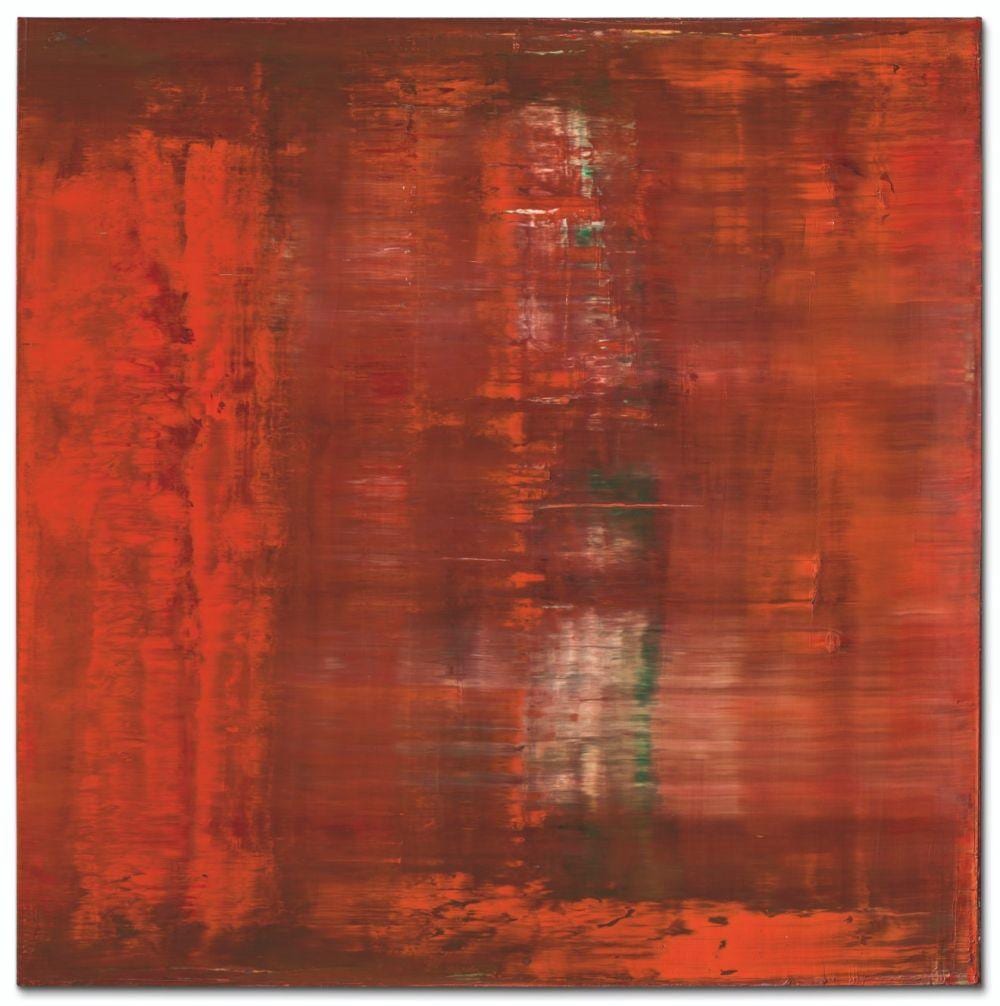
gerhard richter b 1932 abstraktes bild 747 1 oil on canvas 200 x 200 cm · Christie's · 2021-12-01 gerhard richter b 1932 abstraktes bild 747 1 oil on canvas 200 x 200 cm Christie's · 2021-12-01
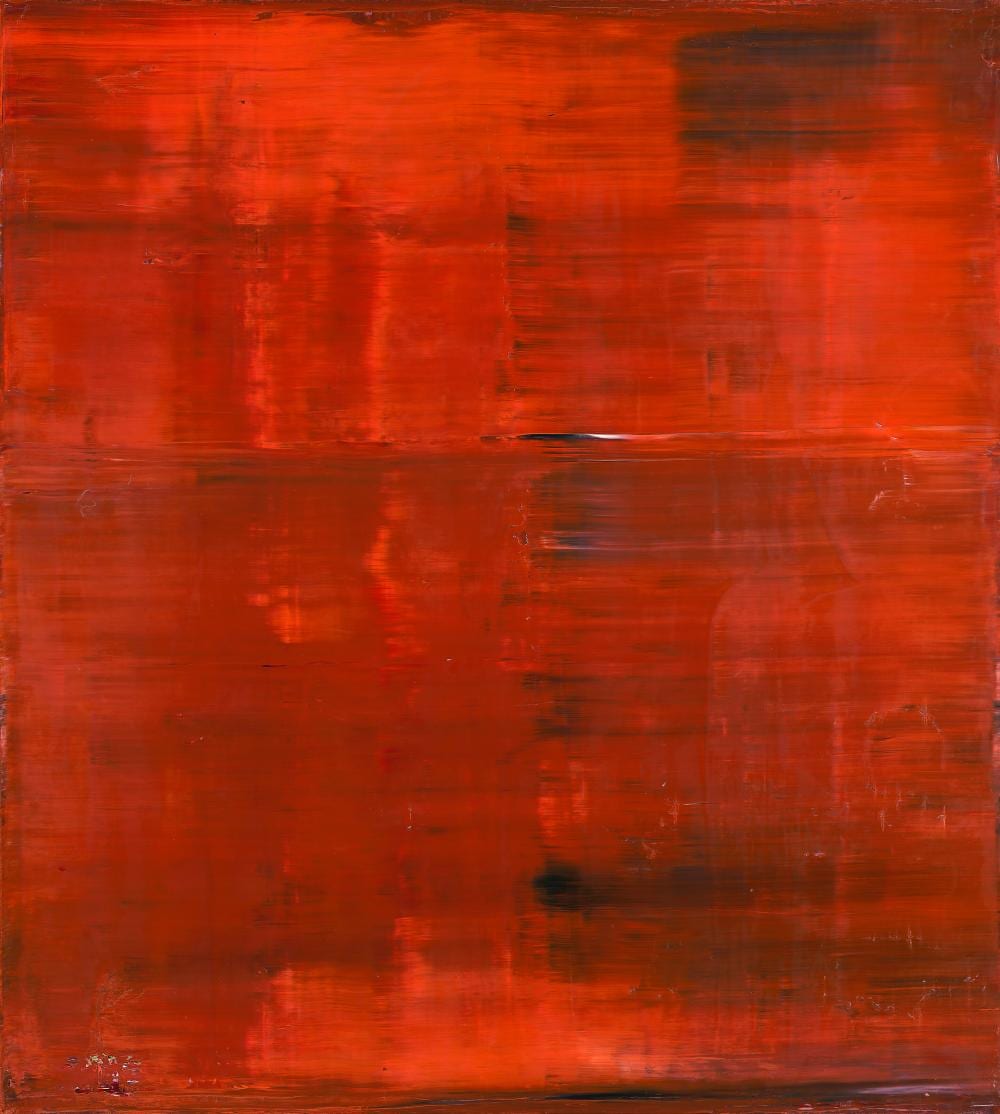
gerhard richter b 1932 abstraktes bild oil on canvas200 x 180 cm 78 · Christie's · 2026-03-27 gerhard richter b 1932 abstraktes bild oil on canvas200 x 180 cm 78 Christie's · 2026-03-27

gerhard richter b 1932 besen oil on canvas 224 7 x 200 cm 88 1 2 x 78 · Christie's · 2022-05-26 gerhard richter b 1932 besen oil on canvas 224 7 x 200 cm 88 1 2 x 78 Christie's · 2022-05-26
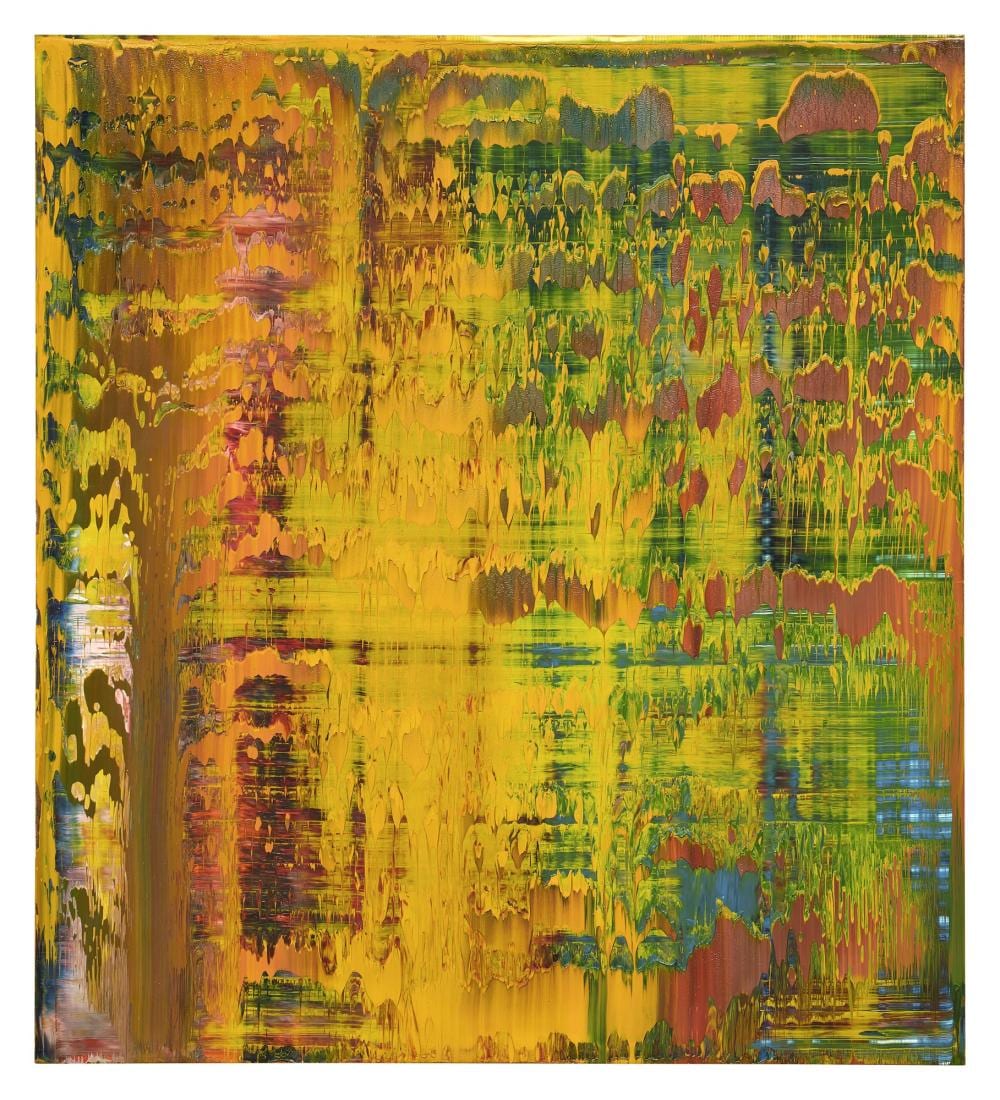
gerhard richter abstraktes bild · Sotheby's · 2022-04-27 gerhard richter abstraktes bild Sotheby's · 2022-04-27
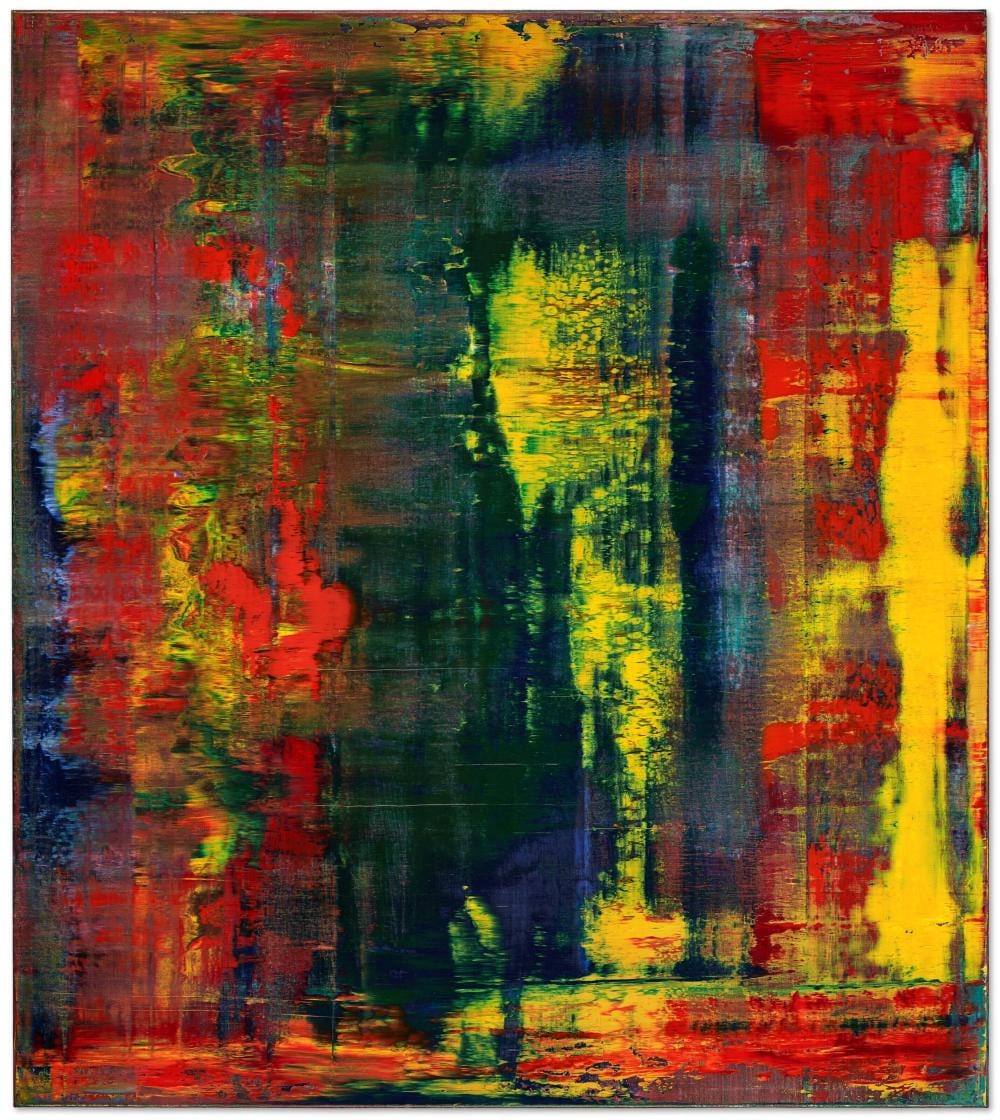
gerhard richter b 1932 abstraktes bild oil on canvas 88 5 8 x 78 3 4 in · Christie's · 2022-05-10 gerhard richter b 1932 abstraktes bild oil on canvas 88 5 8 x 78 3 4 in Christie's · 2022-05-10

gerhard richter b 1932 kerze candle oil on canvas39 x 27 in 10 · Christie's · 2026-05-20 gerhard richter b 1932 kerze candle oil on canvas39 x 27 in 10 Christie's · 2026-05-20
Data basis
This page is built from Appraisily's public auction market index. Private transactions, incomplete sale feeds, and attribution changes may not be fully represented.
Artist value FAQ
How much is Gerhard Richter worth?
Comparable public auction sales are the best starting point, but final value depends on the specific artwork, condition, size, medium, provenance, and attribution confidence.
Can Appraisily value my Gerhard Richter artwork?
Yes. Appraisily can review photos, dimensions, signatures, condition, provenance, and comparable market data to prepare a current valuation.