Changshi Wu Auction Prices and Value Guide
Changshi Wu auction prices are tracked in Appraisily's artist market index, with source-directory coverage of 2,558 records. Use this page to review sold-lot activity, market context, and valuation factors before requesting a formal appraisal.
Changshi Wu auction prices: quick answer
Changshi Wu auction prices depend on medium, size, date, condition, provenance, edition details, attribution confidence, and recent comparable auction sales.
- Artist
- Changshi Wu
- Source records
- 2,558
- Market update
- 2026-02-16
Changshi Wu market snapshot
Changshi Wu shows developing auction liquidity with 31 tracked lots. Median realized sale is around $14,400. Category concentration is still broad or sparse. Last 12 months recorded 2 sales. Latest recorded sale: 2025-11-09.
Realized price distribution
- Under $1,000 (5.0% · 1 sales)
- $1,000 to $10,000 (35.0% · 7 sales)
- $10,000+ (60.0% · 12 sales)
- Median sale (last 12 months)
- $2,200
- Sales recorded (last 12 months)
- 2
- Median shift vs prior year
- 0.0%
- Latest recorded sale
- 2025-11-09
Artist context
About Changshi Wu
Born
1844
Died
1927
Nationality
Chinese
Also known as
Wu Changshuo, Wu Junqing, Wu Chün-chʻing, Wu Chang-shuo
Wu Changshuo (1844–1927), born Wu Junqing in Anji, Zhejiang Province, was a Chinese painter, calligrapher, and seal artist active during the late Qing Dynasty. He is regarded as one of the leading figures in the Shanghai School of Chinese painting, known for blending classical literati traditions with a bold, expressive brushwork style. Wu mastered multiple art forms simultaneously—painting, calligraphy, and seal carving—and was celebrated for his ability to unite stone-inscription aesthetics with fluid ink painting. His work drew heavily on ancient seal script and stone stele calligraphy, which he adapted into a distinctive visual language that influenced subsequent generations of Chinese artists. Wu spent his later career in Shanghai, where he became a central figure in the city's artistic community before his death in 1927. He was posthumously honored with the name Zhenyi xian sheng.
Late Qing literati painting traditionChinese ink paintingcalligraphyseal carvingFlowers and plants (traditional Chinese botanical subjects)
Common works and media
Wu Changshuo is most frequently encountered in appraisal and auction contexts as ink-and-color paintings of botanical subjects—especially plum blossoms, orchids, bamboo, chrysanthemums, and peonies—often rendered on hanging scrolls, album leaves, or fan mounts. His calligraphic works in seal script and running script are also common, as are his carved stone seals. Smaller-format works such as fan paintings and album pages appear more often on the market than large-scale compositions.
Market and appraisal context
Wu Changshuo's works have a documented auction history spanning 2007–2025 across 31 recorded lots, 20 with realized prices. Major houses including Christie's and Bonhams have offered his work, with Christie's Hong Kong accounting for the highest prices observed—HKD 487,500 for 'Reading in a Secluded Cottage' (May 2008) and HKD 367,500 for 'Watching the Waterfall' (May 2008). Bonhams New York achieved USD 23,750 for Chinese Paintings (December 2011) and USD 19,000–20,000 for individual ink paintings in September 2021. Mid-tier and regional houses (Galerie Zacke, Aste Boetto SRL, Kiefer Buch- und Kunstauktionen, Singapore International Auction) have also offered lots, typically at lower price points (USD 1,000–4,000; EUR 14,000). The price distribution is wide (p25 USD 2,280; median USD 14,400; p75 USD 150,000), reflecting variation by format, size, provenance quality, and whether the sale occurred at a top-tier or regional house. Recent liquidity is thin—only 2 lots in the trailing 12 months versus 0 in the prior 12-month period—suggesting that while Wu's market is established, current availability is limited and pricing should be interpreted cautiously.
Auction categories and appraisal factors
Common auction categories
- Chinese Classical Paintings & Calligraphy
- Chinese Works of Art
- Chinese ink painting
- calligraphy
- seal carving
Value drivers
- Attribution and authenticity are critical; Wu's work is widely copied and forged
- Medium and format (hanging scroll, handscroll, album leaf, fan painting) affect value significantly
- Provenance and exhibition history are important valuation factors for late Qing works
- Seal carvings and calligraphic works represent a distinct collectible category
- Attribution and authenticity are critical; Wu's work is widely copied and forged, so expert connoisseurship is essential
- Format strongly affects value: large hanging scrolls and handscrolls command premiums over fan paintings and album leaves
Appraisal caveats
- No major auction-house records were available in this source pack; market estimates should be corroborated with Christie's, Sotheby's, or comparable databases
- Price distribution mixes currencies (USD, HKD, EUR, SGD) and was not normalized to a single currency in the source data; cross-currency comparisons require conversion
- The highest recorded prices (HKD 367,500–487,500) all come from a single Christie's Hong Kong sale in May 2008 and may not reflect current market conditions 17+ years later
- Only 20 of 31 recorded lots have realized prices, limiting the reliability of distribution statistics
Evidence
Sources for artist context
This source-grounded artist context passed Appraisily's promotion threshold: high confidence, strong sources.
- Wikidata library authority
- Wikipedia wikipedia
- VIAF library authority
- Library of Congress library authority
- RKD - Netherlands Institute for Art History library authority
Recent sale records
Selected public auction records currently in the Appraisily lot index. Use them as market context, then request a formal appraisal before you sell, insure, or donate.
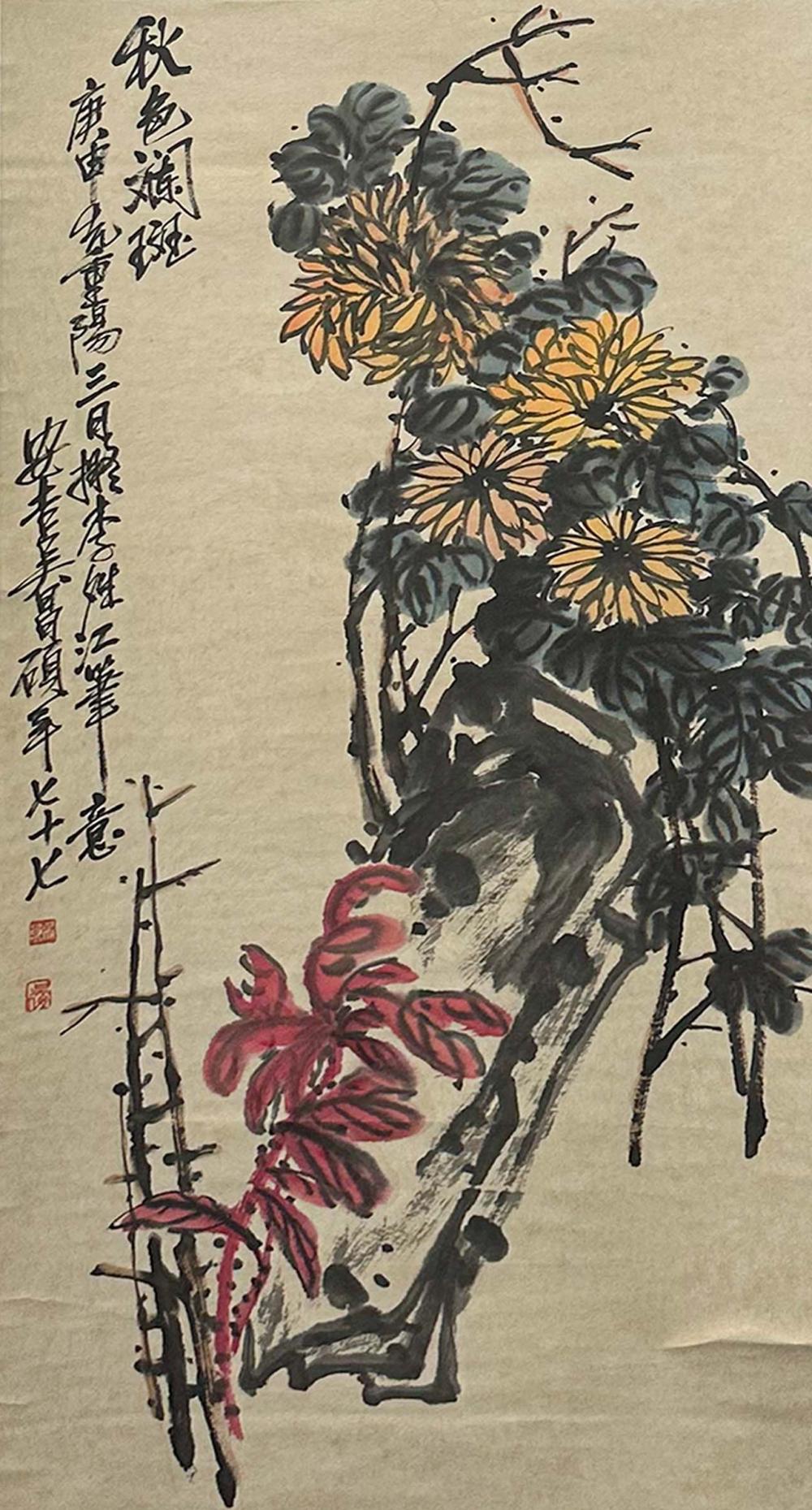
wu changshuo flower · SINGAPORE INTERNATIONAL AUCTION PTE LTD. · 2023-11-11 wu changshuo flower SINGAPORE INTERNATIONAL AUCTION PTE LTD. · 2023-11-11
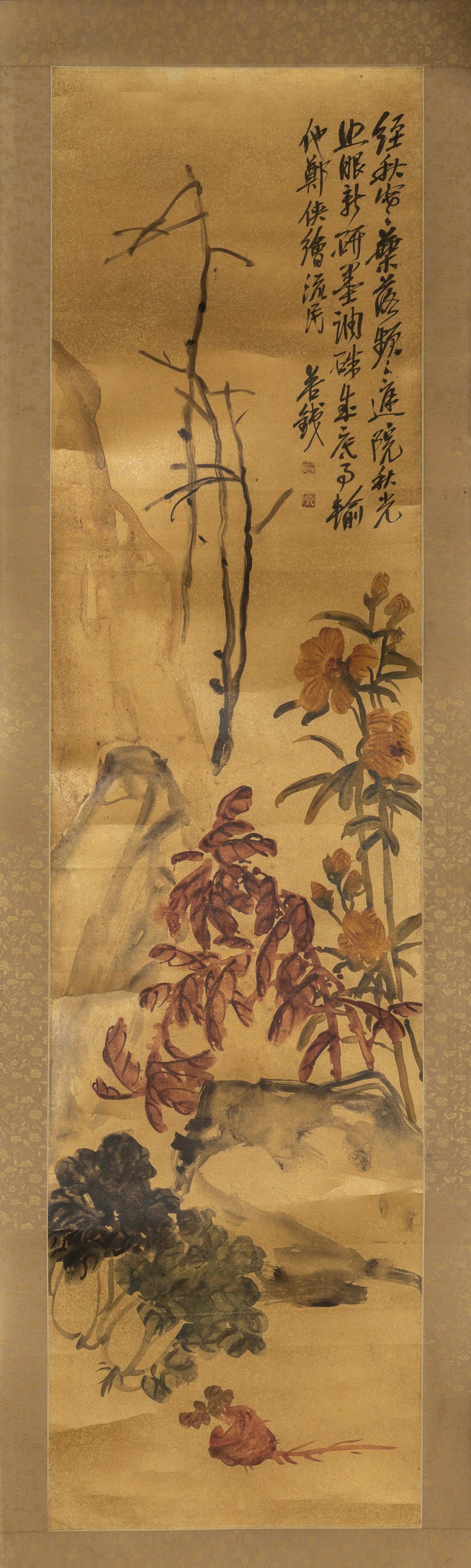
oggettistica · Aste Boetto SRL · 2023-09-26 oggettistica Aste Boetto SRL · 2023-09-26
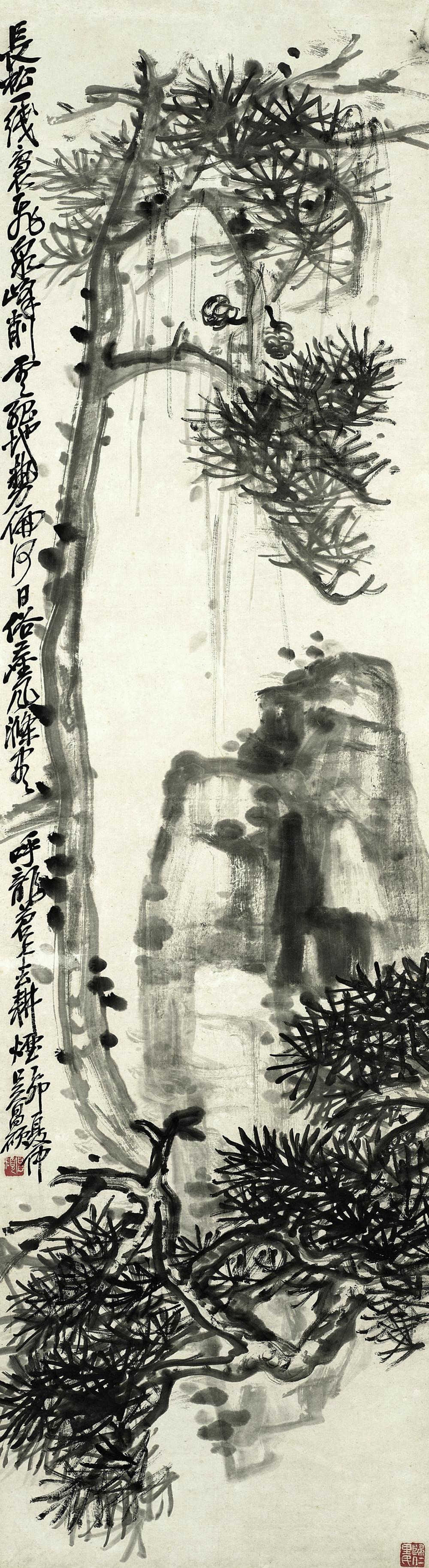
wu changshi 1844 1927 pine and rock 1915 · Bonhams · 2021-09-20 wu changshi 1844 1927 pine and rock 1915 Bonhams · 2021-09-20
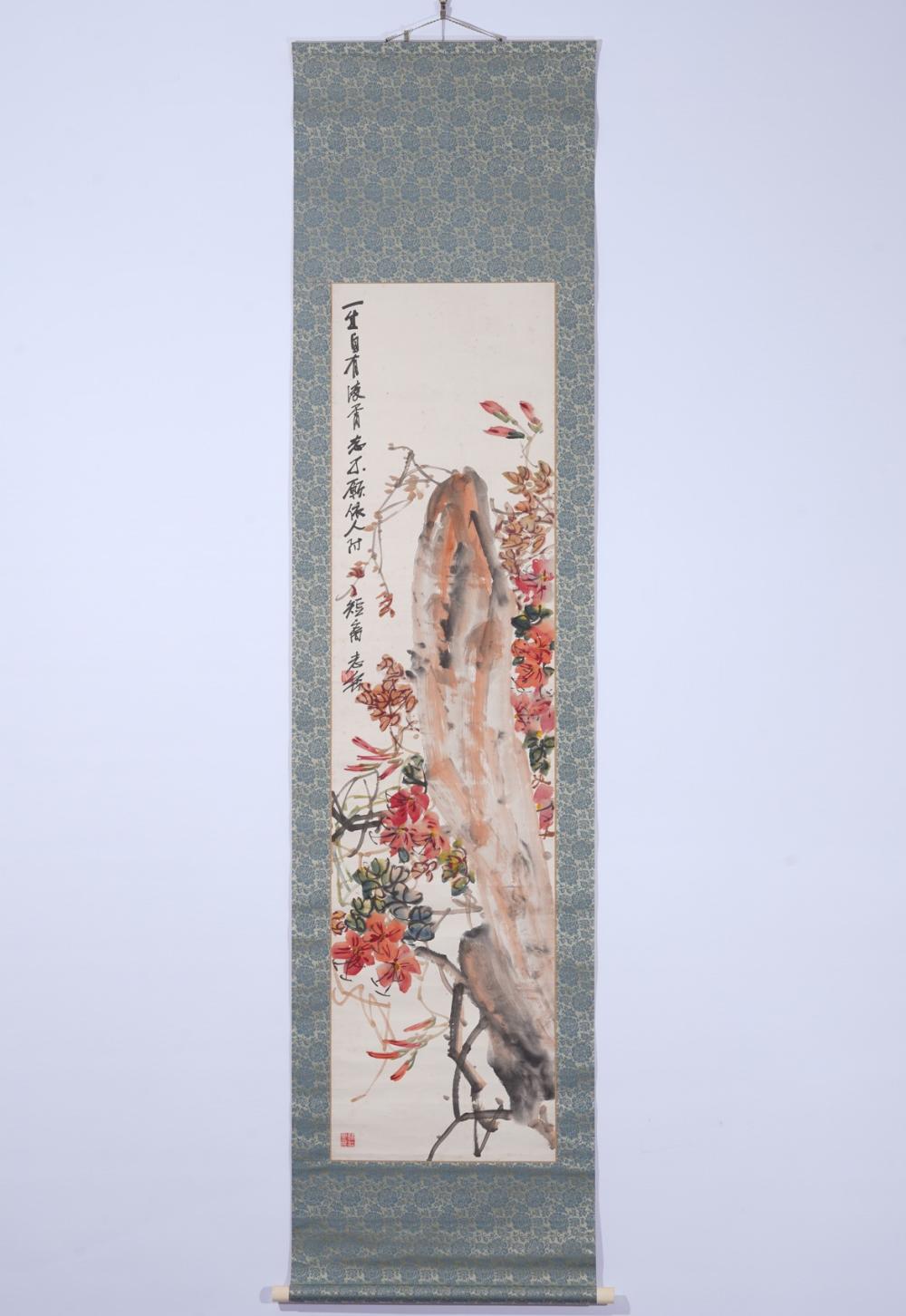
wu changshuo color and ink flowers painting · Poway Auctioneers Inc. · 2021-01-23 wu changshuo color and ink flowers painting Poway Auctioneers Inc. · 2021-01-23
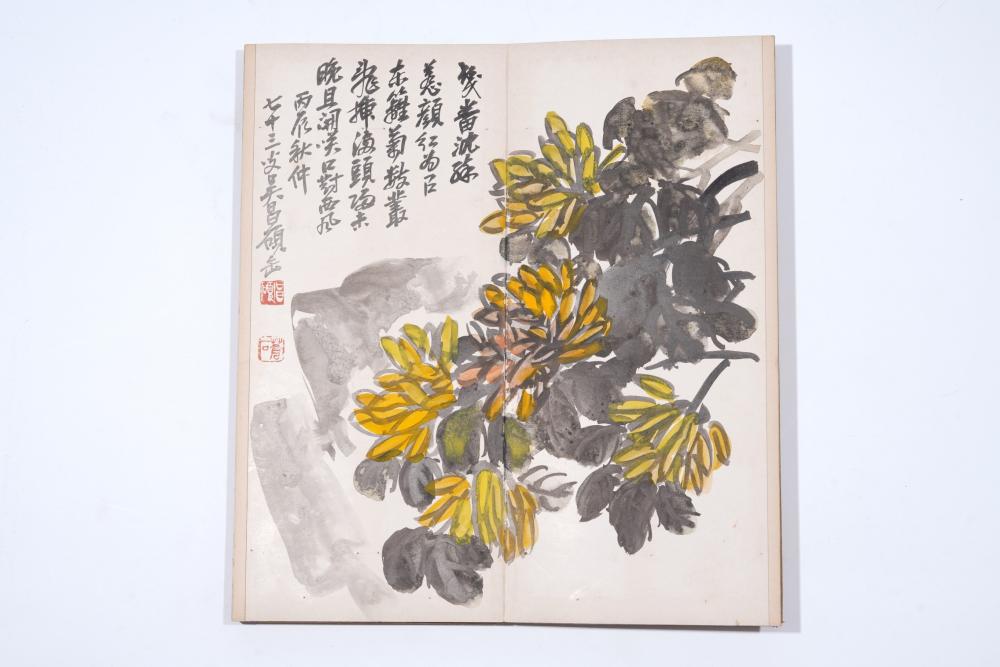
wu changshuo color and ink on paper flowers album · Poway Auctioneers Inc. · 2021-01-23 wu changshuo color and ink on paper flowers album Poway Auctioneers Inc. · 2021-01-23
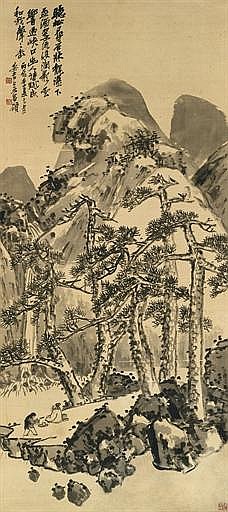
watching the waterfall · Christie's · 2008-05-26 watching the waterfall Christie's · 2008-05-26
Data basis
This page is built from Appraisily's public auction market index. Private transactions, incomplete sale feeds, and attribution changes may not be fully represented.
Artist value FAQ
How much is Changshi Wu worth?
Comparable public auction sales are the best starting point, but final value depends on the specific artwork, condition, size, medium, provenance, and attribution confidence.
Can Appraisily value my Changshi Wu artwork?
Yes. Appraisily can review photos, dimensions, signatures, condition, provenance, and comparable market data to prepare a current valuation.