Anni Albers Auction Prices and Value Guide
Anni Albers auction prices are tracked in Appraisily's artist market index, with source-directory coverage of 186 records. Use this page to review sold-lot activity, market context, and valuation factors before requesting a formal appraisal.
Anni Albers auction prices: quick answer
Anni Albers auction prices depend on medium, size, date, condition, provenance, edition details, attribution confidence, and recent comparable auction sales.
- Artist
- Anni Albers
- Source records
- 186
- Market update
- 2026-02-06
Anni Albers market snapshot
Anni Albers shows solid auction liquidity with 112 tracked lots. Median realized sale is around $2,600. Category concentration is still broad or sparse. Last 12 months recorded 8 sales. Latest recorded sale: 2025-12-12.
Realized price distribution
- Under $1,000 (25.0% · 24 sales)
- $1,000 to $10,000 (62.5% · 60 sales)
- $10,000+ (12.5% · 12 sales)
- Median sale (last 12 months)
- $650
- Sales recorded (last 12 months)
- 8
- Median shift vs prior year
- 0.0%
- Latest recorded sale
- 2025-12-12
Artist context
About Anni Albers
Born
1899
Died
1994
Nationality
German, American
Also known as
Anneliese Albers, Anneliese Else Frieda Fleischmann
Anni Albers (1899–1994) was a German-American textile artist, weaver, and printmaker widely regarded as the foremost textile designer of the twentieth century. Born Anneliese Else Frieda Fleischmann in Berlin, she enrolled at the Bauhaus in 1922, where she was initially directed into the weaving workshop — a common restriction for women at the school. She transformed that constraint into a pioneering practice, producing textiles that fused modernist abstraction with structural experimentation. After the Bauhaus closed, she and her husband Josef Albers emigrated to the United States, where both taught at Black Mountain College. Her woven works, wall hangings, and later prints helped elevate textile art from craft to fine art. The Josef and Anni Albers Foundation preserves her legacy, and her work is held by major institutions including the Museum of Modern Art and Tate.
BauhausModernismTextile and weavingPrintmaking and graphic artAbstract and geometric textile designFunctional materials and wall hangings
Common works and media
Collectors and appraisers most frequently encounter Anni Albers's work in the form of woven wall hangings and pictorial textiles, screen prints and lithographs (particularly her later geometric prints), design prototypes for industrial textiles, and preparatory works on paper. Her prints often feature abstract, interlocking linear compositions that translate her weaving logic into two dimensions. Bauhaus-era weavings and design studies are rare; later prints from the 1960s–1980s are more commonly available at auction.
Market and appraisal context
Anni Albers's work appears at auction across Post-War and Contemporary Art, Modern Design, Prints and Multiples, and Textile Art categories. Key valuation factors include the specific medium (woven textile, wall hanging, screen print, or lithograph), provenance (particularly Bauhaus-era or Albers Foundation documentation), condition — especially for textiles vulnerable to fading and wear — edition details for prints, and the period of execution. Bauhaus-period works are comparatively scarce and tend to attract stronger institutional and collector interest. As the market for textile and fiber art continues to develop, prices for Albers's work have shown increased recognition, though realized results vary widely by medium and format.
Auction categories and appraisal factors
Appraisal caveats
- Textile art remains a developing auction category; realized prices can vary significantly by medium, size, and period
- Attribution should be confirmed through the Albers Foundation; unsigned or undocumented works require additional verification
Evidence
Sources for artist context
This source-grounded artist context passed Appraisily's promotion threshold: high confidence, strong sources.
- The Museum of Modern Art museum or university
- Josef and Anni Albers Foundation artist estate or foundation
- RKD Netherlands Institute for Art History library authority
- Wikidata library authority
- Getty Vocabulary Program library authority
- VIAF library authority
Recent sale records
Selected public auction records currently in the Appraisily lot index. Use them as market context, then request a formal appraisal before you sell, insure, or donate.
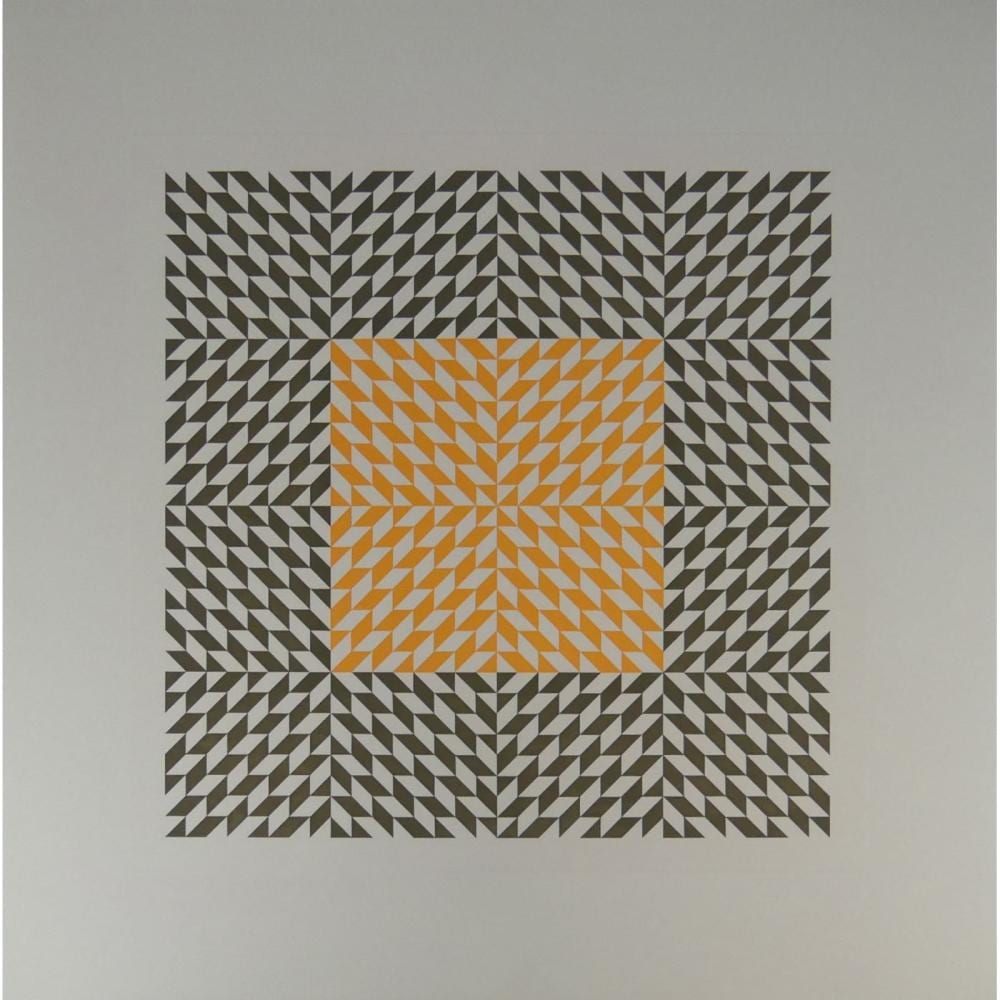
anni albers second movement offset lithograph · Antiques & Modern Auction Gallery · 2026-04-25 anni albers second movement offset lithograph Antiques & Modern Auction Gallery · 2026-04-25
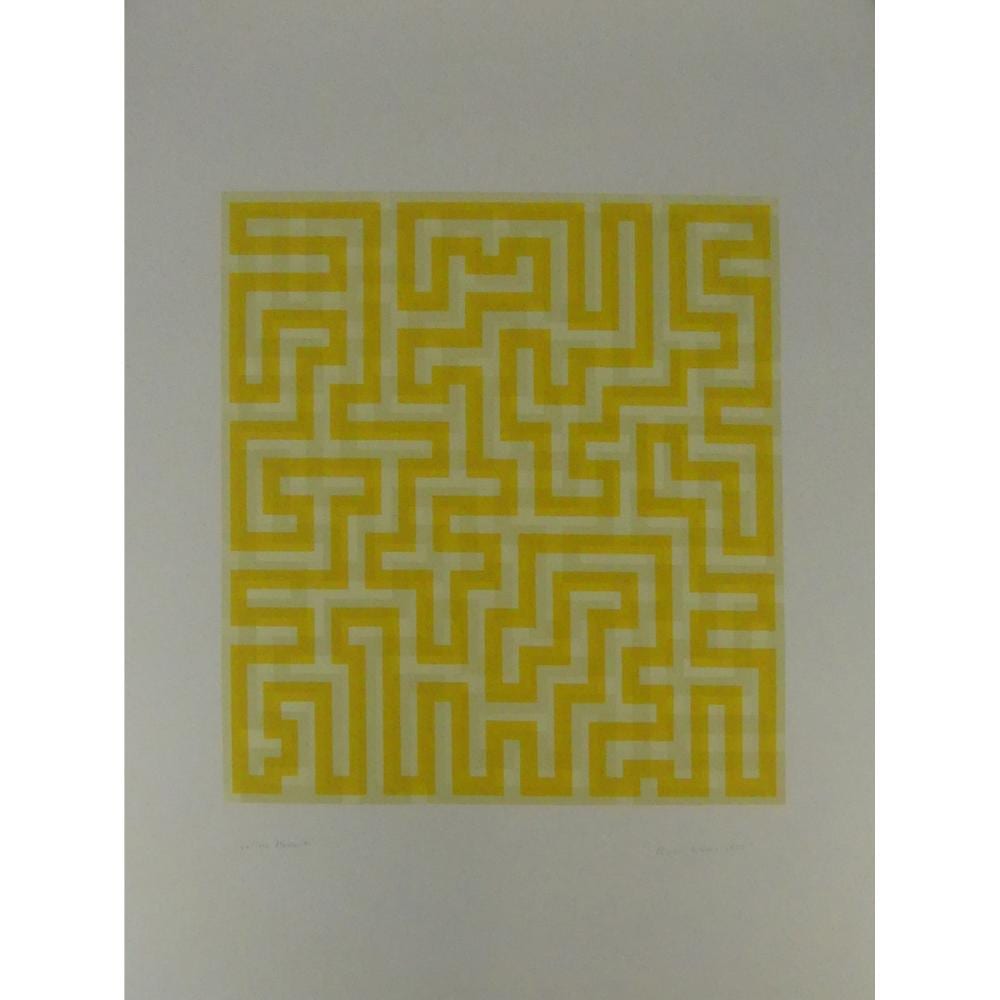
anni albers yellow meander · Antiques & Modern Auction Gallery · 2026-04-25 anni albers yellow meander Antiques & Modern Auction Gallery · 2026-04-25

anni albers 1899 1994 orchestra iii image 11 x 10 in 279 x 267 mm · Christie's · 2026-02-26 anni albers 1899 1994 orchestra iii image 11 x 10 in 279 x 267 mm Christie's · 2026-02-26
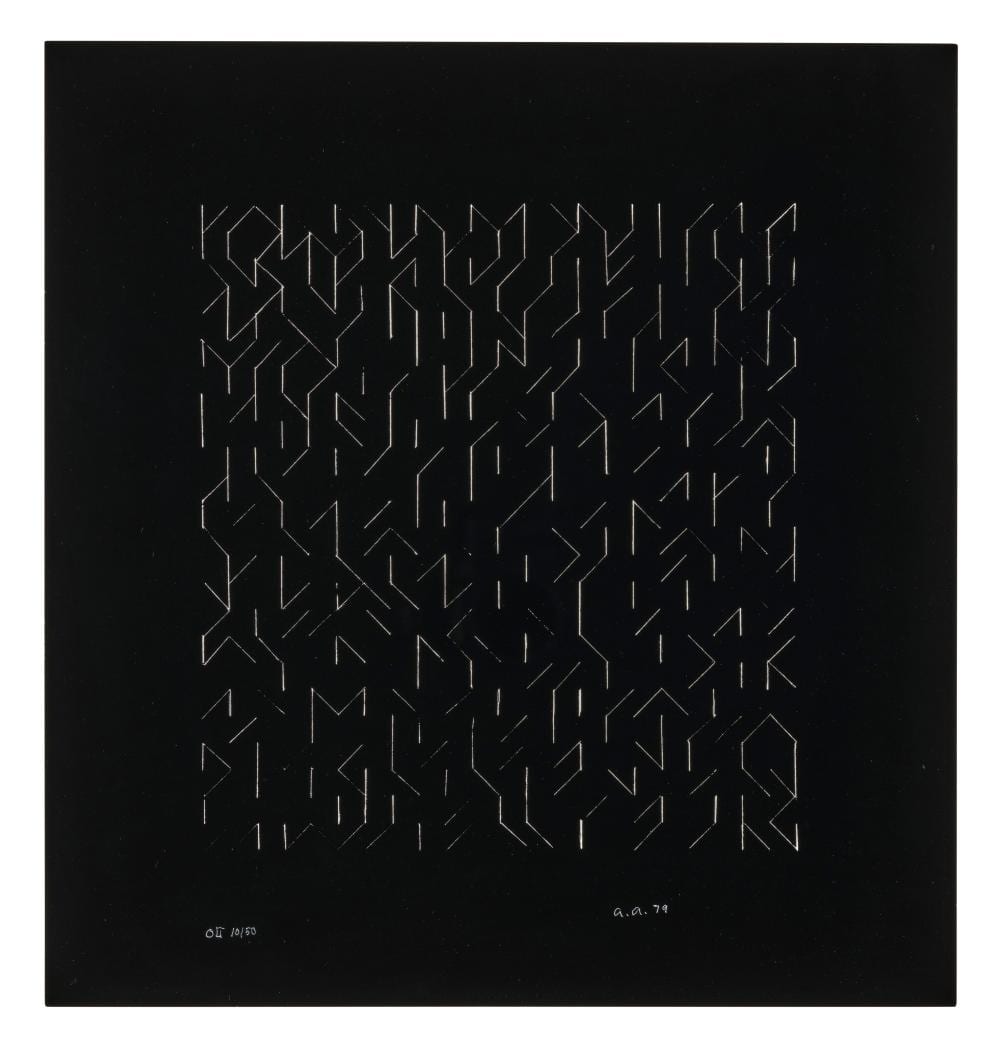
anni albers 1899 1994 orchestra ii image 12 x 11 in 305 x 279 mm sh · Christie's · 2026-02-26 anni albers 1899 1994 orchestra ii image 12 x 11 in 305 x 279 mm sh Christie's · 2026-02-26

anni albers orange meander serigraph 1970 · Revere Auctions · 2026-02-03 anni albers orange meander serigraph 1970 Revere Auctions · 2026-02-03

anni albers american german 1899 1994 study for an unexecuted wall hanging from connections 1926 1983 · Freeman’s · 2025-12-12 anni albers american german 1899 1994 study for an unexecuted wall hanging from connections 1926 1983 Freeman’s · 2025-12-12
Data basis
This page is built from Appraisily's public auction market index. Private transactions, incomplete sale feeds, and attribution changes may not be fully represented.
Artist value FAQ
How much is Anni Albers worth?
Comparable public auction sales are the best starting point, but final value depends on the specific artwork, condition, size, medium, provenance, and attribution confidence.
Can Appraisily value my Anni Albers artwork?
Yes. Appraisily can review photos, dimensions, signatures, condition, provenance, and comparable market data to prepare a current valuation.