Unlocking the Worth a Collectors Guide to the Value of Antique Cast Iron Skillets: appraisal and value basics
Unlocking the Worth a Collectors Guide to the Value of Antique Cast Iron Skillets research should start with identification, condition, provenance, and item-specific market evidence. Use this guide to compare the signals that matter before paying for a formal appraisal or deciding whether to sell.
Antique cast iron skillet appraisal checklist
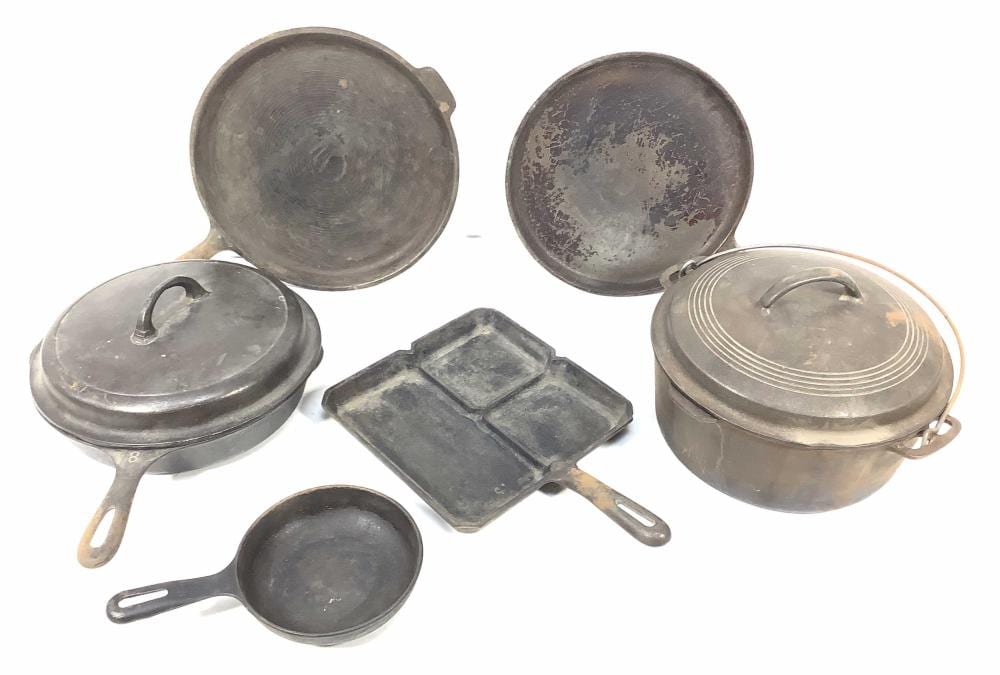
The quiet hum of an old skillet warming up is almost a time machine. For collectors and appraisers, antique cast iron is more than cookware—it’s engineering, design history, and household culture in one object. This guide shows you how to identify makers and eras, assess condition, spot scarcity, and arrive at realistic values for antique cast iron skillets.
What Drives Value in Antique Cast Iron Skillets
Three forces set the tone for price: maker and era, condition and originality, and scarcity. Understanding how they interact lets you separate a a value that must be established from current, topic-matched sales user from a a value that must be established from current, topic-matched sales prize.
Maker and era: Pre-1960 American foundries are the core. Griswold, Wagner, Favorite Piqua, Wapak, Birmingham Stove & Range (BSR), Lodge (early, often unmarked), Martin, Vollrath, and a handful of regional shops made high-quality, thinner, factory-smoothed skillets that cook beautifully and attract collectors.
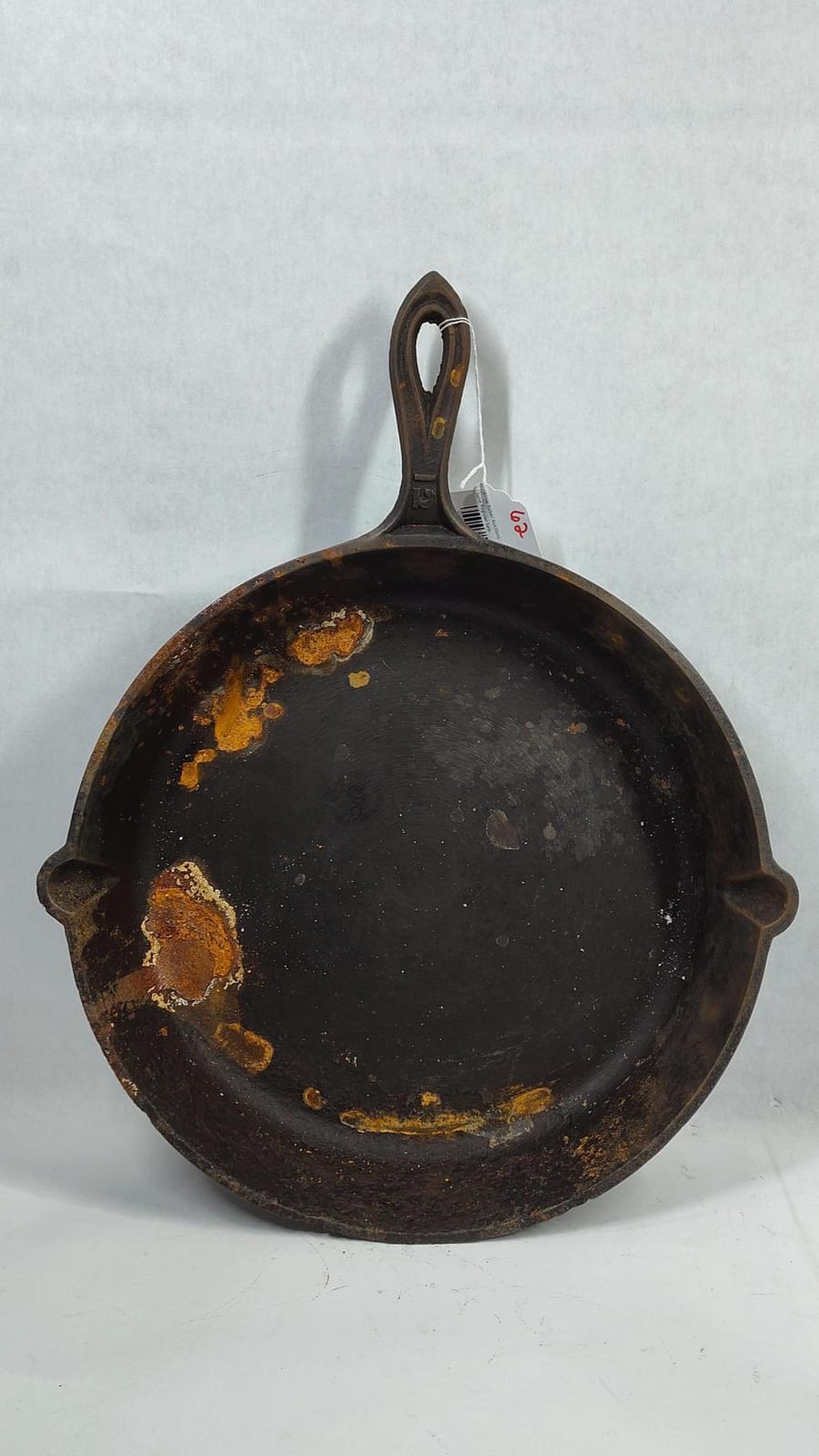
Condition and originality: A skillet with its original smooth cooking surface, no cracks or deep pitting, and minimal warp commands a premium. Over-cleaning, grinding, or sandblasting permanently reduces value.
Scarcity and demand: Certain sizes (#2 and #13+), rarer logos and patterns, lids, and unusual features drive big premiums. Location matters too: rural finds may be cheaper; metropolitan markets can bid up top brands.
Pricing benchmarks (typical ranges; condition, size, and venue matter)
- Unmarked early user-grade skillet (#8–#10): a value that must be established from current, topic-matched sales
- Lodge three-notch heat ring unmarked, user-grade: a value that must be established from current, topic-matched sales
- Wagner Ware Sidney -O- #8, good condition: a value that must be established from current, topic-matched sales
- Favorite Piqua “Smiley” #8–#9: a value that must be established from current, topic-matched sales
- BSR Red Mountain #8: a value that must be established from current, topic-matched sales
- Griswold Large Block Logo #8: a value that must be established from current, topic-matched sales+ (add a value that must be established from current, topic-matched sales with lid)
- Wapak “Indian Head” (rare logo): a value that must be established from current, topic-matched sales+
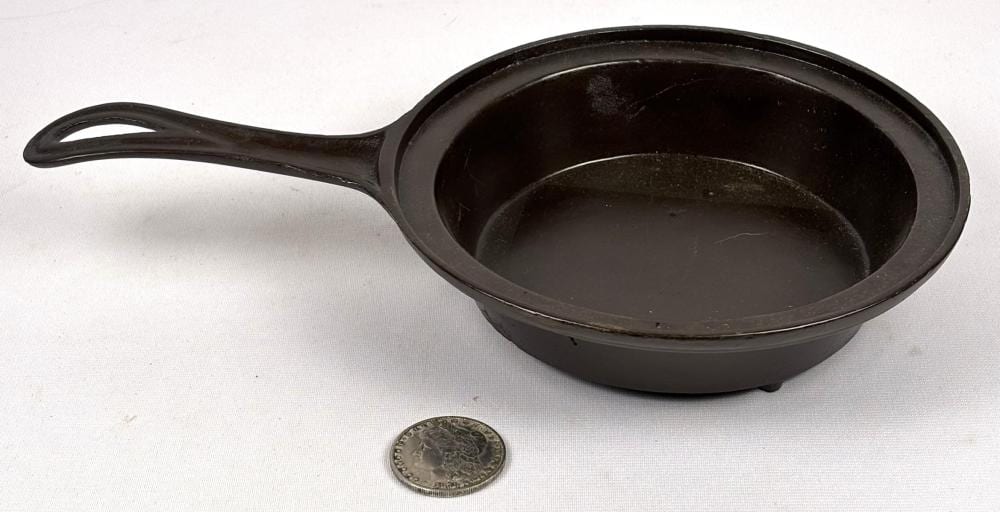
- Small sizes (#2) across major makers: a value that must be established from current, topic-matched sales+
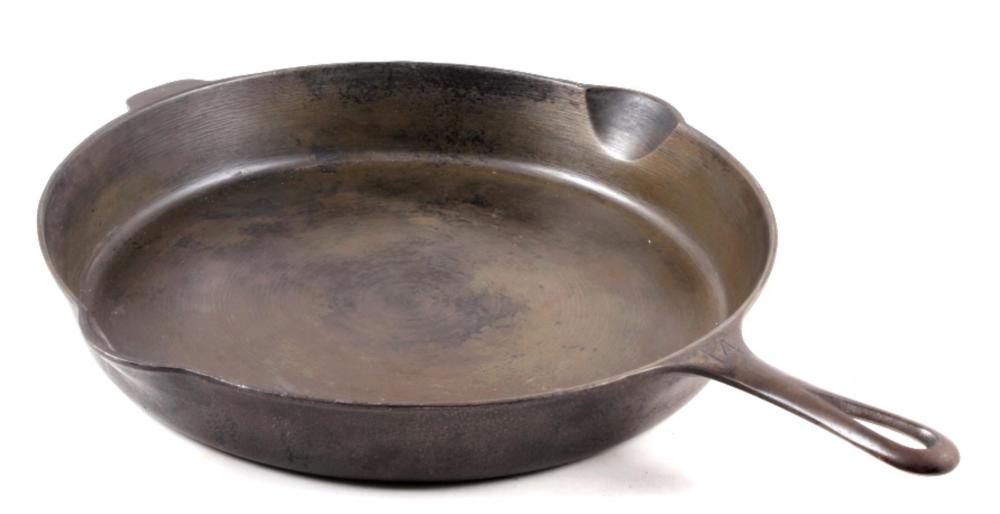
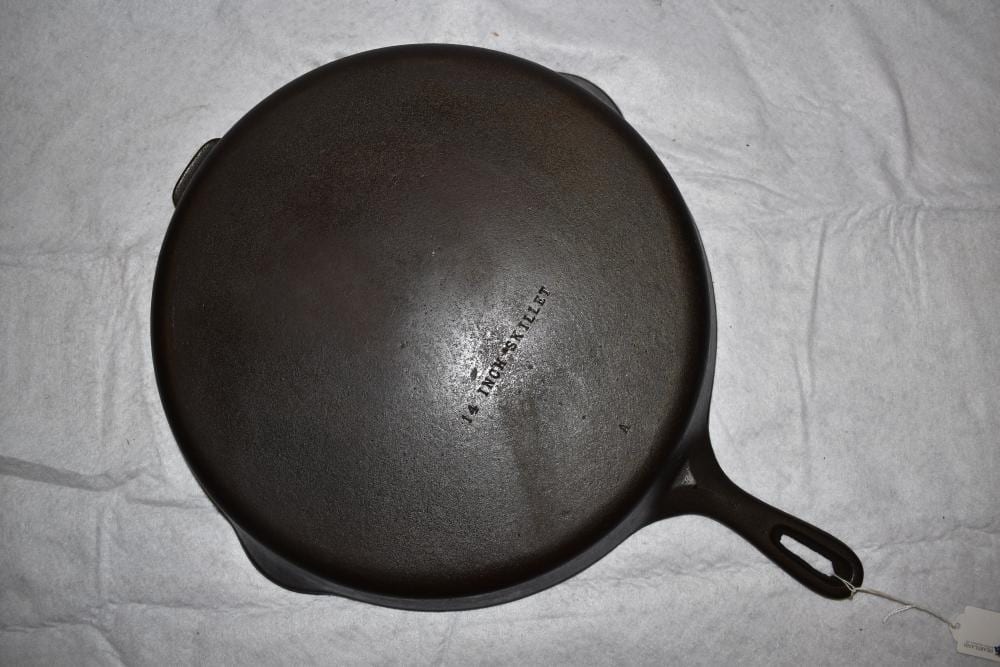
- Oversize (#13–#14) across major makers: a value that must be established from current, topic-matched sales+
- Early “ERIE” (pre-Griswold) and special marks (spider, etc.): significant premiums; standout examples can reach into the high four figures
Auction-day dynamics, complete sets, matching lids, provenance, and exceptional originality can move prices well above these ranges.
How to Identify Maker and Era
Accurate identification is the backbone of a reliable appraisal. Start with the bottom and the handle—then note weight, surface finish, and geometry.
Logos and text:
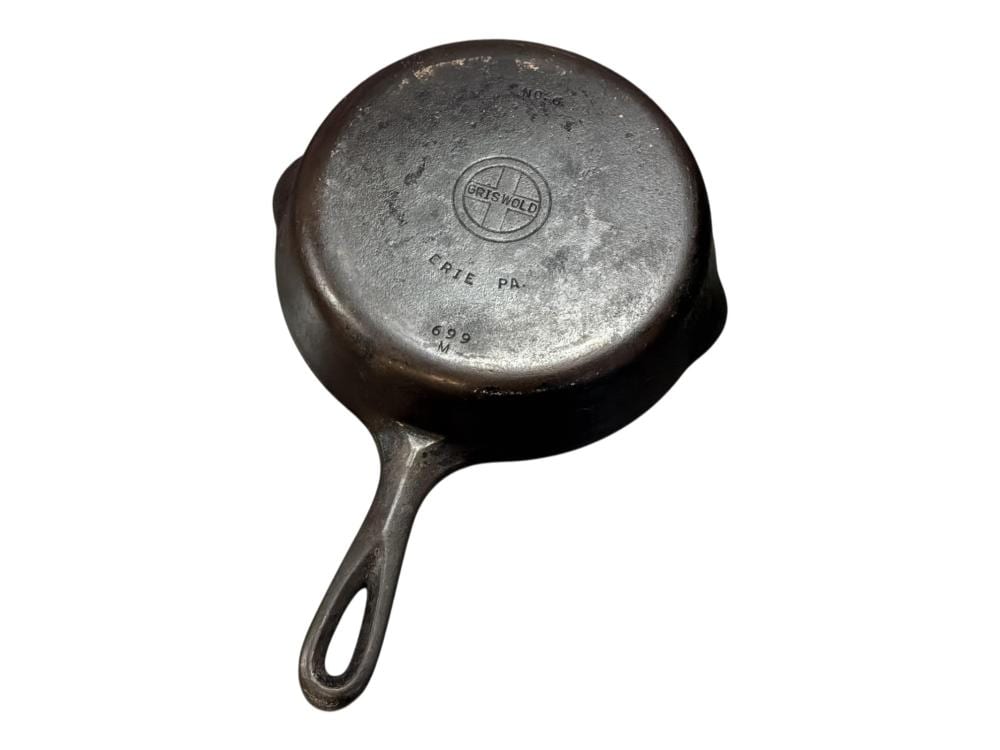
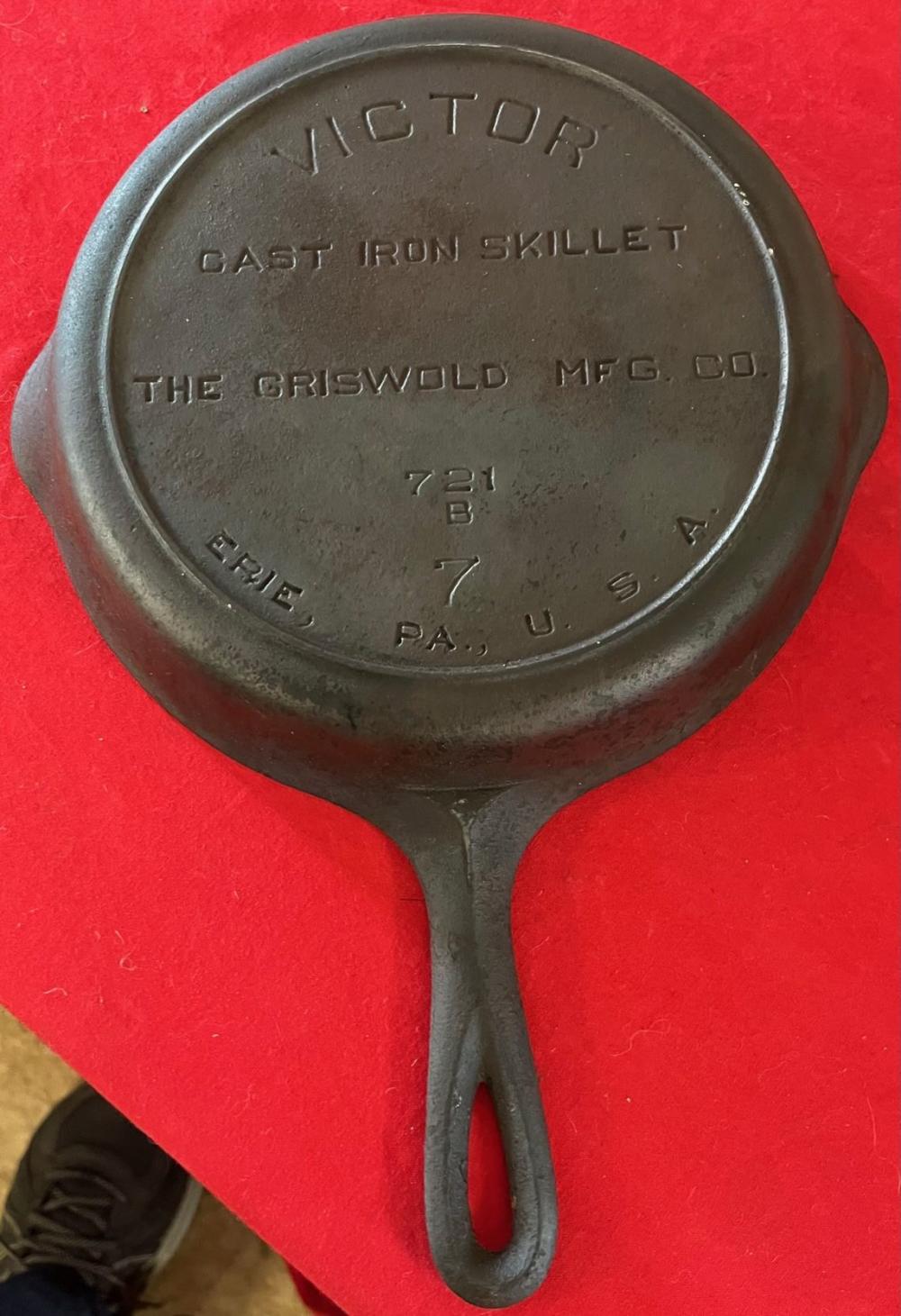
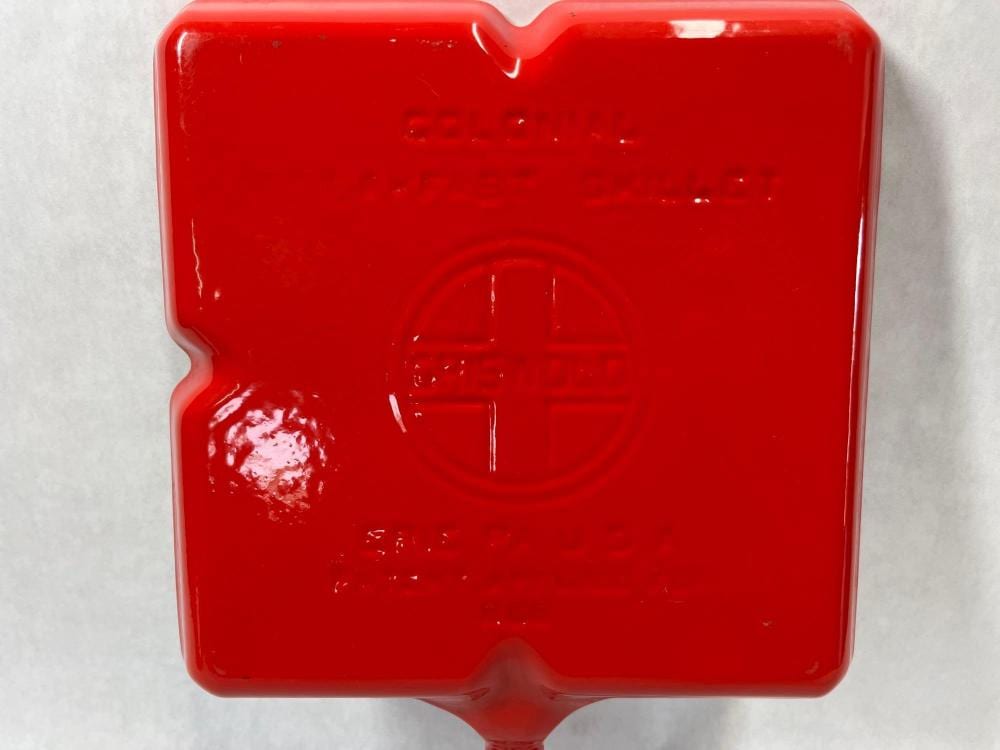
- Griswold: Cross-in-double-circle. “Slant” logo (~1906–1912, sometimes EPU: “Erie, PA., U.S.A.”) and “Large Block” (~1920s–40s). Smaller logos generally point to later production (often less valuable).
- ERIE: Pre-Griswold mark (~1880s–1907). Numerous variants; prized by collectors.
- Wagner/Wagner Ware: Early “WAGNER” (1890s) and “Wagner Ware Sidney -O-” script forms (early 1900s–40s). Font shape and the placement of “Sidney -O-” help date.
- Favorite Piqua: The cheerful “Smiley” logo (arched “Favorite Piqua Ware”) ~1916–1930s.
- Wapak: “Wapak” and the rare “Indian Head” logo (scarcer; higher value).
- BSR: Often unmarked or simply marked with size; Red Mountain (1930s–40s) generally shows an inset heat ring; Century (1950s–60s) tends toward smooth bottoms.
- Lodge: Founded 1896. Many early pans are unmarked. A signature clue is the three-notch heat ring (roughly 1930s–60s). Lodge added a bold modern logo in the 1970s (not antique).
- Vollrath, Martin, and regional makers: Typically clearly marked, with variations by period.
Heat ring vs. smooth bottom:
- Heat rings, especially inset rings, are common on earlier skillets (late 19th to early 20th century). Smooth-bottom pans tended to become more common mid-20th century.
- Three-notch heat ring strongly suggests early Lodge.
Gate mark:
- A raised, straight or oval scar on the skillet’s underside center. Indicates older (often 19th-century) gating methods. Collectible and often more valuable.
Size numbers and patterns:
- Size numbers are often on the handle or underside. Rare sizes (#2, #13, #14) are immediate value flags. Pattern numbers (e.g., Griswold 704, 710) can be matched to maker-era charts for precision dating.
Weight and finish:
- Older American skillets are typically lighter and thinner than modern pieces. Many were factory-machined to a silky smooth cook surface. Coarse “pebble” or heavy orange-peel texture can indicate later production or poor reconditioning.
Ghost marks:
- Faint remnants of earlier logos or text from pattern reuse. Collectors prize these as conversation pieces.
Red flags for non-antique or reproductions:
- “1891 Original” Wagner was a 1991 commemorative—vintage, not antique.
- Pre-seasoned from factory, bold “Made in USA” on classic logos, extra-heavy walls, or clumsy fonts often mean later or reproduction pieces.
- Sand-cast “copycat” pans with crude text and poor machining are common; weight, surface, and font accuracy typically betray them.
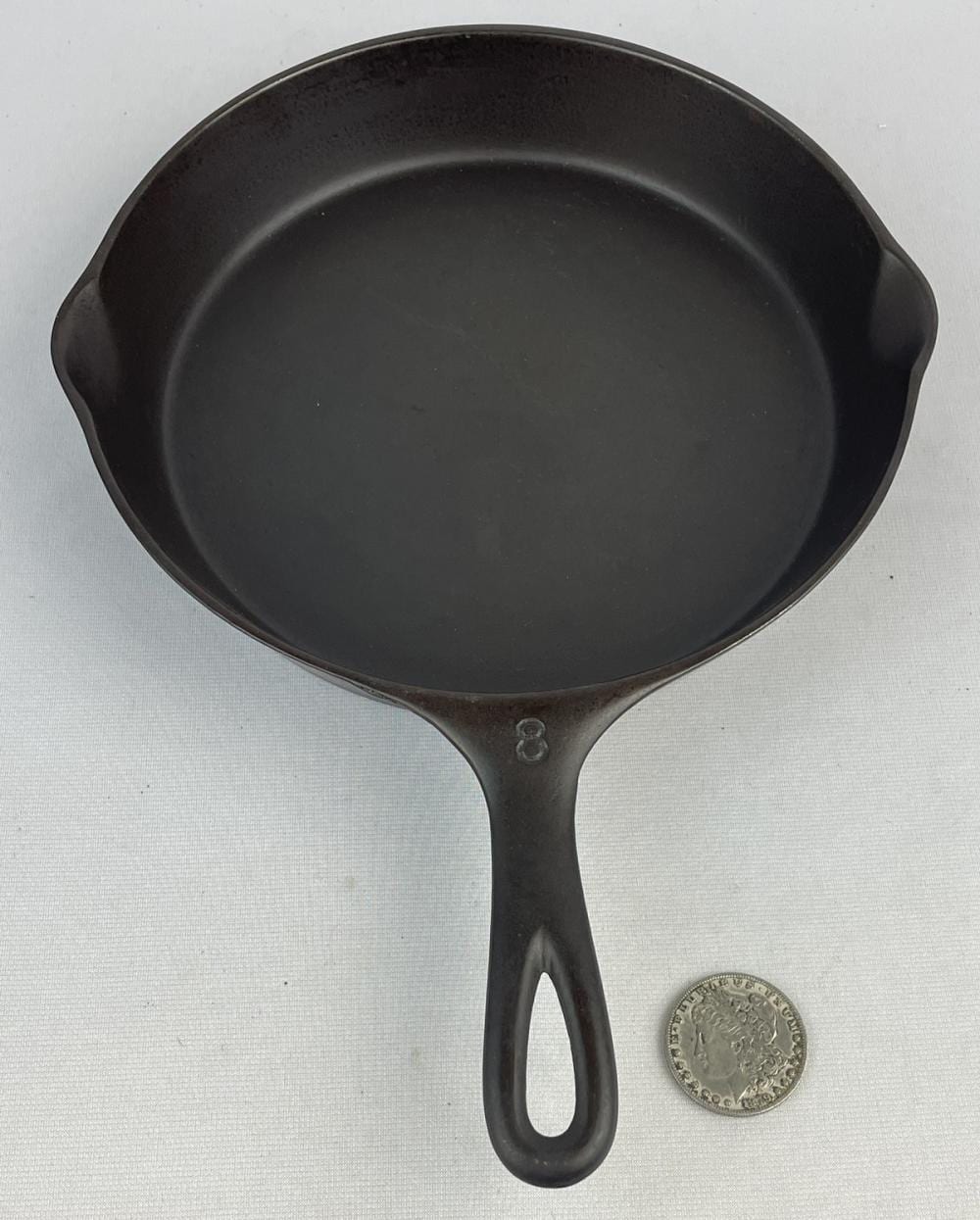
Document your findings with clear photos of the bottom, logo, handle, and cooking surface. Those details drive both identification and valuation.
Condition and Originality: Grading What You Have
Condition can double—or halve—value. Grade honestly with a collector’s eye and a cook’s pragmatism.
Cracks and hairlines:
- Deal-breakers for most collectors. Use a bright light and a “ping” test: a clear ring suggests sound iron; a dull thud often signals a crack. Cracked pans are mostly wall-hangers.
Warp and flatness:
- Place on a known flat surface (glass/stone) and try the spin/rock test. Mild movement can be tolerated for gas use; electric/induction buyers demand dead-flat. Heavy warp cuts value sharply.
Pitting and sulfur damage:
- Peppery pitting on the cooking surface (often from high-sulfur coal fires) reduces performance and collector value. Light, evenly distributed “pinprick” pitting might be acceptable for users but will lower price.
Grinding, sanding, and blasters:
- Over-aggressive restoration leaves telltale swirl marks or flattening that erases factory machining. Sandblasting produces a uniform, too-rough texture—values drop accordingly.
Seasoning:
- Stable, thin, jet-black seasoning is desirable. Flaking, sticky, or tar-like layers suggest poor maintenance. Freshly stripped and properly seasoned is acceptable; “baked-on cosmoline” look is not.
Original machining and finish:
- Fine lathe lines in the interior are a plus. Nickel-plated or enameled pieces with intact finishes can be more valuable; patchy plating is harder to sell.
Accessories and completeness:
- Original lids can add a condition-specific range to value, especially for rarer sizes. Heat diffusers and bail-handled lids also appeal to collectors.
Preservation tips that protect value
- Clean with lye or an electrolysis tank to remove seasoning safely; avoid blasting media.
- Rinse, dry thoroughly, and apply a thin, even coat of neutral oil; heat-cure lightly.
- Store dry, with paper between stacked pieces to prevent rub marks.
- Do not grind to “make it flat”; consult a specialist if a rare pan wobbles.
Scarcity Signals: Sizes, Patterns, and Oddities
Scarcity transforms a good skillet into a great one. Keep an eye out for:
- Size outliers:
- Small #2 and oversized #13–#14 command strong premiums across most makers.
- Rare logos and short runs:
- Griswold “ERIE” variations; Wapak “Indian Head”; Favorite Piqua with unusual script; early Wagner marks; ghost-marked transitions.
- Pattern anomalies:
- Mis-strikes, unusual pattern numbers, and early experimental features.
- Regionals and short-lived foundries:
- Vollrath, Martin Stove & Range, and smaller regional foundries that produced in lower quantities can be sleeper hits when marked and in top condition.
- Matching sets and lids:
- Complete, size-consistent runs with lids trade higher, particularly in private sales.
Scarcity only pays when condition supports it. A cracked #13 is still a hard sell.
Quick Appraisal Checklist
Use this one-page workflow to triage a skillet quickly and consistently.
- Confirm it’s cast iron (not cast aluminum or steel) and note overall weight and feel.
- Photograph bottom, logo, handle, cook surface, and profile in good light.
- Identify maker and era:
- Logo/text (Griswold, Wagner Ware, ERIE, Favorite Piqua “Smiley,” Wapak, BSR, Lodge three-notch heat ring, etc.).
- Heat ring present? Notches? Gate mark?
- Size number and any pattern/catalog numbers.
- Evaluate condition:
- Ping test for cracks; inspect in raking light for hairlines.
- Flatness test on glass/stone; note any spin/rock.
- Note pitting, rust, grinder/sander marks, plating/enameled integrity.
- Assess seasoning: thin/stable or sticky/flaky.
- Check scarcity factors:
- Unusual sizes (#2, #13+), rare logos, ghost marks, nickel plating, original lid.
- Assign a grade:
- Display-grade, collector-grade, user-grade, or parts/repair.
- Price using comparables:
- Reference recent sold prices for same maker/size/logo/condition (not asking prices).
- Adjust for venue (local flea vs. specialty auction), shipping, and regional demand.
- Decide next steps:
- If rare/high-dollar, avoid aggressive cleaning; consult a specialist restorer or advanced collector before any work.
- For user-grade, perform a careful lye/electrolysis clean and light re-seasoning.
FAQ
Q: How can I tell if my skillet is actually antique? A: Look for early maker marks (ERIE, large block Griswold, early Wagner), an inset heat ring, gate marks, and a lighter, factory-smoothed cooking surface. Many true antiques lack “Made in USA” and any modern logos. The three-notch heat ring is an early Lodge clue; modern Lodge has a prominent logo (post-1970s).
Q: What matters more—brand or condition? A: Both. Condition is a price multiplier across brands. A clean, flat Favorite Piqua can beat a warped Griswold. But within equal condition, top makers (Griswold, Wagner, scarce Wapak) typically command higher prices.
Q: Are restored skillets worth less? A: Careful, non-destructive restoration (lye/electrolysis, light seasoning) is acceptable and often preferred. Values drop when grinding, heavy sanding, or blasting alters the original machined surface.
Q: Do lids add value? A: Yes. Correct, period lids can add a condition-specific range to a sale price, especially for uncommon sizes. Verify the lid’s fit and maker alignment; mismatched lids add less.
Q: What sizes are most valuable? A: Outliers. Small (#2) and large (#13–#14) sizes bring premiums across makers, provided they’re flat and crack-free. Common sizes (#8–#10) sell well but are rarely rare.
Smart cast iron appraisals combine pattern recognition with discipline: confirm the maker and era, grade the iron honestly, weigh scarcity, then anchor to real sold market evidence. With that method, you’ll be able to unlock the worth of antique cast iron skillets—from dependable users to exceptional display pieces—confidently and consistently.