
Silver marcasite poison ring: appraisal and value basics
Silver marcasite poison ring research should start with hallmarks, 925 stamps, hinge construction, marcasite condition, compartment wear, provenance, and item-specific market evidence. Use this guide to compare the signals that matter before paying for a formal appraisal or deciding whether to sell.
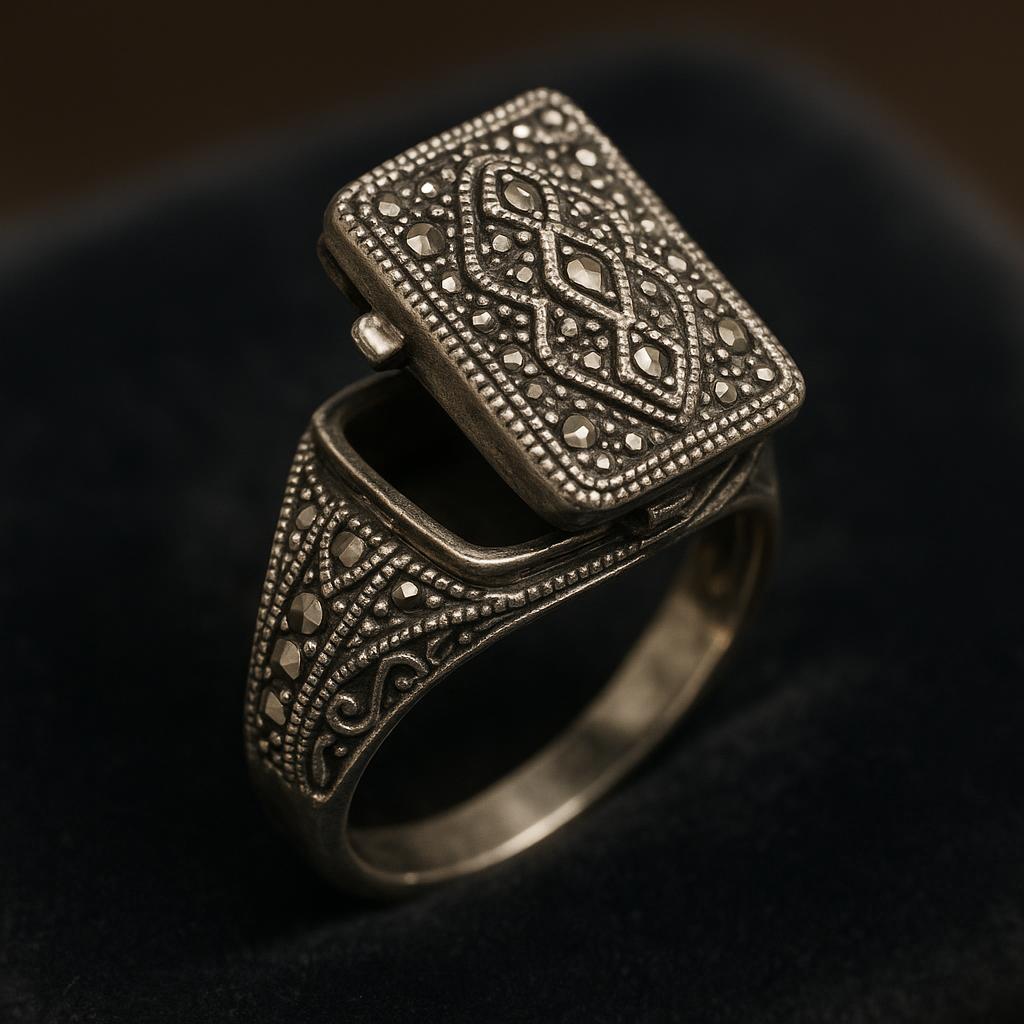
If you’ve inherited or found a sterling silver marcasite “poison ring” with a horse head hallmark, you’re looking at a jewelry form that sits right on the line between legend and reality. Poison rings can have hidden compartments, but most modern collectors value them for their clever hinged locket construction, Art Deco styling, and vintage hallmarks—not for any proven historical use.
In the 1910s–1930s, marcasite-studded silver jewelry was widely produced across Europe and the U.S. (often marked “925” for sterling). When you add a distinctive maker’s symbol—like a horse head mark plus an additional tiny symbol (sometimes a heart)—the ring can become more than “just scrap silver.” This guide shows what to document so you can estimate value confidently and describe it accurately when selling.
Note: We couldn’t find relevant auction comps in our database for this topic right now. If you’re valuing a specific item, try searching by maker/model/material and we’ll expand coverage over time.
What similar items actually sold for
To help ground this guide in real market activity, here are recent example auction comps from Appraisily’s internal database. These matched sales are market context only, not an object estimate or identification, and they do not guarantee a price for your specific marcasite ring.
Shown USD range: USD 8-USD 40. Median of these 8 USD examples: USD 20.
| Comparable | What sold | Auction house | Date | Lot | Source-reported amount |
|---|---|---|---|---|---|
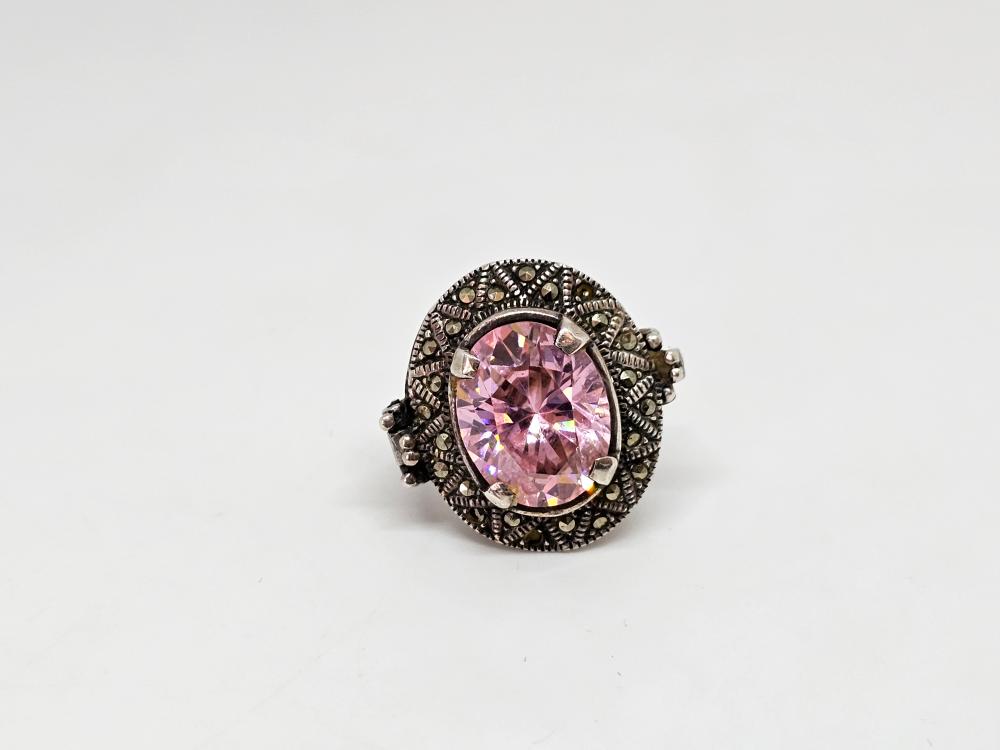 |
Sterling Silver Marcasite Poison Ring LOT 489 | Jones Auction House LLC | 2024-01-14 | 25 | USD 40 (buyer’s-premium treatment unknown) |
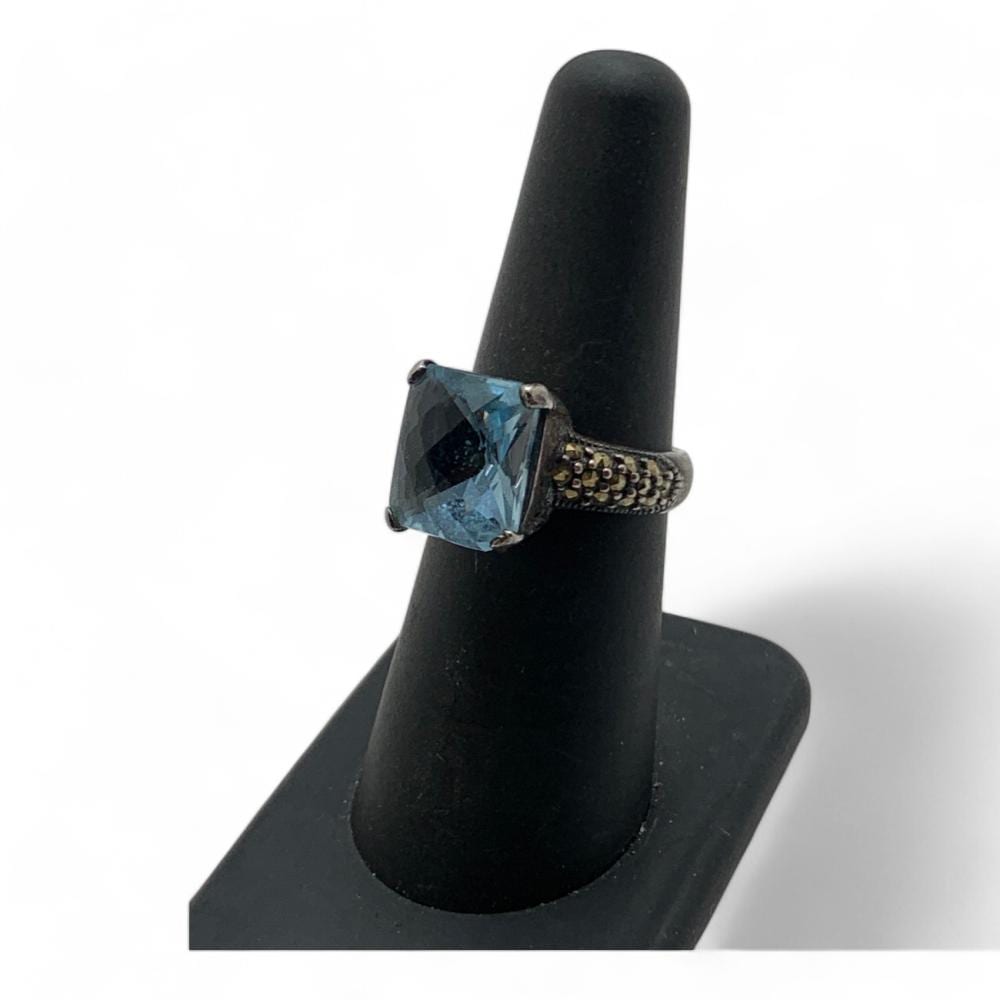 |
Sterling Silver Marcasite Ring W Blue Stone | Berner's Auction Gallery | 2025-01-23 | 3309 | USD 15 (buyer’s-premium treatment unknown) |
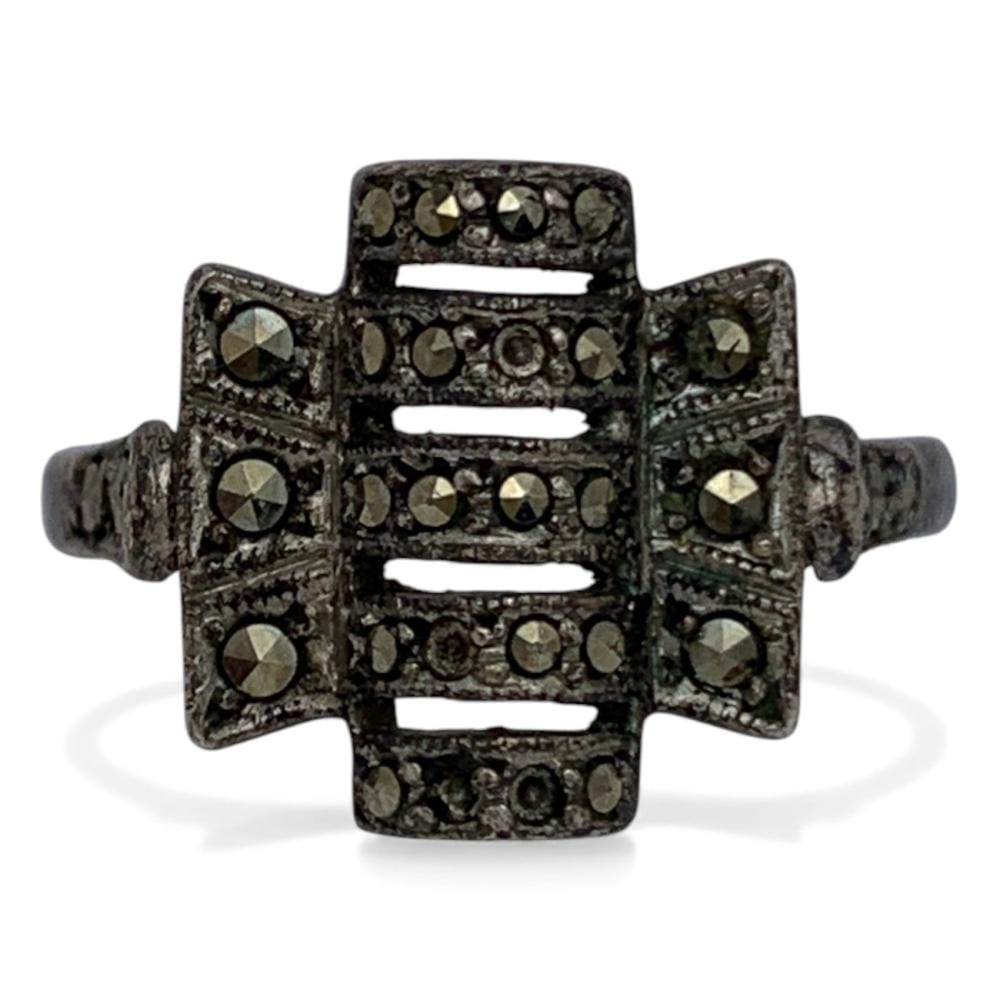 |
Sterling Silver & Marcasite Ring | Berner's Auction Gallery | 2025-12-04 | 3372 | USD 8 (buyer’s-premium treatment unknown) |
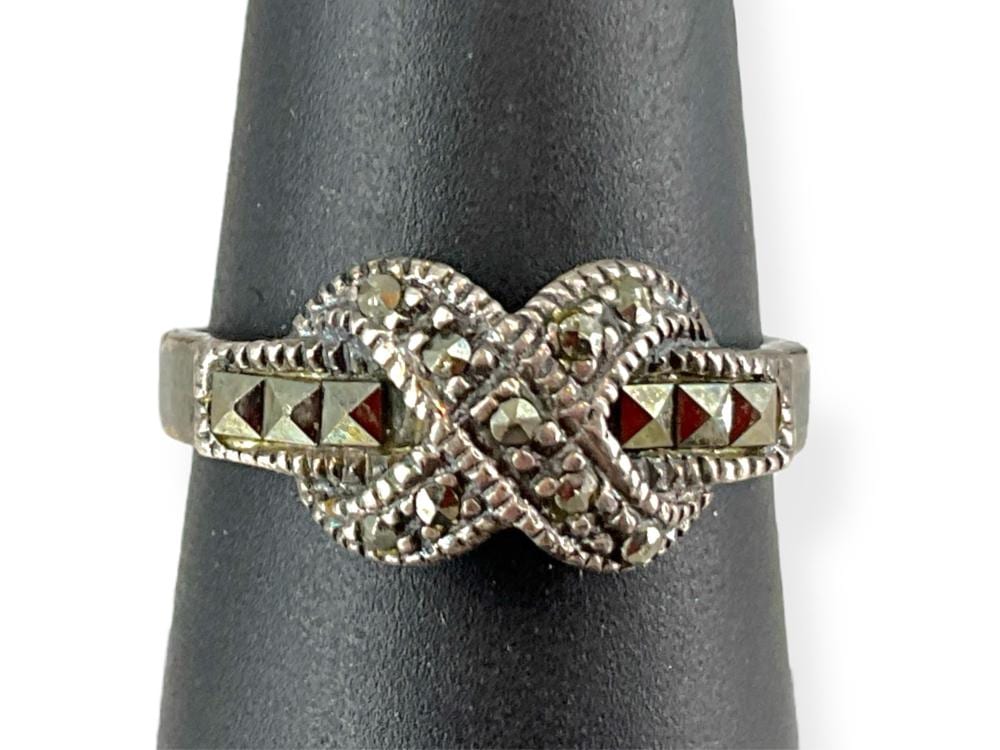 |
Sterling Silver and Marcasite Stones Ring | Apple Tree Auction Center | 2025-01-22 | 3296 | USD 15 (buyer’s-premium treatment unknown) |
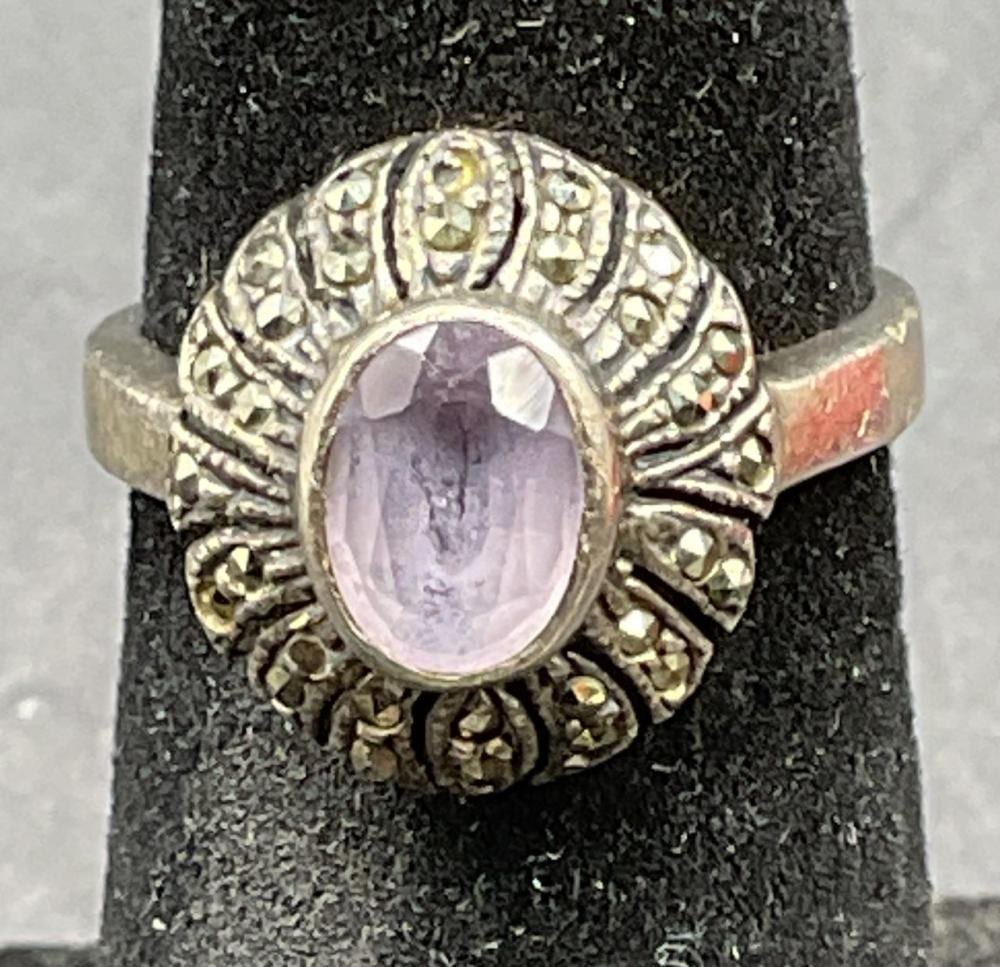 |
Sterling Silver Amethyst & Marcasite Ring | The Benefit Shop Foundation Inc. | 2026-02-11 | 280 | USD 25 (buyer’s-premium treatment unknown) |
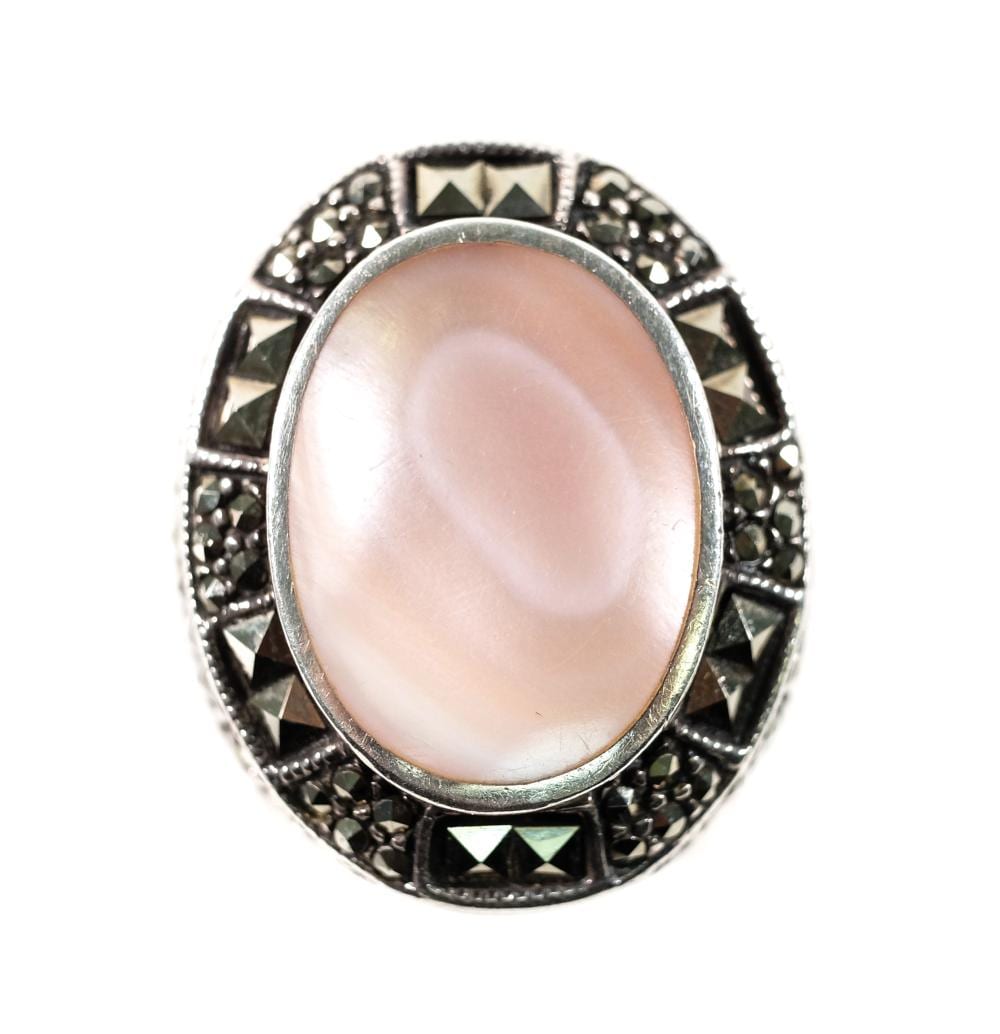 |
Sterling Silver MOP & Marcasite Ring, Size 8 | Gallery 63 | 2022-12-13 | 174 | USD 25 (buyer’s-premium treatment unknown) |
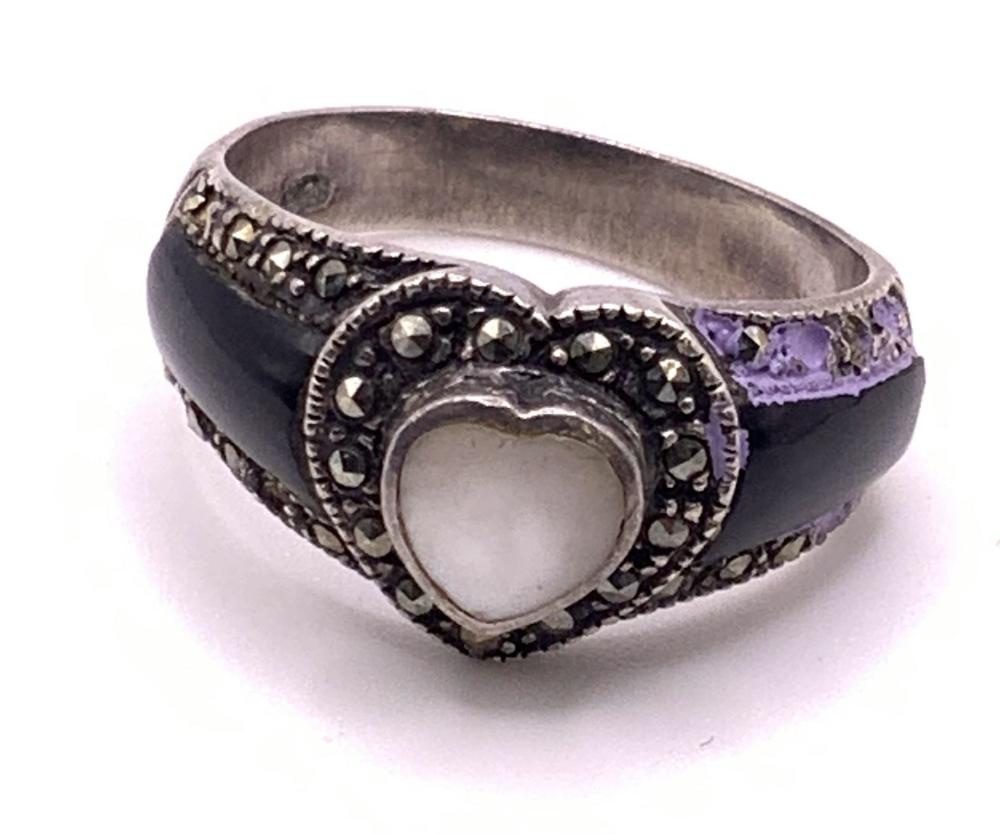 |
Vintage STERLING SILVER Enamel & Marcasite Ring | The Benefit Shop Foundation Inc. | 2022-06-01 | 525 | USD 10 (buyer’s-premium treatment unknown) |
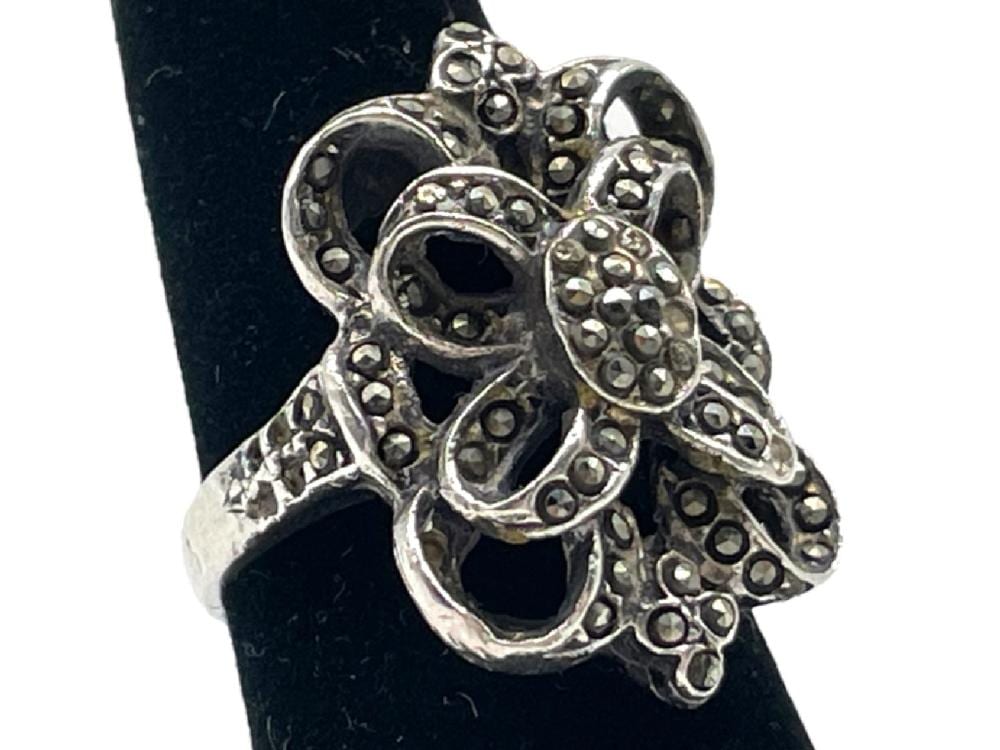 |
925 STERLING SILVER MARCASITE DECO RING SIZE 5 | DejaVu Estate Sales & Auctions | 2024-11-11 | 92 | USD 40 (buyer’s-premium treatment unknown) |
How these auction records were verified
Each row retains its exact source URL, lot identity, retrieval time, access result, and immutable record hash. Inspect the public comparable provenance record.
Disclosure: prices are shown as reported by auction houses and are provided for appraisal context. Learn more in our editorial policy.
Free instant estimate
Not sure if your item is worth appraising? Let us take a look.
Upload a photo, tell us what you know, and get a free first read. If a full appraisal makes sense, we will say so.
Free. No card needed. Takes about two minutes.
How We Research Valuation Data
Our appraisal guides are based on auction results, dealer pricing data, and professional appraiser insights. We may earn a commission when you use our free professional appraisal service . Learn about our editorial standards .
Quick ID: what makes it a “poison ring”?
A poison ring is essentially a locket ring: the top opens on a hinge to reveal a tiny compartment. Collectors also call these “secret compartment rings” or “locket-top rings.” The dramatic story about historical poison use is popular, but it’s best treated as folklore unless you have strong provenance.
- Hinged lid that opens cleanly without wobble.
- Inner cavity (sometimes lined) with a tight closure when shut.
- Decorative face in marcasite, paste stones, enamel, or carved hardstone typical of early 20th century jewelry.
Dating a silver marcasite poison ring (why “c. 1920s” fits)
Marcasite-set silver jewelry is strongly associated with Edwardian and Art Deco fashion. Many rings with geometric faces, milgrain edges, and pavé-like sparkle sit comfortably in the 1910s–1930s window.
Your ring’s combination of sterling (925) silver, a marcasite-studded hinged top, and a distinctive horse head hallmark fits the way many European export pieces were marked and sold in the early 20th century.
Understanding the horse head hallmark + 925 (and the tiny heart)
Marks are most useful when they confirm metal fineness and give you a lead on origin. The downside is that symbols can overlap across countries, and worn stamps are easy to misread.
What “925” usually means
A “925” stamp generally indicates sterling silver: 92.5% silver with the balance usually copper or another alloy. It’s an important value driver because it separates the ring from silver-plate or base-metal costume jewelry.
What the horse head mark might indicate
A horse head is often a maker’s mark or an import/export hallmark used by a particular workshop. It can also be confused with other animal-head marks used in different hallmark systems. Treat it as a clue, not a conclusion.
If you also see a tiny heart symbol near the horse head (some rings show a small secondary stamp), it can be a second device mark. For a confident attribution, photograph the punch straight-on and compare the outline and any letters inside it.
Photos that help confirm the marks
- The hallmark in natural window light, plus a second shot with raking light from the side.
- A close shot of the hinge and how the lid seats when closed.
- The underside of the top and the inside compartment (clean, but not polished bright).
Condition checklist (what impacts value most)
On marcasite jewelry, condition is usually the difference between “wearable vintage ring” and “parts/scrap.” Focus on the practical issues buyers ask about.
- Missing marcasites (common): note how many stones are missing and whether prongs are bent.
- Loose hinge or lid: a lid that wobbles or doesn’t close securely reduces value quickly.
- Shank repairs at the shoulders: look for solder seams or cracks.
- Over-polishing: aggressive polishing can flatten detail and make the face look “soft.”
Appraisal value: a practical range for a silver marcasite poison ring
A wearable sterling silver poison or locket ring with intact hinge, clear 925 mark, and mostly complete marcasite setting usually belongs in the affordable vintage-jewelry market, not the scrap-silver market. Recent auction evidence puts ordinary sterling/marcasite ring lots around $250 to $350, while a closer direct comp for an Art Deco .925 sterling silver poison hidden-box ring brought $475 in 2026.
- $75 to $175 is a practical resale band when stones are missing, the lid is loose, or the horse-head mark cannot be attributed.
- $175 to $350 fits many wearable sterling marcasite rings and small estate lots when condition is presentable.
- $350 to $500+ needs stronger locket/poison construction, crisp Art Deco design, clean hinge action, and clear hallmark photos.
The horse-head mark can help searchability, but do not price the ring on the mark alone. Buyers need to see metal fineness, hinge condition, missing-stone count, ring size, and whether the compartment closes securely.
Upload hallmark, hinge, open-compartment, and stone-condition photos. The free screener can tell you whether the poison-ring comp applies or whether the ring should be priced as ordinary marcasite jewelry.
Upload photos for a free first lookCare & cleaning (marcasite-safe)
Marcasite is commonly set with tiny prongs, and harsh cleaning can loosen stones or stress the hinge.
- Avoid ultrasonic cleaners (they can shake stones loose).
- Use a dry, soft toothbrush to lift dust from pavé areas.
- If needed, use a barely damp cloth and dry immediately; keep moisture out of the compartment.
- Store separately so the lid and stones don’t abrade against other jewelry.
How to sell it (and how to describe it accurately)
The goal is a listing that feels trustworthy: specific about construction, careful about the “poison” story, and honest about condition.
- Photograph the ring closed and open, plus close-ups of the horse head hallmark and 925 stamp.
- State ring size and note any missing stones or a loose hinge.
- If shipping, use fully insured service and avoid off-platform payment requests.
eBay and Etsy are common venues for marcasite rings; vintage jewelry dealers may also buy outright if condition is excellent and the maker is identifiable.
Search variations collectors ask
Readers often Google:
- what is a sterling silver poison ring and how does it work
- 1920s Art Deco marcasite poison ring value
- horse head hallmark on silver ring meaning
- 925 marcasite ring with hidden compartment appraisal
- how to date a marcasite locket ring by style
- are poison rings actually used for poison
- how to clean marcasite jewelry without losing stones
- is a horse head mark French or Dutch on jewelry
- best place to sell a vintage sterling poison ring
Each question maps to the valuation and attribution review guidance above.
References
- Silver hallmark reference (925-1000.com)
- International maker’s marks reference (SilverCollection.it)
- Guide: taking good photos for online listings
Wrap-up
A sterling silver marcasite poison ring with a horse head mark is valuable because it’s wearable vintage jewelry with clever construction. Document the hinge, compartment, and hallmarks clearly, then price it based on condition and comparable sterling marcasite rings—not just on the romance of the “poison” story.