Quick answer
Start with a realistic range, then earn the higher number
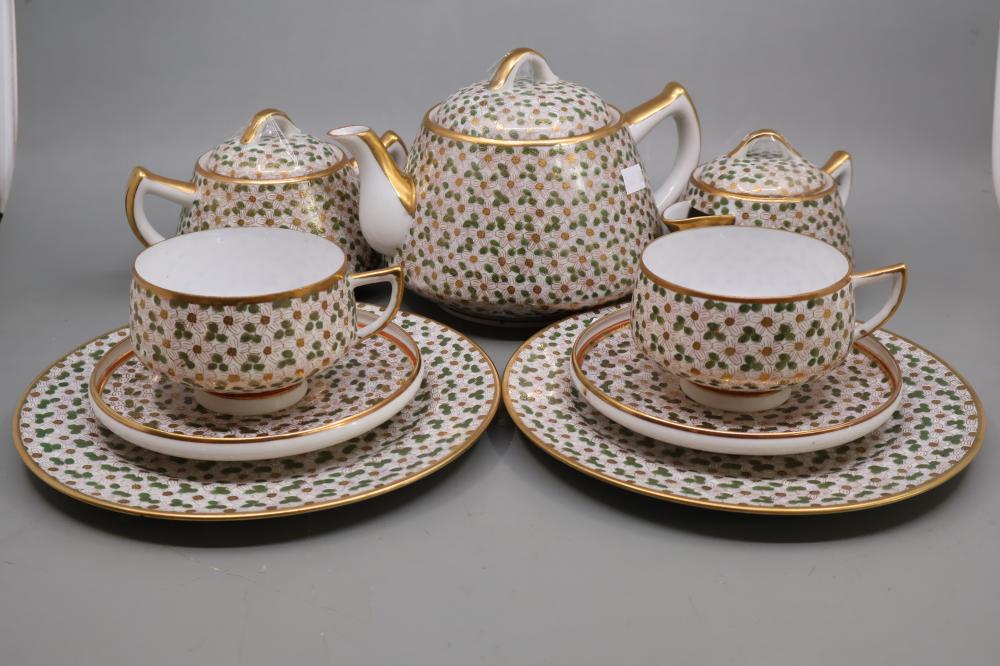
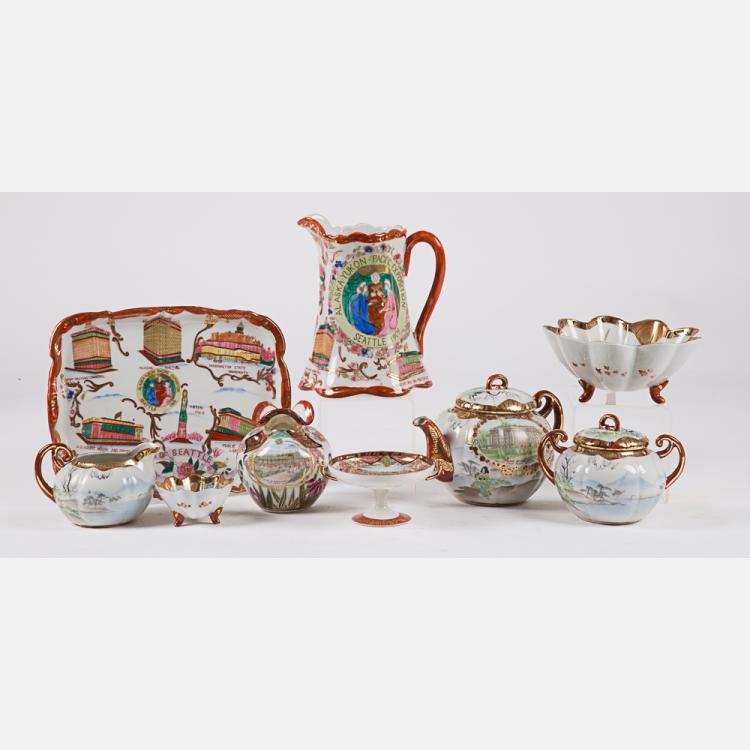
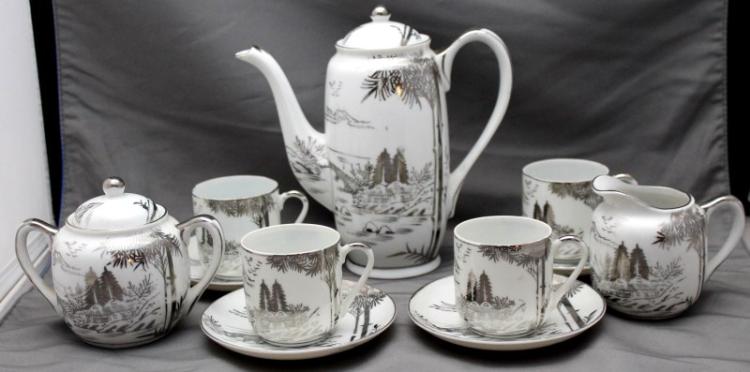
A Japanese tea set can be an attractive decorative service worth under $100, a better complete set worth several hundred, or a specialist object worth more. The practical question is not simply whether it is old. It is whether the mark, ceramic body, painting, completeness and condition give buyers a reason to compete.
As a first screen—not an appraisal—use these broad bands:
- About $25–$150: later export or decorative sets, incomplete services, mass-produced decoration, or sets with obvious chips, repairs or heavy wear.
- About $150–$600: complete or nearly complete hand-decorated services with coherent marks, good presentation and limited damage.
- $600–$1,500+: unusually fine painting, a recognized workshop or artist, an original fitted box, stronger age and provenance, or specialist-auction quality.
These are working US-dollar screening bands. They are deliberately wide because a generic “Satsuma” or “Kutani” label is not enough. Archived auction results also span different dates, currencies and buyer-premium conventions. Use them to decide what deserves a closer look, not to declare an exact resale price.
Satsuma clues
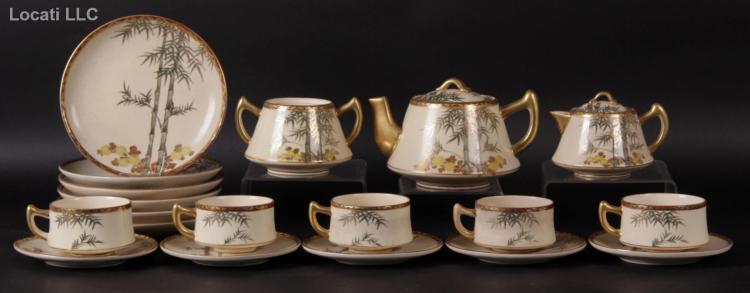
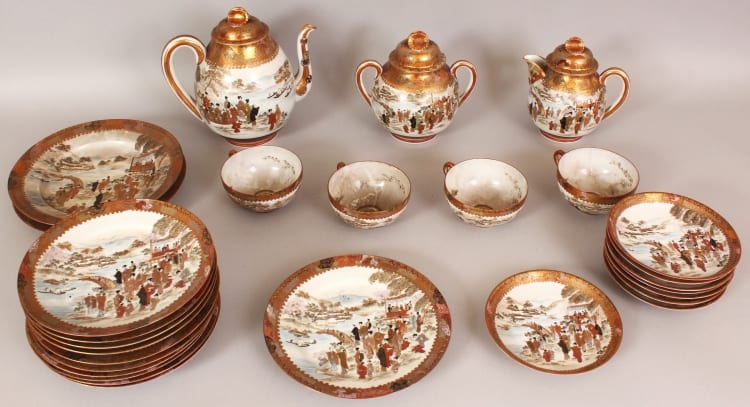
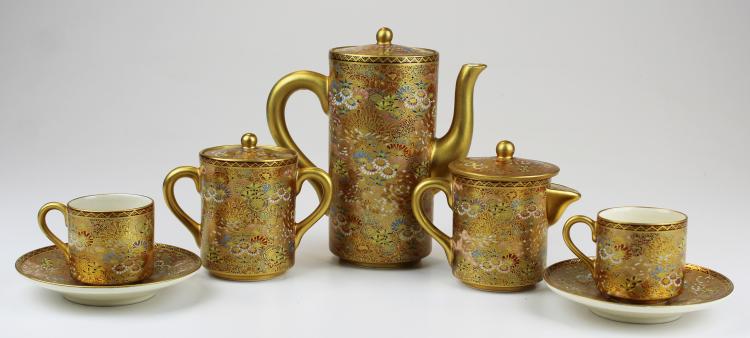
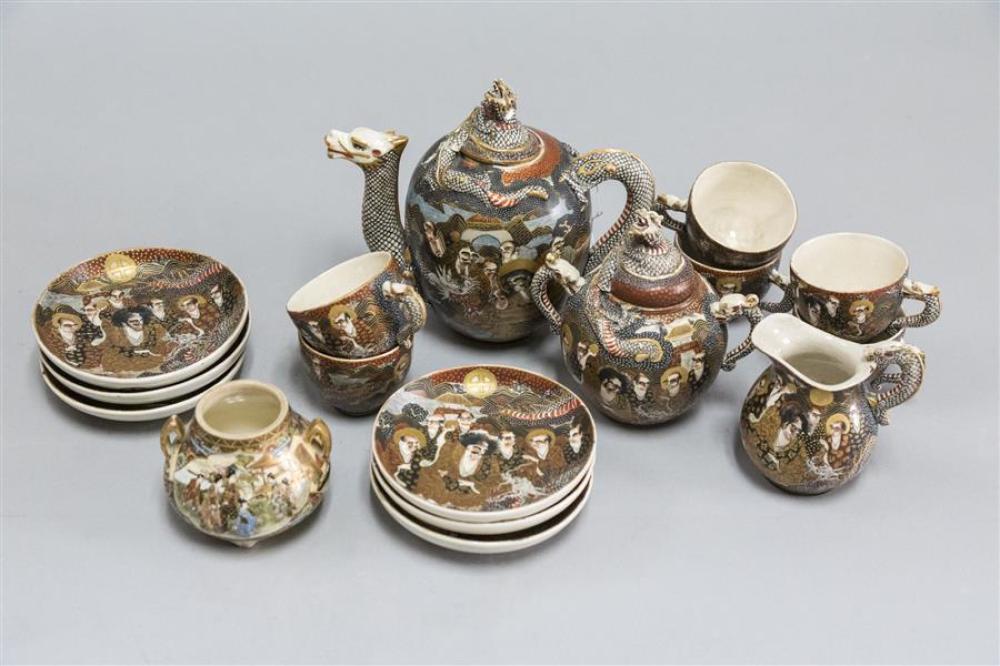
Warm earthenware body, fine crackled glaze, raised enamels and detailed gilding.
Kutani clues
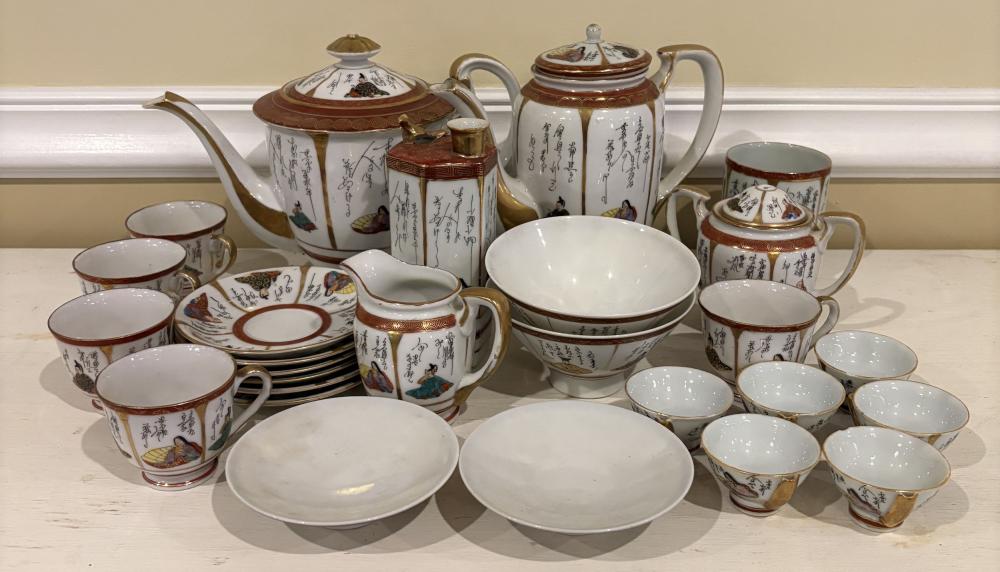
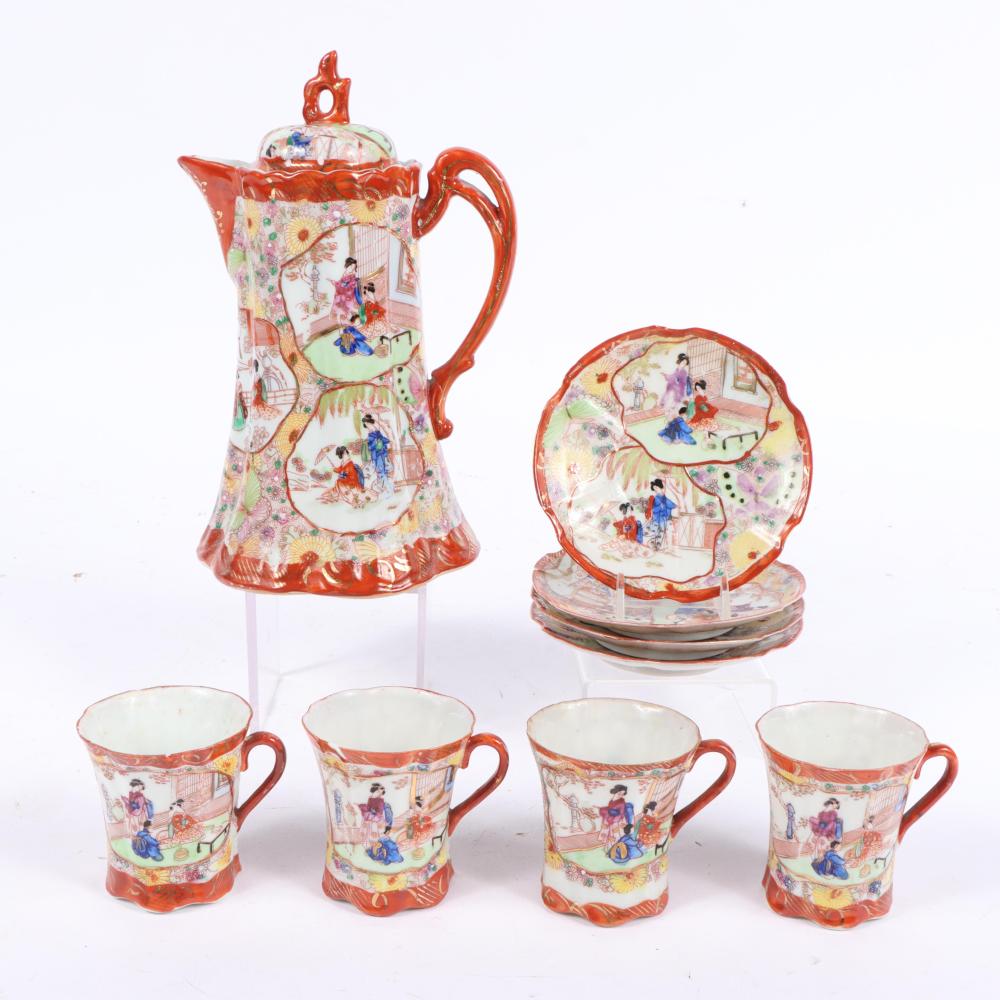
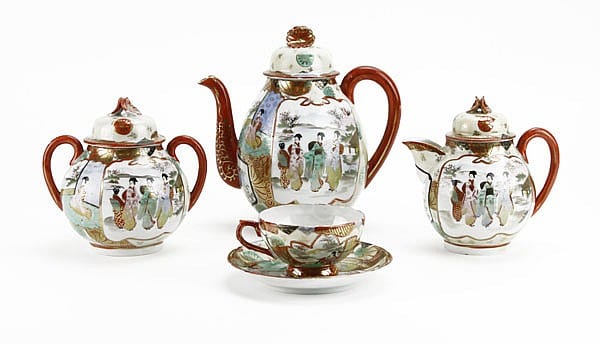
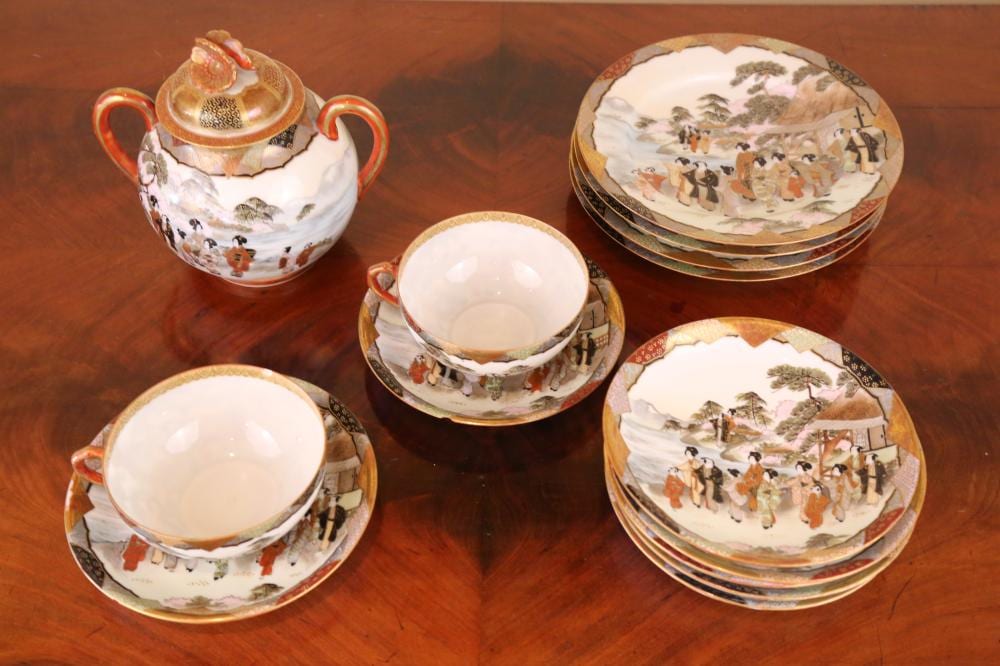
Porcelain body, overglaze color, red-and-gold work, figure scenes or eggshell forms.
Free instant estimate
Not sure which range fits your Japanese tea set?
Upload clear photos of the set and its marks for a free first read. If the evidence supports a full appraisal, we will say so.
Free. No card needed. Takes about two minutes.
Flip every piece: treat the kiln mark as evidence, not proof
Start with the teapot, then compare the marks on the sugar bowl, milk jug, cups and saucers. Photograph each mark straight on. Record its color, number of characters, border shape, printed or hand-painted appearance, and any English wording.
Consistency helps, but variation is not automatically bad. A service can contain different marks or partial marks, especially when pieces came through an exporter or were decorated in more than one workshop. A generic Kutani mark may name a regional tradition rather than one kiln. A Satsuma-style crest or character group can also appear on later export ware. The mark matters, but it is not enough on its own.
- Look for agreement: the mark, body, decoration and apparent age should tell the same story.
- Read export wording carefully: “Nippon,” “Japan” and “Made in Japan” can help frame a production period, but wording alone does not authenticate the set.
- Flag suspicious perfection: a crisp new-looking stamp beneath an otherwise worn piece deserves more scrutiny.
- Do not translate from memory: rotate the image and obtain a reliable reading before assigning a workshop or artist.
Separate Satsuma from Kutani by body and technique
Satsuma and Kutani are broad ceramic categories, not single price grades. A seller’s label should be tested against what is visible.
For Satsuma, inspect the body and enamel work
Classic Satsuma ware is earthenware rather than translucent porcelain. A warm cream body, fine crackled glaze, raised enamels and detailed gilding can support the identification. The Metropolitan Museum of Art describes an 1870 Satsuma wine pot as faience with a finely crackled glaze and colored enamels. That is useful material context; it does not mean every crackled cream-colored tea set is nineteenth-century Satsuma.
For Kutani, inspect the porcelain, palette and drawing
Kutani includes several periods, kilns and export styles. Porcelain bodies, strong overglaze color, red-and-gold decoration, figure scenes and fine eggshell services all appear in the market. Christie's records a circa-1900 boxed Kutani eggshell set with slender forms, painted and gilt landscape panels, and a red enamel six-character mark. The combination is more informative than the red mark alone.
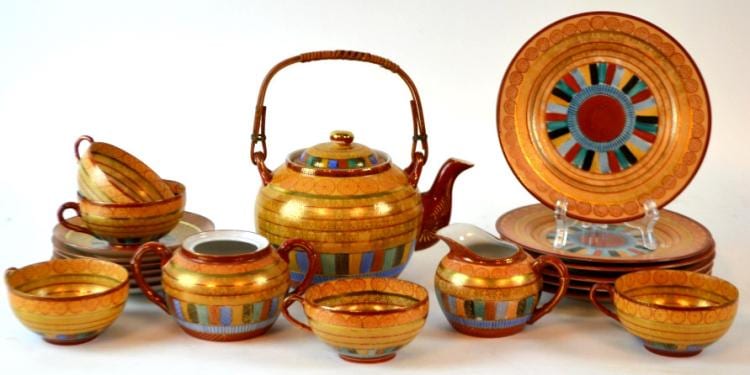
Hand painting can strengthen value when the line work is controlled and the decoration remains distinct from piece to piece. Uniform dots, repeated transfers and flat gilding point toward faster production. Export quality is not automatically poor; the practical distinction is between routine decoration and work with convincing technical and artistic quality.
Count the set before you price the mark
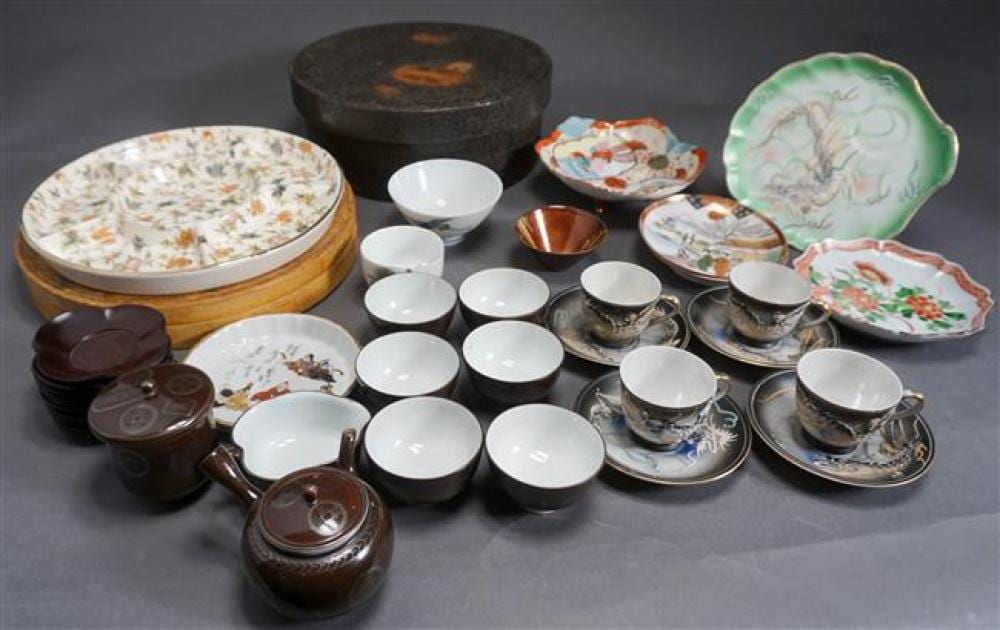
Completeness changes the number faster than most owners expect. List every component and note whether lids, handles and saucers match. A teapot with its original fitted lid matters more than an extra saucer. A sugar bowl without its lid is not complete. Six matching cups with five saucers create a usable but imperfect service.
A typical estate-sale scenario is simple: a box is labeled “Japanese tea set,” but the lid belongs to another pot and two cups have replacement saucers. The mark may still be interesting. The set-level value, however, has to reflect the mismatches.
An original presentation box can add confidence when the fitted spaces correspond to the pieces and any label agrees with the marks. It is supporting evidence, not a substitute for examining the ceramics.
Use angled light to find the damage that changes value
Wash nothing aggressively. Remove loose dust with a soft, dry brush, then inspect under bright indirect light. Tilt each piece slowly. Hairlines become easier to see when light catches them; old adhesive may fluoresce differently under UV, but UV is a screening aid rather than a final test.
- Teapot: check the spout, handle joins, lid flange and finial.
- Cups: inspect rims, handle joins and foot rings for short hairlines and tiny chips.
- Gilding: distinguish normal high-point wear from broad polishing loss.
- Glaze: fine intentional crackle is different from a structural crack through the body.
- Repairs: look for color changes, overspray, rough seams and areas that sound different when very gently tapped. Do not use a tap test on thin eggshell porcelain.
Do not hide repairs when selling. A clear condition report builds more buyer confidence than an optimistic “excellent for age.”
Read auction results as a spread, not a promise
Archived Bonhams records show why the object has to lead the number. An early twentieth-century Satsuma part tea service sold for £11.75 including premium, while another Satsuma part tea service sold for £188. A circa-1900 Satsuma tea set in its original fitted case sold for £250. Those results are not directly interchangeable, but together they show the effect of quality, completeness and presentation.
The upper end has a different evidence burden. A recent Bonhams specialist catalogue estimated a Satsuma tea service by Okamoto Ryozan for the Yasuda Company at €1,800–€3,000. That is an estimate, not a reported sale, and it belongs to an attributed specialist object—not to every gold-decorated set marked Satsuma.
Compare like with like: same ceramic type, similar number of pieces, comparable workshop confidence, similar decoration, and the same condition level. Also check whether a published figure is a hammer price or includes buyer’s premium. Currency and sale date matter. The current auction-comps section below is the better place to look for closer market evidence when relevant lots are available.
Build a five-photo evidence packet before asking for a value
- Photograph the complete set from above so every piece can be counted.
- Show the teapot in profile with its lid removed and beside it.
- Capture the clearest base mark straight on in natural light.
- Add close-ups of the best painting, gilding and ceramic body at the foot.
- Photograph every chip, hairline, repair and mismatched piece.
Include dimensions for the teapot and one cup. If there is a box, photograph its label and the fitted interior. Good evidence narrows the range; extra adjectives do not.
Choose the next step that matches the decision
If you mainly want to know whether the set merits more work, start with the free instant estimate. It is the sensible first move when the mark or category is uncertain.
A written appraisal becomes useful when the set appears finely made, carries a credible workshop attribution, or needs documentation for insurance, an estate, donation or an important sale. For more identification context, use the Japanese tea set markings guide and the broader Asian art appraisal guide.
Japanese tea set value FAQ
Does a red mark mean the set is Kutani?
Not by itself. Red enamel marks are common on Kutani-related wares, but the porcelain body, palette, drawing and wording must agree. Photograph the full mark and the foot before making the attribution.
Does crackle prove a tea set is Satsuma?
No. Fine crackle can be consistent with Satsuma, but it was also copied. Check whether the body is warm-toned earthenware, whether the enamel and gilding show convincing workmanship, and whether the mark fits the rest of the evidence.
Should I split up an incomplete set?
Usually document and offer it as one set first. Splitting can help when individual cups or lids are useful replacements, but it also removes the visual coherence that may attract a decorative buyer.
What should I never do before appraisal?
Do not use bleach, abrasive cleaners, metal polish or a dishwasher. Do not repaint losses or glue a handle without documenting the break. Those actions can remove evidence and make condition harder to judge.
Search variations answered in this guide
- How much is an old Japanese tea set worth?
- How do I identify a Japanese tea set mark?
- Does a red Kutani mark increase tea set value?
- How can I tell real Satsuma from a reproduction?
- What is a complete Japanese tea service?
- Do chips and hairlines ruin Satsuma value?
- Are hand-painted Japanese tea sets valuable?
- Does an original fitted box add value?