Start with an evidence packet, not a guess
A jade-labeled bangle, pendant, bead strand, or carving can be exciting. It can also be difficult to describe from one green, glossy phone photo. A useful first read starts with a repeatable record: neutral photos, safe light observations, exact dimensions, condition notes, and documents that show where the object came from.
The word jade is not a complete identification. It can refer to jadeite or nephrite, and other materials can be sold under jade-like names. Color, translucency, carving quality, treatment risk, and material type all matter more than the label alone. This checklist helps a reviewer see those questions clearly; it does not settle them by itself.
Photograph the object in a fixed 12-shot sequence
Good appraisal photos are not studio glamour shots. They are comparable records. Use the same background, camera distance, and orientation so color changes, asymmetry, repairs, and construction details do not disappear between frames.

Set up a five-minute photo station
- Wipe the surface only with a soft cloth. If cleaning is necessary, use conservative warm soapy water and dry it carefully; avoid ultrasonic or steam cleaning when treatment status is unknown.
- Place the object on matte white, light gray, and dark gray paper. The three backgrounds help show pale edges and dark silhouettes without adding a color cast.
- Stand near a bright window out of direct sun. Turn off warm room lights. Do not use portrait mode, beauty filters, HDR effects, or automatic color enhancement.
- Use the rear camera at its normal focal length. Brace the phone or use a small tripod. Tap the object to focus, then reduce exposure if polished highlights turn white.
- Keep the original image files. Cropped copies are useful for sharing, but metadata and surrounding context can help a reviewer audit the packet.
Take these 12 photographs in order
Name the files 01-front through 12-context. That small step prevents a reviewer from mistaking a backlit detail for the normal-color view.
Add the shots your object type needs
| Object | Add these photographs | Record this detail |
|---|---|---|
| Bangle | Interior, outer edge, side profile, any flat spot | Inside diameter, wall width, thickness, weight |
| Bead strand | Full strand, clasp, knotting, three representative beads, drill holes | Length, bead count, smallest/largest bead, total weight |
| Pendant or ring | Mount front/back, hallmark, prongs or bezel, bail, setting profile | Stone and complete-jewel dimensions; metal marks as written |
| Carving | All faces, base, undercuts, recessed areas, stand separately | Height × width × depth; object and stand weights |
| Rough or pebble | Dry and damp surface, broken/cut face if already present | Three axes and weight; do not cut or scratch a new window |
Use light to record color and translucency safely
Light changes what jade looks like. That makes controlled lighting useful for documentation and dangerous as a shortcut. A bright green edge, cloudy patch, dark band, or fluorescent response is something to record. It is not a home authentication result.

Take a neutral color view first
Photograph the object under indirect daylight or a high-color-rendering daylight lamp. Include a plain white card in the first frame, then remove it for the close-up. Record the light source and whether the phone altered the image. The goal is not to make the green look richer; it is to give the reviewer a baseline.
Note the dominant color, secondary colors, and distribution in ordinary words: “pale gray-green with two darker patches” is more useful than “imperial.” Also note whether the pattern looks even, mottled, veined, spotted, or concentrated near an edge.

Make one diffused transmitted-light view
Place a cool, diffused white light behind the object without touching it. A phone flashlight can work if you cover it with a clean white paper diffuser and keep heat away. Photograph the whole object, then one close-up of the thinnest area. Record where light passes through, where it stops, and whether internal bands or cloudy zones become easier to see.
Thickness controls this result. An opaque center and glowing edge can simply reflect different section depths. That is why the transmitted-light photo must travel with a profile photo and thickness measurement.
Treat UV as optional screening, never a verdict
If you already own a proper gem-testing UV lamp, record its wavelength, the room conditions, the response color, and whether the response is even or localized. Wear UV-protective goggles, avoid skin exposure, and never look into the beam. Skip the test entirely for an object you cannot illuminate safely.
Fluorescence alone cannot determine material, origin, age, or treatment. GIA describes UV as a screening observation and uses broader laboratory testing for conclusive identification. A “no reaction” result is not a certificate, and a bright reaction is not proof of dye or resin.
Skip tests that can damage the object or mislead you
- No scratch test: it can permanently mark jade, a lookalike, a coating, or a mount.
- No flame or hot needle: heat can damage jade, treatments, adhesives, cord, or metalwork.
- No acid, solvent, bleach, or acetone: treatment status is unknown and the surface may be vulnerable.
- No drop or impact test: toughness does not make a carved edge, old repair, or mounted jewel indestructible.
- No sound verdict: a ring tone depends on shape, thickness, suspension, fractures, mounts, and handling.
- No “cold to the touch” verdict: temperature response varies with environment, size, and comparison material.
Free instant estimate
Finished the checklist? Get a free first read of your jade object
Share the photos, measurements, and ownership notes you have. We can give you an initial market read and say plainly if stronger documentation is worth pursuing.
Free. No card needed. Takes about two minutes.
Measure dimensions that another person can compare
“About two inches” is not enough for a useful comparison. Record in millimeters, use a digital caliper gently if you have one, and never clamp across a fragile edge. Photograph the tool reading while the object is in position.

Use three axes and name them
For a carving, record height × width × depth. For a pendant, record the jade element separately from the bail and chain. For a ring, record the stone or carved element, total ring size, and mount height. For a flat plaque, record maximum height × maximum width × thickness at both the thinnest and thickest safe points.
Measure bangles and beads consistently
- Bangle: inside diameter across the opening, outside diameter, wall width, wall thickness, and total weight.
- Beads: strand length, bead count, smallest and largest bead diameter, representative bead diameter, clasp length, and total weight.
- Matched pair: measure and weigh each item separately. Near-matches can differ in thickness, color distribution, or repair history.
Do not subtract an estimated mount weight. State exactly what went on the scale: “complete pendant with 14K-marked mount and chain, 18.42 g” is auditable; “jade weighs around 15 g” is not.
Turn condition into a simple map
Draw an outline or print the front and back photos. Number each chip, fracture, abrasion, stain, repair, loose fitting, and polish difference. Match those numbers to close-up filenames. Condition changes the comparison set quickly, and the map keeps a small edge nick from being confused with a through-fracture.
Build provenance another person can audit
Provenance is the documented chain of ownership and custody. A family story is a lead. A dated receipt, old photograph, inventory, insurance schedule, export document, exhibition label, repair invoice, or correspondence can corroborate part of that story.
Write the ownership timeline before scanning papers
| Date or range | Owner and place | Event | Evidence file | Confidence |
|---|---|---|---|---|
| Known or estimated | Name, relationship, city/country | Purchase, gift, inheritance, repair, move, exhibition | Receipt, photo, letter, inventory, certificate | Documented, reported, or unknown |
Keep uncertainty visible. “Reportedly purchased in Hong Kong before 1975; no receipt located” is more credible than converting the story into an exact date. Do not assign a dynasty, mine, workshop, or previous owner unless a record supports it.
Scan documents with their context
- Photograph the front and back of every label, card, envelope, tag, or certificate.
- Capture the whole document before close-ups of stamps, signatures, numbers, or photographs.
- Keep edges, folds, holes, handwriting, and attached notes visible.
- Record who supplied the document and when it was found.
- Do not crop a seller name, date, amount, laboratory number, or disclaimer.
A certificate is evidence about what the issuing party reported. It is not automatically current, authentic, or sufficient for today’s decision. Save it, photograph it, and let the reviewer assess it with the object.
Keep history and market value in separate columns
An old ownership record can improve confidence in the timeline without proving material or treatment. A laboratory report can identify material or disclose detected treatment without proving an inherited family story. An appraisal can address a specified value question without establishing archaeological or cultural origin. Strong packets keep these jobs separate.
Assemble one submission packet
Create a folder named jade-object-owner-year. Put original photos in 01-photos, measurements and condition notes in 02-object-record, provenance documents in 03-provenance, and any prior reports in 04-reports. Do not overwrite the originals when you crop or annotate a copy.
Copy this jade appraisal worksheet
OBJECT
Object type:
Material claimed on label or receipt:
Color in neutral light:
Translucency: opaque / edge glow / partly translucent / other
Carving, polish, texture, and construction notes:

MEASUREMENTS
Height/length: ___ mm   Width: ___ mm   Depth/thickness: ___ mm
Inside diameter (if bangle): ___ mm
Bead size and count (if strand):
Weight: ___ g   Weighed with:

CONDITION
Chips/fractures:
Repairs/adhesive:
Surface wear/staining:
Mount, clasp, cord, or stand condition:

LIGHT RECORD
Neutral-light source:
Transmitted-light result and thickness at observed area:
Optional UV wavelength and response:

PROVENANCE
Owner/date/place timeline:
Receipts, photos, certificates, labels, reports:
What is documented, reported, and unknown:

PURPOSE
Learn / sell / insure / estate / donate / other:
Decision date, if any:
Run a 60-second quality check
- Can you see the full object before any detail crop?
- Are front, back, profile, base, scale, and condition views present?
- Do the written dimensions match the ruler or caliper photographs?
- Are normal-light and backlit photographs clearly labeled?
- Are owner stories separated from documents?
- Did you state what the weight includes?
- Did you preserve original files?
- Did you say what decision the appraisal needs to support?
Compare market evidence only after the object record is complete
Auction results are useful when the lot and your object share relevant characteristics. For jade, the comparison can change with material identification, treatment disclosure, color, translucency, texture, workmanship, object type, dimensions, condition, mount, and provenance. A broad label match is not enough.
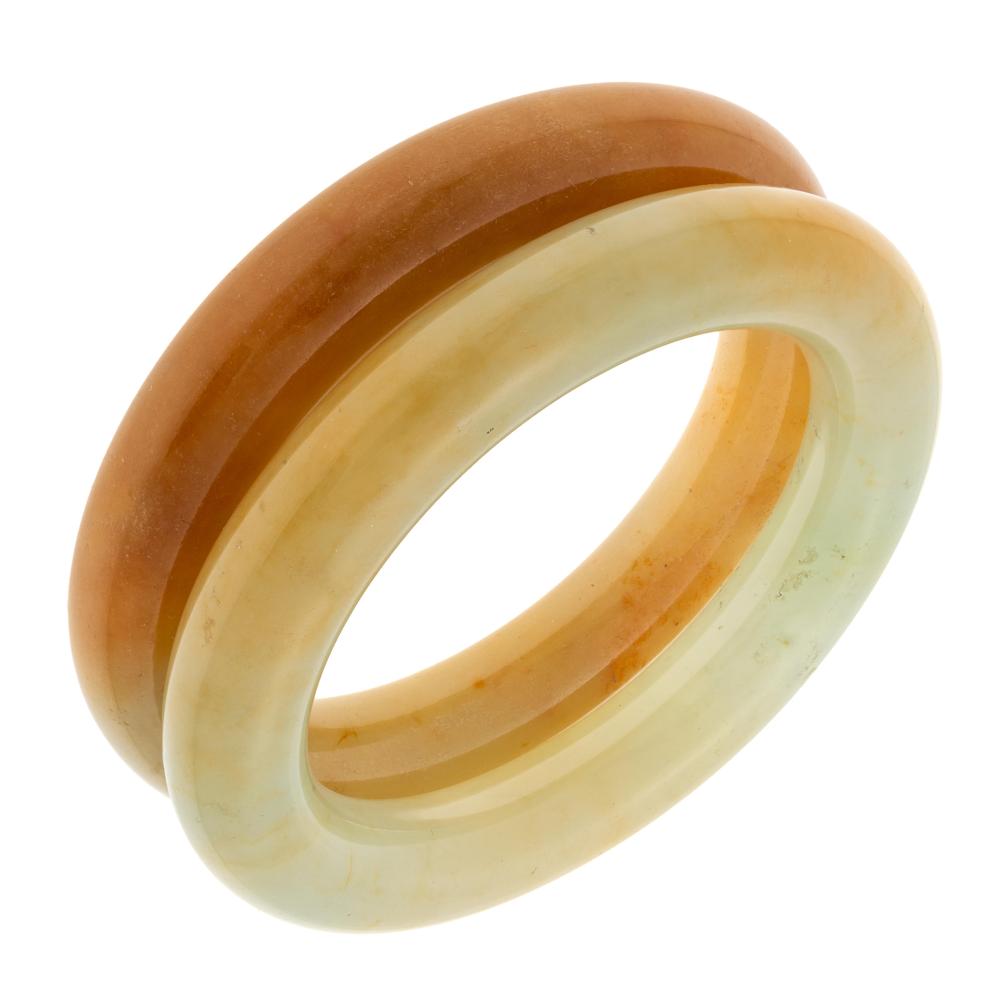
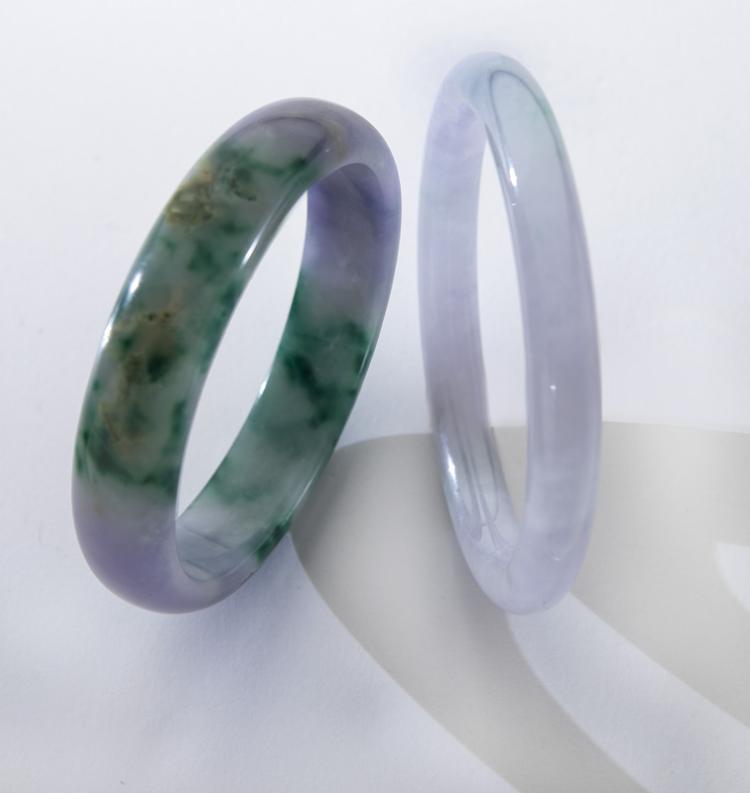
The selected results below are exact jadeite bangle records from the curated evidence file. They show why the packet needs inside diameter, wall thickness, weight, color views, mount details, and treatment documentation. They do not authenticate an owner’s object or predict a price by visual resemblance alone.
Know what this checklist cannot prove
Phone photographs can support an initial category and market read. They usually cannot prove whether a green object is jadeite, nephrite, another mineral, glass, or a composite. They cannot reliably establish treatment status, geographic origin, age, or a named workshop.
That boundary is practical, not pessimistic. If the object appears ordinary and your goal is curiosity, the packet may be enough to stop. If the object appears commercially significant or the decision requires documentation, a qualified gemological laboratory may be needed for material and treatment questions, while an appraiser addresses the relevant value and market.
Jade appraisal checklist FAQ
How many photos should I send for a jade appraisal?
Start with the 12-shot sequence, then add object-specific views. A bangle usually needs interior, outer edge, profile, and flat-spot details. A carving needs every face, base, undercuts, and the stand separately. Sharp, labeled coverage matters more than a high photo count.
Can a flashlight identify real jade?
No. A diffused backlight can document translucency, internal bands, cloudy zones, and thickness differences. Those observations help a reviewer ask better questions, but they do not identify the material or prove treatment status.
Does UV fluorescence prove jade is treated?
No. UV can be a screening observation when used safely and recorded correctly. A reaction—or no reaction—does not by itself prove material, origin, age, dye, bleaching, or polymer impregnation. Conclusive questions can require laboratory instrumentation.
Should I do a scratch or hot-needle test before appraisal?
No. Both can damage the object and neither produces an appraisal-grade conclusion. Keep the object intact, record what you can see, and let a qualified professional choose non-destructive testing appropriate to the question.
How do I measure a jade bangle?
Record inside diameter across the opening, outside diameter, wall width, wall thickness, and total weight. Use millimeters. Photograph each measurement and do not force a caliper across a chipped or fragile edge.
What counts as provenance for jade?
Dated receipts, old photographs, inventories, insurance schedules, correspondence, exhibition labels, repair invoices, export records, and prior reports can support parts of an ownership timeline. A family story is still worth recording, but label it as reported until a document corroborates it.
Do I need an online appraisal or a gem laboratory?
They answer different questions. A photo-based first read can assess visible evidence and market direction. A laboratory can address material and detected treatment with testing. A written appraisal addresses a defined value question. Start with the decision you need to make, then pay only for the evidence that decision requires.
When the object needs hands-on review
Use the packet as your briefing document. Ask the professional whether they appraise jade jewelry or Asian works of art, which value definition they will use, whether laboratory testing is separate, and what the final report will include.
Find an appraiser near youSearch variations this checklist answers
- What photos are needed for a jade appraisal?
- How do I photograph a jade bangle for an online estimate?
- What dimensions should I record for jade jewelry?
- Can a flashlight test identify jadeite or nephrite?
- Does UV light show whether jade has been treated?
- How do I measure the inside diameter of a jade bangle?
- What provenance documents help with a jade appraisal?
- What should I include in a jade valuation submission?
Sources and method
This worksheet separates owner-observable evidence from laboratory conclusions. Market examples are selected from Appraisily’s retained auction-evidence pipeline and published with a public provenance record.
- GIA: Jade Buyer’s Guide
- GIA: Jadeite Jade Quality Factors
- GIA: Jade Description
- GIA: Jadeite bangle treatment investigation
- GIA: UV fluorescence screening limits and safety
- GIA: Jade care and cleaning
- The Metropolitan Museum of Art: object dimensions and provenance record example
- Appraisily editorial policy and comparable-sales methodology