An old bottle can look ordinary until you turn it in the light. The shoulder may reveal its original use, a seam may run into the lip, and a faint symbol on the base may point to a glassmaker and a narrow production period. Those clues are more useful together than any one “antique bottle trick.”
The practical question is not simply whether the bottle is old. It is what the bottle was made to do, how it was manufactured, and whether collectors care about that exact form. Use this order so you do not let a dramatic color or a single number overrule the rest of the evidence.
Start with five clues, in this order
- Photograph the shape. Capture the full bottle straight on, then note whether it is round, square, flask-shaped, paneled, squat, or long-necked.
- Trace every seam. Follow each mold line from the base toward the shoulder, neck, and lip. Record where it stops rather than guessing a date.
- Copy every mark exactly. Photograph the base, heel, shoulder, and body embossing in raking light. Keep letters, logos, and numbers in their original layout.
- Classify the finish and closure. Look for a cork bore, applied lip, crown finish, bail or stopper hardware, external threads, or a ground stopper.
- Use color as a cross-check. Aqua, amber, cobalt, green, amethyst, milk glass, and colorless glass can support an identification, but color rarely dates a bottle by itself.
Fast answer: a convincing identification needs several clues to agree. Shape suggests use; seams and the finish suggest manufacturing method; marks may identify the maker; color and condition refine the story.
Compare three real bottles before you date yours
These National Park Service collection photographs show why identification works best as a stack. Each bottle has a useful clue, but none should be dated from that clue alone.


Read the silhouette before chasing a date
Shape is the quickest way to narrow the search. A rectangular bottle with recessed panels may have held medicine. A tall cylinder with a crown finish may point toward beer, soda, or mineral water. A squat flask, handled jug, narrow perfume bottle, or wide-mouthed food jar belongs in a different reference set.
Measure height, base width, mouth diameter, and capacity if known. Then write a neutral description: “round amber bottle, sloped shoulder, long neck, narrow crown-style finish.” That description searches better than “rare antique bottle.”
Do not identify from silhouette alone. Bottle forms were copied, reused, and made for long periods. Shape creates the candidate list; seams, finish, marks, and provenance eliminate weak candidates.
Trace the seam all the way to the lip
Turn the bottle slowly under side light. A seam that stops on the shoulder or neck tells a different manufacturing story from a fine seam that continues through the finish. The National Park Service’s Yosemite guide notes that applied finishes may show a side seam ending below an irregular lip, while a thin seam continuing through the lip is consistent with later machine manufacture.
Now flip the bottle over. A rough circular pontil scar can support an early hand-blown interpretation. The Fort Smith National Historic Site documents a pre-1838 aqua bottle with a prominent pontil mark, uneven thickness, and seed-like bubbles. A smooth concave push-up, cup-bottom seam, post-bottom seam, or machine scar suggests another process.
Use ranges carefully. The Society for Historical Archaeology warns that bottle dating is complex and full of exceptions. A glassmaker could keep using an older method, and specialty or imported bottles may not follow the normal timeline for American utilitarian containers.
Copy the mark before you interpret it
The mark matters, but it is not enough on its own. A base may combine a maker logo, plant code, mold number, date code, capacity mark, and a customer’s proprietary symbol. Photograph the whole base first; then take a close-up with the light coming from the side.
- Preserve the orientation of letters and numbers around the logo.
- Distinguish an embossed mark from a label, acid stamp, or later scratch.
- Search the complete symbol, not one isolated number.
- Compare the mark’s documented use period with the seam and finish.
- Check whether the name belongs to the glassmaker, bottler, druggist, or product company.
A bottler’s city can be useful for local research even when it does not identify the glass factory. For bottom-number questions, use our guide to numbers on old bottles; for company symbols, compare the broader old-bottle trademark guide.
Match the closure to the finish
The closure is the removable part; the finish is the glass shape that receives it. If the original cap or stopper is missing, the finish still holds evidence. Record the bore, lip profile, threads, grooves, ledges, and any wire-bail attachment points.
- Cork or stopper bore
- A plain inner bore may have accepted cork; a precisely ground interior can indicate a fitted glass stopper. Look for wear and matching numbers before assuming a stopper belongs to the bottle.
- Crown finish
- A crown-cap finish points toward beverages and other products using a crimped metal cap. Closure chronologies help narrow the period, but regional adoption and reuse matter.
- External threads
- Threads do not automatically mean “new.” Study their form, the seam path through the finish, the base code, and the bottle’s intended use.
- Bail or mechanical stopper
- Wire hardware, a ceramic or glass plug, and a rubber gasket should be evaluated as a system. Replaced hardware is common.
Use color as support, not proof
Aqua can come from iron impurities in the sand. Amber can protect light-sensitive contents. Cobalt, emerald green, milk glass, and other colors may relate to product type, maker preference, or deliberate design. Clear glass can acquire an amethyst cast after long ultraviolet exposure when manganese was used as a decolorizer.
That makes color useful—but not decisive. Lighting, dirt, irradiation, and modern reproduction can change what you see. Photograph the bottle against white paper in indirect daylight, include a neutral gray or white reference, and do not “sun purple” clear glass to make it look older. Altered color can hurt credibility and value.
Separate age clues from value clues
Age creates context. Value comes from demand for the exact bottle. Maker, product, city, rarity, color, closure, embossing, size, condition, provenance, and collector demand all matter. A common early bottle can sell for less than a later regional soda bottle with strong embossing and a scarce color.
Condition changes the number faster than most owners expect. Check for lip chips, cracks, bruises, internal haze, stain, case wear, label loss, polished surfaces, replaced stoppers, and repairs. Do not remove a label or aggressively tumble-clean the glass before you know what it is.
What similar items actually sold for
To help ground this guide in real market activity, here are recent example auction comps from Appraisily’s internal database. These matched sales are market context only, not an object estimate or identification, and they do not guarantee a price for your specific antique glass bottle.
Shown USD range: USD 20-USD 400. Median of these 4 USD examples: USD 42.50.
| Comparable | What sold | Auction house | Date | Lot | Source-reported amount |
|---|---|---|---|---|---|
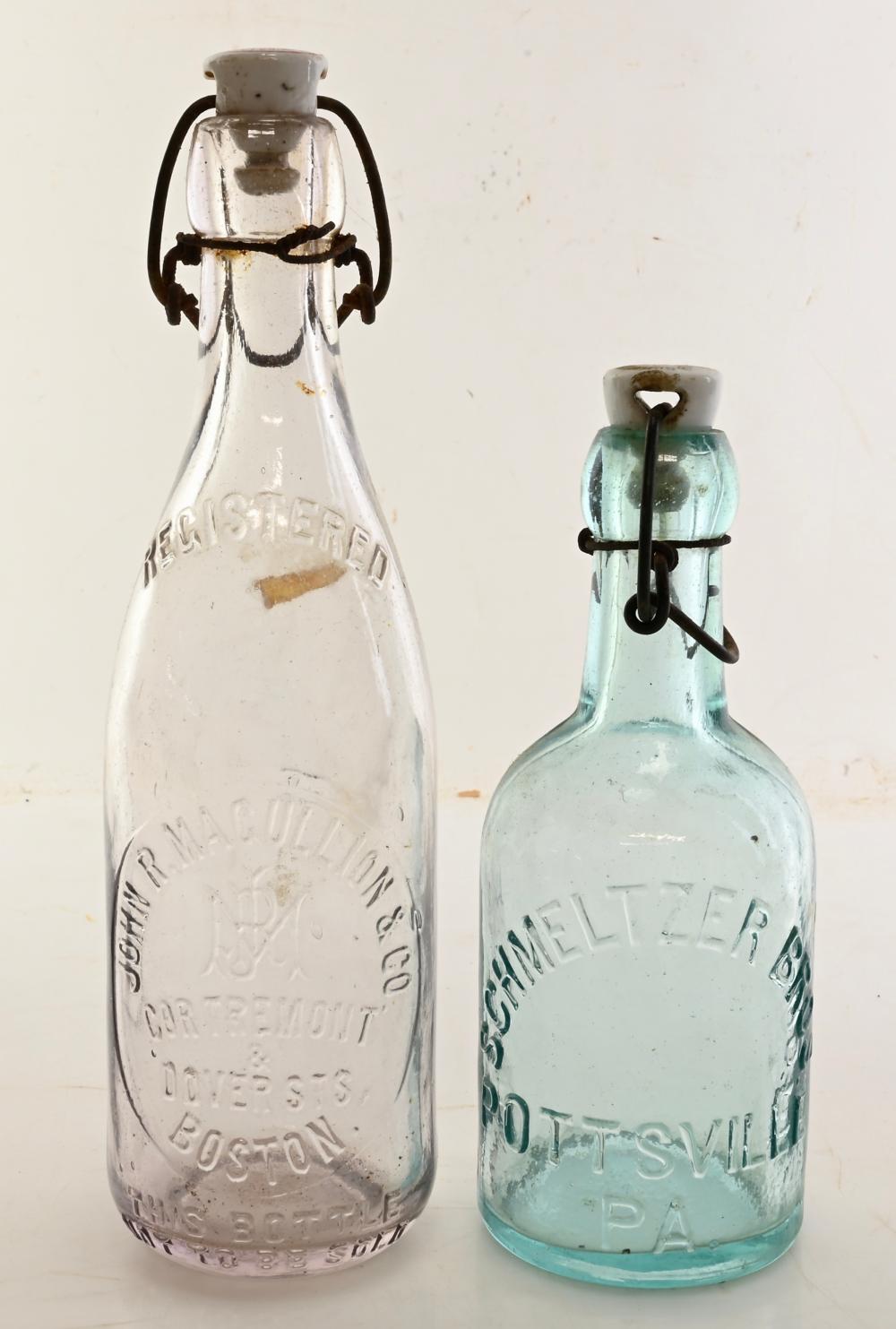 |
Antique Glass Blob Top Soda Bottle Collection | Mebane Antique Auction | 2025-07-31 | 698 | USD 20 (buyer’s-premium treatment unknown) |
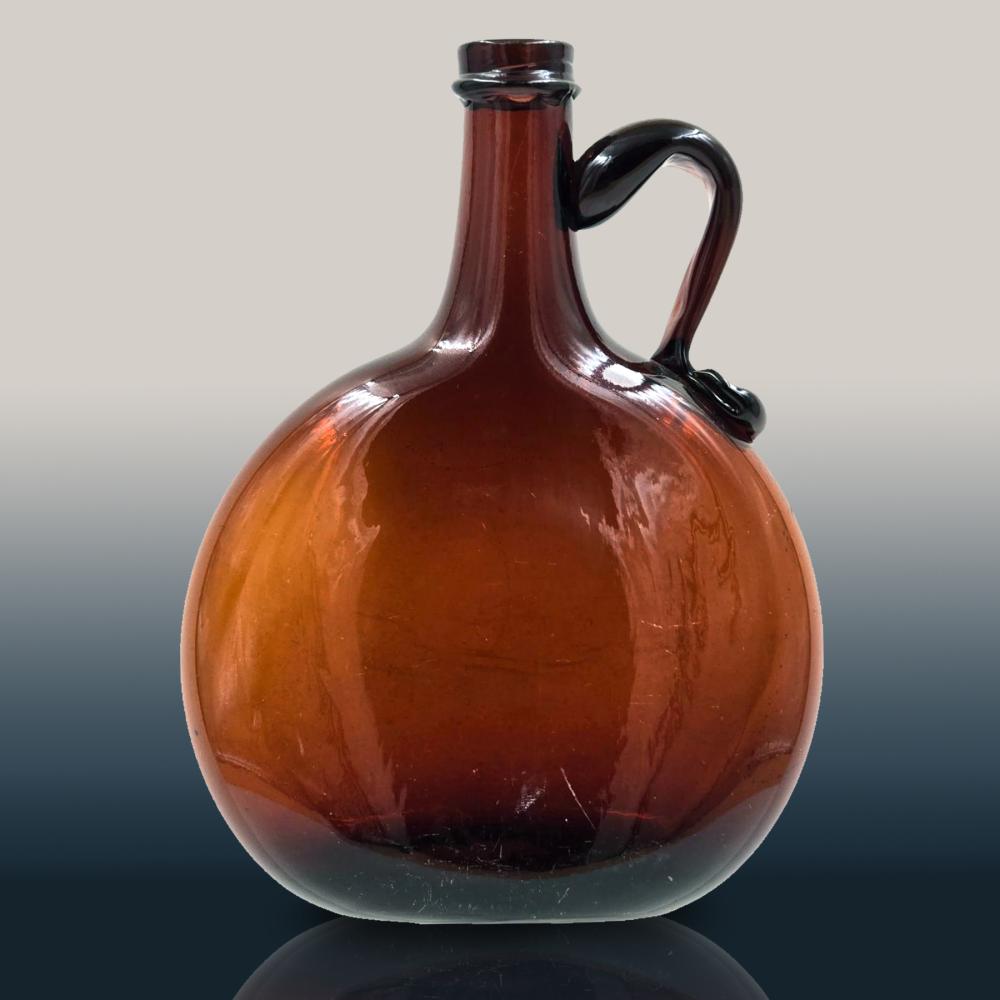 |
Hand Blown Amber Glass Bottle / Flask OPEN PONTIL AND APPLIED HANDLE | RB Fine Arts | 2024-06-29 | 29 | USD 50 (buyer’s-premium treatment unknown) |
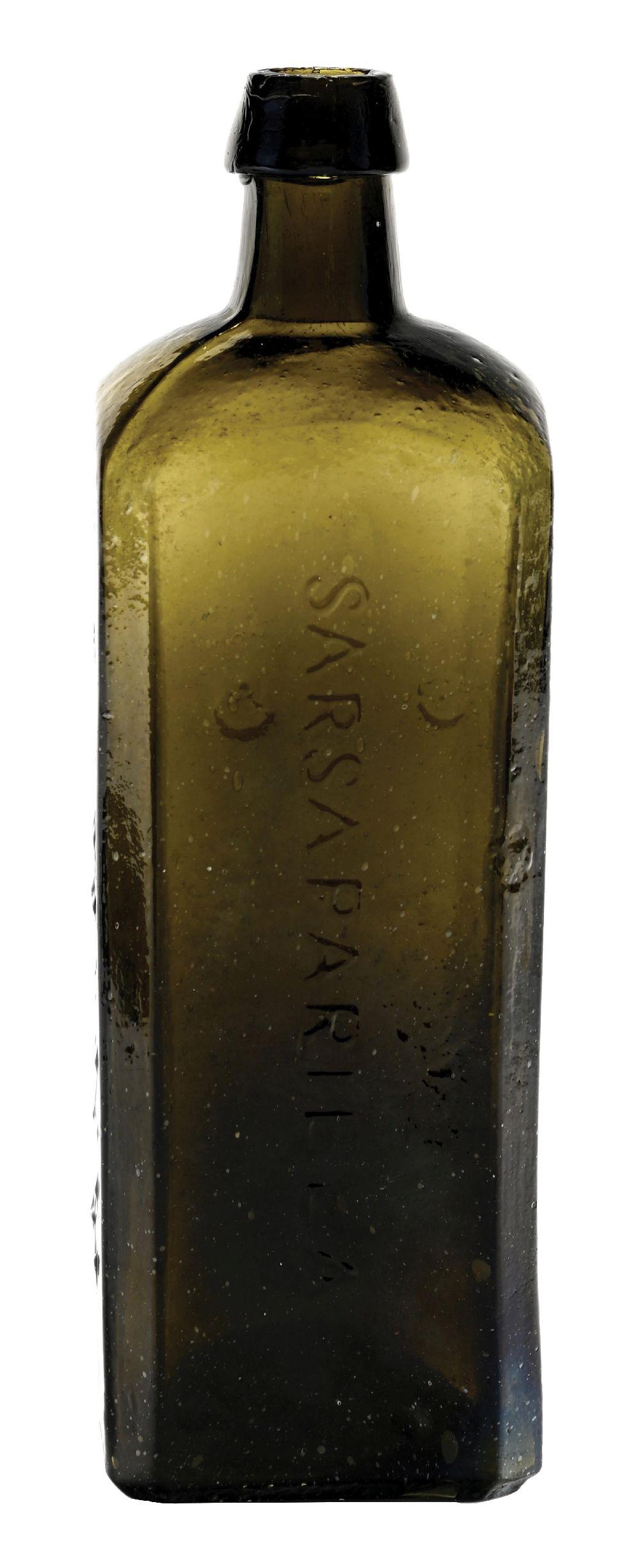 |
DR. TOWNSEND SARSAPARILLA GREEN GLASS BOTTLE | Morphy Auctions | 2025-12-11 | 2051 | USD 400 (buyer’s-premium treatment unknown) |
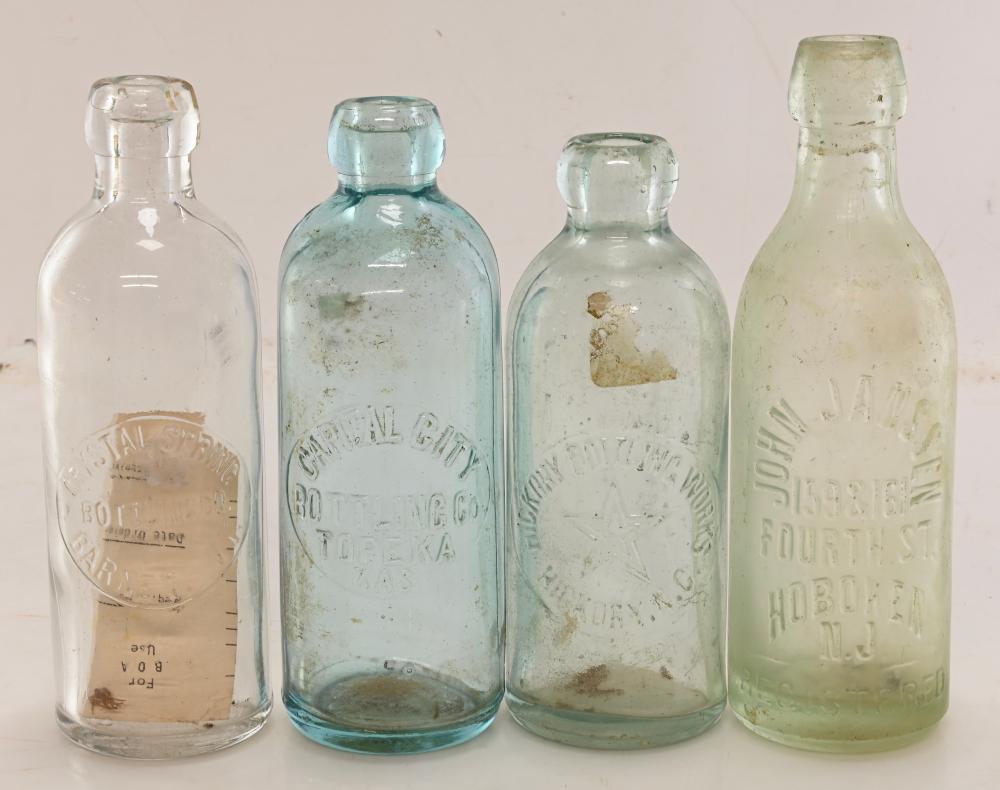 |
Antique Hutchinson Glass Bottle Collection | Mebane Antique Auction | 2025-07-31 | 688 | USD 35 (buyer’s-premium treatment unknown) |
How these auction records were verified
Each row retains its exact source URL, lot identity, retrieval time, access result, and immutable record hash. Inspect the public comparable provenance record.
Disclosure: prices are shown as reported by auction houses and are provided for appraisal context. Learn more in our editorial policy.
Read sales as object-specific evidence
A group of 11 early green glass apothecary bottles sold at Thomaston Place Auction Galleries on August 29, 2025, lot 2022, for $650 USD. That result belongs to that group—not to every green bottle. Completeness, type, condition, and the number of bottles all travel with the price.
Use the table as a set of market examples, then compare your bottle line by line. If the object type, maker, size, closure, condition, or quantity changes, the result needs adjustment rather than blind copying.
Free instant estimate
Still unsure about your old bottle? Send the evidence.
Upload the full shape, lip, base, seams, and marks for a free first read. If the bottle is worth a full appraisal, we will say so.
Free. No card needed. Takes about two minutes.
Take six photos that answer the question
- Full front against a plain background.
- Full side with the seam visible in raking light.
- Close-up of the lip or finish from slightly above.
- Base photographed square-on, with marks readable.
- Embossing or label under side light.
- Every chip, crack, stain, repair, and loose closure.
Add height, base width, mouth diameter, and weight. If the bottle was found in an old property, record the location without disturbing an archaeological site. Objects found in parks or protected land should be left in place and reported to the responsible authority.
Questions people ask about old bottles
Does a bottle with no seams have to be antique?
No. No visible side seam can support a hand-blown or free-blown interpretation, but a seam may be faint, hidden, polished, or absent for another reason. Check the base, finish, symmetry, and provenance before assigning a date.
Does a screw top mean the bottle is modern?
Not necessarily. Threaded finishes appear on older bottles too. The thread form, seam path, maker mark, and bottle type provide better context than the screw top alone.
Do bubbles prove that glass is old?
No. Bubbles can support an older manufacturing story, especially with uneven glass and hand-finished features, but bubbles alone do not prove age or authenticity.
What do the numbers on the bottom mean?
A number may be a mold, plant, date, capacity, or design code. Record the complete layout and identify the maker before interpreting one number.
Should I clean the bottle first?
Start with dry dusting and gentle rinsing only when the glass is stable. Do not scrape labels, polish iridescence, or force a stopper. Original labels, residue, and surface condition can be evidence.
When is an appraisal useful?
Get a second read when the bottle has a scarce maker, unusual closure, strong provenance, valuable contents, or exceptional condition—or when you need documented support for insurance, an estate, or a sale. If clear photos and a maker lookup answer the question, you may not need a written appraisal.
Keep researching the exact bottle
For a wider identification path, compare our old bottles identification guide and seven bottle value factors. If the bottle needs in-person inspection, use the antique appraiser directory to compare local options.
Search variations: identify your exact bottle clue
Old-bottle identification questions covered here
- How do I identify an old bottle by its shape?
- What does a mold seam through the bottle lip mean?
- How can I date a bottle from the mark on the bottom?
- Does amber or cobalt glass make a bottle older?
- How do I identify an old cork-top bottle?
- What do numbers on the bottom of glass bottles mean?
- How can I tell hand-blown glass from machine-made glass?
- Which photos are needed to identify an antique bottle?