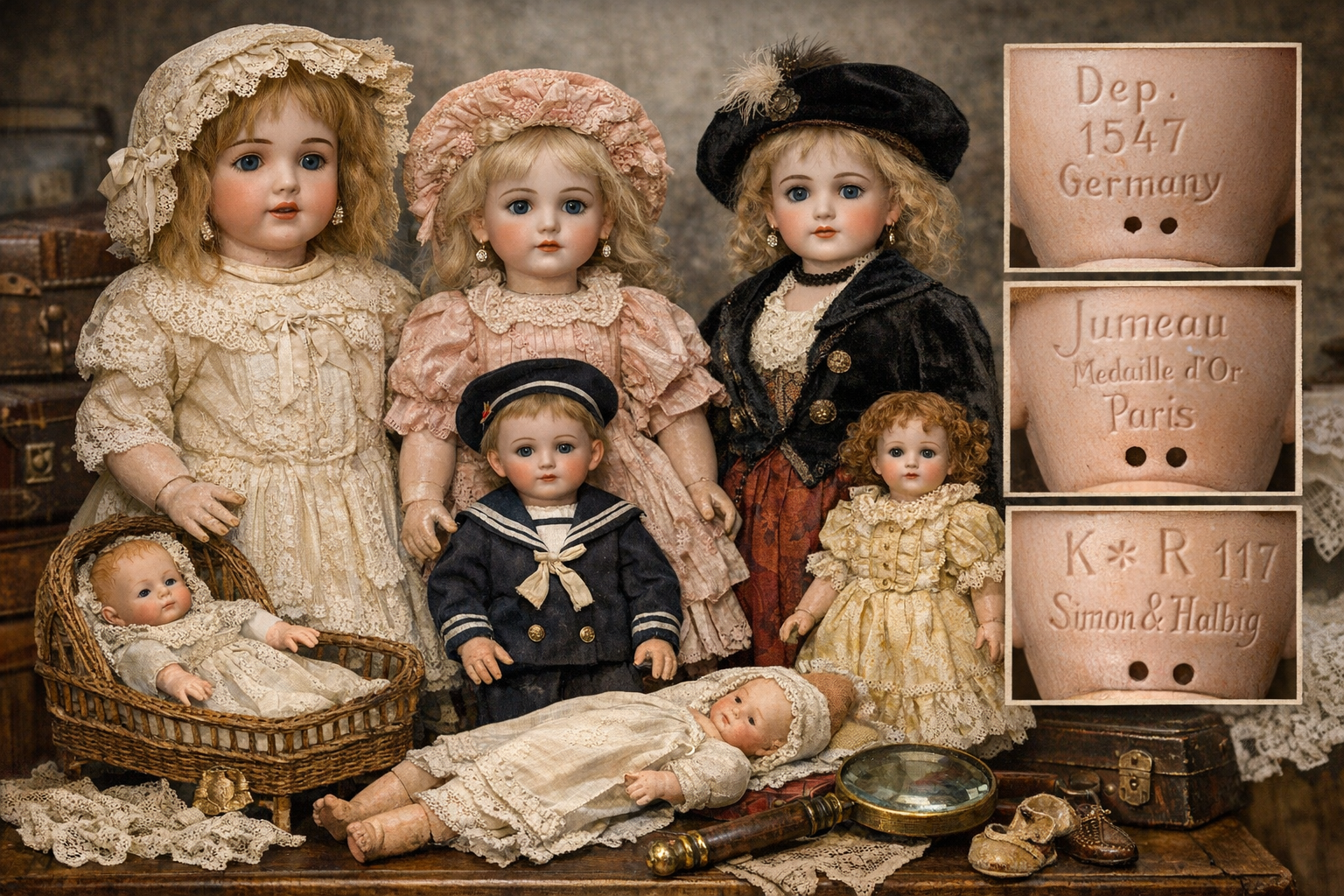
Antique Doll Identification Guide: appraisal basics
Antique doll identification combines head marks, body material, jointing, face painting, eyes, wig, costume, construction, repairs, condition, and whether parts appear original to each other.
Introduction to Antique Doll Identification
Historical Evolution of Doll Manufacturing
- Pre-1800s
Early Wooden & Wax Dolls
The earliest manufactured dolls were typically made of wood, wax, or composition materials. These dolls featured simple designs and handcrafted details.
- 1800-1880
China & Parian Dolls
China dolls with glazed porcelain heads became popular, followed by parian dolls with unglazed white bisque heads. These dolls often had cloth bodies with china or wooden limbs.
- 1880-1930
Golden Age of Bisque Dolls
German and French bisque dolls dominated this era, with fine craftsmanship and detailed features. Major manufacturers included Jumeau, Bru, Simon & Halbig, and Kestner.
- 1930-1950
Composition & Celluloid Dolls
Materials shifted to composition (wood pulp and glue) and celluloid (an early plastic). Shirley Temple dolls and other character dolls became popular.
- 1950-1970
Vinyl & Hard Plastic Era
Modern plastics replaced older materials, revolutionizing doll making. Barbie dolls, introduced in 1959, transformed the industry.
- 1970-Present
Modern Collectibles
Limited edition porcelain dolls and artist dolls emerged as high-end collectibles, while modern manufacturing techniques brought advanced features.
Identifying Manufacturer's Marks and Signatures
Where to Look for Markings
Antique dolls can have markings in various locations:
- Back of the head/neck (most common)
- Upper back between shoulder blades
- Soles of the feet
- Inside clothing tags or labels
- Behind the ears
- Inside the doll’s body (if composition or cloth)
Many markings include numbers, initials, or full company names. To check for marks, gently lift the doll’s hair or wig to examine the back of the head and neck area. For cloth-bodied dolls, examine the seams and inner fabric.
Common Antique Doll Marks
The style and format of doll marks evolved over time and varied by manufacturer:
- German Bisque Dolls: Often marked with “Germany,” “Made in Germany,” or “Dep” (for deposé). Look for numbers like “1079” (Armand Marseille) or “K*R” (Kämmer & Reinhardt).
- French Dolls: High-end French dolls typically have “Jumeau,” “Bru,” or “SFBJ” marks along with size numbers.
- American Dolls: Makers like Effanbee often used stamped marks with their name and date.
- Japanese Dolls: Post-WWII dolls often have “Made in Occupied Japan” or “Japan” marks.
Value Ranges for Marked Antique Dolls
Approximate values based on condition and rarity (2023)
Material Identification: Key to Dating Antique Dolls
China and Porcelain Dolls (1840s-1880s)
China dolls feature glazed porcelain heads, hands, and sometimes feet. The signature glossy finish differentiates them from later bisque dolls. These dolls typically have:
- Molded hair (often black) painted directly onto the porcelain
- Rosy cheeks and simple facial features
- Cloth bodies with porcelain limbs
- Simpler eyes compared to later dolls
Bisque Dolls (1860s-1930s)
Bisque is unglazed porcelain with a matte finish that more realistically resembles human skin. These dolls represent the golden age of doll making:
- Finely detailed, realistic faces
- Glass eyes (often with real eyelashes)
- More naturalistic coloring
- Elaborate hairstyles with real or mohair wigs
- Jointed composition or wood bodies
- Finely sewn costumes
Composition Dolls (1910s-1950s)
Composition material consists of wood pulp, glue, and other materials pressed into molds:
- Less durable than porcelain (prone to crazing and cracking)
- Often painted features that may fade over time
- More affordable than bisque dolls
- Popular for character dolls (Shirley Temple, Patsy, etc.)
Celluloid and Early Plastic Dolls (1920s-1960s)
Celluloid, an early plastic, was lightweight but flammable:
- Very lightweight compared to porcelain
- Often hollow
- Makes a distinctive “ping” sound when tapped lightly
- Yellow discoloration common with age
Material Identification Checklist
Use these checks to determine your doll's material
- Glazed, shiny porcelain head (china doll)
- Unglazed, matte porcelain head (bisque doll)
- Wood pulp composition with painted features
- Extremely lightweight, hollow feel (celluloid)
- Hard plastic with molded hair (post-1950s)
- Vinyl with soft feel (modern doll or reproduction)
- Cloth body with porcelain/bisque limbs
- Fully jointed composition or wood body
Body Construction and Jointing Methods
Common Body Types
- Cloth Bodies with Porcelain Limbs: Common in early china and bisque dolls
- Kid Leather Bodies: Premium dolls from the 1860s-1890s
- Ball-Jointed Bodies: High-end French and German dolls (1880s-1920s)
- Wood-Jointed Bodies: German dolls from the mid-19th to early 20th century
- Composition Bodies: Popular from the 1900s through the 1940s
- One-Piece Rigid Bodies: Common in penny dolls and inexpensive dolls
Joint Types
- Socket Joints: Ball and socket joints allow for smooth, realistic movement
- Pin Joints: Visible pins connect limbs to the body
- Strung Joints: Elastic or string connects limbs through holes
- Swivel Neck: Head can turn side to side
- Sleep Eyes: Eyes that open and close (mechanism introduced in the 1880s)
Dating clues include the precision of the jointing, materials used for connection points, and overall articulation quality. French fashion dolls typically had the most elaborate jointing systems, while German dolls often featured simpler constructions.
Dating Through Clothing and Accessories

Fashion Clues by Era
- 1840s-1860s: Hoopskirt styles, low shoulder lines
- 1870s-1880s: Bustle styles, natural waistlines
- 1890s-1900s: Gibson Girl influences, leg-o-mutton sleeves
- 1910s-1920s: World War I influences, rising hemlines
- 1930s-1940s: Depression-era simplicity, wartime restrictions
Fabric and Construction Details
Examine these elements for authenticity:
- Hand stitching vs. machine stitching
- Natural fibers (silk, cotton, wool) vs. synthetics
- Types of lace, ribbons, and trims
- Construction methods (seams, finishing)
- Closures (hooks, buttons, snaps)
Original clothing significantly increases a doll’s value, so it’s important to determine if garments are original to the doll. Look for appropriate sizing, period-correct materials, and consistent aging patterns between the doll and its clothing.
Identifying Antique Dolls with No Markings
Physical Characteristics to Examine
- Head Shape and Size: Different manufacturers had distinctive head molds
- Eye Style: Glass, painted, or sleep eyes; color, shape, and setting method
- Mouth Formation: Open, closed, type of teeth (if any)
- Ear Details: Size, shape, and whether pierced
- Body Proportions: Relative size of head, torso, and limbs
- Quality of Painting: Finely detailed or simple
- Hair Material and Style: Mohair, human hair, painted, or molded
Comparative Research Techniques
Without markings, comparing your doll to known examples becomes essential:
- Study doll reference books with manufacturer catalogs
- Visit museum collections (many have online databases)
- Consult with experienced collectors
- Attend doll shows where experts can examine your doll
- Use online doll identification forums and databases
| Category | Price | Notes |
|---|---|---|
| French Bisque (Jumeau, Bru) | $1,000-$15,000+ | Premium for rare models in original condition |
| German Bisque (Kestner, S&H) | $500-$5,000 | Character dolls command higher prices |
| American Composition | $100-$800 | Shirley Temple dolls among most valuable |
| China Head Dolls | $200-$2,000 | Higher value for painted features and original bodies |
| Unmarked Antique Dolls | $50-$500 | Value based on condition, material, and craftsmanship |
</tbody> </table>
Distinguishing Antique Dolls from Modern Reproductions
Key Differences to Look For
- Material Quality: Antique bisque has a distinctive feel and weight; reproductions often use modern porcelain
- Manufacturing Evidence: Look for modern production methods (machine-perfect seams, modern glues)
- Aging Patterns: Natural vs. artificial aging (crazing, discoloration, wear patterns)
- Construction Details: Hand vs. machine stitching, precision of jointing
- Glass Eyes: Antique glass eyes have depth and dimension; modern reproductions often look flat
Common Reproduction Tells
- Markings: Reproductions may have fake marks or excessively clear markings
- Clothing: Modern threads, machine stitching, synthetic materials
- Body Construction: Modern dolls have more uniform construction
- Face Painting: Antique dolls have subtle variations; reproductions often have perfect, uniform painting
- Price: If the price seems too good to be true for a supposedly rare antique doll, it likely is
Using Technology and Resources for Identification
Digital Resources
Several online databases and apps can help with identification:
- Doll Reference Database (www.dollreference.com)
- Online collector forums and identification services
- Digital archives of doll manufacturer catalogs
- Museum collection databases
Books and Publications
Essential reference books for serious collectors:
- Coleman’s Encyclopedia of Dolls
- Theriault’s Gold Horse auction catalogs
- The Complete Book of Doll Collecting by Helen Young
- Identifying German Chinas by Mary Gorham Krombholz
Professional Assessment
For valuable or rare dolls, consider professional appraisal services:
- Specialized doll appraisers and dealers
- Auction house specialists
- Museum curators with doll expertise
Essential Doll Identification Resources
Doll Reference: Trusted Resource Identifying Dolls
Comprehensive database of doll marks, manufacturers, and identification guides with searchable catalog.
How to Identify Antique Dolls - wikiHow
Step-by-step guide to identifying different types of antique dolls with visual examples.
Antique Doll Collector Magazine
Monthly publication featuring articles on doll identification, valuation, and collecting trends.
UFDC - United Federation of Doll Clubs
Organization offering educational resources, events, and expert networks for doll collectors.
Theriault's Doll Auctions
World's largest auction house specializing in antique dolls, with extensive archives of past sales.
Reddit r/Antiquedollcollecting
Active community of collectors sharing identification help, resources, and collecting advice.
Determining the Value of Your Antique Doll
Key Value Factors
- Rarity: Limited production runs, unusual models, or discontinued features
- Condition: Original finish, intact parts, minimal restoration
- Completeness: Original clothing, accessories, box, and paperwork
- Provenance: Documented history, previous ownership by notable collectors
- Market Demand: Current collector interest and market trends
Condition Assessment
Condition significantly impacts value - a doll in poor condition may be worth a fraction of the same model in excellent condition:
- Mint: No flaws, all original parts, possibly never played with
- Excellent: Minor wear, all original parts, minimal aging
- Good: Some restoration, replaced parts, moderate wear
- Fair: Significant restoration, major replaced parts, heavy wear
- Poor: Extensive damage, multiple repairs, heavy restoration
Getting a Professional Appraisal
For potentially valuable dolls, consider these appraisal options:
- Specialized doll dealers and appraisers
- Auction house evaluations
- Doll show dealer consultations
- Certified appraisers with doll expertise
Remember that value can fluctuate over time as collecting trends change, so regular reappraisal may be necessary for insurance or sale purposes.
Frequently Asked Questions About Antique Doll Identification
Is there an app that helps tell you the value of old dolls?
How can you tell what kind of doll you have?
How do you date an old doll?
How do you identify a doll with no markings?
How can I tell if my antique doll is valuable?
How do I tell the difference between an antique doll and a reproduction?
What's the difference between antique and vintage dolls?
Can I restore my antique doll without decreasing its value?
Conclusion: Building Your Expertise
The journey of antique doll identification combines historical knowledge, material science, and artistic appreciation. Whether you’re a casual inheritor of a family heirloom or a serious collector, understanding the origins and value of your dolls adds a rich dimension to their significance.
Remember that authentication and valuation often require multiple approaches:
- Manufacturer’s marks provide direct evidence
- Materials and construction methods narrow down the time period
- Stylistic elements help identify the maker
- Comparative analysis confirms identification
- Expert consultation validates your findings
For valuable or rare dolls, always consider consulting with qualified experts or appraisers who specialize in antique dolls. Their experience can provide valuable insights and help avoid misidentification.
By applying the techniques in this guide, you’ll be well-equipped to begin the fascinating process of uncovering the stories behind your antique dolls—their makers, their age, and their place in the rich history of doll making.
Note: We couldn’t find relevant auction comps in our database for this topic right now. If you’re valuing a specific item, try searching by maker/model/material and we’ll expand coverage over time.
What similar items actually sold for
To help ground this guide in real market activity, here are recent example auction comps from Appraisily’s internal database. These are educational comparables (not a guarantee of price for your specific item).
| Image | Description | Auction house | Date | Lot | Reported price realized |
|---|---|---|---|---|---|
| No relevant auction comps found for this topic right now. | |||||
Disclosure: prices are shown as reported by auction houses and are provided for appraisal context. Learn more in our editorial policy.
Free instant estimate
Not sure if your item is worth appraising? Let us take a look.
Upload a photo, tell us what you know, and get a free first read. If a full appraisal makes sense, we will say so.
Free. No card needed. Takes about two minutes.
Choose your next step
Use the path that matches the decision you need to make about the item.
Not sure it is worth appraising?
Start with a lower-friction screen to understand the likely category, evidence, and next step.
Upload photos for a free first lookWant proof before paying?
See how a signed report documents photos, comparable evidence, condition notes, and value conclusions.
View signed report sampleNeed a signed report?
Use this for insurance, estate, donation, resale, or documented value decisions.
Need documentation now? Start signed appraisalNeed local or specialist help?
Compare directory options when the work needs in-person review or a specialist near you.
Find local specialistsSee what the report looks like
Sample reports show how photos, comparable evidence, condition notes, and a value conclusion are documented.
Get an antique doll appraisal
Upload photos of the doll head, marks, body, hands, feet, eyes, wig, clothing, damage, repairs, and measurements so a specialist can review it.
- Expert report with photos and comps
- Fast turnaround
- Fixed, upfront pricing
No obligation. Secure upload.
Continue your valuation journey
Find the right local specialist
Compare antique and art appraisers by location and specialty in one directory.
Antique & art specialists
Browse the Antique & Art Appraisers Directory
Choose a local specialist when the assignment needs in-person inspection or a specific credential.
Machine-readable summaries
Use these machine-friendly references for AI and crawler discovery of Appraisily content.
Ready for pricing guidance?
Start a secure online appraisal
Upload images and details. Certified specialists respond within 24 hours.
Upload photos for a free first look View signed report sample