What Emmett Kelly figurines actually sell for
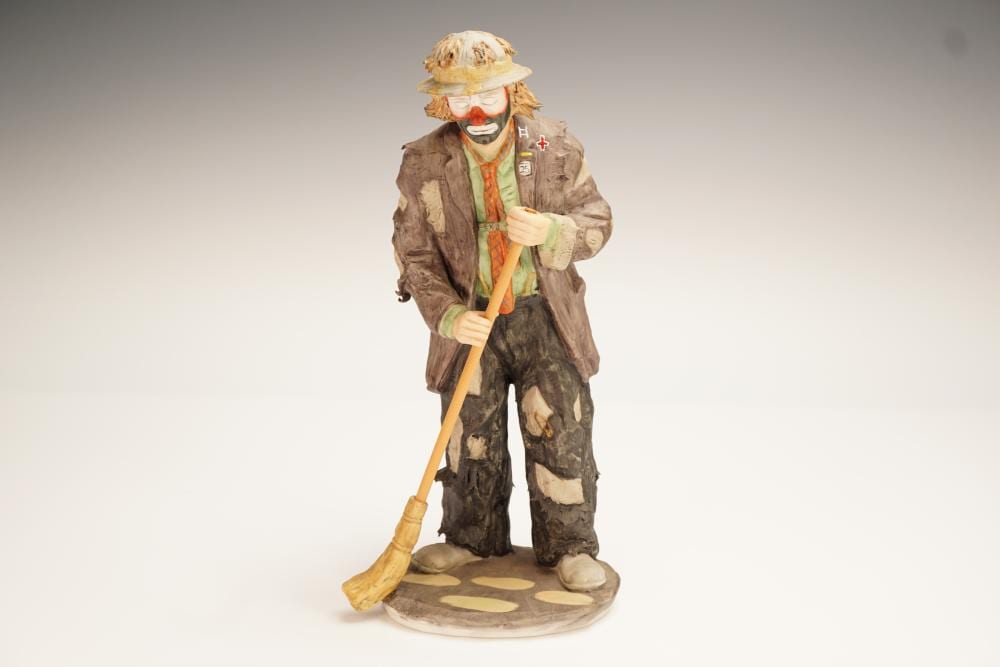
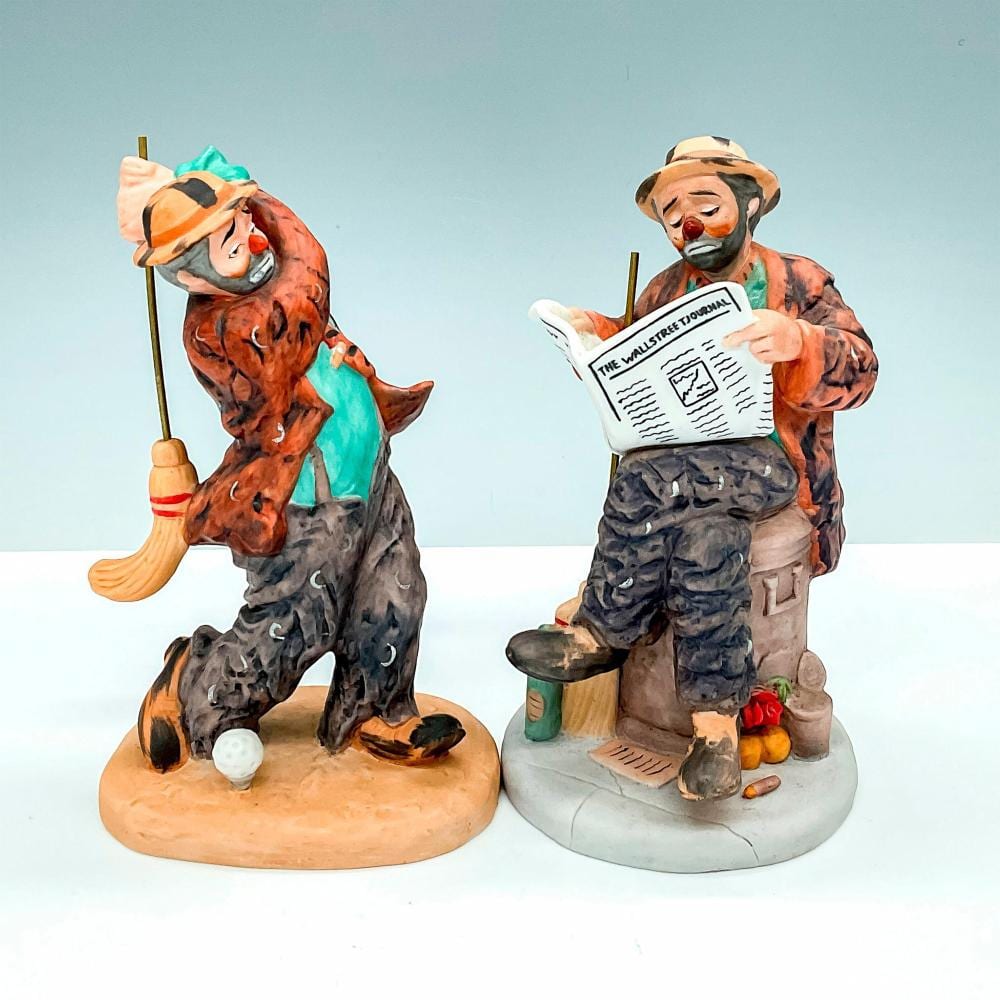
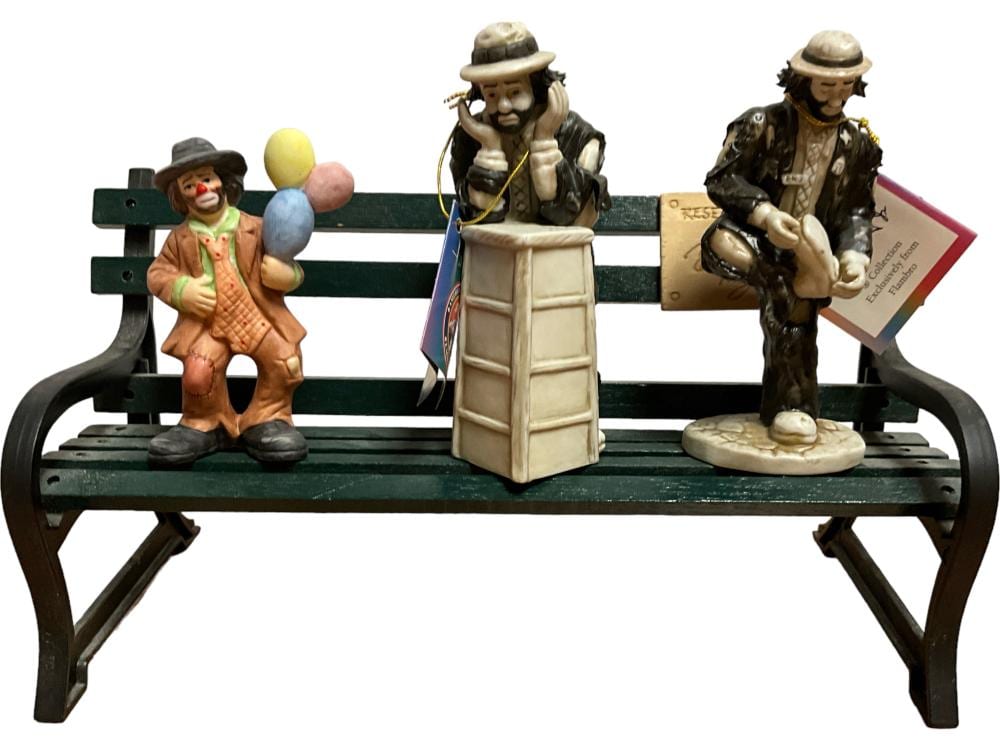
Mass-produced Flambro porcelain is a different market from a large Ron Lee mixed-media piece.
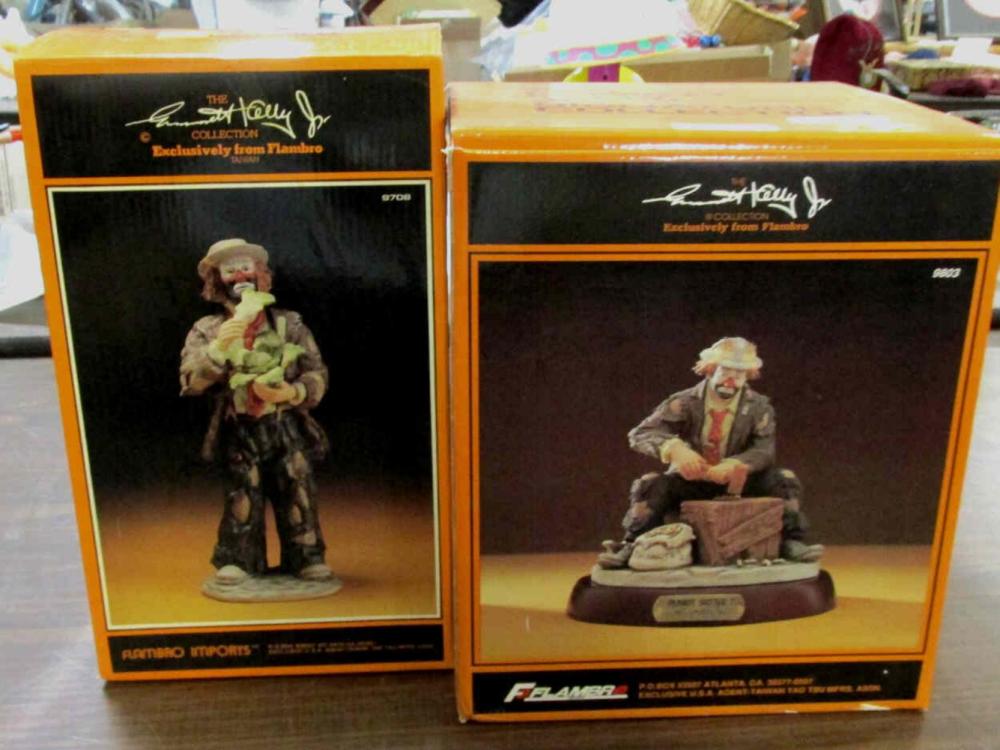
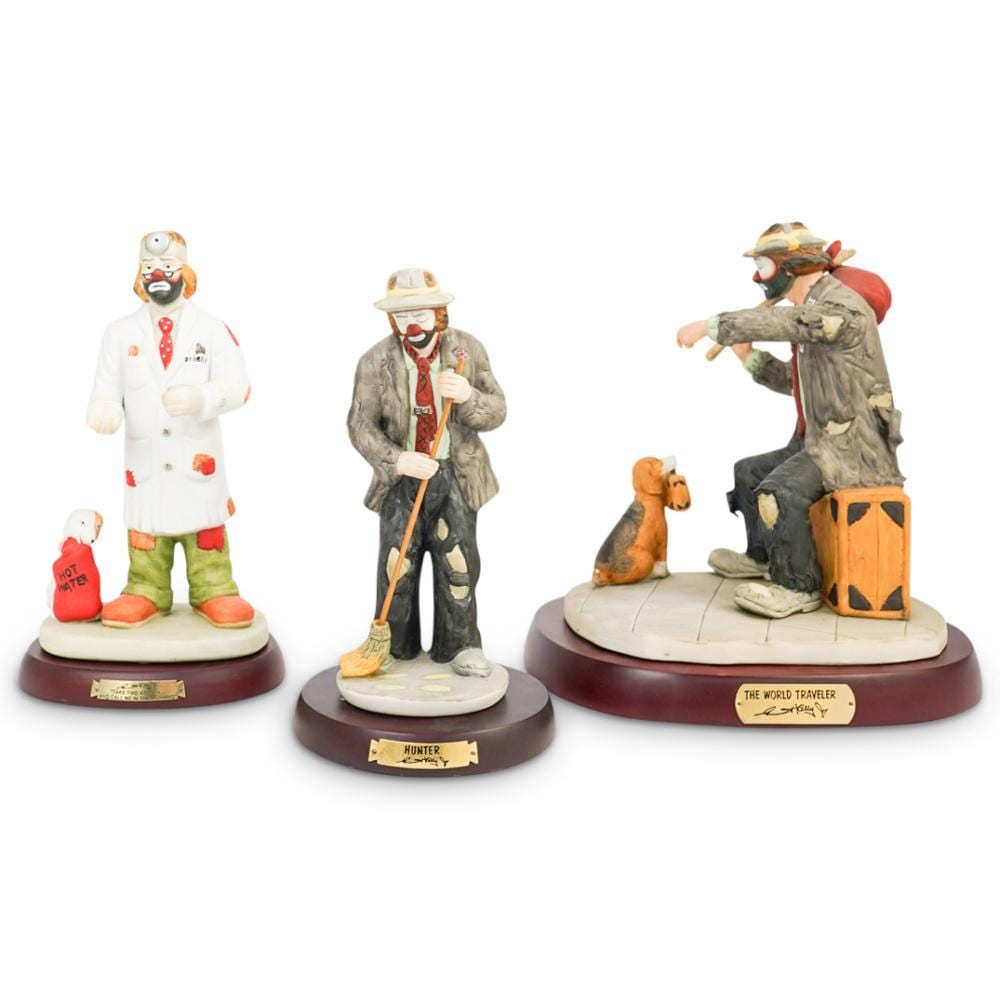
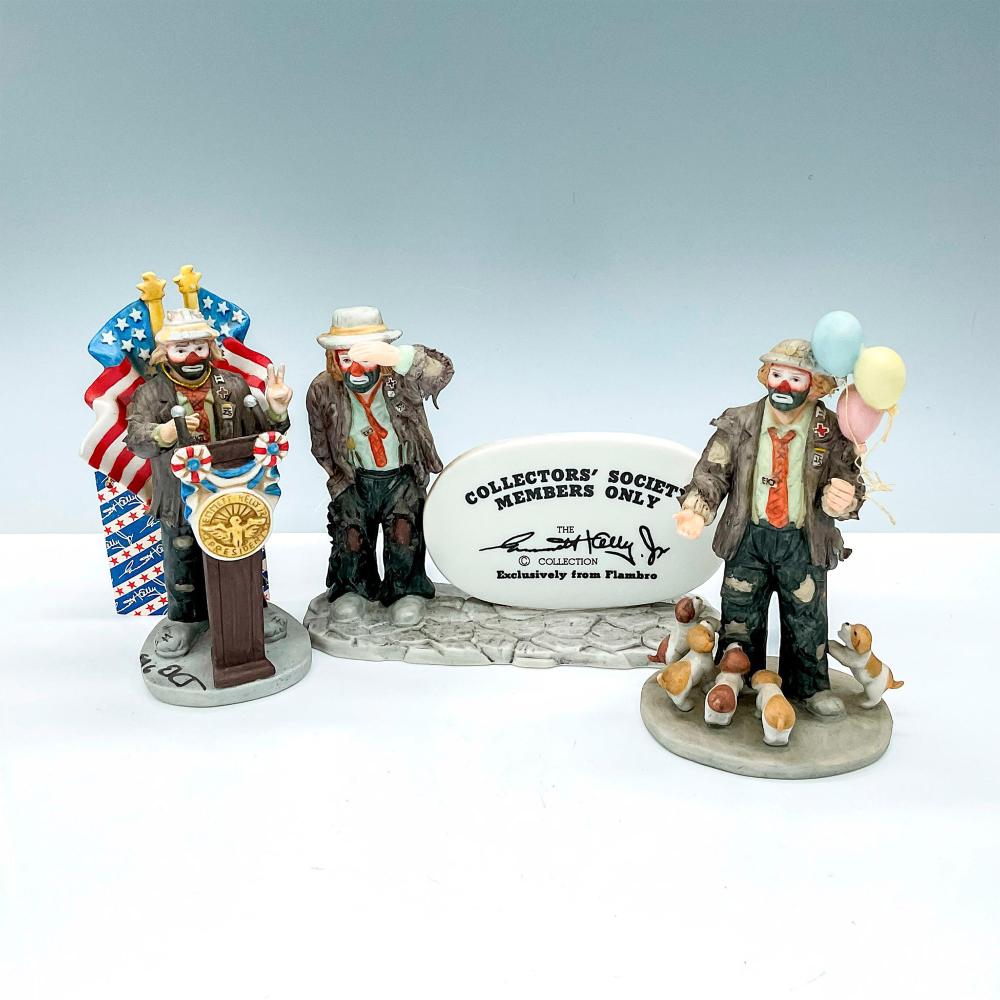
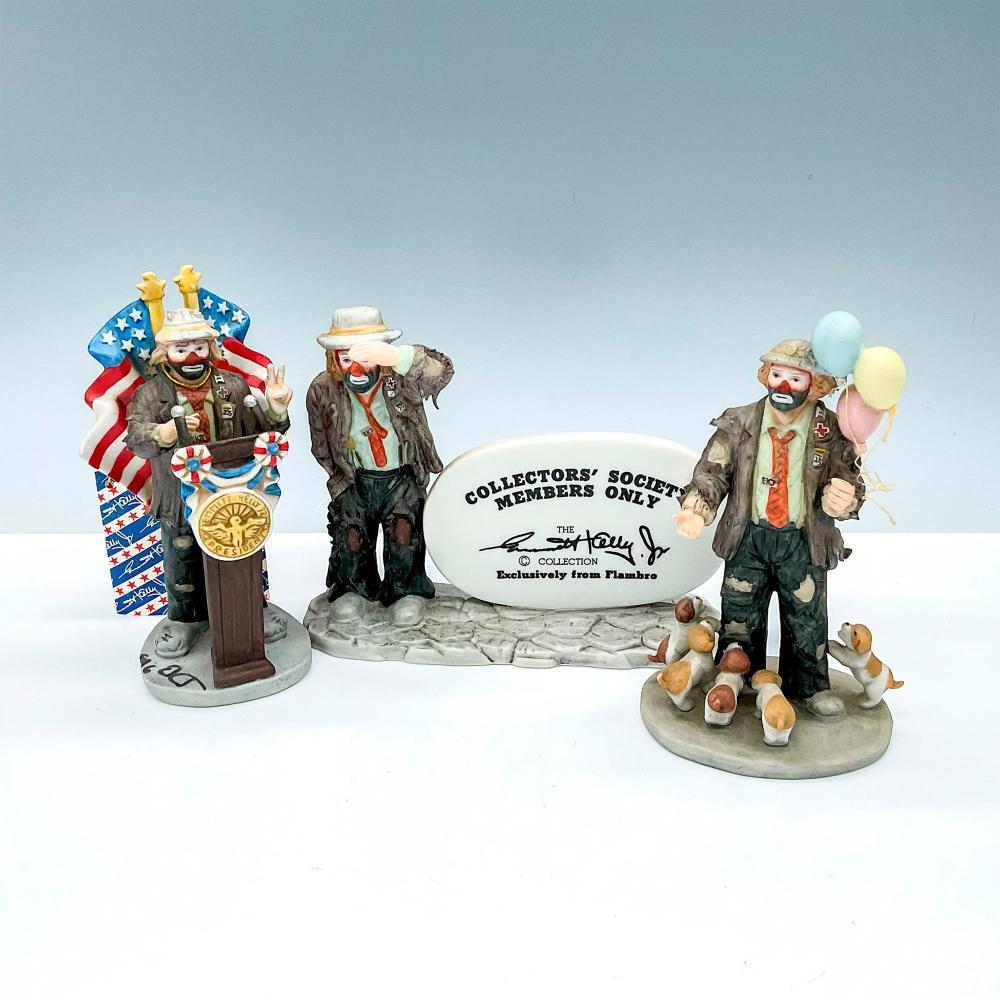
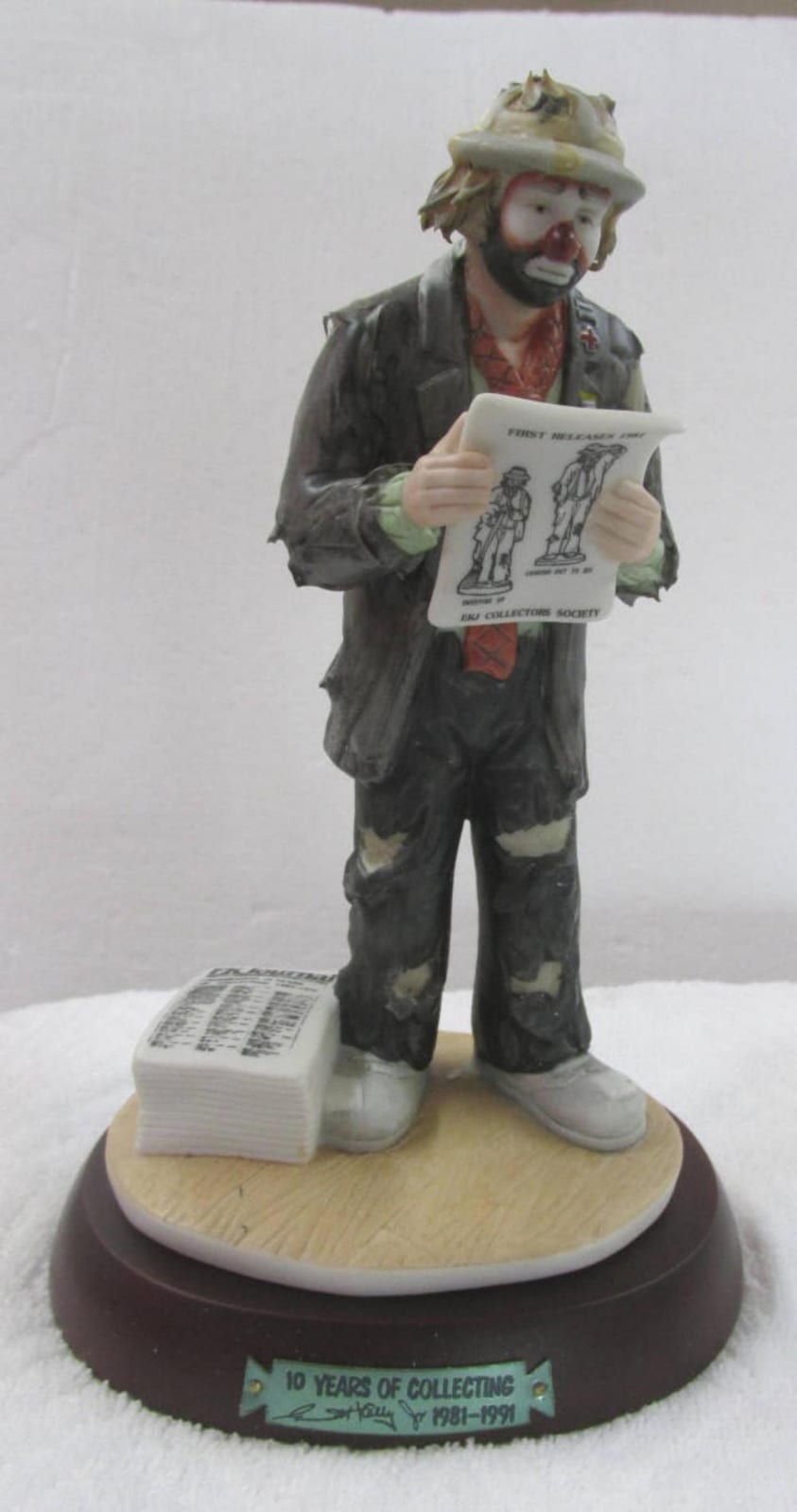
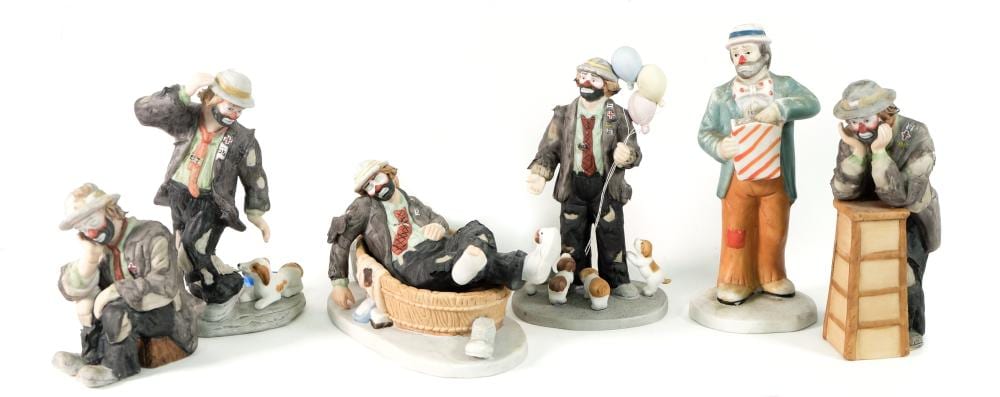
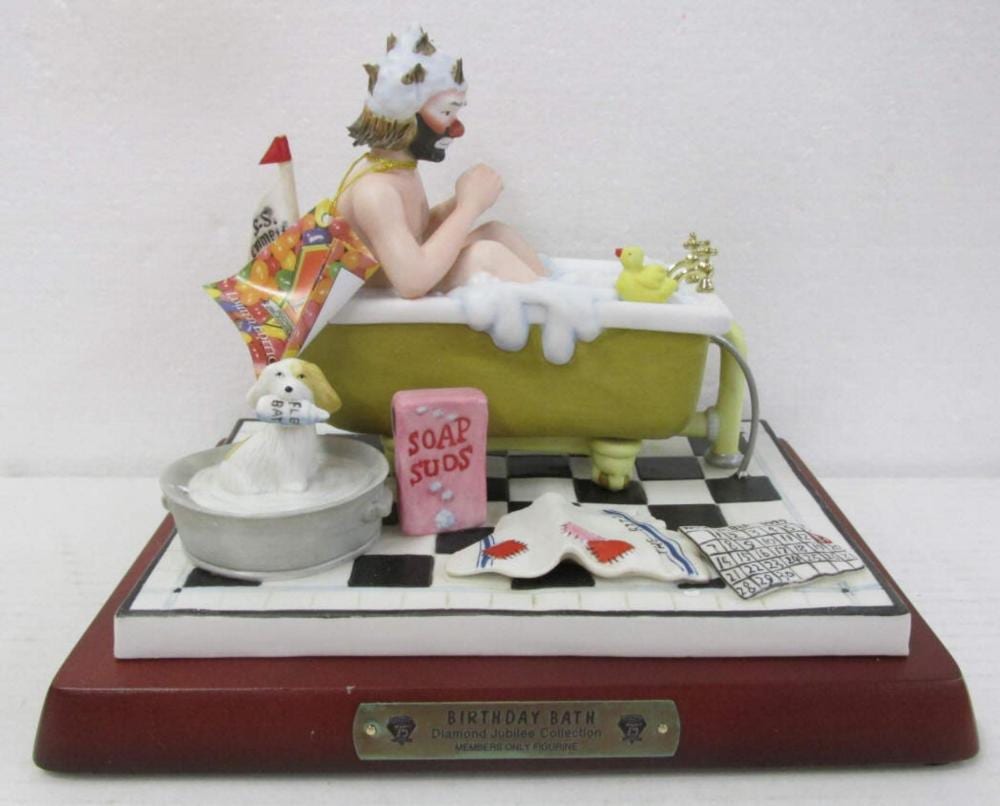
Small Flambro porcelain. An Emmett Kelly “Praying Clown” Flambro figurine sold for $10.
An Emmett Kelly Jr. Flambro miniature, handstand on a ball, sold for $10.
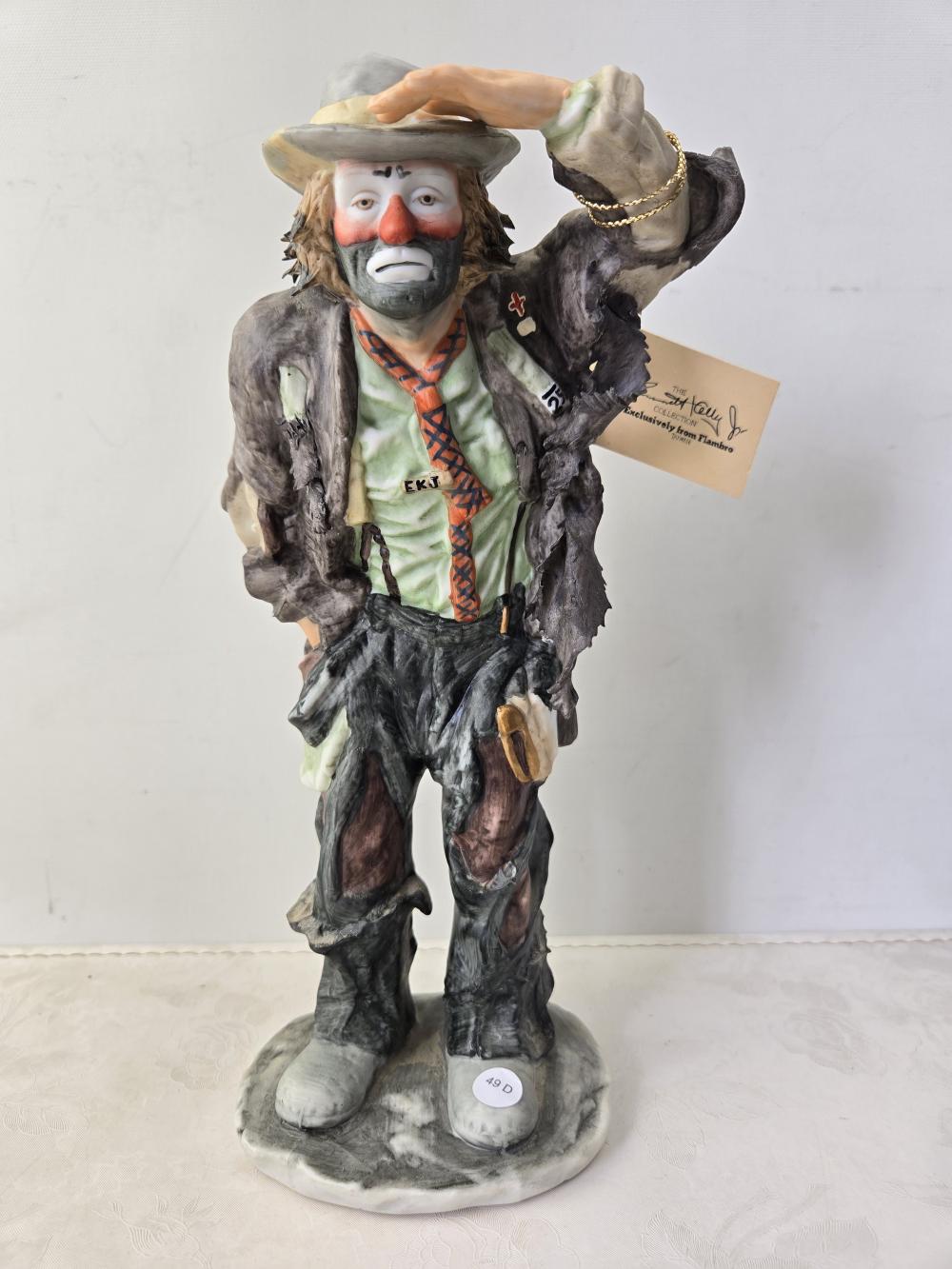
Named Flambro pose. A Flambro Emmett Kelly Jr. “Looking Out” hobo clown sold for $19.
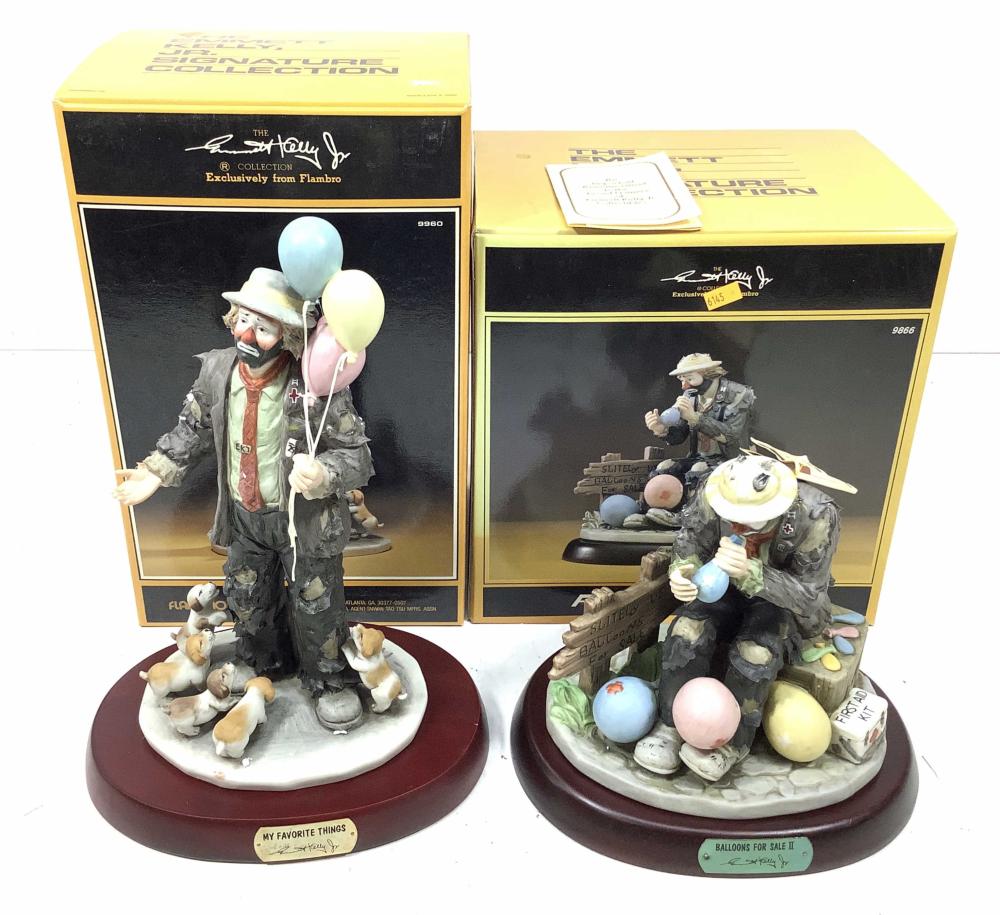
A Flambro Emmett Kelly Jr. “My Favorite Things” figurine sold for $30.
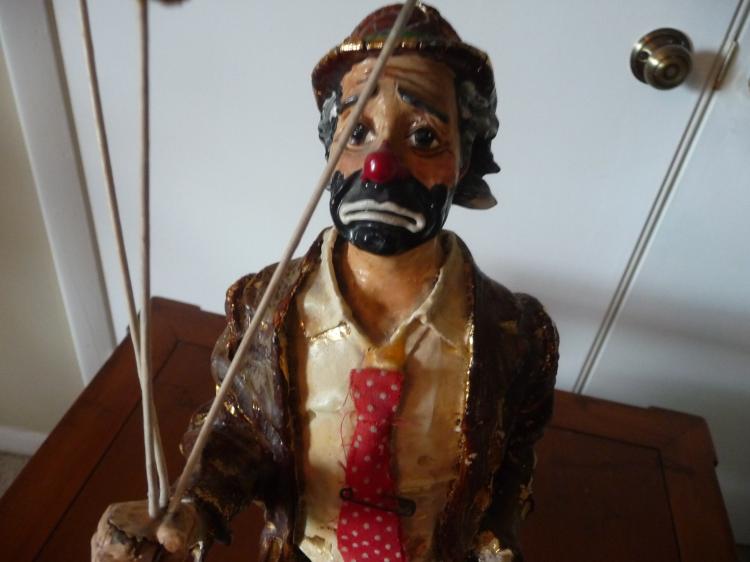
High-value outlier. A vintage Emmett Kelly hobo clown with balloons by Ron Lee sold for $800.
Read the maker mark, height, and whether it is Flambro porcelain or Ron Lee mixed media before treating any one sale as yours.
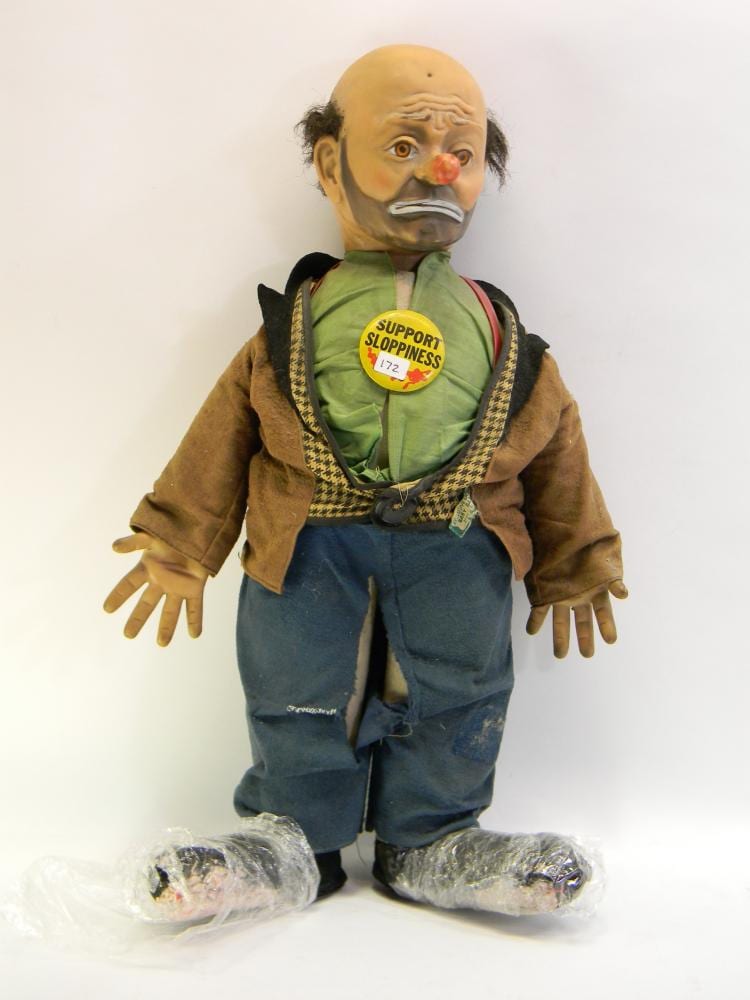
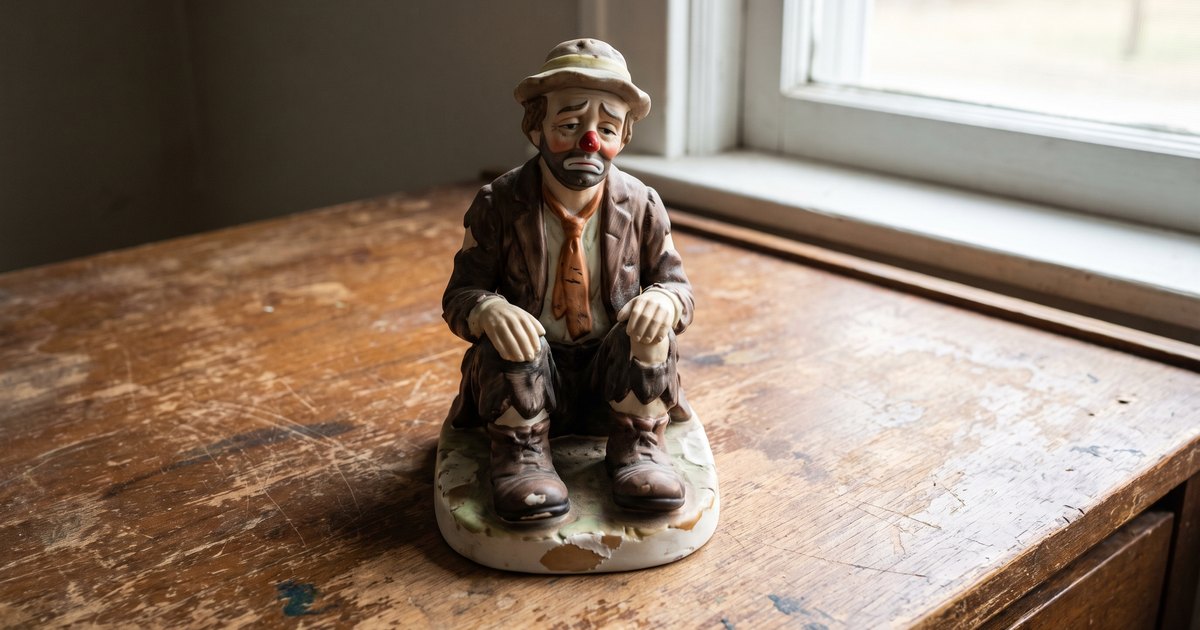
Emmett Kelly figurines—most famously depicting the “Weary Willie” sad clown—remain popular collectibles. Values vary widely because the market mixes mass-produced decorator pieces, limited editions, and higher-end materials (porcelain, mixed media, or even precious metal in “clown” figurine categories).
This guide gives you a practical way to estimate value: identify the line, confirm material and markings, grade condition, then compare against recent sales for similar size and quality.
Quick answer: how much are Emmett Kelly figurines worth?
Most common Emmett Kelly-style figurines trade in the variable sold-comparable prices range when undamaged and properly identified. Pieces that are larger, limited edition, signed, or paired with original packaging can move into the stronger collector prices range. Serious condition issues (repairs, breaks, missing parts) can cut value sharply.
Use this quick pricing table
| What you have | Typical resale range | What pushes it higher |
|---|---|---|
| Common mass-produced figurine (no box/COA) | Varies by sold comps | Clean paint, crisp base marks, no repairs |
| Higher-quality porcelain, larger pose or scene | Varies by sold comps | Detailed sculpt, better finish, desirable theme |
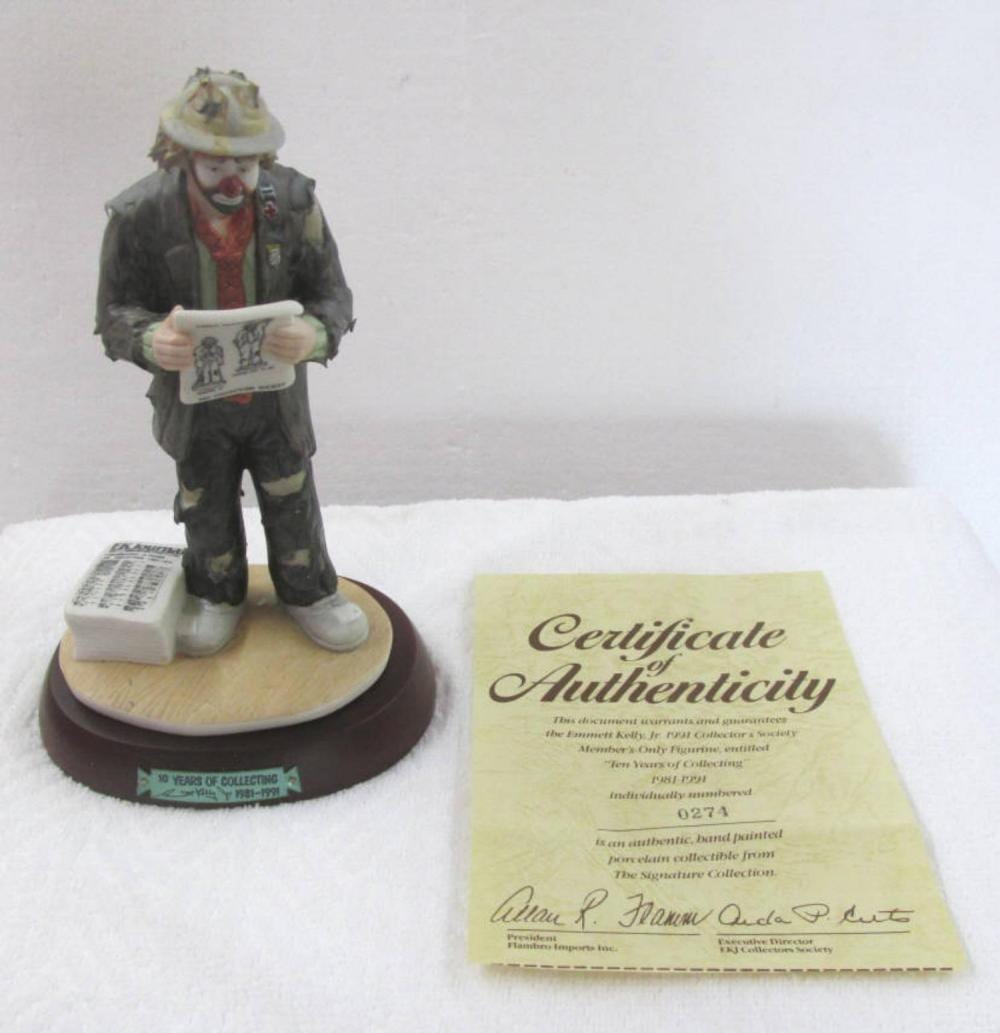
| Limited edition / signed / documented | Stronger collector prices | Edition info, certificate, original packaging, provenance |
| Damaged or repaired piece | Varies by sold comps | Minor wear only; repairs disclosed and minimal |
What drives value (the 6 factors buyers actually pay for)
- Maker/line identification: the same “Weary Willie” look can appear across different lines and eras—confirmation matters.
- Material: porcelain and fine ceramics tend to outperform resin; precious-metal “clown” figurines are in a different price bracket.
- Scale and complexity: taller figures, multi-figure scenes, and detailed props generally command higher prices.
- Edition/sourcing: limited editions, signed examples, and paperwork/box can raise confidence (and price).
- Condition: chips, hairlines, repairs, and overpaint are the #1 value killer for figurines.
- Demand for the specific pose: some scenes are simply more sought-after than others at a given moment.
How to identify your figurine (base marks, materials, and telltales)
Start on the underside. Even when a piece looks “right” from the front, the base often provides the best clues: maker mark areas, mold numbers, and evidence of sticker placement. Use a phone flashlight and take a sharp photo straight-on.
Condition checklist (and how much it can change the price)
For figurines, condition is often the difference between a variable sold-comparable prices décor piece and a variable sold-comparable prices collector piece. Use raking light (a flashlight held low) to make repairs and overpaint easier to spot.
Red flags that usually require a lower price
- Repaired breaks (arms, fingers, props), especially with overpaint.
- Hairline cracks that travel through structural areas (neck, ankles, base).
- Missing small parts (hat tips, canes, instruments) that change the silhouette.
- Heavy surface cleaning that leaves a uniform “new” shine or removes detail.
Market evidence (why material and category matter)
To price any figurine, compare like with like: similar size, material, condition, and theme. When a database doesn’t have enough exact Emmett Kelly-labeled lots, it’s still useful to see how the broader “clown figurine” category moves—especially when material shifts (porcelain vs silver, etc.).
How to use these market evidence: if your Emmett Kelly figurine is porcelain (not precious metal) and smaller, you generally price below silver/metal market evidence. If yours is large, highly detailed, and in immaculate condition with box/COA, you move up within the porcelain band.
How to sell Emmett Kelly figurines (and get the higher end of the range)
- Photograph correctly: front, back, face close-up, base close-up, and any damage. Add one raking-light photo if repairs are suspected.
- Describe objectively: include height, material, any marks (even if faint), and condition notes.
- Bundle intelligently: sets can sell better together, but rare poses sometimes do better individually.
- Pick the right channel: online marketplaces for common pieces; specialty auction/consignment for premium examples.
Search variations collectors ask
Readers often Google:
- how to tell if an Emmett Kelly figurine is porcelain or resin
- what does Weary Willie figurine mean and who made it
- Emmett Kelly Jr figurine value with original box
- how to spot repairs on a porcelain clown figurine
- best way to sell Emmett Kelly figurines online
- are signed Emmett Kelly clown figurines worth more
- Emmett Kelly figurine price range for insurance
- how to photograph a figurine base mark for identification
Each question is addressed in the valuation and identification sections above.
References & notes
- Sold-comparable examples shown are sourced from Appraisily’s internal auction results database (see editorial policy for standards).
- For best results, price against market evidence that match your figurine’s material, height, and condition—not just the character name.