

The quick answer: compare the shank, not just the head
A hand-forged or hand-wrought nail is individually worked. Its four faces and taper tend to vary, and its head-to-shank transition may be uneven. A cut nail is sheared from plate. It usually has two broad, nearly parallel faces and tapers across the other dimension. The head can be machine-formed or finished by hand, so an irregular head alone is not enough.
Hand-forged or hand-wrought
Look for four-sided variation, a taper that changes from face to face, and less mechanical repetition between nails.
Machine-cut
Look for a flat rectangular shank, paired parallel faces, a directional taper, and repeated geometry across a group.
What they prove: manufacturing method. What they can support: a period-consistent construction story. What they do not prove alone: the exact date, originality, authenticity, or value of the item.
Turn the nail and inspect all four faces
Start with a loose nail only if it came out safely. Otherwise, photograph the exposed head and any visible shank without pulling original hardware. The goal is to understand geometry, not to create fresh damage.
- Compare opposite faces. A cut nail's broad faces tend to stay parallel. Its narrow edges show the taper more clearly.
- Follow the taper from head to point. A forged nail can narrow on several faces with small deviations. A cut nail often narrows in one plane.
- Check the head-to-shank transition. Hand work can leave an off-center or faceted transition. But later makers can hand-finish a cut blank, so keep reading the shank.
- Compare a group. Mechanical repetition is easier to see across three or four nails than on one corroded example.
For a deeper shape vocabulary, use the companion guide to cut, square, and hand-forged nails. It is especially useful when a listing uses “square nail” as though that were one manufacturing method.
Read the fastener in its installation context
The practical question is not whether the nail looks old. It is whether the nail belongs to this joint, surface, and repair sequence. A genuine early nail reused during a modern restoration is still an early nail, but it does not date the repaired item. Check these four relationships before you draw a conclusion:
Mixed hardware is normal in useful antiques. Treat the mixture as a timeline to explain, not an automatic failure. The broader guide to hand-forged metal parts and period use shows why hinges, straps, screws, and joinery need to agree with the same story.
Free instant estimate
Not sure what the fasteners mean for your item?
Upload clear photos of the item, fasteners, joints, and condition. We will give you a free first read and say plainly if a full appraisal looks worthwhile.
Free. No card needed. Takes about two minutes.
See what each nail can actually prove
A nail is strongest as a manufacturing clue and weakest as a standalone value claim. Put each conclusion on the right rung:
| Claim | What the nail contributes | What else you need |
|---|---|---|
| How the nail was made | Shank geometry, taper, and repetition can make this a reasonably strong visual conclusion. | Clear views of more than one face; comparison across a group helps. |
| Whether construction is period-consistent | The fastener can support or challenge the proposed era. | Joinery, wood preparation, hardware, finish sequence, and regional context. |
| Whether the nail is original to the item | Fit and surrounding surface provide clues, not certainty. | Hole history, repair pattern, concealed surfaces, and provenance. |
| What the item is worth | The nail may strengthen or weaken the construction story. | Maker or attribution, age evidence, completeness, condition, provenance, and buyer demand. |
A modern coffee table built from welded cut nails makes the limit obvious: “cut nails” can describe the material or design, not an early construction date. Context carries the conclusion.
One catalog example shows the right way to read the clue: Cowan's Auctions described a mid-19th-century painted cupboard as constructed with pins and cut nails; lot 535 sold for USD 1,610 on February 18, 2006. That result prices the complete cupboard—not the nails—and the catalog combined construction, form, material, and period attribution.
What similar items actually sold for
To help ground this guide in real market activity, here are recent example auction comps from Appraisily’s internal database. These are educational comparables (not a guarantee of price for your specific item).
Shown USD range: USD 300-USD 1,610. Median of these 3 USD examples: USD 900.
| Comparable | What sold | Auction house | Date | Lot | Reported price realized |
|---|---|---|---|---|---|
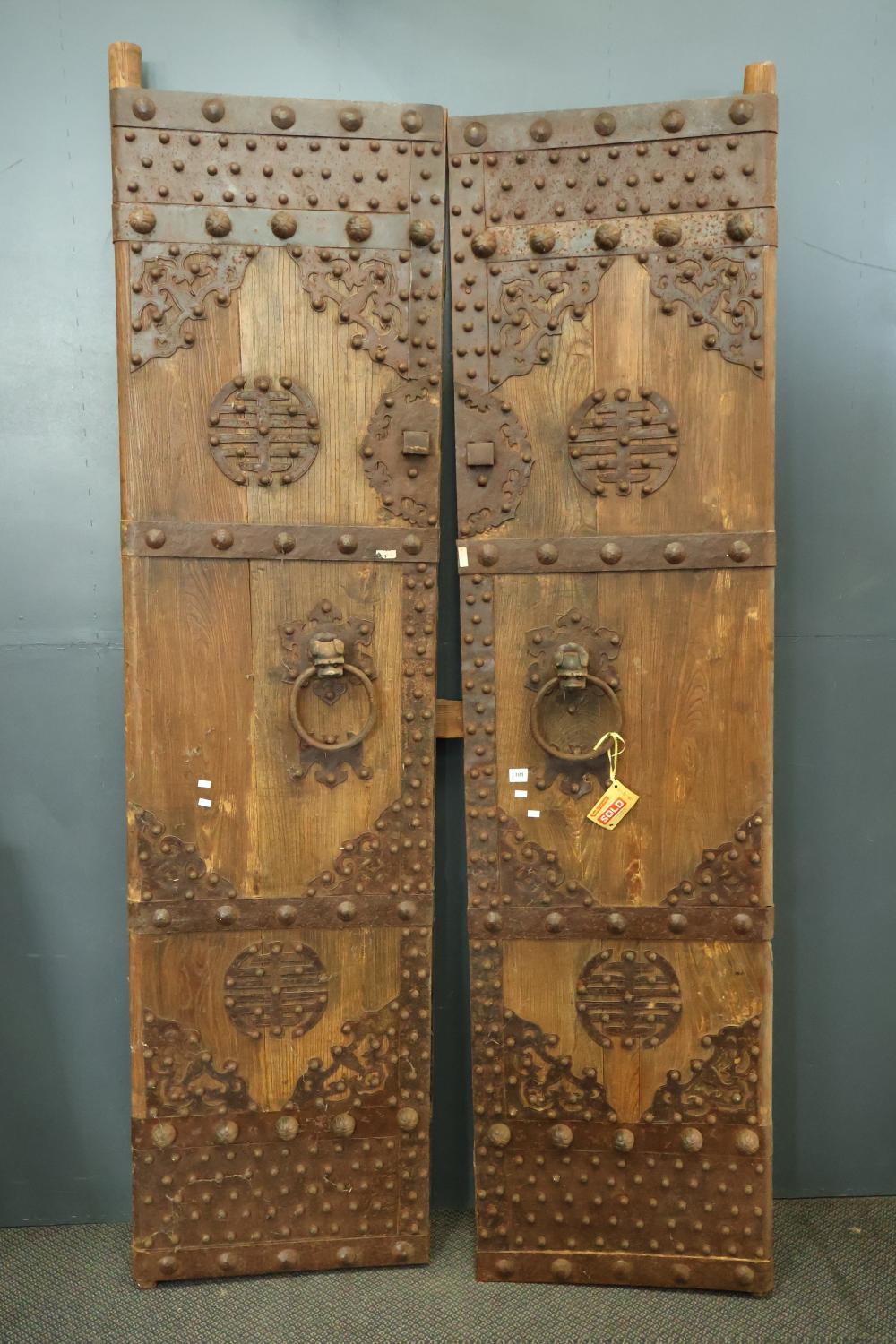 |
Chinese elm compound doors with hand-forged nailsSource access blocked; immutable pipeline provenance matched | Albion Antique Auction Centre | 2025-10-02 | 1381 | AUD 575 (price basis unavailable) |
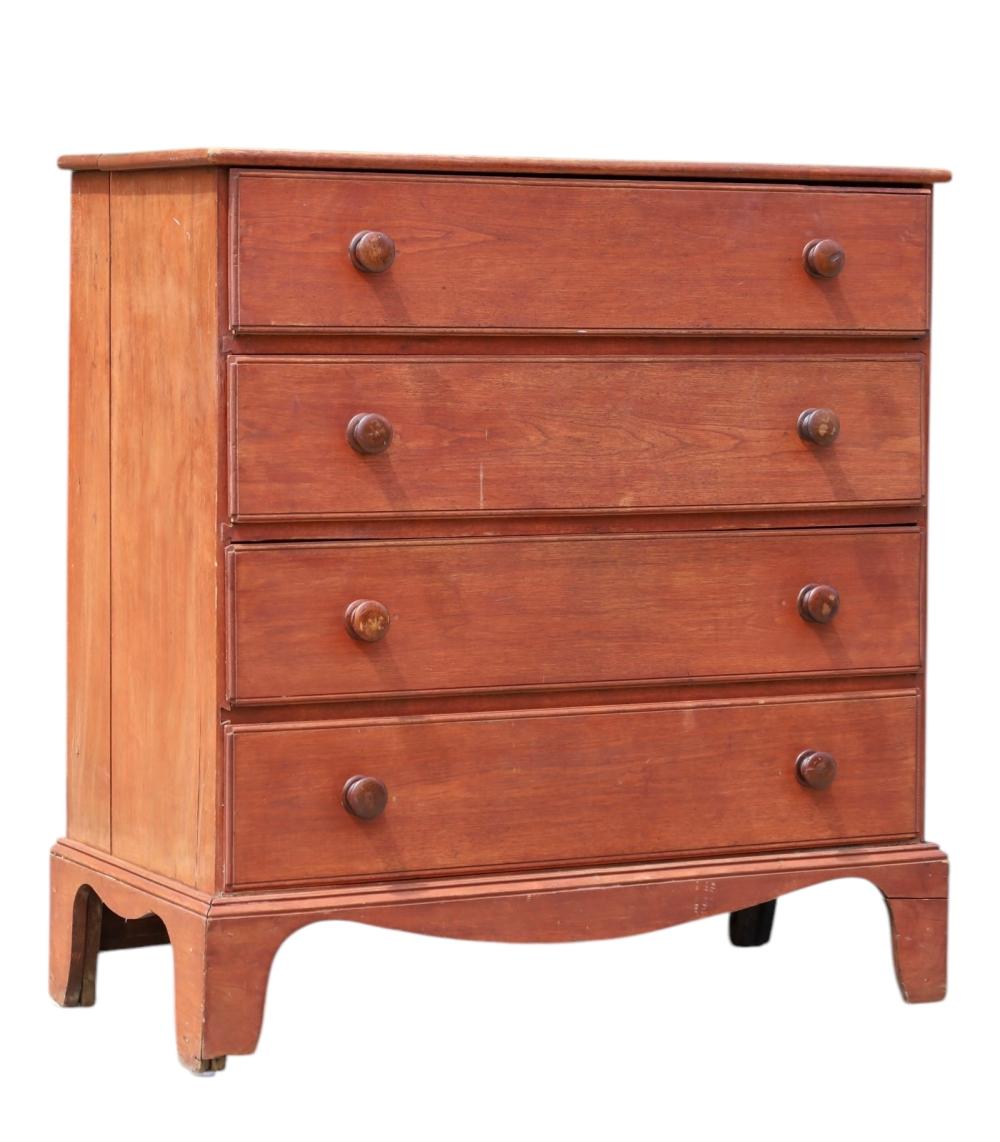 |
Canadian birch commode with forged nailsSource access blocked; immutable pipeline provenance matched | Kavanagh Auctions | 2025-05-24 | 146 | CAD 325 (price basis unavailable) |
| No auction photo supplied | Midwestern painted cupboard with cut nailsSource access blocked; immutable pipeline provenance matched | Cowan's Auctions | 2006-02-18 | 535 | USD 1,610 (price basis unavailable) |
| No auction photo supplied | American wooden canteen with hand-wrought nailsSource access blocked; immutable pipeline provenance matched | Redding Auction Service | 2025-05-17 | 443 | USD 300 (price basis unavailable) |
| No auction photo supplied | Mark Weinstein coffee table built from welded cut nailsSource access blocked; immutable pipeline provenance matched | Uniques & Antiques | 2026-06-03 | 676 | USD 900 (price basis unavailable) |
How these auction records were verified
Each row retains its exact source URL, lot identity, retrieval time, access result, and immutable record hash. Live source access was blocked; the exact record matched Appraisily's immutable pipeline provenance. Inspect the public comparable provenance record.
Disclosure: prices are shown as reported by auction houses and are provided for appraisal context. Learn more in our editorial policy.
Decide whether the distinction changes value
The practical question is not whether the nail is old. It is whether buyers care about the conclusion it supports. That depends on the whole item.
- Maker or attribution: a known workshop, region, or documented maker can make construction evidence more consequential.
- Construction method: period-consistent fasteners matter more when joinery and toolwork tell the same story.
- Age evidence: the nail can corroborate an era, but it should not carry the date by itself.
- Completeness: replaced backs, feet, drawers, lids, or hardware can matter more than one original fastener.
- Condition: active splitting, structural movement, over-cleaning, and heavy restoration can erase the premium a good construction story might support.
A nail also has almost no useful standalone price relationship to the object that contains it. Auction buyers were bidding on the cupboard, canteen, commode, doors, or sculpture in the comparable set. Nail construction helped describe those objects; it did not set their price.
Build a photo set that can support a second read
Good photos turn a guess into a reviewable construction question. Keep the item stationary, use diffuse daylight, and include a scale without covering the fastener.
- Whole item: front, back, and any underside or interior view that shows how it is built.
- Head close-up: camera square to the surface, with the surrounding finish visible.
- Shank faces: two angles about 90 degrees apart if any shank is exposed.
- Fastener group: several nails in the same structural area so repetition or mixing is visible.
- Joinery: corners, drawer construction, backboards, hinges, and replaced elements.
- Condition: cracks, losses, looseness, later screws, filler, and evidence of refinishing.
Record dimensions and where each nail appears. Do not remove an original nail only to improve a photo. If the manufacturing clue could change a purchase, sale, insurance, estate, or conservation decision, that is enough reason to get a second read before acting.
Questions owners ask about forged and cut nails
What do hand-forged nails look like?
Expect variation across the shank's four faces, an uneven or faceted transition below the head, and less exact repetition across a group. Corrosion can hide those traits, so use more than one angle.
When did people stop using hand-forged nails?
There is no universal cutoff that safely dates every item. Production changed at different times by place and trade, older stock was reused, and later craftspeople kept forging nails. Use the nail to test a proposed period, not to invent one.
What if an item has both hand-forged and cut nails?
Map where each type appears. Consistent forged nails in primary construction and cut nails in a replaced back can describe a repair sequence. Random mixing needs a closer look.
Do old nails have value by themselves?
Usually the stronger commercial value is the information they preserve about a complete item. A special archaeological association or documented group can be different, but age-looking shape alone is not a price.
Can photos prove whether a nail is forged or cut?
Clear views of multiple faces can support a manufacturing-method opinion. Photos are weaker for hidden repairs, installation sequence, exact material, and the age of the item around the nail.
Search variations
- How can I tell hand-forged nails from cut nails?
- What do hand-wrought nails look like from the side?
- Do cut nails prove antique furniture is old?
- Are square nails always hand forged?
- Can old forged nails be reused in later furniture?
- What does a mix of forged and cut nails mean?
- Do hand-forged nails make an item more valuable?
- Which photos show whether a nail was forged or cut?
These questions all use the same method: classify the shank, then test whether its installation agrees with the item.