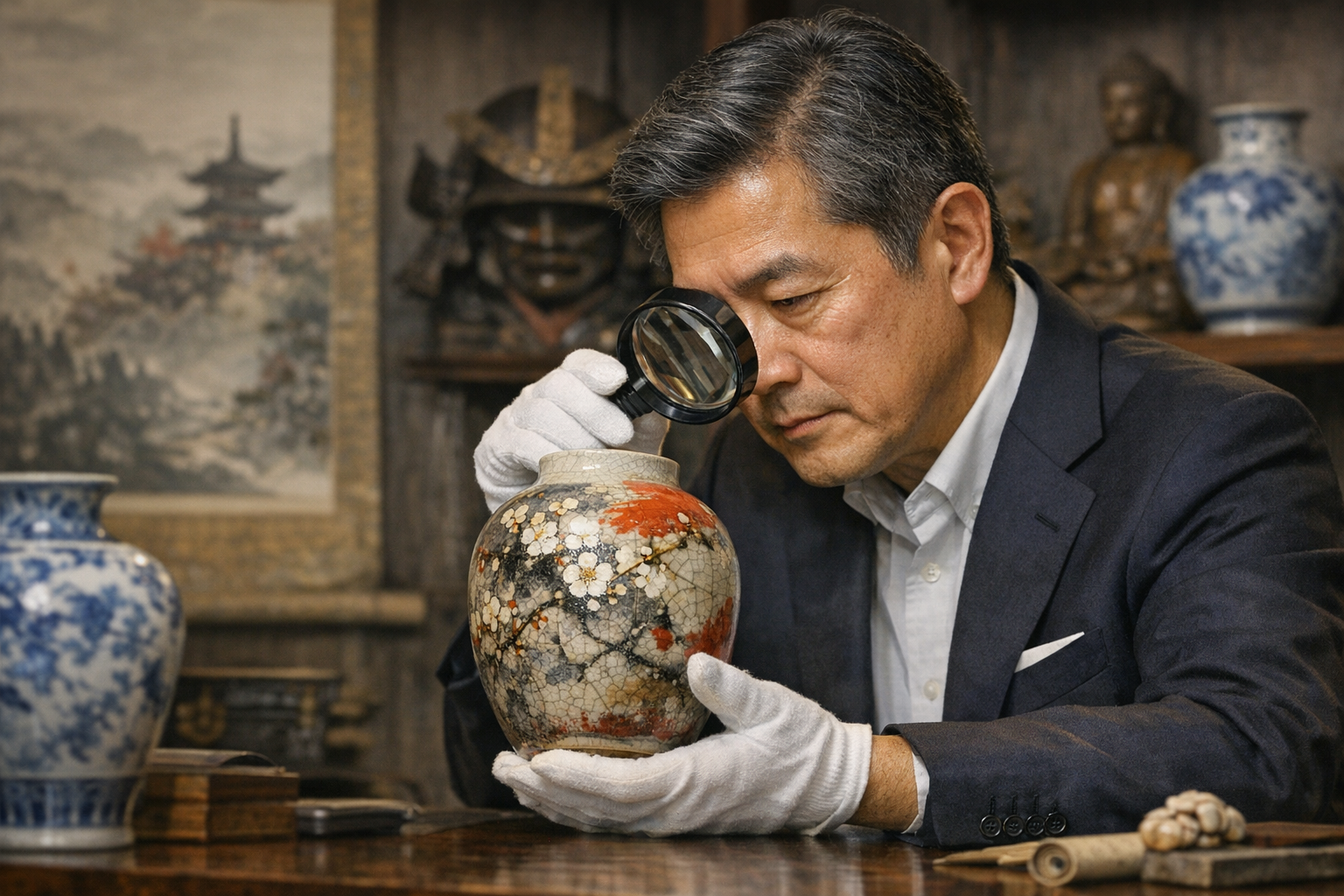
Japanese art appraisal can cover woodblock prints, ceramics, screens, bronzes, lacquer, scrolls, netsuke, and contemporary works. The right valuation starts with object type, artist or school evidence, condition, and market purpose.
Document signatures and seals
Photograph signatures, seals, inscriptions, back labels, boxes, mounts, and any paperwork. For prints, include margins, edition marks, publisher seals, and condition issues.
Condition needs close review
Fading, foxing, trimming, repairs, stains, cracks, losses, mount damage, and later framing can change value. Material-specific issues should be disclosed before comparison.
Choose the appraisal scope
Insurance, resale, estate, donation, and curiosity assignments need different levels of documentation. Remote photos may support triage, while high-value or uncertain works may need specialist inspection.
What a defensible value needs
A useful Japanese art appraisal starts with clear photos and a defined purpose. Avoid relying on signature matches alone without material and market context.
Need a documented value?
Upload photos and details. Appraisily checks identity, condition, and market evidence, then prepares a signed appraisal report you can share.