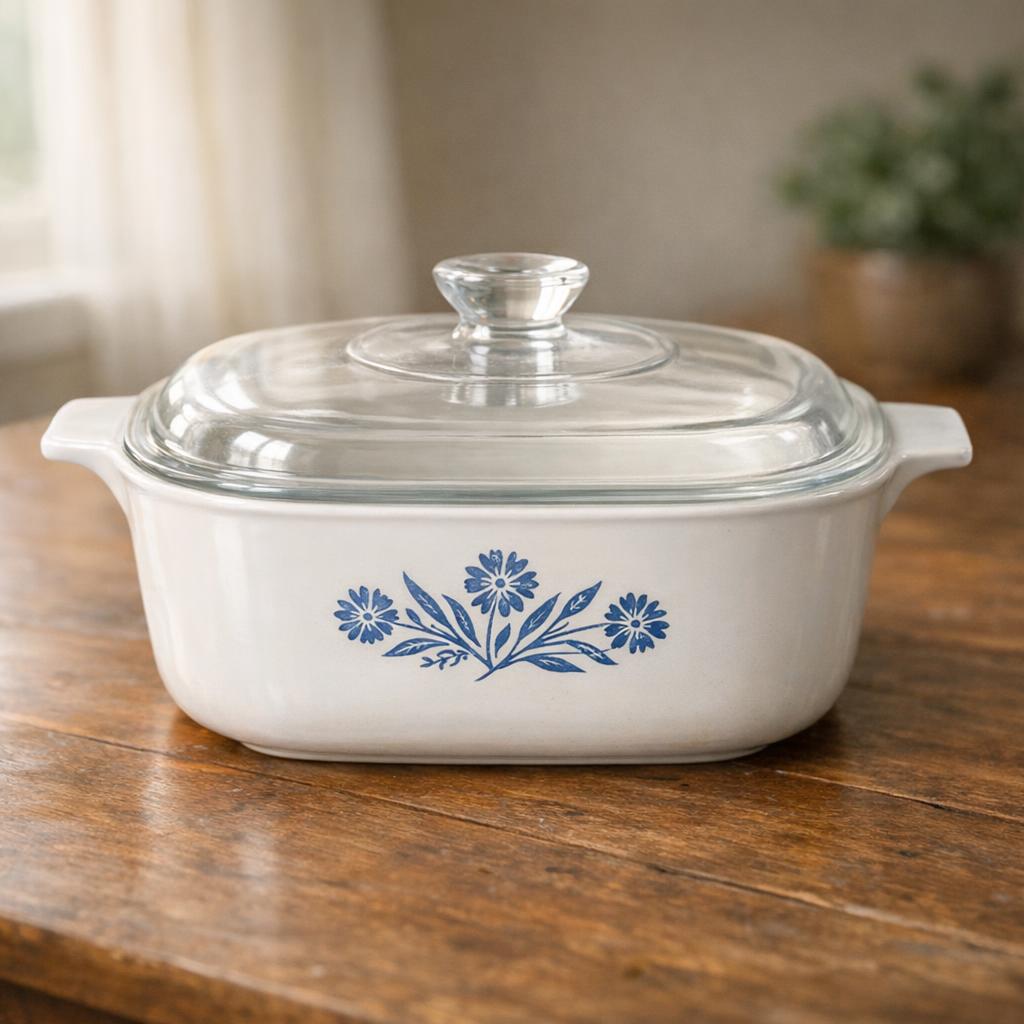
Rare vintage CorningWare is not defined by viral asking prices. The strongest pieces combine the right pattern, vessel form, model code, backstamp, lid, production era, and condition with verified sold demand.
Pattern alone is not enough
Blue Cornflower is common overall, but early forms and backstamp variants can still be collectible. Short-run gift lines, unusual capacities, Canadian variants, and specific wording changes can be more important than the pattern name.
Check codes and lids
Model prefixes such as P, A, and F help date the body. Correct Pyrex lids, detachable handles, boxes, inserts, and clean backstamps can add value, while swapped lids or damaged graphics reduce it.
Use realistic sold market evidence
Most common pieces sell modestly. Stronger prices usually require scarcity plus condition, completeness, and documented buyer demand. Ignore unsupported five-figure listings unless an actual sold result verifies them.
Quick appraisal checklist
- Record pattern, vessel form, and capacity
- Photograph backstamp and model code
- Confirm lid code and era fit
- Check for chips, cracks, staining, and graphic wear
- Compare only to verified sold examples
Choose your next step
Use the path that matches the decision you need to make about the item.
Need a signed report?
Use this for insurance, estate, donation, resale, or documented value decisions.
Start a signed reportNot sure it is worth appraising?
Start with a lower-friction screen to understand the likely category, evidence, and next step.
Use the free screenerNeed local or specialist help?
Compare directory options when the work needs in-person review or a specialist near you.
Find local specialistsSee what the report looks like
Sample reports show how photos, comparable evidence, condition notes, and a value conclusion are documented.
Need a documented value?
Upload photos and details for a written appraisal report prepared from your item evidence and relevant market research.
Start dinnerware appraisal