Introduction to Vintage CorningWare
CorningWare revolutionized home cooking when it was introduced in 1958. Made from Pyroceram, a glass-ceramic material originally developed for missile nose cones, these durable dishes could withstand extreme temperature changes, moving directly from freezer to oven without cracking. Over the decades, numerous patterns, shapes, and sizes were produced, with some becoming significantly more valuable than others.
Free. No card needed. Photo upload takes about two minutes.
Vintage CorningWare Market Highlights
a value that must be established from current, topic-matched sales: Top auction prices for the rarest patterns
60+ years: Age of the oldest CorningWare pieces (since 1958)
a category-dependent amount: Average value increase for rare patterns since 2020
What Makes Old CorningWare Valuable?
Age and Material Composition
The oldest CorningWare, produced between 1958 and the early 1970s, tends to be the most valuable. These early pieces were made from Pyroceram, which is particularly prized by collectors. To identify Pyroceram pieces:
- Look for a glass-like appearance with slight translucency when held to light
- Check for the backstamp with the Cornflower symbol and “Pyroceram” text
- Original Pyroceram has a slight heft compared to later stoneware versions
Later pieces (post-1998) were primarily made of stoneware rather than Pyroceram and generally have lower collector value.
Rarity and Pattern Desirability
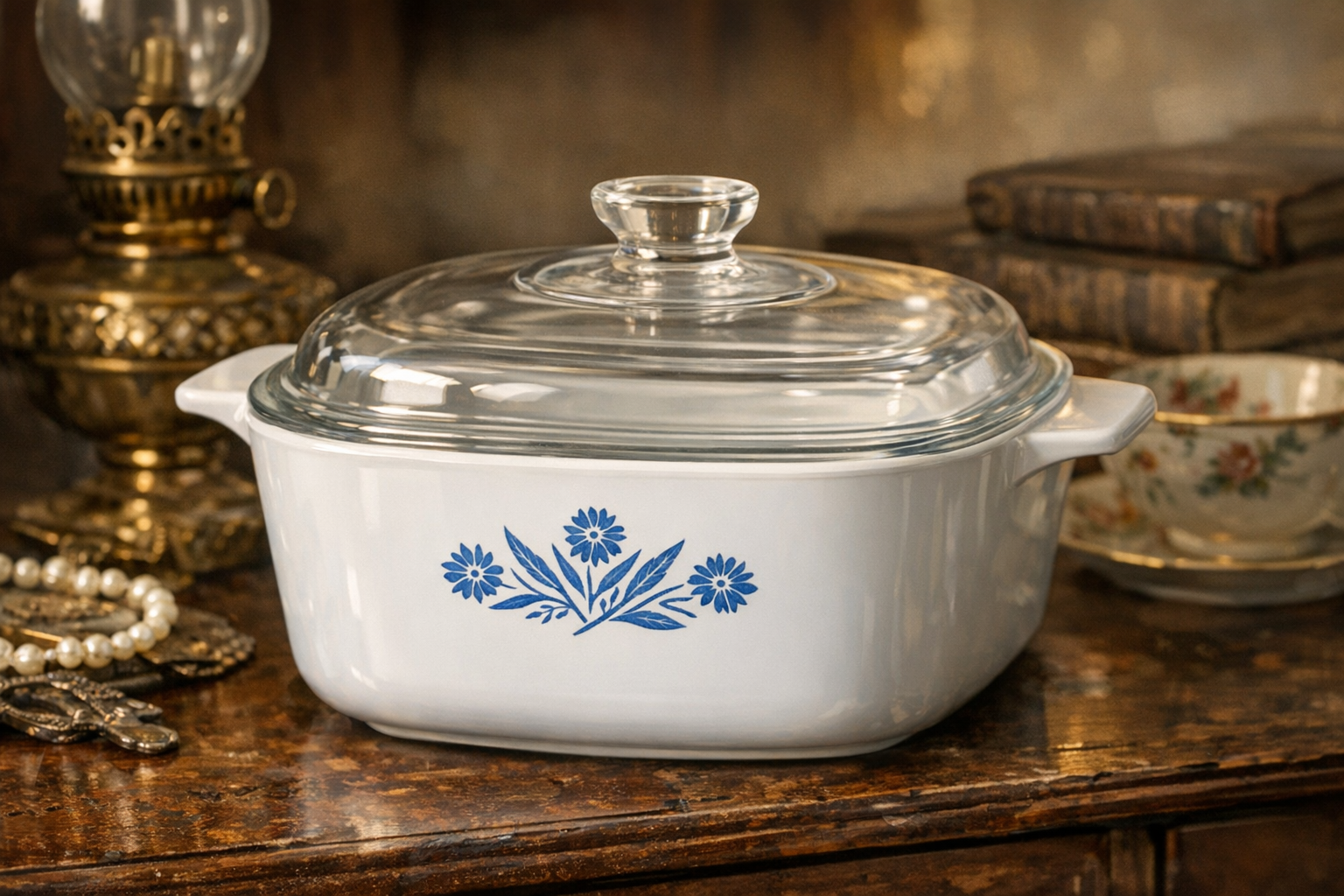
The pattern is often the single biggest determinant of CorningWare value. While the iconic Blue Cornflower design is beloved, it was produced in such large quantities that most pieces sell for modest prices unless in pristine condition with original packaging.
Most Valuable CorningWare Patterns
Current market values for rare designs
Condition Factors
The condition of vintage CorningWare dramatically affects its value. Pieces with minimal wear, no cracks, chips, or crazing will command premium prices.
CorningWare Condition Assessment
Check applicable items to gauge value impact
- No chips or cracks in the dish or lid
- Pattern is bright with minimal fading
- Original lid is present and undamaged
- No signs of crazing (tiny cracks in the glaze)
- Original box or packaging is included
- No discoloration or staining
- Minimal utensil marks on the interior
- Complete set with accessories (trivets, holders)
Completeness of Sets
Complete sets or pieces with their original lids are worth significantly more than individual pieces. Special promotional sets that included metal cradles, warmers, or baskets can fetch premium prices, especially when all components are present and in excellent condition.
How to Identify and Date Your CorningWare
Evolution of CorningWare Backstamps
- 1958-1961
Early Backstamps
The earliest pieces feature an embossed backstamp with a stylized flame symbol. These are among the most valuable pieces for collectors.
- 1961-1966
Basic Model Number
Look for backstamps with model numbers and the stylized flame logo. Many pieces specifically mention "Pyroceram" material.
- 1966-1970s
Detailed Production Marks
More detailed backstamps with specific pattern names and clearer manufacturing data. The Corning logo became more prominent.
- 1970s-1990s
Transitional Period
Backstamps include more specific copyright information and often country of manufacture. Pattern names are clearly indicated.
- Post-1998
Stoneware Era
After World Kitchen purchased the brand, pieces transitioned to stoneware rather than Pyroceram. These newer pieces have significantly lower collector value.
Pattern Identification Guide
Use these characteristics to identify some of the most valuable CorningWare patterns:
- Blue Cornflower: The iconic blue floral design on white background, running from 1958 to the 1980s
- Spice O’ Life (La Marjolaine): Features vegetables and herbs with “La Marjolaine” text, produced 1972-1987
- Wildflower: Pink, blue, and yellow flowers on a white background, produced 1977-1984
- Black Starburst: Rare promotional pattern with black starbursts on white, extremely valuable
- Blue Heather: Delicate bluish-purple floral design, limited production in 1970s
Model Numbers and Sizes
CorningWare pieces are typically marked with alphanumeric codes that indicate their size and shape:
- P-series: Petite pans (P-41, P-43, etc.)
- A-series: Standard casseroles (A-1, A-2, A-3, etc.)
- B-series: Baking dishes and roasters
- F-series: Skillets and frying pans
- M-series: Menuette pieces (smaller items)
The number typically corresponds to approximate capacity (A-1 = 1 pint, A-2 = 2 pints, etc.)
Most Valuable CorningWare Pieces on the Market
Record-Breaking Sales
While most vintage CorningWare sells in the a market-dependent range, some exceptional pieces have fetched staggering prices:
| Category | Price | Notes |
|---|---|---|
| Black Starburst (A-1-B) | a value that must be established from current, topic-matched sales | Extremely rare promotional item from 1960s |
| Floral Bouquet | a value that must be established from current, topic-matched sales | Limited production run, complete sets are scarce |
| Blue Heather | a value that must be established from current, topic-matched sales | Rare light blue pattern from the 1970s |
| Wildflower (1977-1984) | a value that must be established from current, topic-matched sales | Popular pattern with colorful flower design |
| Spice O' Life (La Marjolaine) | a value that must be established from current, topic-matched sales | Common pattern, but popular with collectors |
</tbody> </table>
Despite viral social media posts claiming certain patterns like “La Marjolaine” (Spice of Life) are worth a value that must be established from current, topic-matched sales professional appraisers have debunked these claims. According to JustAnswer’s antiques experts, most Spice of Life pieces typically sell for a value that must be established from current, topic-matched sales each.
Factors Contributing to Exceptional Values
Pieces that achieve extraordinary prices typically have multiple value-enhancing characteristics:
- Extremely rare patterns with limited production runs
- Mint or near-mint condition with no damage
- Complete sets with all original components
- Original packaging, literature, or promotional materials
- Documented provenance or historical significance
Common CorningWare Patterns and Their Values
Blue Cornflower Pattern
As the inaugural and most iconic CorningWare pattern, Blue Cornflower remains highly recognizable and collectible. According to the eBay Community price discussions, values vary widely:
- Individual casseroles with lids: a value that must be established from current, topic-matched sales depending on size and condition
- Rare or unusual Blue Cornflower pieces: a value that must be established from current, topic-matched sales
- Complete sets in original packaging: a value that must be established from current, topic-matched sales
- Early production pieces (1958-1960) with proper documentation: a value that must be established from current, topic-matched sales
Spice O’ Life (La Marjolaine)
Despite viral misinformation about extremely high values, this 1970s pattern featuring vegetables and herbs is moderately collectible:
- Standard casseroles: a value that must be established from current, topic-matched sales each
- Complete sets: a value that must be established from current, topic-matched sales
- Rare or promotional pieces: a value that must be established from current, topic-matched sales
Country Festival (Friendship)
This folk art-inspired pattern featuring a Pennsylvania Dutch motif has moderate collector interest:
- Individual pieces: a value that must be established from current, topic-matched sales
- Complete sets: a value that must be established from current, topic-matched sales
Wildflower and Floral Bouquet
These colorful floral patterns from the 1970s have strong collector demand:
- Individual Wildflower pieces: a value that must be established from current, topic-matched sales
- Complete Wildflower sets: a value that must be established from current, topic-matched sales
- Floral Bouquet individual pieces: a value that must be established from current, topic-matched sales
- Floral Bouquet complete sets: a value that must be established from current, topic-matched sales
Tips for Buying and Selling Vintage CorningWare
Where to Buy Vintage CorningWare
Popular sources for acquiring vintage CorningWare include:
Online Marketplaces: eBay, Etsy, and Facebook Marketplace offer extensive selections but require careful evaluation of seller descriptions and photos.
Estate Sales and Auctions: Often yield the best deals on complete sets, though competition can be fierce for rare patterns.
Thrift Stores: Still possible to find overlooked treasures, especially in areas with older populations.
Antique Malls and Collectible Shops: Higher prices but better attribution review and condition assessments.
Specialty Collectors’ Groups: Join online communities where collectors buy, sell, and trade directly.
Selling Your CorningWare Collection
To maximize returns when selling:
Research Thoroughly: Check recently sold listings on eBay or other platforms to gauge realistic values for your specific pieces.
Clean and Photograph Properly: Present items at their best with proper cleaning and high-quality, well-lit photos from multiple angles.
Highlight Key Details: Include pattern names, model numbers, condition notes, and clear images of backstamps.
Consider Your Platform: eBay reaches the broadest audience, but specialty collector sites may attract more serious buyers.
Sell Sets Together: Complete sets typically command higher total prices than pieces sold individually.
Be Honest About Condition: Fully disclose any chips, cracks, or wear to avoid returns and negative feedback.
Caring for Vintage CorningWare
Cleaning and Maintenance
- Avoid harsh abrasives that can damage patterns and glaze
- Soak stubborn stains in baking soda solution rather than scrubbing
- Handle lids carefully as they’re often the first to chip or break
- Store pieces with protective padding between them
- If using vintage pieces for cooking, avoid extreme temperature shocks
Display and Storage Options
For collectors who want to showcase their CorningWare:
- Glass-fronted cabinets protect from dust while allowing visibility
- Custom shelving with plate grooves prevents sliding
- Acid-free tissue between stacked pieces prevents scratching
- Climate-controlled storage prevents glaze crazing
- Keep pieces away from direct sunlight to prevent pattern fading
Debunking CorningWare Value Myths
The a value that must be established from current, topic-matched sales La Marjolaine Myth
A widely circulated claim suggests that Spice O’ Life (La Marjolaine) pattern CorningWare is worth a value that must be established from current, topic-matched sales or more. According to antique experts at JustAnswer, this is false. These pieces typically sell for a value that must be established from current, topic-matched sales each, with complete sets reaching a value that must be established from current, topic-matched sales.
Common vs. Truly Rare Patterns
The Blue Cornflower pattern is often mistakenly believed to be rare and extremely valuable. While it has collector appeal, its long production run (1958-1988) means most pieces are relatively common. Truly rare patterns include:
- Black Starburst (promotional pattern)
- Wheat (test market pattern from 1958)
- Floral Bouquet (limited production)
- Blue Heather (short production run)
Condition Expectations
Many sellers overestimate the condition of their pieces. For maximum value, vintage CorningWare should have:
- No chips, cracks, or crazing (tiny cracks in the glaze)
- Minimal utensil marks or surface scratches
- Bright, unfaded patterns
- Original lids with no damage
- Clean, readable backstamps
Common Questions About Vintage CorningWare Value
How much is La Marjolaine Corningware worth?
How do I tell the age of my CorningWare?
- 1958-1961: Embossed bottom with stylized flame stamp
- 1961-1966: Basic model number with stylized flame stamp, may mention "Pyroceram"
- 1966-1970s: More detailed backstamps with specific pattern names
- 1970s-1990s: Includes copyright information and country of manufacture
- Post-1998: Stoneware pieces (not original Pyroceram) with World Kitchen branding
What is the oldest CorningWare design?
What year was Blue Cornflower CorningWare introduced?
Why are some CorningWare pieces so expensive?
Is CorningWare made after 1998 worth anything?
Where is the best place to sell valuable CorningWare?
- eBay: Reaches the largest audience of collectors worldwide
- Etsy: Good for rare patterns and higher-end pieces
- Specialty collector forums and Facebook groups: Target serious buyers willing to pay premium prices
- Local antique dealers: Convenient but typically offer wholesale prices
- Consignment with specialty auction houses: Best for extremely rare or valuable pieces
External Resources for CorningWare Collectors
CorningWare 411
Comprehensive guide to identifying and dating CorningWare through backstamps and markings. Includes detailed pattern guides and historical information.
Taste of Home: Vintage CorningWare Value Guide
A detailed look at which vintage CorningWare patterns are most valuable and why collectors seek them out.
LoveToKnow: Vintage CorningWare Patterns & Values
Comprehensive overview of pattern identification and current market values for different CorningWare designs.
eBay: Current CorningWare Listings
Browse current listings to see real-time pricing for various CorningWare patterns and pieces on the market.
Home Beautiful: High-Value CorningWare Guide
Explores which CorningWare patterns have seen the highest auction results in recent years.
Corning Museum of Glass
The official museum housing the historical collection of Corning products, including rare and significant CorningWare pieces.
Dr. Lori's YouTube Guide to Rare CorningWare
Expert antiques appraiser Dr. Lori provides video guidance on identifying valuable and rare CorningWare patterns.
Conclusion: Is Your CorningWare a Hidden Treasure?
For most collectors, the iconic Blue Cornflower and other common patterns hold nostalgic value that transcends their monetary worth. These pieces represent mid-century American innovation and evoke memories of family meals from bygone eras.
Whether you’re looking to sell inherited pieces, start a collection, or simply appreciate the vintage CorningWare you use daily, knowing the history and value of these durable kitchen classics adds another dimension to their appreciation.
Remember that market values fluctuate based on collector trends, so pieces that are modestly valued today might become tomorrow’s sought-after treasures. The enduring appeal of CorningWare’s classic designs ensures they’ll remain collectible for generations to come.
Note: We couldn’t find relevant auction comps in our database for this topic right now. If you’re valuing a specific item, try searching by maker/model/material and we’ll expand coverage over time.
What similar items actually sold for
To help ground this guide in real market activity, here are recent example auction comps from Appraisily’s internal database. These matched sales are market context only, not an object estimate or identification, and they do not guarantee a price for your specific value of old corningware.
Shown USD range: USD 276-USD 892. Median of these 3 USD examples: USD 390.
| Comparable | What sold | Auction house | Date | Lot | Source-reported amount |
|---|---|---|---|---|---|
![[ Comic ] " Four Color #328 Crowley Copy pedigree (Dell, 1951) CGC VF 8.0 Cream to off-white pages. Walt Disney's Donald Duck in ""Old California"", featuring a Carl Barks story and art. Overstreet 2005 VF 8.0 value = $210. CGC census 12/05: 2 in sold by Heritage Auctions, lot 17159 — auction record photograph](https://assets.appraisily.com/comps/auction-lots/48404924/thumb/h1042-l12058620.jpg) |
[ Comic ] " Four Color #328 Crowley Copy pedigree (Dell, 1951) CGC VF 8.0 Cream to off-white pages. Walt Disney's Donald Duck in ""Old California"", featuring a Carl Barks story and art. Overstreet 2005 VF 8.0 value = $210. CGC census 12/05: 2 in | Heritage Auctions | 2006-01-01 | 17159 | USD 276 (buyer’s-premium treatment unknown) |
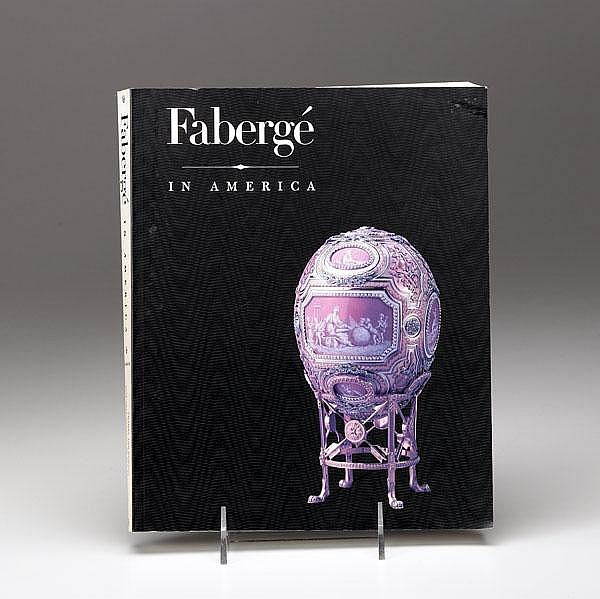 |
JEWELRY AND SILVER BOOKS Twenty-six books: ''Peter | Rago Arts and Auction Center | 2009-02-15 | 1309 | USD 390 (buyer’s-premium treatment unknown) |
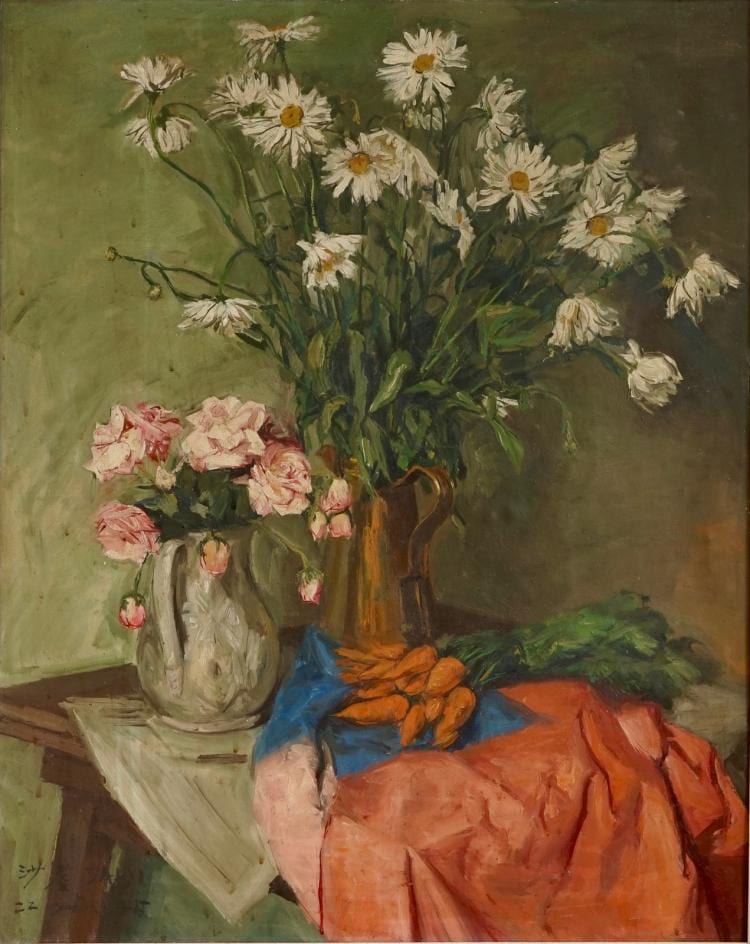 |
SADJI (SHA QI, SHA YINNIAN) (1914-2005), A STILL LIFE WITH FLOWERS AND CARROTS, OIL ON CANVAS, DATED 1945 | Rob Michiels Auctions | 2018-04-29 | 1125 | EUR 100,000 (buyer’s-premium treatment unknown) |
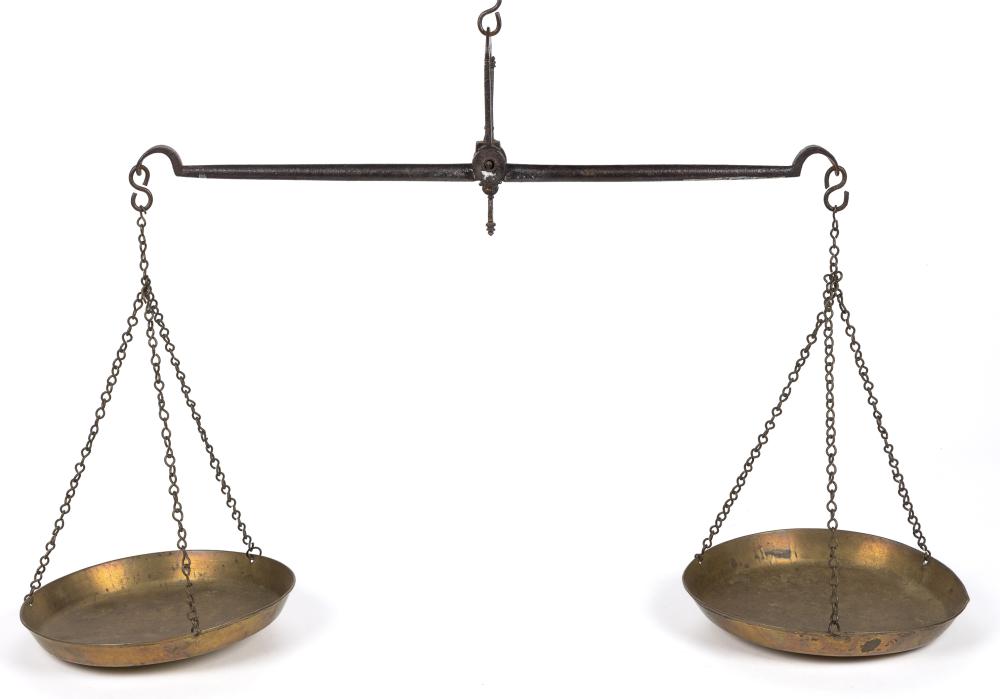 |
WILLIAM JACKSON (ACTIVE 1829-1832) ALEXANDRIA, VIRGINIA IRON AND BRASS BALANCE SCALE | Jeffrey S. Evans & Associates | 2024-02-10 | 1238 | USD 892 (buyer’s-premium treatment unknown) |
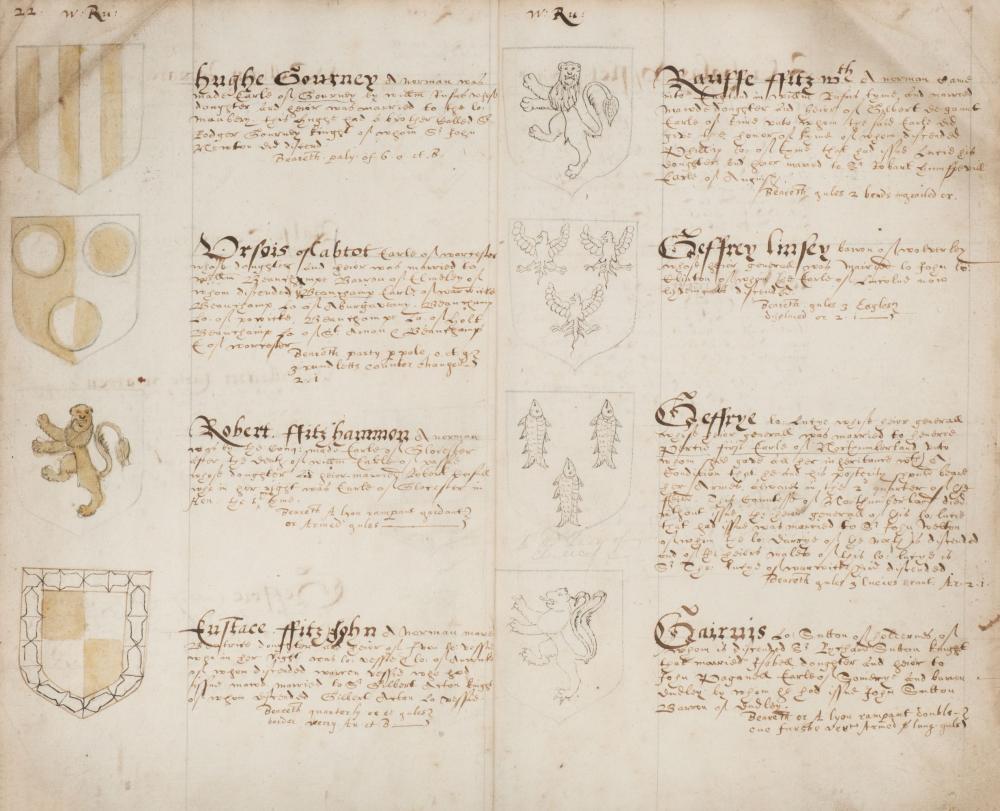 |
Heraldry. Robert Cooke, Clarenceux King of Arms. The Names of the Dukes ... Armes of England, 1606 | Dominic Winter Auctions | 2026-05-20 | 363 | GBP 1,150 (buyer’s-premium treatment unknown) |
How these auction records were verified
Each row retains its exact source URL, lot identity, retrieval time, access result, and immutable record hash. Inspect the public comparable provenance record.
Disclosure: prices are shown as reported by auction houses and are provided for appraisal context. Learn more in our editorial policy.
Free instant estimate
Not sure if your item is worth appraising? Let us take a look.
Upload a photo, tell us what you know, and get a free first read. If a full appraisal makes sense, we will say so.
Free. No card needed. Takes about two minutes.
Choose your next step
Use the path that matches the decision you need to make about the item.
Not sure it is worth appraising?
Start with a lower-friction screen to understand the likely category, evidence, and next step.
Upload photos for a free first lookWant proof before paying?
See how a signed report documents photos, comparable evidence, condition notes, and value conclusions.
View signed report sampleNeed a signed report?
Use this for insurance, estate, donation, resale, or documented value decisions.
Need documentation now? Start signed appraisalNeed local or specialist help?
Compare directory options when the work needs in-person review or a specialist near you.
Find local specialistsSee what the report looks like
Sample reports show how photos, comparable evidence, condition notes, and a value conclusion are documented.
Get CorningWare appraised
Upload photos of the dish, pattern, backstamp, lid, handles, size, color, wear, chips, staining, and condition notes.
- Expert report with photos and market context
- Fast turnaround
- Fixed, upfront pricing
No obligation. Secure upload.
Continue your valuation journey
Find the right local specialist
Compare antique and art appraisers by location and specialty in one directory.
Antique & art specialists
Browse the Antique & Art Appraisers Directory
Choose a local specialist when the assignment needs in-person inspection or a specific credential.
Machine-readable summaries
Use these machine-friendly references for AI and crawler discovery of Appraisily content.
Ready for pricing guidance?
Start a secure online appraisal
Upload images and details. Certified specialists respond within 24 hours.
Upload photos for a free first look View signed report sample