Define the valuation purpose first
Replacement value for insurance is different from fair market value for estate or donation work. A quick sale estimate is different again. State the intended use before asking for a number.
If the valuation may be used for tax, legal, or insurance documentation, ask whether a written report is required.
Photograph the evidence
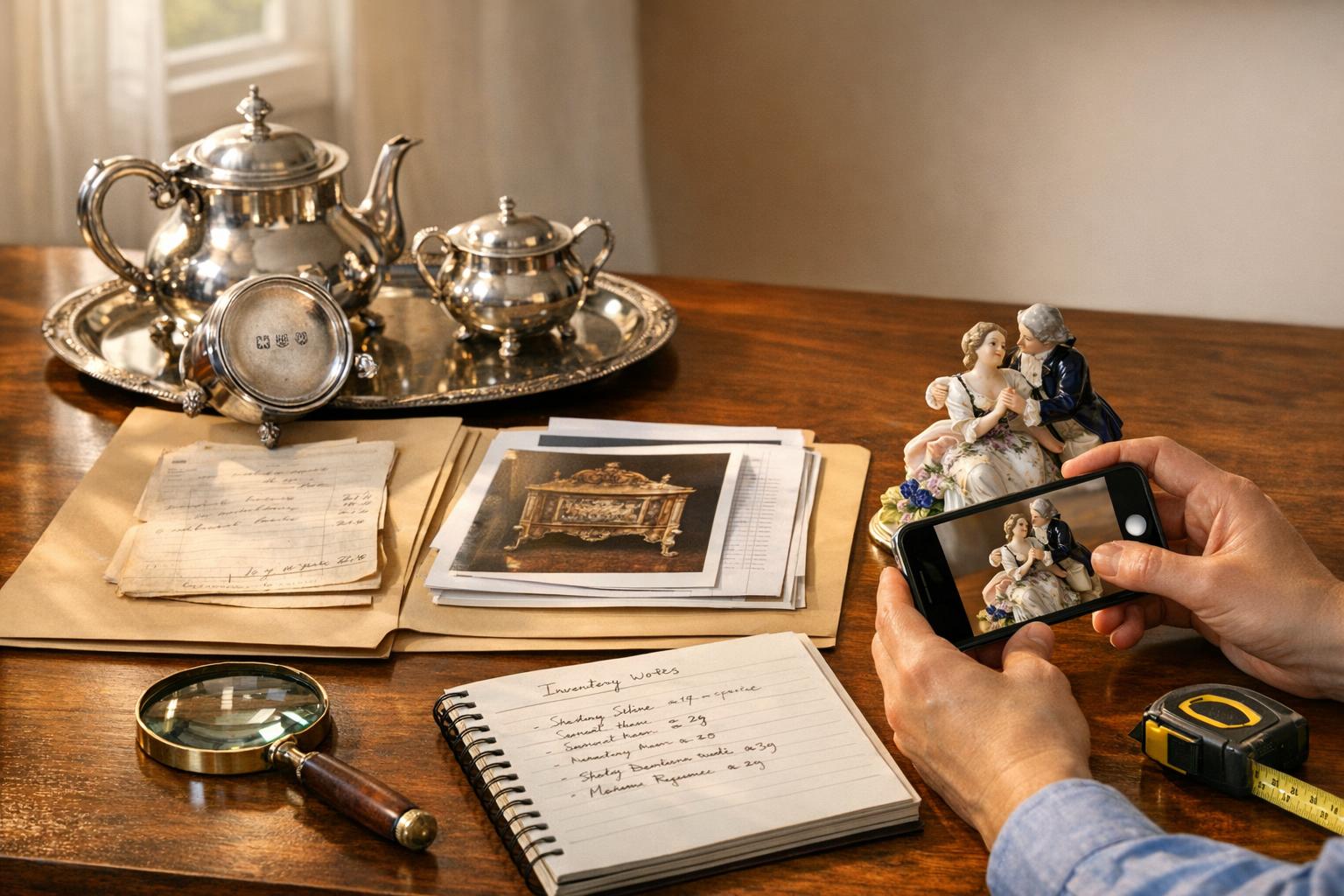
Take full-object photos, detail shots, maker marks, labels, signatures, repairs, underside views, and scale references. Include dimensions and materials when known.
Do not polish, clean, repair, reframe, or reupholster before the review unless a qualified specialist tells you to.
Choose the right expertise
General antique appraisers can triage mixed estates, but jewelry, coins, fine art, rugs, books, firearms, and Asian antiques may require specialists. Ask how the appraiser handles categories outside their specialty.
A credible valuation should explain assumptions, limits, comparable evidence, and conflicts of interest.
Need a credible value opinion?
Upload clear photos, marks, dimensions, and condition notes. Appraisily can review the item remotely and explain which details affect value.
Start antique appraisal