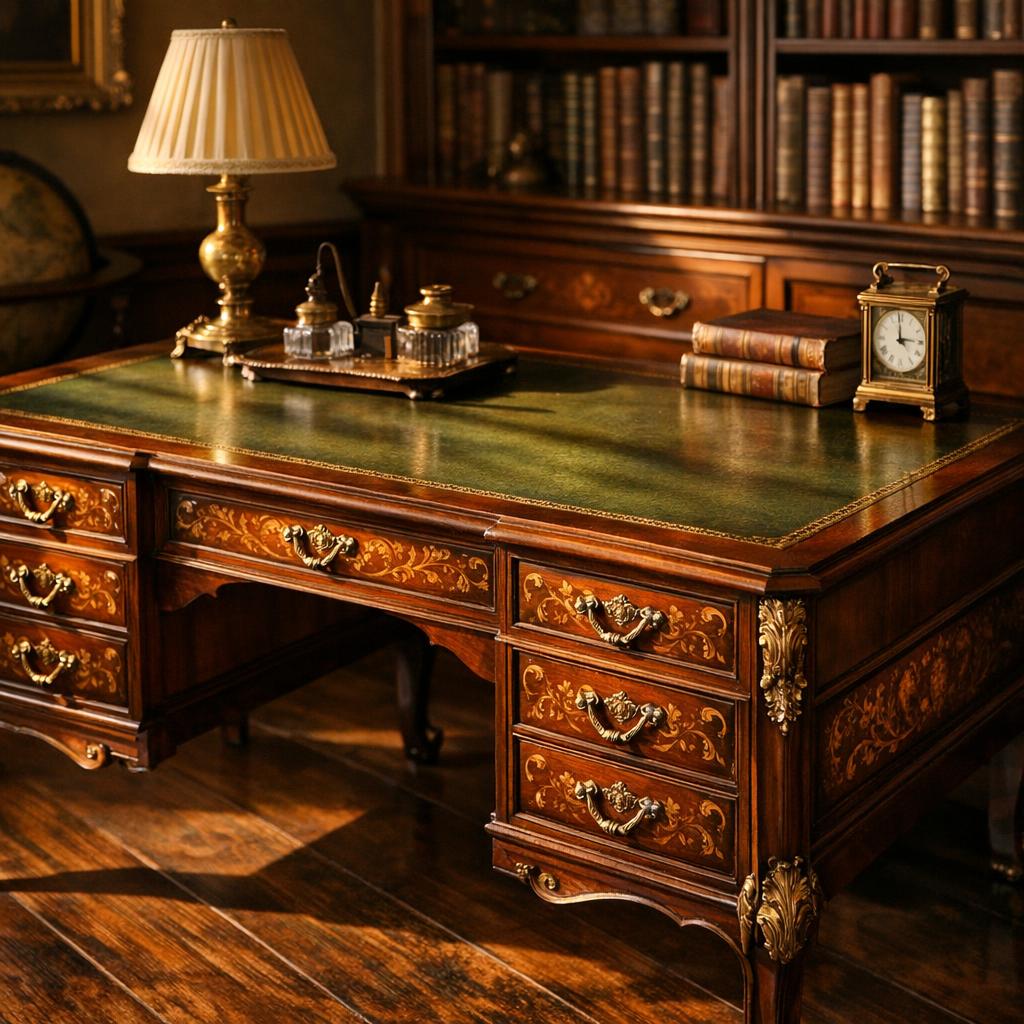
Look underneath first
Turn the table carefully and inspect joinery, underside oxidation, secondary woods, fasteners, drawer runners, glue blocks, and tool marks. The underside often shows age clues that the polished top hides.
- Photograph the top, legs, apron, underside, feet, hardware, and any labels or stamps.
- Measure height, width, depth, leaf size, and drawer dimensions if present.
- Do not remove old screws, labels, or finish before review.
Separate style from age
A table can be made in Georgian, Victorian, Arts and Crafts, or Colonial Revival style without being from that original period. Proportions, construction, materials, and wear patterns help distinguish period work from later revival furniture.
- Machine-cut uniformity, modern screws, plywood, and synthetic finishes can point later.
- Hand-cut dovetails, irregular oxidation, and period hardware may support age but are not proof alone.
Condition and alterations
Refinished tops, cut-down legs, replaced feet, married bases, added leaves, and hardware changes can affect value. These issues should be documented rather than hidden.
A useful appraisal explains what is original, what is altered, and how that affects the likely market.
What to send for remote review
Send full-room scale photos, closeups of construction, underside images, labels, repairs, finish issues, and any family history or receipts. Include whether the table is stable and whether leaves fit.
Need a value opinion on your antique table?
Upload clear photos, marks, dimensions, and condition notes. Appraisily can review the item remotely and tell you which details matter most.
Start furniture appraisal