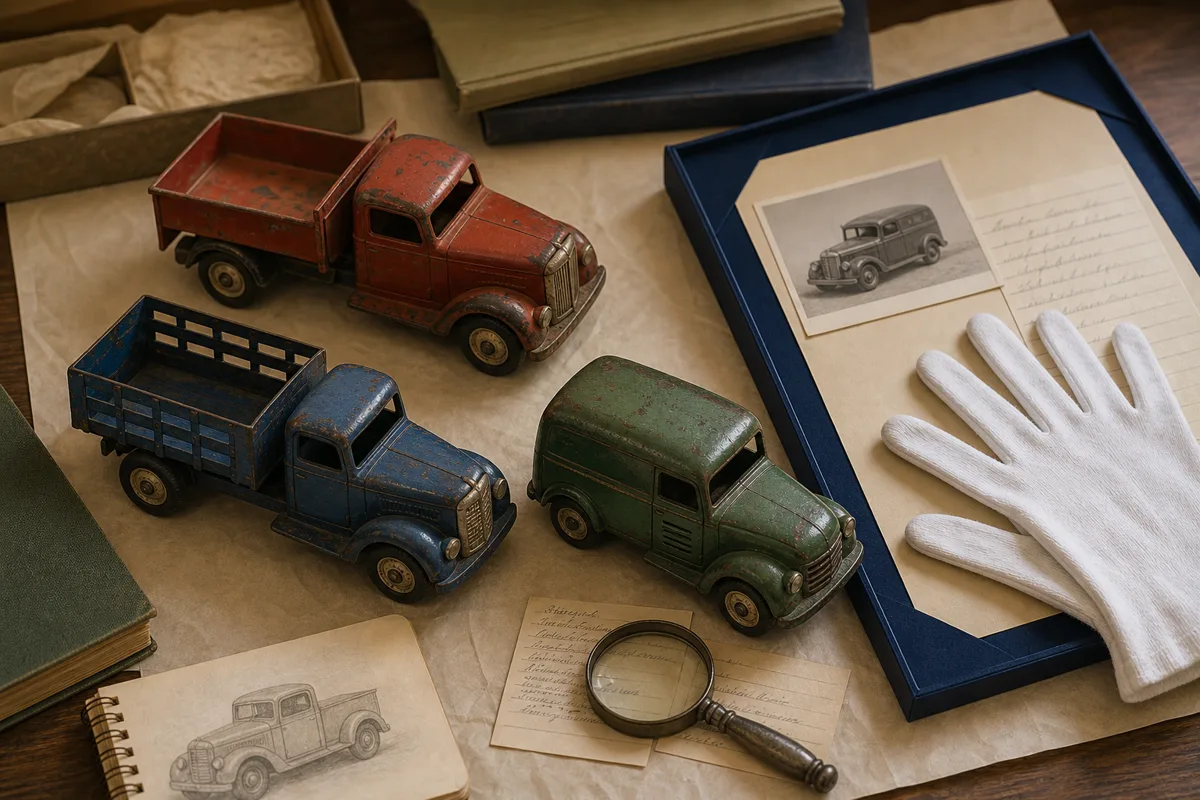
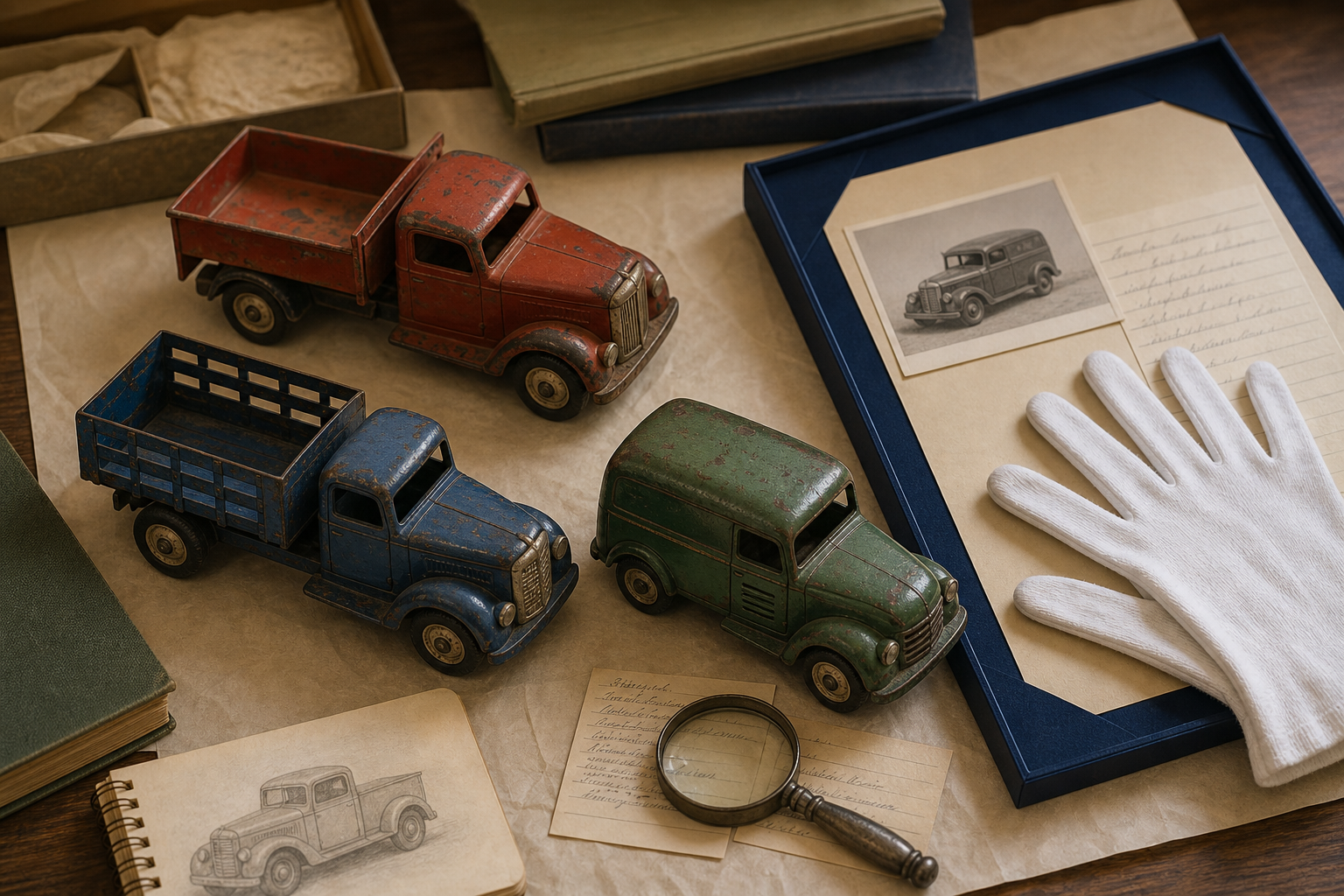
Identify model and era
Tonka value starts with the exact model, production era, scale, pressed-steel body, decals, wheels, and accessories. Dump trucks, graders, loaders, fire trucks, and construction sets do not all perform the same way.
- Photograph both sides, underside, decals, wheels, moving parts, and any box.
- Measure length and note whether accessories are present.
- Compare decals and wheels to period examples to avoid mixing eras.
Paint and decals matter
Original paint with honest play wear is often preferred over repaint. Decals, wheels, tires, tailgates, buckets, ladders, and small accessories can drive value when they are correct and intact.
- Look for repaint, touchups, replaced wheels, missing parts, rust, bends, and cracks.
- Boxes and catalogs can add interest when they match the toy.
- Reproductions and later reissues should be identified clearly.
Collector value versus display value
Some Tonka toys are strong collector pieces, while others sell mainly as nostalgic decor. Model, condition, completeness, and color drive the difference.
Do not use high asking prices as proof of value. Match sold results by exact model and condition whenever possible.
Appraisal photo set
Send full views, underside, decals, wheels, moving parts, damage, box, and accessories. Mention whether parts move and whether any restoration is known.
Need a value opinion on your vintage Tonka toy?
Upload clear photos, marks, dimensions, and condition notes. Appraisily can review the item remotely and tell you which details matter most.
Start toy appraisal


![Tonka Truck and Willys Toys [178969] sold by Holabird Western Americana, lot 2276 — auction record photograph](https://assets.appraisily.com/auction-lots/187663411/thumb/a7bf1ab2e22387229738a1bb2bb1b8285cde2d231387a03a2455f56f2296e103.jpg)


