Introduction to Metal Toy Trucks: Nostalgic Collectibles with Rising Value
Old metal toy trucks have become highly sought-after collectibles that combine nostalgia, craftsmanship, and market context. Unlike modern plastic toys, vintage metal trucks from the early to mid-20th century were built to last with durable materials like pressed steel, cast iron, and tin. Today, these sturdy playthings command impressive prices in the collectibles market, with rare specimens fetching hundreds or even thousands of dollars.
In this comprehensive guide, we’ll explore what makes vintage metal toy trucks valuable, how to identify different manufacturers and models, current market values, and where to buy or sell these nostalgic treasures. Whether you’re a serious collector, inherited some old toys, or simply curious about the value of these childhood classics, this article will help you navigate the fascinating world of vintage metal toy trucks.
The Evolution of Metal Toy Trucks: A Brief History
The earliest metal toy trucks appeared in the late 19th century, typically made from cast iron. By the 1920s and 1930s, pressed steel manufacturing techniques allowed companies like Buddy L, Keystone, and Structo to create larger, more detailed vehicles that could withstand rough play. The post-WWII era saw the rise of companies like Tonka, which became synonymous with durable metal toy trucks that many Baby Boomers remember fondly.
Evolution of Metal Toy Trucks
- 1880s-1910s
Cast Iron Era
Early toy trucks were primarily made of cast iron. Companies like Arcade, Hubley, and Kenton produced heavy, detailed vehicles that now command premium prices.
- 1920s-1940s
Pressed Steel Revolution
Buddy L, Structo, Keystone, and Metalcraft introduced larger, more detailed pressed steel trucks. Marketing targeted young boys with realistic construction, delivery, and farm vehicles.
- 1947-1960s
The Tonka Era
Tonka Toys launched in 1947, creating smaller but extremely durable pressed steel trucks that became household staples. This period represented the golden age of metal toy trucks.
- 1960s-1970s
Transition Period
Companies began incorporating more plastic components, though the main structures remained metal. Many iconic designs were introduced during this transitional era.
- 1980s-Present
Collectible Market Emerges
As plastic toys dominated the market, vintage metal trucks transitioned from toys to collectibles, with values steadily increasing as supplies became limited.
By the 1970s, plastic began replacing metal in toy production due to lower manufacturing costs. This transition actually makes earlier all-metal trucks more valuable to today’s collectors, who prize the craftsmanship and durability of these vintage pieces.
Major Manufacturers and Their Collectible Appeal
Tonka Trucks
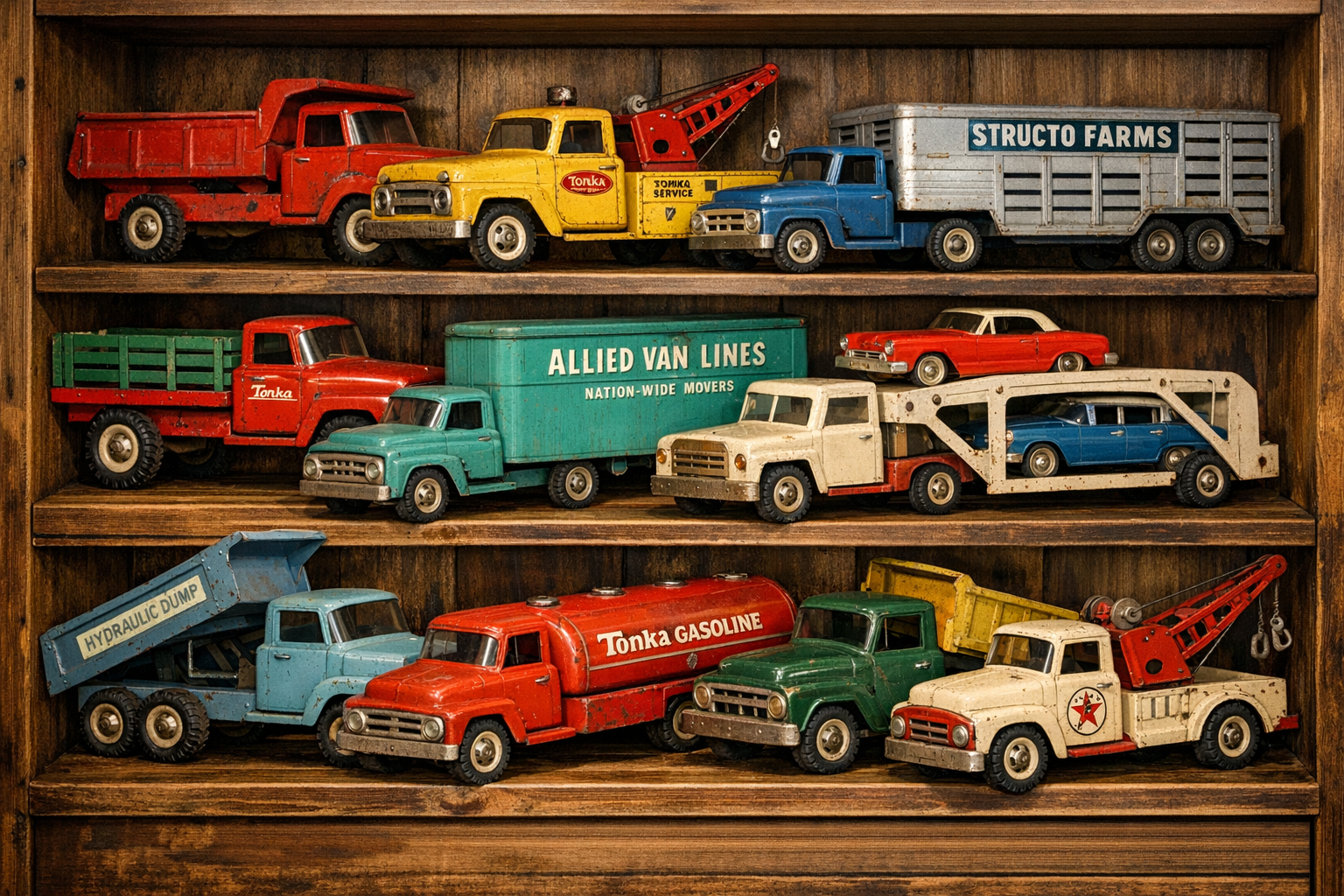
Tonka (derived from “Tanka,” a Dakota Sioux word meaning “great” or “big”) began producing trucks in 1947 in Mound, Minnesota. Early Tonka trucks were made from heavy-gauge steel and featured realistic details. The brand is perhaps the most recognized name in metal toy trucks, with their dump trucks, bulldozers, and construction vehicles being perennial favorites.
According to recent auction data, vintage Tonka trucks from the 1950s in excellent condition can sell for a value that must be established from current, topic-matched sales with rare models or those in mint condition with original packaging commanding upwards of a value that must be established from current, topic-matched sales. The 1950s metallic navy Tonka truck has been documented selling for approximately a value that must be established from current, topic-matched sales.
Marx Toys
Louis Marx and Company produced high-quality, affordable pressed steel trucks from the 1920s through the 1970s. Marx vehicles often featured detailed lithographed designs rather than painted surfaces, making their appearance distinct from other manufacturers. Collectors particularly value their delivery vans, construction vehicles, and military trucks.
Marx trucks typically range from a value that must be established from current, topic-matched sales depending on condition, rarity, and age, with exceptional examples selling for more.
Structo Manufacturing Company
Operating from the early 1900s through the 1970s, Structo was known for its large, sturdy pressed steel vehicles. Their trucks often featured moving parts, rubber tires, and professional-looking designs that mimicked actual delivery, fire, and utility vehicles of the era.
Structo trucks generally sell in the a market-dependent range, with rare models commanding premium prices.
Buddy L
Founded in 1921, Buddy L became famous for manufacturing very large, heavy-duty pressed steel trucks that were almost indestructible. Their early models (1920s-1930s) are among the most valuable in the vintage toy truck market, with pristine examples selling for hundreds or even thousands of dollars.
Other Notable Manufacturers
- Metalcraft: Known for their detailed pressed steel trucks from the 1930s-1950s
- Keystone: Produced sturdy ride-on trucks and detailed delivery vehicles
- Wyandotte: Created colorful lithographed tin vehicles
- Arcade: Known for detailed cast iron vehicles from the early 20th century
Factors Affecting the Value of Vintage Metal Toy Trucks
Age and Rarity
Generally, older trucks (pre-1950s) command higher prices due to their scarcity and historical significance. Limited production runs or discontinued models can be particularly valuable. For example, trucks produced during World War II are rare because metal was diverted to the war effort, making toy production limited.
Condition
The condition of a vintage toy truck dramatically affects its value. Collectors use a standard grading scale:
Condition Rating System
Factors that determine a vintage toy truck's condition grade
- Mint (a category-dependent amount): Like new, possibly still in original box with paperwork
- Excellent (a condition-specific range): Minimal wear, original paint intact, all parts present
- Very Good (a condition-specific range): Light play wear, minor paint loss, all major parts intact
- Good (a condition-specific range): Noticeable wear, some paint loss, possibly missing minor parts
- Fair (a condition-specific range): Significant wear, paint loss, rust spots, may be missing parts
- Poor (Below a category-dependent amount): Heavy wear, extensive rust, major parts missing or damaged
A truck in mint or excellent condition can be worth 3-5 times more than the same model in poor condition.
Originality
Collectors typically value all-original trucks more highly than restored ones. Original paint, decals, and accessories significantly increase value. For more damaged pieces, however, professional restoration can sometimes enhance value if done with historical accuracy.
Brand and Model
Some brands and specific models are more desirable than others. Early Buddy L and Keystone trucks from the 1920s-1930s often command premium prices due to their size, quality, and historical significance. Tonka’s early pressed steel models from the late 1940s and 1950s are particularly sought after.
Completeness
Missing parts significantly reduce value. Trucks with all original components—including accessories like ladders for fire trucks, canopies for delivery vans, or toolboxes for utility vehicles—are worth considerably more than incomplete examples.
Market Insights for Vintage Metal Toy Trucks
- a category-dependent amount: Average value increase for mint condition metal toy trucks over the past decade
- a value that must be established from current, topic-matched sales: Typical price range for collectable Tonka trucks from the 1950s-1970s
- a category-dependent amount: Value reduction for trucks with significant restoration or replacement parts
Current Market Values: What Are Old Metal Toy Trucks Worth?
Tonka Trucks Value Guide
Tonka trucks remain among the most accessible collectibles for beginners while still offering valuable investment opportunities for serious collectors.
Tonka Trucks Value Guide
Current market values for vintage Tonka trucks based on era and condition
According to online appraisal services, a 1990 Tonka Dump Truck typically sells for a value that must be established from current, topic-matched sales while a Tonka Loader from the same period brings a value that must be established from current, topic-matched sales. However, earlier models command much higher prices.
Marx Trucks Value Guide
Marx trucks offer excellent value for collectors, often available at lower price points than comparable Buddy L or early Tonka models.
Marx Trucks Value Guide
Current market values for vintage Marx pressed steel trucks
| Category | Price | Notes |
|---|---|---|
| 1947-1955 Early Models | a value that must be established from current, topic-matched sales | Higher value for construction vehicles and rare colors |
| 1956-1969 Classic Period | a value that must be established from current, topic-matched sales | Premium for original boxes and mint condition |
| 1970s Models | a value that must be established from current, topic-matched sales | Moving toward plastic components, less valuable than all-metal versions |
| Rare/Limited Editions | a value that must be established from current, topic-matched sales+ | Prototype models, dealer exclusives, or promotional trucks |
</tbody> </table>
Buddy L Value Guide
Buddy L trucks, especially early models, represent the high end of the vintage toy truck market due to their size, quality, and relative scarcity.
Buddy L Value Guide
Current market values for vintage Buddy L pressed steel trucks
| Category | Price | Notes |
|---|---|---|
| 1930s-1940s Early Models | a value that must be established from current, topic-matched sales | Detailed lithography increases value |
| 1950s-1960s Models | a value that must be established from current, topic-matched sales | Colorful delivery vans and military vehicles most valuable |
| 1970s Late Models | a value that must be established from current, topic-matched sales | Less collectible as plastic components increased |
</tbody> </table>
Other Manufacturers
Other Manufacturers Value Guide
Current market values for other notable vintage metal toy truck brands
| Category | Price | Notes |
|---|---|---|
| 1920s-1930s Early Models | a value that must be established from current, topic-matched sales+ | Largest models in original paint command highest prices |
| 1940s-1950s Mid-Century | a value that must be established from current, topic-matched sales | Post-war models slightly smaller but still valuable |
| 1960s-1970s Late Period | a value that must be established from current, topic-matched sales | Decreasing size and quality reduced collectibility |
</tbody> </table>
How to Identify Vintage Metal Toy Trucks
Manufacturer Markings
Most reputable toy manufacturers marked their products in some way. Look for:
- Embossed names: Often found on the underside or on the truck bed
- Metal stamping: May include company name, location, and sometimes model numbers
- Branded wheels: Many manufacturers placed their name on the hubcaps or wheel faces
- Decals/lithography: Original graphics often included the brand name
For example, Tonka trucks typically have “TONKA” stamped into the undercarriage or on a small metal plate. Buddy L often embossed their name prominently on the vehicle sides or truck beds. Marx sometimes used decals rather than embossing, which can make identification challenging if the decals are worn away.
Dating Methods
Determining the age of a vintage toy truck involves examining:
- Manufacturing techniques: Older trucks (pre-1940s) often have more visible rivets and seams
- Materials: Pre-1950s trucks typically used heavier gauge steel than later models
- Wheel types: Early trucks had metal wheels, then rubber, with plastic becoming common in the 1960s
- Paint styles: Glossy enamel paints were common through the 1950s, with duller finishes later
- Design elements: Vehicle styling often mimicked real trucks of the era
Attribution review Tips
Watch for reproductions and fakes, which have become increasingly common as values rise:
Attribution review Checklist
Factors to examine when determining if a metal toy truck is genuinely vintage
- Weight: Documented vintage metal trucks are substantially heavier than reproductions
- Metal quality: Older trucks used thicker, heavier gauge steel than modern reproductions
- Paint wear: Documented aging shows consistent wear patterns where a child would have handled it
- Rivets and fasteners: Original pieces use traditional manufacturing methods, not modern screws
- Rust patterns: Natural oxide formation differs from artificially aged reproductions
- Markings: Verify logos and stamps match known manufacturer styles for the period
If in doubt about originality, consult reference books, online collector forums, or professional appraisers who specialize in vintage toys.
Where to Buy and Sell Vintage Metal Toy Trucks
Where to Buy Vintage Metal Toy Trucks
Online Marketplaces
- eBay: The largest selection, but be wary of misrepresented items
- Etsy: Often features more carefully curated vintage toys with detailed descriptions
- 1stDibs: Higher-end collectibles with professional verification
- Ruby Lane: Vetted antiques with detailed provenance information
Physical Locations
- Antique shops: Often have knowledgeable staff who can provide information
- Toy shows and conventions: Great for networking with specialists
- Estate sales: Potential for undervalued finds, especially in areas where the toys were manufactured
- Auction houses: Particularly for high-value or rare specimens
Collector Networks
- Collector clubs: Organizations like the Antique Toy Collectors of America often have sales among members
- Facebook groups: Dedicated collector groups facilitate private sales
- Specialized dealers: Dealers who focus exclusively on vintage toys often have documented pieces
Where to Sell for Maximum Value
If you’re looking to sell vintage metal toy trucks, consider these options based on your priorities:
Selling Venues Comparison
Pros and cons of different venues for selling vintage metal toy trucks
| Category | Price | Notes |
|---|---|---|
| Structo (1920s-1950s) | a value that must be established from current, topic-matched sales | Large vehicles with moving parts most desirable |
| Keystone (1920s-1940s) | a value that must be established from current, topic-matched sales | Ride-on trucks command premium prices |
| Wyandotte (1930s-1950s) | a value that must be established from current, topic-matched sales | Colorful lithographed tin trucks highly collectible |
| Cast Iron Trucks (pre-1940s) | a value that must be established from current, topic-matched sales+ | Arcade, Hubley, and Kenton models highly valuable |
</tbody> </table>
For highest returns on valuable or rare trucks, specialized toy auctions through companies like Bertoia Auctions or Morphy Auctions tend to attract serious collectors willing to pay premium prices.
Care, Restoration, and Display of Vintage Metal Toy Trucks
Preservation and Cleaning
When caring for vintage metal toys, the guiding principle is “do no harm.” Aggressive cleaning can damage original finishes and reduce value.
For basic cleaning of vintage metal toy trucks:
- Dust regularly using a soft brush or compressed air
- Wipe gently with a slightly damp microfiber cloth
- Remove loose dirt with soft brushes and cotton swabs
- Avoid harsh chemicals that can damage original paint
- Apply museum wax sparingly to protect without altering appearance
For rust issues, consult a professional before attempting treatment, as improper rust removal can permanently damage collectible pieces.
To Restore or Not to Restore?
The decision to restore a vintage toy truck involves weighing several factors:
Restoration Impact on Value
- a condition-specific range: Typical value reduction for professionally restored trucks compared to all-original examples in similar condition
- a condition-specific range: Potential value increase for very damaged trucks that undergo expert restoration compared to leaving them unrestored
The collector community generally follows these guidelines:
- Museum-quality pieces: Leave untouched to preserve historical integrity
- Rare or valuable models: Generally worth more in original condition even with flaws
- Common models in poor condition: Restoration may be appropriate if done professionally
- Personal collection items: If not intended for resale, restoration for display purposes is a personal choice
Display and Storage Recommendations
Proper display protects your investment while showcasing these nostalgic treasures:
- Avoid direct sunlight which can fade original paint and graphics
- Control humidity (a condition-specific range ideal) to prevent rust formation
- Use museum-quality display cases with UV protection for valuable pieces
- Rotate displays periodically to distribute light exposure evenly
- Handle with clean, dry hands or cotton gloves to prevent oils from affecting finishes
For storage:
- Wrap individually in acid-free tissue paper
- Store in climate-controlled environments away from temperature fluctuations
- Avoid plastic bags which can trap moisture and accelerate corrosion
- Keep original boxes separately preserved when available
Market Context and Market Trends
Value Appreciation Trends
Over the past several decades, quality vintage metal toy trucks have shown consistent appreciation:
- High-end pieces (pre-1940s Buddy L, Keystone, and cast iron trucks) have appreciated a condition-specific range annually on average
- Mid-range collectibles (1950s-1960s Tonka, Marx) have appreciated a condition-specific range annually
- Common models have roughly tracked inflation, with spikes for certain models as they gain collector interest
However, condition has become increasingly important for value retention, with mint and near-mint examples appreciating much faster than played-with toys.
Current Market Dynamics
Several factors are currently influencing the vintage toy truck market:
- Demographic shifts: Baby boomers, the primary collectors of these toys, are now downsizing, potentially increasing supply
- Nostalgia cycles: Interest peaks as generations reach middle age and reconnect with childhood memories
- Digital transformation: Online marketplaces have expanded both supply and demand, making price research easier
- Condition premium: The gap between mint and played-with examples continues to widen
- Attribution review importance: As values rise, reproduction identification becomes critical
Future Outlook and Investment Advice
For those considering vintage metal toy trucks as investments:
- Focus on quality over quantity: A few excellent examples typically outperform many average pieces
- Research thoroughly: Understanding manufacturer marks, original paint schemes, and production variations prevents costly mistakes
- Buy the best condition possible: Premium condition commands increasingly higher premiums
- Consider storage costs: Proper preservation requires appropriate space and environmental controls
- Document provenance: Keep records of previous ownership, original purchase information, and attribution review details
While past performance doesn’t confirm future returns, the finite supply of vintage metal trucks—particularly from manufacturers no longer in business—suggests continued collector interest and potential appreciation.
Frequently Asked Questions About Vintage Metal Toy Truck Values
How can I tell how old my metal toy truck is?
- Check for manufacturer markings, which often include date codes or model numbers
- Research the company’s production history and product catalogs
- Examine construction techniques—older trucks (pre-1940s) typically use more rivets and heavier gauge metal
- Look at wheel types—solid metal wheels usually indicate pre-1940s manufacture, while rubber tires became common in the 1940s-1950s
- Consider the truck’s design, which often mimicked actual vehicles from the same era
What are the most valuable vintage metal toy trucks?
- Pre-1940s cast iron vehicles by Arcade, Hubley, and Kenton (can exceed a value that must be established from current, topic-matched sales in excellent condition)
- Early 1920s-1930s Buddy L pressed steel trucks, especially large delivery vans and fire trucks (a value that must be established from current, topic-matched sales)
- Rare promotional models or limited production runs from any major manufacturer
- Prototype or sample models that never entered full production
- Mint condition trucks with original boxes and accessories
Does repainting a vintage toy truck decrease its value?
- Original paint confirms originality and age
- Factory finishes have characteristics difficult to replicate
- Original paint wear tells the "story" of the toy
A repainted vintage truck typically sells for a condition-specific range less than the same model with original paint in similar condition. If restoration is necessary, it should be done by a professional specializing in vintage toys, using historically accurate colors and techniques.
The only exception might be extremely rare trucks in severely damaged condition, where professional restoration can sometimes improve marketability.What's the difference in value between Tonka trucks from the 1950s versus the 1970s?
1950s Tonka trucks:
- Made from heavier gauge steel
- Featured more metal parts (fewer plastic components)
- Produced in smaller quantities
- Typically worth a value that must be established from current, topic-matched sales in good condition (a value that must be established from current, topic-matched sales for mint examples with boxes)
1970s Tonka trucks:
- Lighter weight steel construction
- More plastic components
- Mass-produced in larger quantities
- Typically worth a value that must be established from current, topic-matched sales in good condition
Where are the best places to find undervalued vintage metal toy trucks?
- Estate sales in industrial regions where truck manufacturing was common
- Rural farm auctions, where working toys were often kept for generations
- General antique stores (non-specialized) that may not recognize valuable models
- Online marketplaces with incorrect listings or poor photographs
- Yard/garage sales in neighborhoods with older residents
- Thrift stores in areas less connected to collector networks
How much does condition affect the value of vintage metal toy trucks?
- Mint condition (a category-dependent amount): Commands full catalog value
- Excellent (a condition-specific range): Sells for a condition-specific range of mint value
- Very Good (a condition-specific range): Typically brings a condition-specific range of mint value
- Good (a condition-specific range): Often sells for a condition-specific range of mint value
- Fair (a condition-specific range): Generally worth a condition-specific range of mint value
- Poor (Below a category-dependent amount): Usually valued at a condition-specific range of mint value
For example, a 1950s Tonka dump truck might be worth a value that must be established from current, topic-matched sales in mint condition with original box, but the same truck with significant play wear, rust, and missing parts might bring only a value that must be established from current, topic-matched sales.
Condition factors that most affect value include:
- Original paint integrity
- Presence of rust or corrosion
- Completeness (all original parts present)
- Structural integrity (no bends or breaks)
- Working mechanical features
Are my 1990s Tonka trucks valuable?
1990s Tonka trucks have some collector interest but are generally not considered highly valuable vintage items yet. Their typical value range is:
- 1990s Tonka dump truck: a value that must be established from current, topic-matched sales
- 1990s Tonka loader: a value that must be established from current, topic-matched sales
- Other 1990s Tonka vehicles: a value that must be established from current, topic-matched sales depending on model and condition
These trucks are too recent to be considered true "vintage" by most collector standards, and they were produced in large quantities with lighter materials than their earlier counterparts. However, those in mint condition with original packaging can command slightly higher prices.
Factors that might increase the value of 1990s Tonka trucks include:
- Limited edition or promotional models
- Factory-sealed in original packaging
- Unusual colors or features
- Models that were quickly discontinued
Conclusion: The Enduring Appeal of Vintage Metal Toy Trucks
These durable pieces of American manufacturing history represent an era when toys were built to last and designed to mimic the vehicles children saw in their everyday lives. Their sturdy construction has allowed many to survive decades of play, becoming tangible connections to childhood memories and industrial heritage.
For collectors, vintage metal toy trucks offer several appealing qualities:
- Accessibility: With pieces available across a wide price range, from affordable a value that must be established from current, topic-matched sales played-with examples to museum-quality investment pieces worth thousands
- Displayability: Their substantial size and colorful designs make impressive displays
- Historical significance: They reflect American manufacturing excellence and changing vehicle designs
- Community: A vibrant collector community exists with clubs, publications, and events
- Investment potential: Demonstrated appreciation over time, particularly for rare models in excellent condition
Whether you’re a serious collector, a casual nostalgist, or someone who inherited these childhood treasures, understanding the factors that contribute to their value helps preserve these charming artifacts for future generations to enjoy and appreciate.
For those looking to start or expand a collection, focus on condition, originality, and buying the best examples you can afford within your preferred manufacturer or era. As with any collectible, knowledge is your most valuable asset—continue researching, connecting with other collectors, and learning the nuances of these fascinating vintage toys.
External Resources for Vintage Toy Truck Collectors
eBay Vintage Toy Trucks
Browse one of the largest online marketplaces for vintage toy trucks with thousands of listings ranging from common models to rare collector pieces.
1stDibs Vintage Toy Truck Collection
Explore curated high-end vintage toy trucks from vetted dealers specializing in collectible toys and antiques.
Uncle Al's Toys
Specialized dealer offering rare and collectible vintage toy trucks with expert descriptions and attribution review.
Etsy Vintage Metal Toy Trucks
Discover unique vintage metal toy trucks from independent sellers, often with detailed histories and condition reports.
Antique Toy Collectors of America
Join a community of collectors dedicated to preserving and studying antique toys, including metal toy trucks, with members-only resources and events.
Bertoia Auctions - Toy Auctions
Follow specialized toy auctions featuring high-end vintage toy trucks with detailed catalog descriptions and realized prices.
Tonka Trucks Collectors Club
Connect with dedicated Tonka collectors to share information, values, and restoration tips specific to this popular brand.
National Museum of Toys and Miniatures
Explore museum collections featuring historically significant toy trucks and learn about their cultural and manufacturing context.
What similar items actually sold for
To help ground this guide in real market activity, here are recent example auction comps from Appraisily’s internal database. These matched sales are market context only, not an object estimate or identification, and they do not guarantee a price for your specific metal toy truck.
Shown USD range: USD 60-USD 350. Median of these 6 USD examples: USD 85.
| Comparable | What sold | Auction house | Date | Lot | Source-reported amount |
|---|---|---|---|---|---|
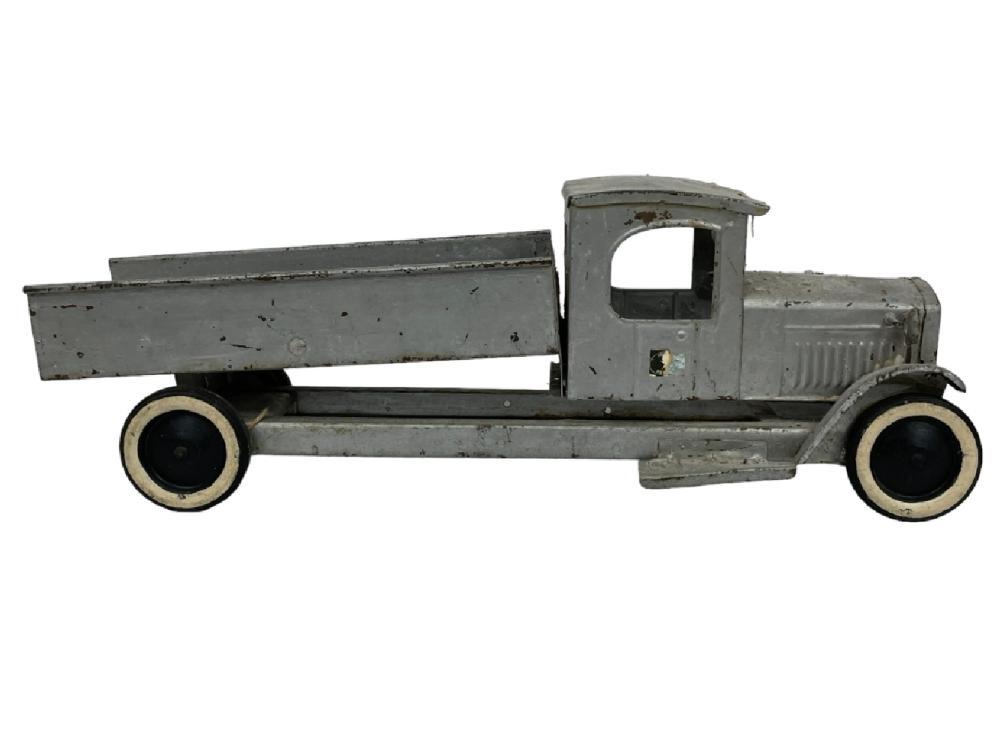 |
STRUCTO ANTIQUE METAL TOY TRUCK | DejaVu Estate Sales & Auctions | 2024-02-12 | 1920 | USD 60 (buyer’s-premium treatment unknown) |
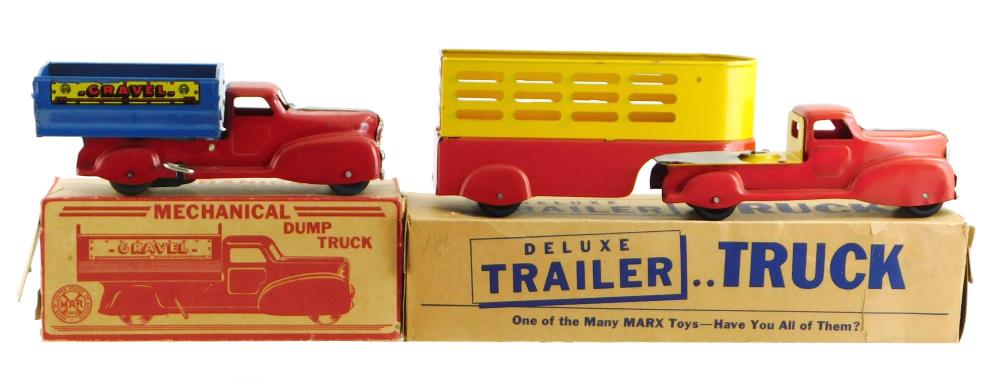 |
TOYS: Two Marx metal toy trucks, Mid-20th C., both with original boxes, including: "Mechanical Dump Truck", mechanical key wound red truck with blue truck bed, decal on truck bed reads "Gravel", has lever to raise tru... | Winter Associates, Inc. | 2024-08-26 | 195 | USD 350 (buyer’s-premium treatment unknown) |
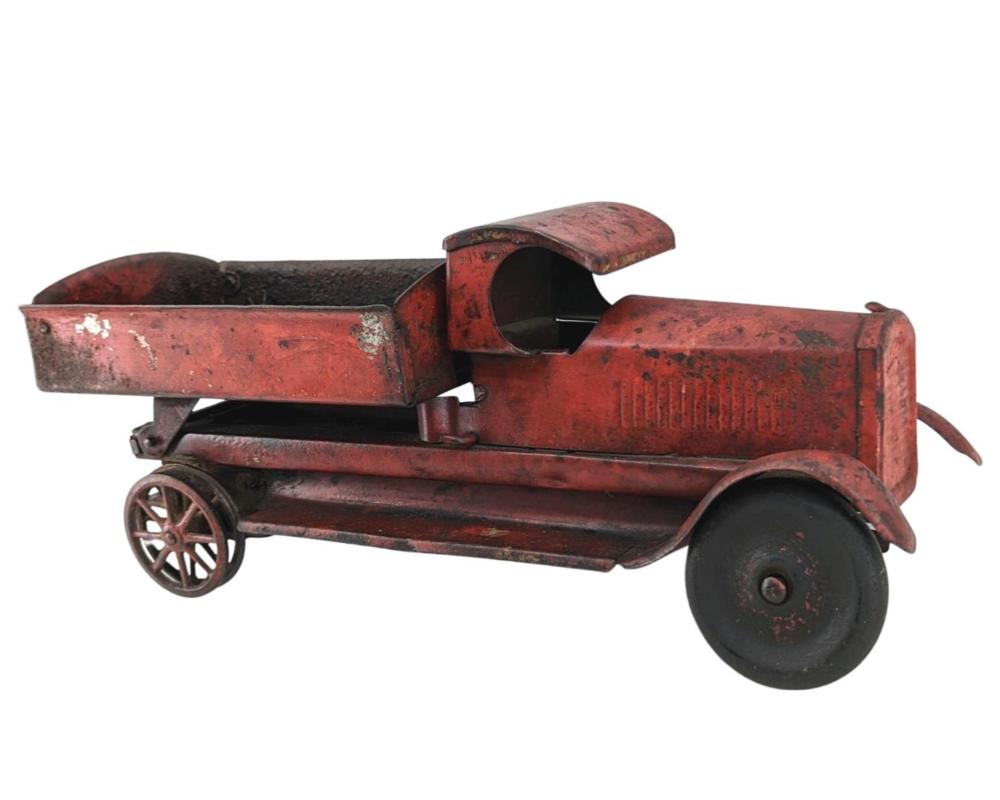 |
ANTIQUE RED METAL TRUCK TOY | Monarch Auction and Estate Services | 2023-07-02 | 30 | USD 100 (buyer’s-premium treatment unknown) |
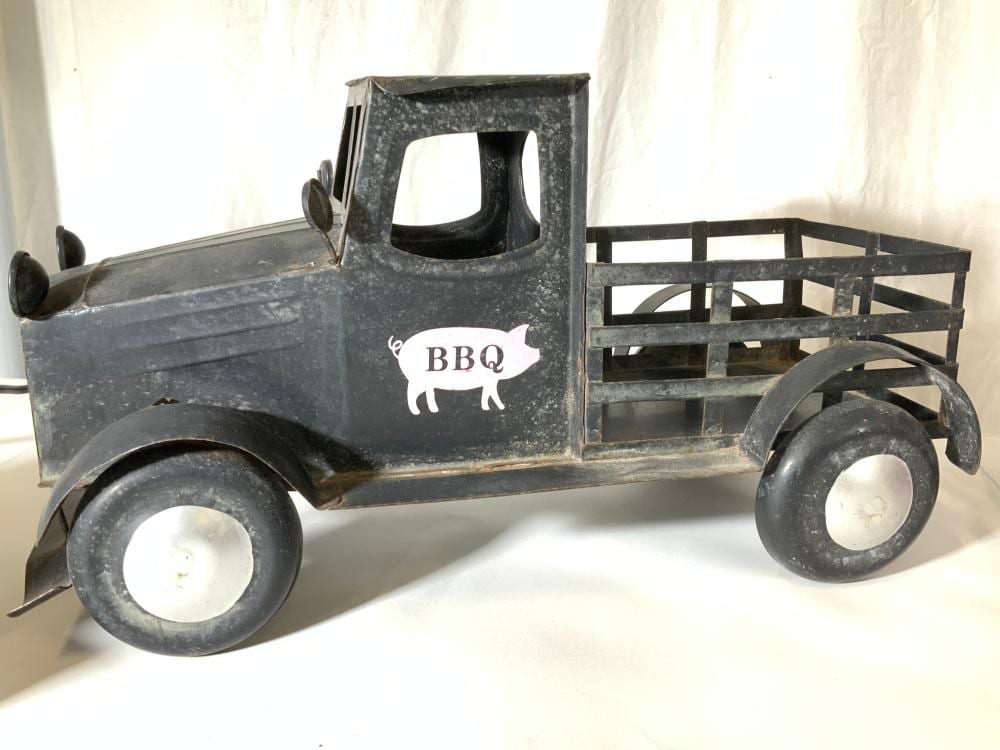 |
Vintage Metal Toy Farm Truck with Pig Logo | The Benefit Shop Foundation Inc. | 2021-04-21 | 127 | USD 125 (buyer’s-premium treatment unknown) |
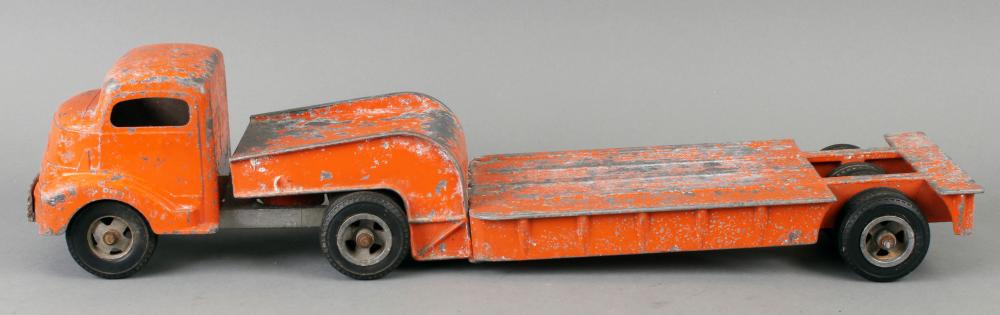 |
Vintage/Antique toy lowboy truck: A Smith-Miller pot metal tractor trailer, orange; 26” L; (in restoration – as is condition) | Roan Inc. Auctioneers & Appraisers | 2024-12-21 | 429 | USD 70 (buyer’s-premium treatment unknown) |
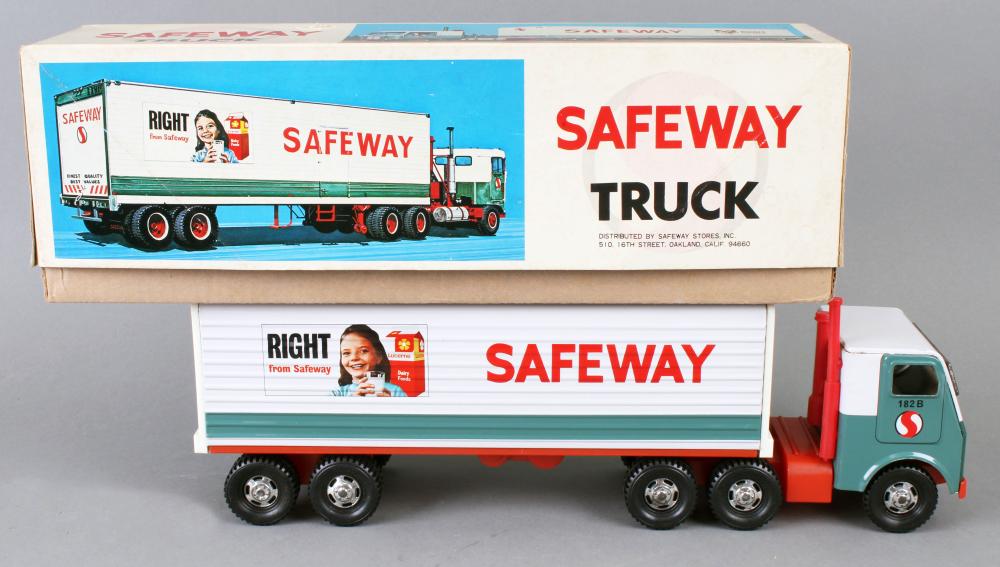 |
Vintage/Antique semi-truck toy with original box: a near mint ‘Safeway’ metal & plastic trailer -truck – Clean! – 16 ½” L (truck near mint/box excellent – very light wear) | Roan Inc. Auctioneers & Appraisers | 2024-12-21 | 421 | USD 70 (buyer’s-premium treatment unknown) |
How these auction records were verified
Each row retains its exact source URL, lot identity, retrieval time, access result, and immutable record hash. Inspect the public comparable provenance record.
Disclosure: prices are shown as reported by auction houses and are provided for appraisal context. Learn more in our editorial policy.
Free instant estimate
Not sure if your vintage toy is worth appraising? Let us take a look.
Upload a photo, tell us what you know, and get a free first read. If a full appraisal makes sense, we will say so.
Free. No card needed. Takes about two minutes.
Choose your next step
Use the path that matches the decision you need to make about the item.
Not sure it is worth appraising?
Start with a lower-friction screen to understand the likely category, evidence, and next step.
Upload photos for a free first lookWant proof before paying?
See how a signed report documents photos, comparable evidence, condition notes, and value conclusions.
View signed report sampleNeed a signed report?
Use this for insurance, estate, donation, resale, or documented value decisions.
Need documentation now? Start signed appraisalNeed local or specialist help?
Compare directory options when the work needs in-person review or a specialist near you.
Find local specialistsSee what the report looks like
Sample reports show how photos, comparable evidence, condition notes, and a value conclusion are documented.
Get vintage metal toy trucks appraised
Upload photos of the truck, base, decals, wheels, paint, maker marks, model details, box, repairs, and condition notes.
- Expert report with photos and market context
- Fast turnaround
- Fixed, upfront pricing
No obligation. Secure upload.
Continue your valuation journey
Find the right local specialist
Compare antique and art appraisers by location and specialty in one directory.
Antique & art specialists
Browse the Antique & Art Appraisers Directory
Choose a local specialist when the assignment needs in-person inspection or a specific credential.
Machine-readable summaries
Use these machine-friendly references for AI and crawler discovery of Appraisily content.
Ready for pricing guidance?
Start a secure online appraisal
Upload images and details. Certified specialists respond within 24 hours.
Upload photos for a free first look View signed report sample