Inca-attributed gold medallion: appraisal and provenance basics
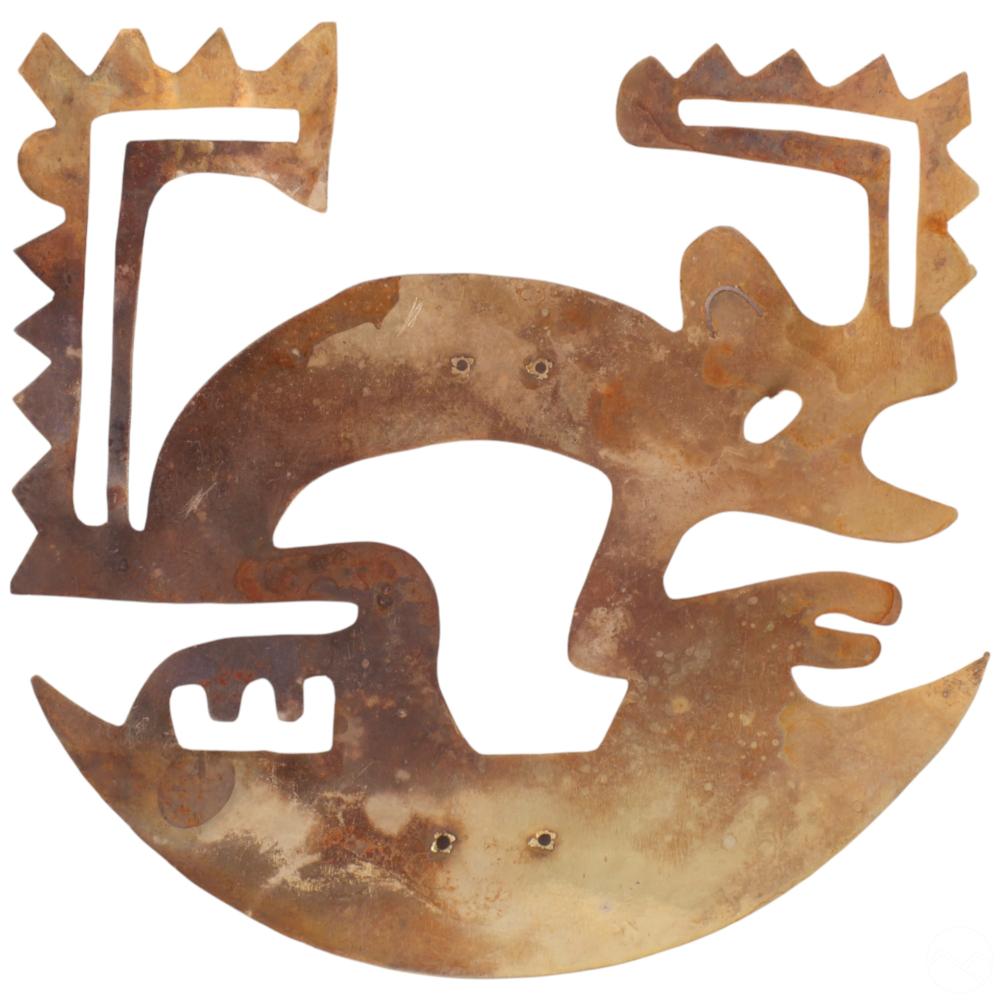
Start by treating an Inca gold medallion label as an attribution, provenance, and legal-risk question, not a confirmed sale category. Compare alloy testing, sheet-metal construction, iconography, surface evidence, cultural attribution, export/import documentation, ownership chain, conservation condition, and specialist review before discussing value or sale venue.
Inca-Attributed Gold Medallion Guide
Inca gold has long stood for imperial power, solar worship, and masterful metallurgy. Yet very few gold ornaments securely attributable to the Inca state survive, and the market is saturated with misattributions and modern copies. For appraisers and collectors, an “Inca Empire South American gold medallion” raises immediate questions: what exactly qualifies as Inca, how was it made, what iconography should one expect, and—crucially—what documentation and testing can substantiate originality and legal title?
This guide provides a practical framework for identifying, authenticating, conserving, and appraising a supposed Inca gold medallion, while situating it within broader Andean traditions.
Defining the Object and Historical Context
- What counts as a “medallion” in Inca terms: The Inca did not use the European term “medallion,” but the category maps best onto circular or gently polygonal sheet-gold ornaments worn as pectorals, headdress plaques, or ritual badges. “Medallion” is thus a trade label; the artifact may have been a breastplate disc, a headdress applique, or a ceremonial token.
- Timeframe: The Inca Empire (Tawantinsuyu) dominated the Andes in the 15th–early 16th centuries (Late Horizon). Inca imperial style coexisted with provincial and earlier traditions (e.g., Chimú, Lambayeque/Sicán) that the Inca absorbed.
- Scarcity: Spanish conquest led to mass melting of Inca gold. Objects surviving with secure pre-20th-century provenance are rare. Many items marketed as “Inca” are actually earlier North Coast Peruvian (Chimú/Lambayeque), later Colonial-Andean, or modern tourist and replica pieces.
- Aesthetic tendencies: Imperial Inca metalwork often favors refined simplicity: thin, highly worked sheet, minimal ornament, and controlled geometry. Highly figural narrative imagery is more typical of Moche or Chimú; exuberant crescents and beaded edges often signal Lambayeque/Sicán.
Conclusion: Before calling any gold disc “Inca,” consider alternative cultural origins and the likelihood of later or modern manufacture.
Materials, Techniques, and Iconography
Materials
- Alloys: Inca gold was typically native alluvial gold, often high-karat (roughly 18–22k or higher). Some pieces contain silver (electrum) and small copper traces. In contrast, many North Coast artifacts employ tumbaga (gold-copper or gold-silver-copper alloy) with depletion gilding.
- Surface: Ancient surfaces show hand burnishing, shallow work marks, and, in burial finds, mineral accretions or localized copper corrosion if the alloy contains copper.
Techniques
- Sheet working: Hammering and annealing to create thin, uniform sheets; cutting with stone/metal tools; chasing and repoussé for low relief; edge folding or crimping for strength.
- Joining: Tabs, lashing holes, and crimped seams rather than true solder. Pre-Hispanic soldering is uncommon; hard-solder joins are more typical of Colonial and later work.
- Perforations: Holes for suspension or stitching were punched/awled from one side, creating a directional burr; edges typically are not machine-regular.
- Gilding: Depletion gilding is more strongly associated with earlier cultures using tumbaga. Surface enrichment gradients can sometimes be observed metallographically.
Iconography
- Inca motifs: Solar symbolism (radiating rays), stepped motifs and geometries (sometimes akin to tocapu concepts), condors, pumas, serpents in stylized, abstracted form. However, unadorned discs with impeccable execution are also consistent with Inca imperial taste.
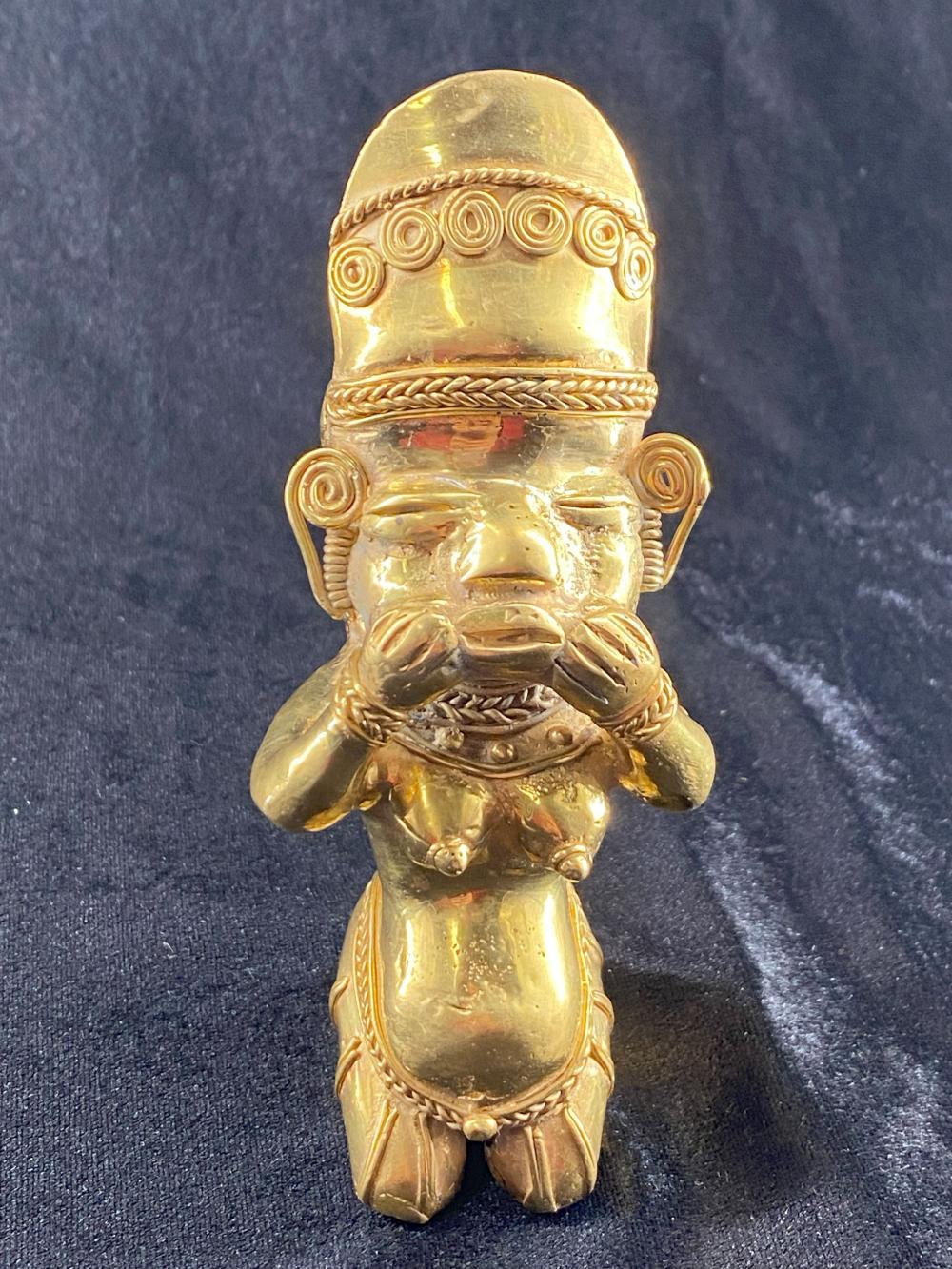
- Non-Inca cues: Beaded wire borders, intricate crescent pectorals, or maskettes often point to Lambayeque/Sicán or Chimú. Narrative scenes, fineline figuration, or large nose rings (narigueras) are usually non-Inca.
- Colonial-Andean medallions: Post-conquest devotional medals or pectorals may use Andean techniques but depict saints, crosses, or European heraldry; these can be period and collectible, but not pre-contact Inca.
Takeaway: Style and technique must be read together. A simple, thin, hammered disc with restrained design and punched lashing holes may be more plausibly Inca than an ornate cast, beaded-edge disc.
Originality: Diagnostic Features, Testing Methods, and Fakes
Diagnostic Features of Ancient Sheet-Gold
- Thickness variation: Subtle irregularity in hand-hammered sheet; slightly thicker near edges if folded or work-hardened.
- Tool marks: Non-uniform chasing lines; microscopic striations consistent with ancient tools rather than modern rotary burrs.
- Perforations: Punch directionality, burrs, slight tearing on the exit side; hole spacing may be irregular.
- Microcracking: Work-hardened areas, particularly near bends or repoussé relief, can show minute cracking consistent with age and repeated annealing cycles.
- Surface wear: Soft, diffused wear on raised points; absence of high-gloss machine polish; patination consistent with burial or long-term handling.
Testing and Analysis
- XRF (X-ray fluorescence): Non-destructive alloy measurement. Expect high Au with Ag and limited Cu for many Inca-attributed items. Elevated copper with surface enrichment suggests depletion-gilded tumbaga—more common in North Coast traditions. Modern pieces sometimes show atypical trace elements or karat levels tailored to modern standards (e.g., exact 18k with uniformity).
- Radiography: Reveals construction, joins, hidden repairs, and casting bubbles (casting is suspicious for many medallion forms that should be sheet-worked).
- Microscopy: Identifies modern rotary tool marks, sanding swirls, or casting skin; checks perforation burrs and edge treatments.
- Metallography (if sampling is permitted): Cross-sectional analysis can confirm depletion gilding gradients or solder composition. Lead-tin, zinc-bearing brazes, or modern hard solders are red flags for pre-contact attributions.
- Comparative typology: Compare with accessioned, published examples in museum collections and credible early literature. Pay attention to findspots and proven collection histories.
Common Fakes and Reproductions
- Cast copies: Uniform thickness, rounded detail, surface porosity; seams or sprue remnants; artificially darkened crevices.
- Assembled pastiches: “Inca” label attached to Lambayeque-style crescents with modern chain; mismatched iconography.
- Tourist gilding: Base metal with surface plating; XRF reveals low Au bulk content beneath a thin plated layer.
- Over-polishing: Attempts to “improve” surface obliterate ancient tool marks; mirror-like sheen not typical of excavated or long-held pieces.
A realistic attribution review pathway combines documentary provenance, stylistic assessment by a Pre-Columbian specialist, and non-destructive analytical testing. None alone is decisive.
Legal and Ethical Considerations
- National patrimony: Peru and other Andean nations designate pre-Columbian artifacts as national property. Export without authorization is typically illegal; many pieces outside source countries require documentation proving lawful export before patrimony laws took effect or lawful removal under permits.
- International frameworks: Post-1970 acquisitions raise heightened risk under cultural property agreements. Import restrictions exist in many jurisdictions.
- Due diligence: Seek proof of ownership chain predating 1970; review old collection labels, invoices, photographs, exhibition catalogues, and publications. Be cautious of vague “old collection” claims without evidence.
- Repatriation risk: High-profile Inca gold items with weak provenance carry significant seizure and restitution risk, affecting value and marketability.
- Ethical collecting: Prioritize documented, legally circulated objects; avoid freshly surfaced items and those with altered or falsified histories.
In valuation, strong, transparent provenance may outweigh minor condition issues; weak provenance can render a piece unmarketable, regardless of beauty or presumed age.
Condition, Conservation, and Handling
Condition Factors
- Structural integrity: Cracks near perforations, folds, or repoussé elements; work-hardened, embrittled zones.
- Corrosion and accretions: Copper-bearing alloys may show green/black corrosion; soil/mineral accretions may be present and can be informative.
- Repairs: Old staples, tabs, or discreet rivets may be period; modern solders, epoxies, and reinforcement plates impact both originality assessment and value.
- Surface: Over-cleaning and polishing reduce scholarly value by erasing microscopic evidence of manufacture and age.
Conservation Best Practices
- Handling: Wear nitrile gloves; support the entire surface with a padded tray; avoid flexing thin sheet.
- Cleaning: Do not polish. Dry, minimal cleaning only by a trained conservator; avoid acids, abrasives, ultrasonic baths, and commercial jewelry cleaners.
- Storage: Inert, acid-free materials; padded supports to prevent deformation; stable relative humidity for copper-bearing alloys; avoid sulfurous environments.
- Display: UV-filtered, low-light conditions; vibration-free mounts that support weight evenly; ensure reversibility of any mounting hardware.
Documentation: Maintain high-resolution, raking-light photography and detailed condition notes; these aid both conservation planning and valuation.
Valuation and Market Context
Rarity and Legality
- Unambiguous Inca gold medallions are exceptionally rare on the open market; many are in institutional collections or subject to potential claims. This rarity can imply high theoretical value but real-world liquidity constraints.
Determinants of Value
- Cultural attribution: Secure Inca attribution (as opposed to “Inca style” or “Andean, pre-Columbian”) commands a premium—but only with robust evidence.
- Provenance depth: Published, exhibited, or documented pre-1970 provenance significantly raises value and reduces legal risk.
- Iconographic importance: Solar imagery, imperial emblems, or elite regalia forms can enhance desirability—provided they align with Inca style and technique.
- Condition and completeness: Intact, unwarped sheet with original perforations and minimal invasive repair is preferred; visible modern solder or plating lowers value.
- Scale and craftsmanship: Larger discs with refined hammering and crisp, ancient tooling command more.
Market Reality
- With airtight provenance, comparable Andean gold pectorals from northern Peru have achieved strong auction outcomes; however, the market is selective, and institutions often outcompete private buyers for top-tier pieces. Items without documentation or with ambiguous attributions may be unsaleable at reputable venues and carry significant forfeiture risk.
Professional Appraisal
- Engage a Pre-Columbian specialist and, where possible, a conservation scientist for XRF and imaging. A multi-expert report that integrates stylistic, technical, and legal findings provides the most credible valuation.
Practical Checklist: Inca Gold Medallion Appraisal
- Identify form and function:
- Is it a thin, hammered sheet with punched lashing holes (pectoral/headdress), or a cast object?
- Examine style:
- Minimalist geometry and solar motifs favor Inca; beaded edges/crescents suggest Lambayeque; figurative narrative likely non-Inca.
- Inspect manufacture:
- Look for hammering, annealing signs, edge folding, ancient tool marks; avoid pieces with modern solder joins or machine-polished surfaces.
- Test the alloy (XRF):
- Record Au/Ag/Cu; watch for depletion-gilded surfaces or modern plating; flag modern solders.
- Assess condition:
- Note cracks, repairs, corrosion, and deformation; avoid polishing.
- Build provenance:
- Gather pre-1970 documentation, old labels, photos, publications, and ownership chain.
- Legal review:
- Verify lawful export/import status and potential patrimony claims before valuation.
- Consult specialists:
- Obtain opinions from a Pre-Columbian scholar and conservation scientist; integrate results into a written report.
- Decide venue:
- With strong provenance, consider established auction houses or private placement; without it, reconsider sale.
FAQ
Q: How pure should a documented Inca gold medallion be? A: Many Inca-attributed items test as high-karat gold (often 18–22k with some silver). Elevated copper content and surface-enriched gilding are more typical of earlier North Coast traditions, though overlap exists. Alloy alone cannot prove attribution.
Q: Can I legally sell an Inca gold medallion in my possession? A: Only if you can demonstrate clear, lawful provenance and export. Many source countries claim ownership of pre-Columbian artifacts. Before selling, obtain legal advice and verify documentation predating key cultural property restrictions.
Q: Is XRF testing enough to document the piece? A: No. XRF is essential for alloy screening and detecting plating or modern solders, but originality requires combined stylistic analysis, construction study, imaging, and robust provenance.
Q: How can I tell Inca from Chimú or Lambayeque? A: Inca favors thin hammered sheet, restrained design, and abstract geometry; Chimú/Lambayeque often feature crescents, beaded borders, maskettes, and more elaborate ornament. Assess the piece alongside known, published comparanda.
Q: Should I clean or polish the medallion before appraisal? A: Do not polish. Polishing destroys microscopic evidence vital for attribution review and can reduce value. Leave any cleaning to a professional conservator using reversible, minimal methods.