Note: We couldn’t find enough auction records that directly match Polish 20th-Century Souvenir Spoon Guide to publish a defensible price table. If you are valuing a specific item, include its maker, model, material, photos, and condition so the search can be narrowed.
What similar items actually sold for
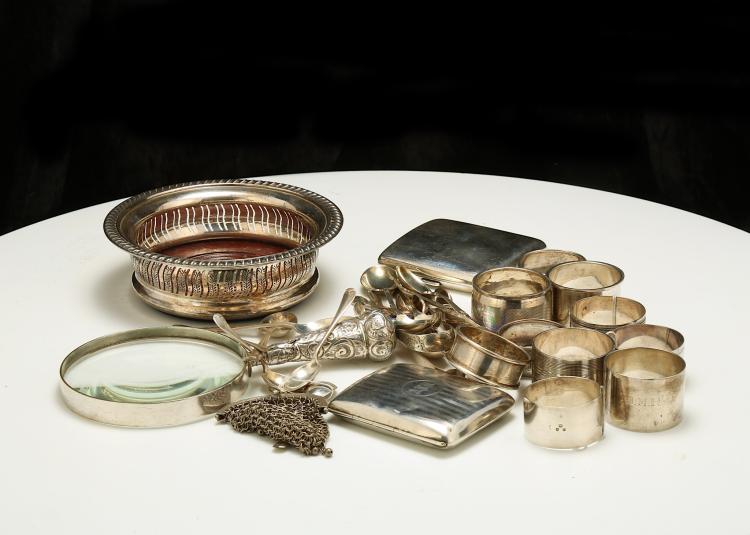
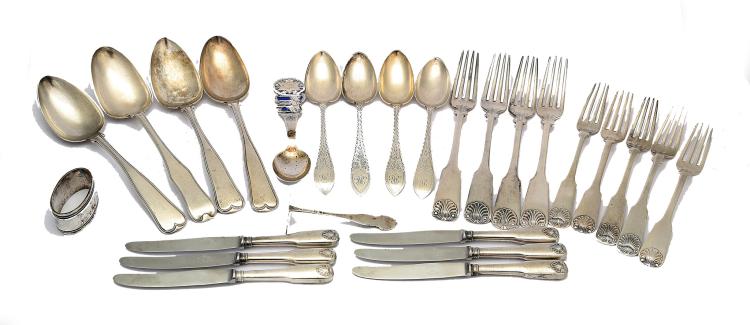
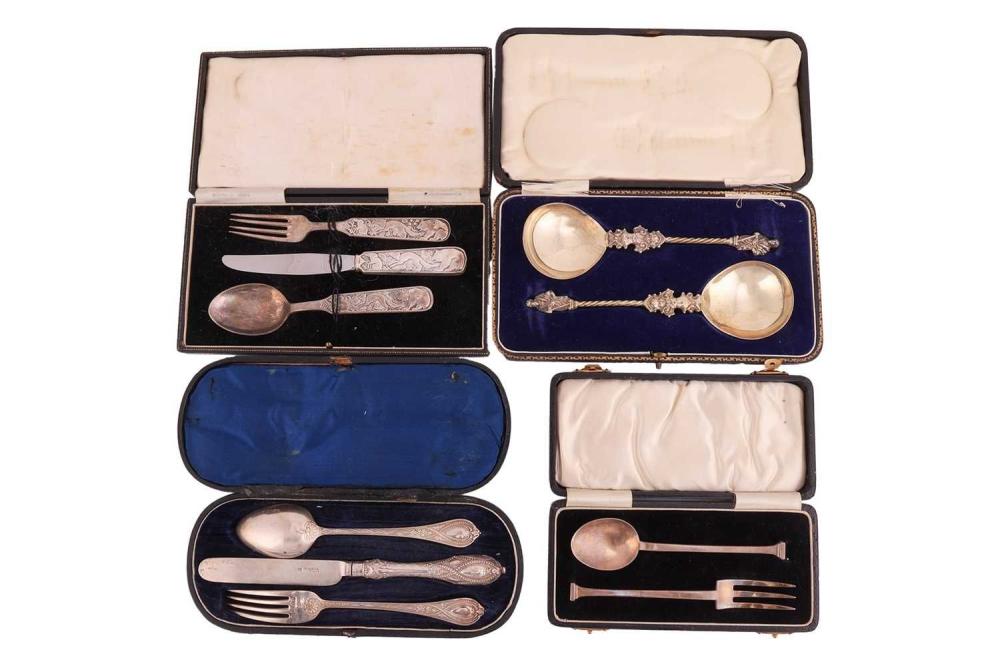
To help ground this guide in real market activity, here are recent example auction comps from Appraisily’s internal database. These matched sales are market context only, not an object estimate or identification, and they do not guarantee a price for your specific a polish origin circa 20th century souvenir spoon.
Shown GBP range: GBP 270-GBP 442. Median of these 3 GBP examples: GBP 412.
How these auction records were verified
Each row retains its exact source URL, lot identity, retrieval time, access result, and immutable record hash. Inspect the public comparable provenance record.
Disclosure: prices are shown as reported by auction houses and are provided for appraisal context. Learn more in our editorial policy.
Free instant estimate
Not sure if your item is worth appraising? Let us take a look.
Upload a photo, tell us what you know, and get a free first read. If a full appraisal makes sense, we will say so.
Free. No card needed. Takes about two minutes.
A Polish Origin Circa 20th Century Souvenir Spoon
A modest souvenir spoon can be packed with history. For pieces of Polish origin from the 20th century, design, metallurgy, and markings reflect political change, industry, and tourism across a turbulent century. This guide gives a focused framework to identify, date, authenticate, and appraise a Polish souvenir spoon, with special attention to hallmarks and construction details valued by collectors and appraisers.
What Collectors Mean by “Polish Souvenir Spoon”
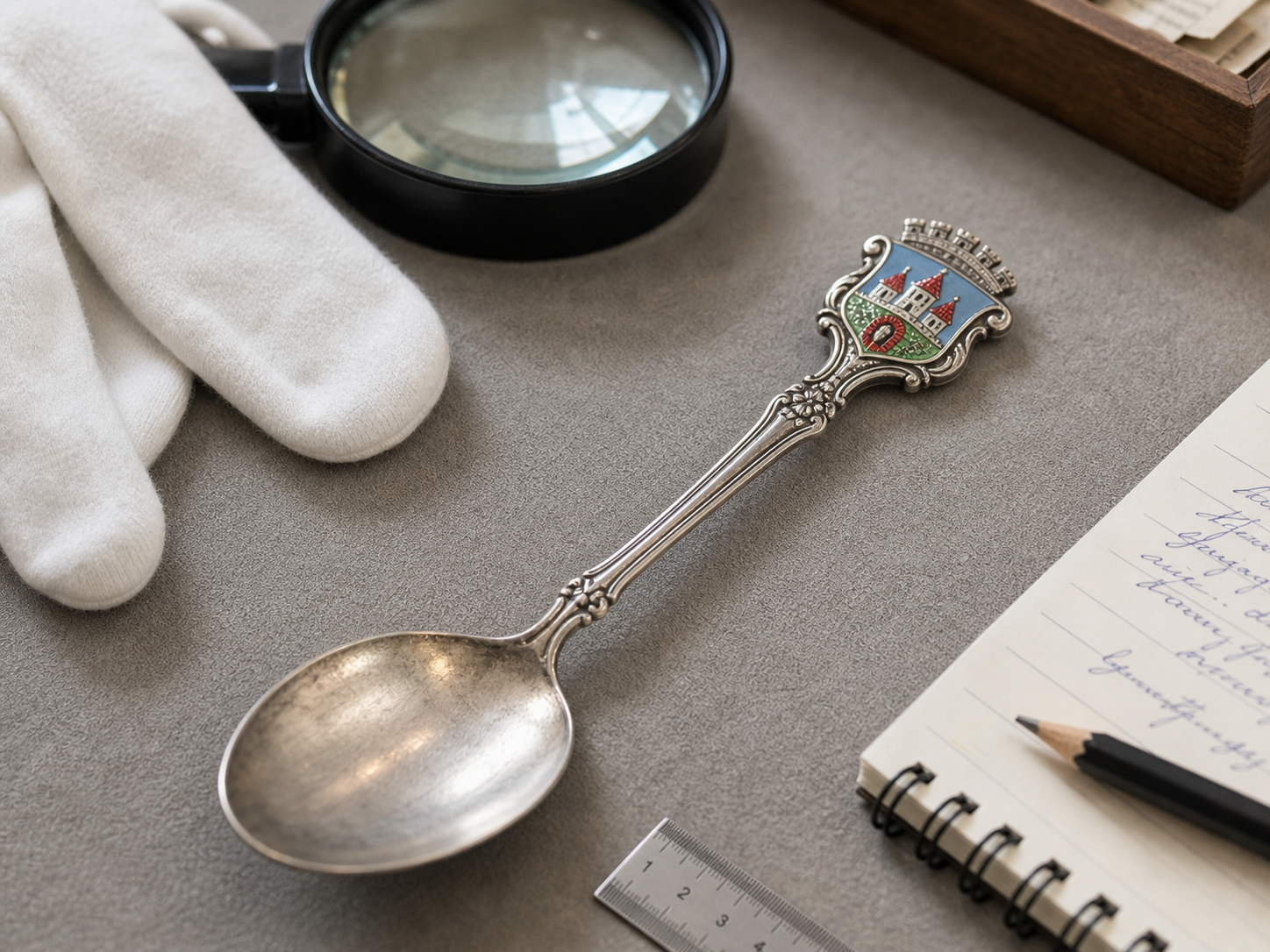
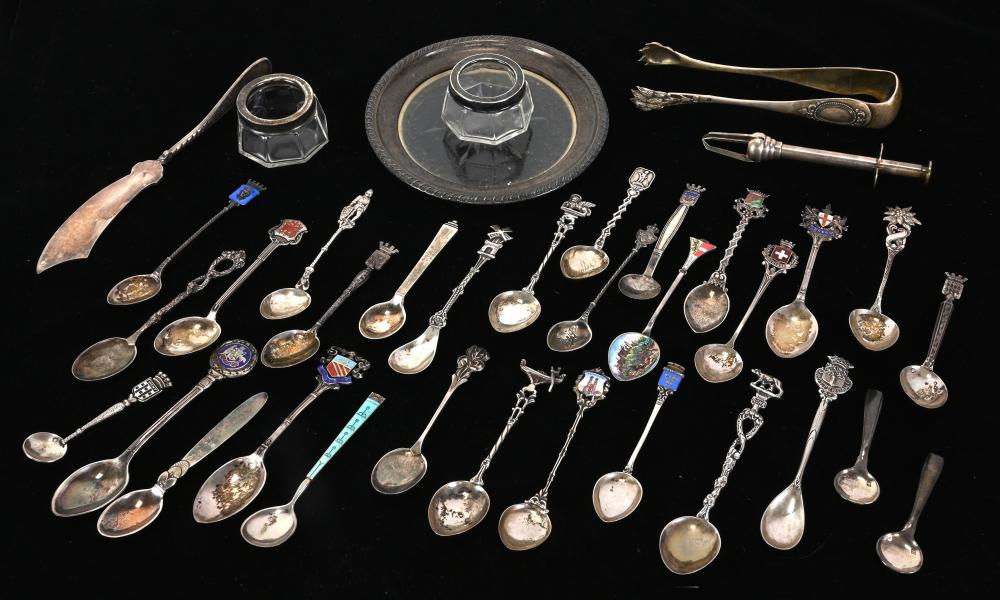
In collecting parlance, a Polish souvenir spoon is a small, usually decorative spoon commemorating a Polish city, region, landmark, or emblem, intended for tourists or as a keepsake. Common features include:
- City crests and enamel shields (Warszawa/Warsaw mermaid, Kraków’s fortified gate, Gdańsk’s double crosses, Poznań’s goat crest, Lwów/Lviv and Wilno/Vilnius in prewar contexts)
- National symbols (the White Eagle—Orzeł Biały—sometimes crowned, sometimes not)
- Architectural or scenic bowls (Wawel Castle, Sukiennice/Cloth Hall, Gdańsk Crane, Tatra mountains, Zakopane folk motifs)
- Figural finials (eagles, mermaids, highlanders/Górale, coats of arms), twisted stems, and gilt-washed bowls
Size varies from demitasse (9–11 cm) to teaspoon (12–14 cm) and dessert/serving sizes (16–18 cm). Materials span solid silver, silver-alloy standards, silver plate on nickel silver (alpacca), brass, and, from mid-century, stainless examples. Many incorporate colored enamel shields.
Production spans distinct phases:
- Late 19th to WWI (Partition era): Territories under Russian, Austro-Hungarian, and German control; marks and styles follow those systems. Tourist demand rises for city views and national emblems.
- Interwar (1918–1939): Independent Poland; patriotic motifs surge, crowned eagle reappears, quality souvenir trade expands. Warsaw and Kraków firms produce both plated and solid silver wares.
- WWII and immediate post-war: Scarcer civilian production; later, state consolidation of firms.
- PRL era (People’s Republic of Poland, 1945–1989): The state emblem loses the crown; export-oriented souvenirs increase, sometimes on plated or stainless blanks. Later 20th century sees mass-produced enamel-shield spoons for the diaspora and tourists.
- Post-1989: Crown returns to the eagle; modern souvenirs proliferate, including reproductions of older motifs.
While some spoons were made abroad for sale in Poland (or for export markets), a substantial number were designed or assembled domestically by well-known Warsaw and regional firms.
Dating by Design and Iconography
Iconography can quickly narrow the time frame, especially for 20th-century Poland where emblems changed with politics.
The eagle’s crown:
- Crowned White Eagle most commonly indicates interwar (1918–1939) or post-1989. If art deco lines and crisp hand-engraving appear alongside a crowned eagle, think interwar.
- Uncrowned eagle suggests PRL era (roughly 1945–1989). If the shield’s typography is modern sans serif and the enamel colors flat and uniform, mid- to late-20th century is likely.
City names and borders:
- Lwów (Polish) and Wilno (Polish) on prewar pieces; postwar Polish spoons rarely reference these cities as Polish locales (they are Lviv, Ukraine and Vilnius, Lithuania after border changes), but modern tourist spoons made outside Poland might still use heritage names.
- “Warszawa,” “Kraków,” “Gdańsk,” “Poznań,” and “Zakopane” are persistent favorites. “Danzig” indicates German context or export.
Enamel shields and style:
- Thick, fired enamel with slight unevenness and fine wire divisions (cloisonné) leans earlier and higher quality; thin, uniform, glossy enamel with printed-looking details tends to be later.
- Twisted stems, cast figural finials, and bowls engraved with panoramic scenes are classic from roughly 1890–1930. Laser-precise engraving and etched fonts point to late 20th century onward.
Inscriptions:
- “Pamiątka z …” or “Na pamiątkę” (“Souvenir from …” or “In remembrance”) appear across the century. Hand-cut script and serif lettering are earlier; machine-engraved sans-serif and all-caps often indicate later production.
- English “POLAND” added to marks suggests export intent (commonly post-1960s).
Use iconography as a first pass, then confirm with metal and hallmarks.
Metals and Polish-Related Marks Explained
Understanding metals is fundamental to both identification and valuation.
Solid silver and fineness:
- In Central Europe, 800, 830, 835, and 900 fineness are common; Polish silver spoons often bear “800,” “830,” or “835.” A “900” is less common but seen on higher-quality export or earlier pieces.
- The word “PRÓBA” (assay/standard) with a number can appear on Polish pieces. Historically, first standard ~.940, second ~.875, third ~.800; in practice, you’ll most often see numerical fineness or “PRÓBA” + number. The exact system evolved; use accompanying maker marks and office marks to triangulate.
- Assay office and state marks vary by era. Expect different hallmarks for Partition-era pieces (e.g., Austrian Diana head with a number, German crescent and crown with “800/835,” Russian “84” zolotnik with kokoshnik head for items from Russian-ruled areas pre-1918). Interwar and later Polish marks include state marks and maker’s initials; these can be small and lightly struck.
Plated wares and base metals:
- Alpacca/alpaka/alpakka (nickel silver) is common; look for “ALPAKA,” “ALPACCA,” “ALPAK,” sometimes with “METAL” or “NS” (nickel silver). These are frequently silver-plated, sometimes with “GALW.” (galwanicznie, electroplated) or “PLAQUÉ.”
- Brass or bronze-toned base metals appear on lower-end souvenirs, often with simple enamels.
- Stainless (“NIERDZEWNA” or simply “STAINLESS”) occurs on late 20th-century souvenirs.
Polish makers and trade names to watch:
- Fraget (Bracia Fraget), Warsaw: Electroplate and higher-end tablewares; marks include “FRAGET,” “FRAGET W WARSZAWIE,” “PLAQUÉ,” sometimes “N” for nickel line. Popular pre-WWII tourist pieces may bear Fraget plate marks.
- Norblin i Ska (with T. Werner), Warsaw: Large metalworks and electroplate; marks like “NORBLIN I SKA,” “NORBLIN,” occasionally “GALW.”
- Henneberg (J.A. Henneberg), Warsaw: Plate and silver goods, similar trade marks.
- HEFRA: Postwar consolidation of Warsaw silverware firms; “HEFRA” marks are common on PRL-era flatware and occasional souvenir items, usually plated or lower silver fineness.
- Regional or smaller workshops may show initials within cartouches; cross-reference with Polish silver directories when possible.
Export and mixed-origin souvenirs:
- A fair number of 20th-century spoons bearing Polish shields were produced in Germany or elsewhere for the tourist trade. German hallmarking (crescent moon and crown + “800/835/925”) alongside a Polish city shield is not unusual. The spoon is still of “Polish subject,” but origin is technically German.
- Post-1960s export spoons may combine foreign blanks with locally applied enamel shields.
When reading marks, use a loupe and good light. Look for clusters: fineness, maker’s initials, state/assay symbol, and sometimes a town mark. On plated pieces, trade names are often more prominent than any fineness indicator.
Free instant estimate. No card needed. A specialist review is only the next step if the evidence supports it.