
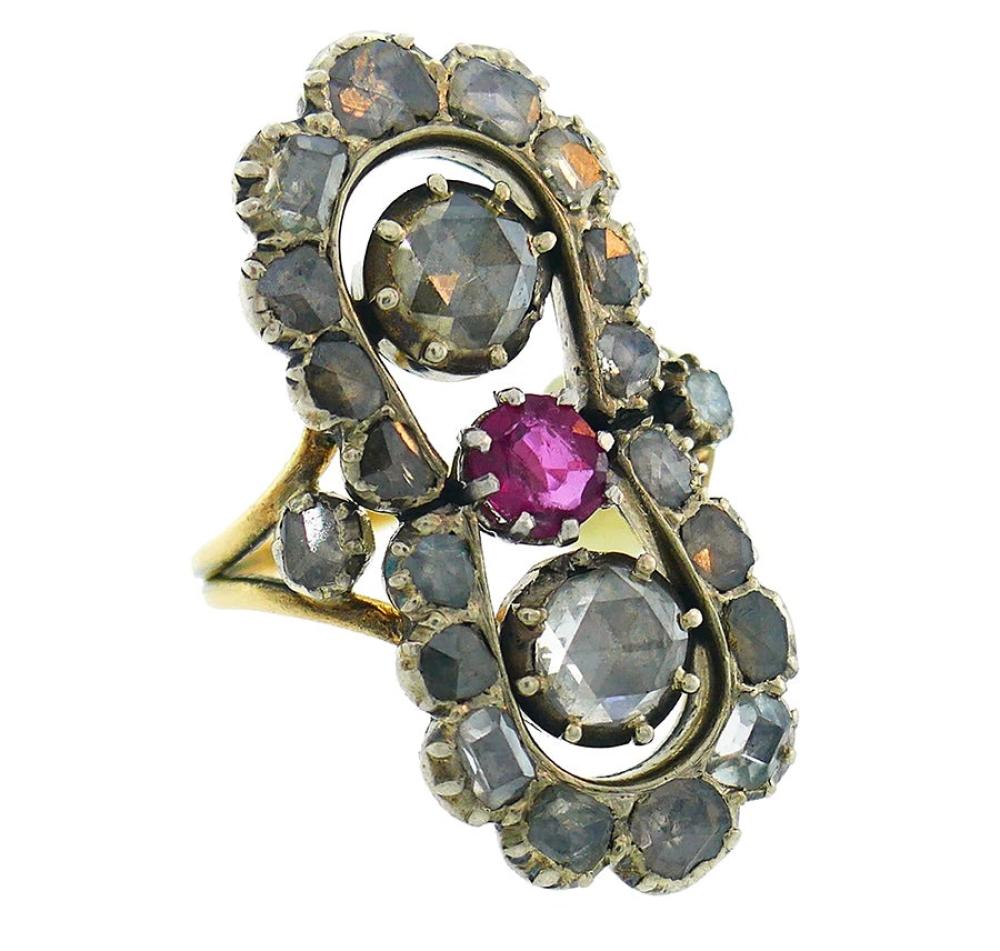
Scrap or resale?
Scrap is melt math: weight times a gold or platinum quote. Resale is a named, complete piece a jewelry buyer can relist. The same estate drawer can hold both.
The strongest tells are visible from a photo:
- A readable maker, assay, or legal origin mark on the piece.
- Matching punches across a pair or suite.
- Stones that fit the seat and look period-correct.
- Stable prongs, clasps, and links.
- A period silhouette buyers currently bid: Cartier retro, Deco brooch, Victorian bangle.
A hallmark is a lead, not proof. Readable identity plus a complete form is what moves a piece off melt.
Start with the marks
1) Verify hallmarks before touching metal assumptions.
Find maker marks, assay marks, and legal origin marks inside the shank, on the clasp, and at the gallery. A readable name usually supports resale more than a color-based karat guess.
Missing or recut punches can mean a replaced shank or a later setting.
Check first: Photograph the interior shank and any assay punch before you weigh the ring.
2) Match marks across matching sets.
If a pair, set, or cluster shares the same marks and fabrication, buyers usually bid it as one lot. Mixed punches force sorting and often drop the first offer.
Check first: Line the earrings and brooch together and compare the punch on each piece.
Metal, stones, and construction
3) Read metal composition from structure, not color alone.
Color and plating can overstate purity. Check prongs, clasps, links, and junctions for a different metal at the high points.
Check first: Look at a worn edge or the inner clasp; yellow color on the face is not a karat test.
4) Evaluate solder lines as a history marker.
Clean, period-consistent joins can stay in the resale lane. Extra solder near a hallmark, or repeated bright joins, makes buyers price repair risk first.
Check first: Tilt the bangle under raking light and look for extra color at the joins, especially near any mark.
5) Inspect stone age and setting fit first.
Judge cut, seat, and wear before chasing carat claims. A modern recut or a loose stone can cut resale even in high-karat metal.
Check first: Look at the girdle and the seat; a later brilliant in an older gallery is a different ring.
6) Confirm prong quality under magnification.
Prongs show era and later work. Clean, even tips are a better resale signal than over-polished metal with retipped stress. Weak prongs raise restoration cost.
Check first: Magnify the tips and look for flattened or split metal before you assume the stone is secure.
7) Stress-test clasp and hinge movement.
A secure catch is what makes a brooch or bracelet listable. Play that risks breakage usually discounts the bid because the next seller has to repair first.
Check first: Open and close the catch once; if the hinge binds or the pin does not seat, treat the brooch as a repair lot.
8) Read inscriptions before drafting conclusions.
Monograms, initials, and dates can support a story, or they can date a later rework. Clear engraving with a plausible date usually helps resale language more than a worn scribble.
Check first: Read the reverse of the ring or locket before you treat the inscription as clutter.
9) Test completeness and pairing logic.
Pairs, suites, and boxed sets convert better than isolated fragments. A missing earring or bracelet forces the buyer to price a broken design.
Check first: Count the suite against the box: necklace, bracelet, and both earrings, or treat it as singles.
10) Read mounting stress as a resale cost.
Bent, thin, or unevenly worn links create unknown bench time. A stable mount is cheaper to relist.
Check first: Flex the bracelet and look at the inner links; stretched or knife-edge wear is a prep cost.
11) Translate style demand into a final confidence score.
Premium metal can still sell in a low range if the silhouette is out of demand. Check period, outline, and recent named sales before you accept melt.
Check first: Name the period and the outline (retro Cartier, Deco brooch, Victorian bangle) before you weigh the piece.
Typical estate-drawer scenario
A typical estate drawer holds a 14k link bracelet next to a signed brooch, both tagged as old gold. Weigh the bracelet and you may be near melt if the links are tired.
The signed Cartier, or a matching earring-and-brooch set, is the resale object.
People also ask about estate jewelry
How do I know if estate jewelry is mostly scrap?
Use the 11 checks above. If the piece has no readable maker, stones that do not sit in the setting, or only tired links, the offer usually sits near melt.
Can hallmark differences change resale value?
Why do matching sets sell for more than singles?
What resale clues matter for vintage brooches?
Can mixed-metal jewelry beat a simple scrap estimate?
References
- Auction records cited above: Nadeau's Auction Gallery, Freeman's | Hindman, STAIR, Hindman, Kodner Galleries, Pook & Pook Inc., Wettmann, Phillips, Potomack Company, Clarke Auction Gallery, and Weschler's.
- Appraisily editorial policy and sourcing standards: /editorial-policy/.