
Antique Quilt Value: appraisal and value basics
Antique Quilt Value research should start with identification, condition, provenance, and item-specific market evidence. Use this guide to compare the signals that matter before paying for a formal appraisal or deciding whether to sell.
Quilt value is usually decided in the construction details, not in the first glance. A bold pattern can attract attention, but collectors and appraisers price old quilts by stitching quality, fabric age, edge integrity, provenance, and whether repairs have changed the original handwork.
This guide is built as a fast screening tool for owners, heirs, and dealers. Start with the auction table, then walk through the 10 clues in order. If your quilt keeps lining up with stronger market evidence and cleaner construction, you have a much better case for a paid appraisal before selling or insuring it.
What similar items actually sold for
To help ground this guide in real market activity, here are recent example auction comps from Appraisily’s internal database. These are educational comparables (not a guarantee of price for your specific item).
Shown USD range: USD 250-USD 5,000. Median of these 5 USD examples: USD 300.
| Image | Description | Auction house | Date | Lot | Reported price realized |
|---|---|---|---|---|---|
 |
ANTIQUE AMERICAN HANDMADE TEXTILE QUILT | Burchard Galleries Inc | 2026-01-18 | 1130 | USD 250 |
 |
ANTIQUE AMERICAN HAND STITCHED TEXTILE QUILT | Burchard Galleries Inc | 2026-01-18 | 1131 | USD 275 |
 |
Important Antique Palatial Patchwork Quilt Textile | Akiba Galleries | 2023-08-29 | 109 | USD 5,000 |
![Auction comp thumbnail for [ANTIQUE QUILT] “String Pattern”, African American Quilt. C... (Potter & Potter Auctions Inc., Lot 563)](https://assets.appraisily.com/articles/10-quilt-clues-that-affect-antique-textile-value/auctions/auction-potter-potter-auctions-inc-563.jpg) |
[ANTIQUE QUILT] “String Pattern”, African American Quilt. C... | Potter & Potter Auctions Inc. | 2025-06-05 | 563 | USD 300 |
![Auction comp thumbnail for [ANTIQUE QUILT] Young Man's Fancy Quilt. Circa 1930s. Cotto... (Potter & Potter Auctions Inc., Lot 559)](https://assets.appraisily.com/articles/10-quilt-clues-that-affect-antique-textile-value/auctions/auction-potter-potter-auctions-inc-559.jpg) |
[ANTIQUE QUILT] Young Man's Fancy Quilt. Circa 1930s. Cotto... | Potter & Potter Auctions Inc. | 2025-06-05 | 559 | USD 325 |
Disclosure: prices are shown as reported by auction houses and are provided for appraisal context. Learn more in our editorial policy.
Free instant estimate
Not sure if your item is worth appraising? Let us take a look.
Upload a photo, tell us what you know, and get a free first read. If a full appraisal makes sense, we will say so.
Free. No card needed. Takes about two minutes.
10 quilt clues that affect antique textile value
- Stitch size and rhythm tell you how much handwork is really present. Tiny, consistent hand quilting generally helps value because it signals labor and skill, but bigger stitches are not automatically bad if they are honest and period-appropriate. Watch for abrupt stitch changes that suggest later repairs or machine finishing added to an older top.
- The backing fabric matters almost as much as the front. Collectors want the back because it confirms age, fabric type, and whether the quilt was re-backed. Older cottons, turkey reds, shirtings, and indigos can support an earlier story; broadcloth that feels too new can weaken it.
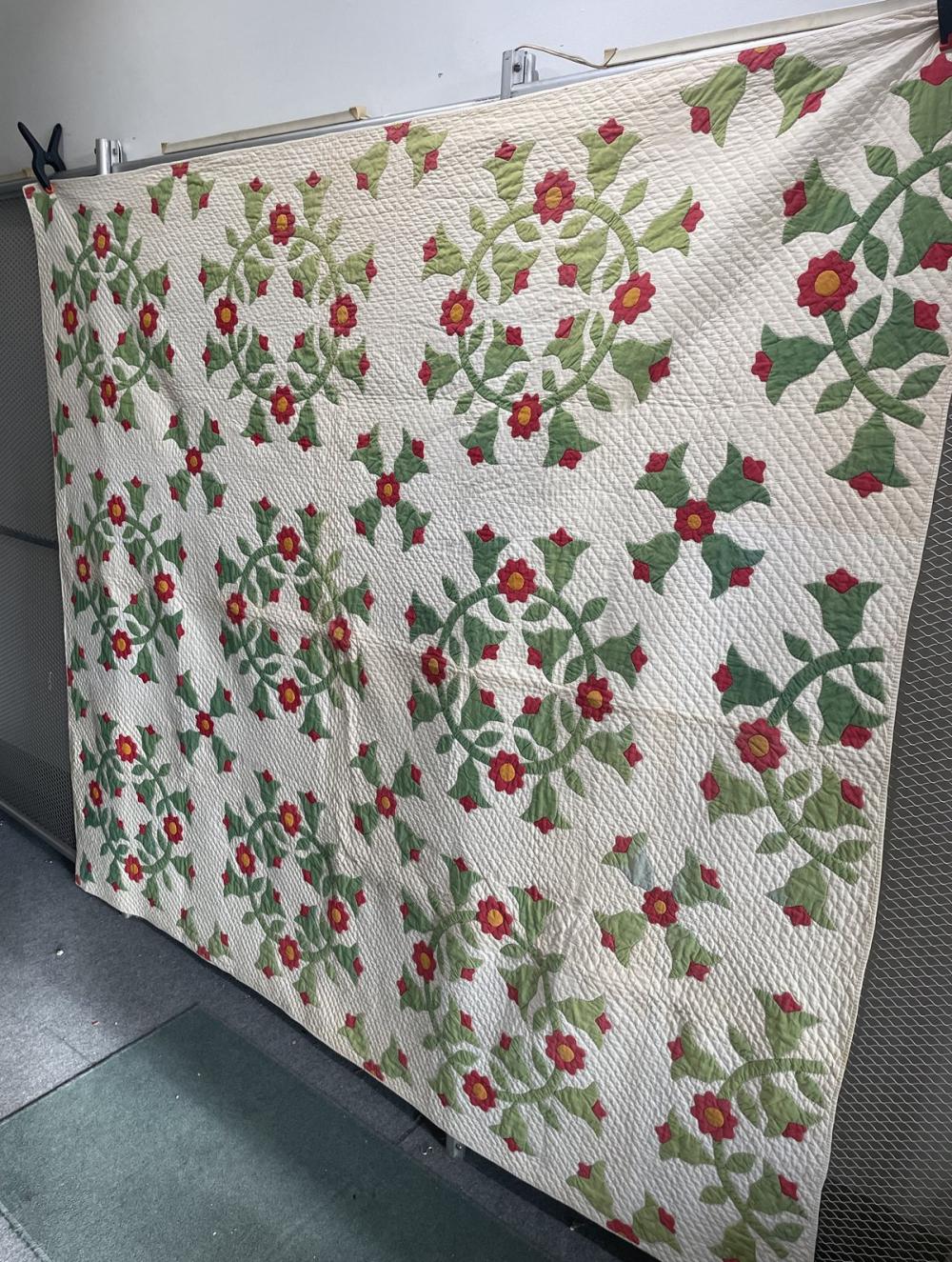
- Pattern rarity only helps when the execution is strong. Desirable names like Whig Rose, friendship, album, and unusual applique forms attract attention, but poor balance or weak quilting can still keep a quilt in a lower decorative band. The Mebane applique examples show how pattern alone does not create a four-figure result.
- Applique, scalloped edges, and prairie points need to look original. Appraisers check whether edge details were built into the original quilt or added later to freshen presentation. Clean, believable handwork is a plus; crisp modern stitching on a supposedly 19th-century edge is not.
- Wear should make sense for how the quilt was used. Honest fading, soft fold lines, and edge wear can be acceptable. Randomly bright front fabrics paired with a tired back often suggest replacement sections or heavy cleaning, which makes valuation harder to defend.
- Repairs are not fatal, but replacements move the needle. A stable old patch is different from a new border, rebound edge, or re-backed quilt. Once original materials are replaced, the quilt often trades more like a decorative textile than a fully intact period object.
- Size and use category affect the buyer pool. Crib quilts, wall-hanging folk pieces, and full-bed quilts do not draw the same audience. The Nazmiyal patchwork sale shows that a larger, displayable size can support a stronger result when other clues line up.
- Signed names, dates, and inscriptions can matter more than pattern. A stitched date, family name, presentation message, or school/community connection can shift a quilt out of the generic market. This is where the exceptional Lion Heart signatures quilt jumps well beyond the normal hundreds range.
- Regional or community attribution adds context collectors will pay for. Specific regional schools, community-made quilts, African American strip constructions, and documented friendship quilts can outperform similar-looking anonymous examples because the story is easier to explain and preserve.
- Market evidence have to live in the same condition tier. Do not compare your repaired, rebound quilt to a crisp family-recorded example with intact edges. The right comparison is the one that matches your quilt’s age, pattern type, size, and condition honesty, not the highest number you can find online.
What actually moves quilt value up or down
The strongest sales in this sample cluster around quilts that combine believable age with a clean story. Material Culture lot 109 at a value that must be established from current, topic-matched sales and Nazmiyal lot 1167 at a value that must be established from current, topic-matched sales sit above the more routine decorative results because they read as stronger complete objects, not just attractive fabric pieces. At the same time, One Source’s decorative and crazy-quilt results show that a quilt can be old, handmade, and still remain in the mid-hundreds when condition or desirability is more modest.
- Pattern desirability: friendship, album, applique, and unusual regional constructions often outperform generic patchwork.
- Originality: intact edges, original backing, and period fabrics support stronger values.
- Condition honesty: collectors forgive age more easily than hidden restoration or replacements.
- Provenance: names, dates, family letters, and community attribution can matter more than perfect condition.
- Presentation: quilts that display well and photograph clearly tend to be easier to market.
Visual gallery: market evidence and reference checks
Use these images to compare your quilt’s pattern family, edge treatment, and condition tier against the types of examples that actually sold.
Best photos to send for a quilt appraisal
Quilts are easy to undershoot in photos. Appraisers need construction and condition evidence, not just a single folded shot on a bed. Start with the checklist below, then add any stitched names, labels, or unusual repairs.
- Full front: confirms pattern, color balance, and overall symmetry.
- Full back: shows backing age, quilting lines, and possible replacement fabric.
- All corners and edges: catches binding loss, rebound fabric, and fraying.
- Stitch close-ups: helps distinguish hand quilting from later machine work.
- Names, dates, and labels: provenance often hides in the plainest details.
- Repair shots: document patches, tears, dye bleed, and areas of weakness.
FAQ: antique quilt appraisal
Do handmade quilts always sell for more than machine-stitched quilts?
Not always. Hand quilting helps when it is original and paired with strong fabrics, pattern quality, and believable age. But a later hand-stitched decorative quilt can still sell below an earlier machine-assisted example with stronger provenance or better condition.
What is the first thing an appraiser wants to see on an antique quilt?
Usually the full front, full back, corners, stitch close-ups, and any labels or names. Those views explain construction and condition faster than a styled room photo.
Does washing an old quilt hurt value?
It can. Washing can shift dyes, weaken seams, flatten quilting, and remove evidence that helps date the textile. Photograph first and ask before any cleaning if the quilt is fragile or potentially important.
How much does provenance matter for quilt value?
A lot when it is specific. Stitched names, family records, school or church connections, and community attribution can move a quilt out of the generic decorative market and into a more competitive collector lane.
When is a paid quilt appraisal worth it?
When several clues line up at once: early fabrics, convincing handwork, limited repairs, and market evidence that look genuinely comparable to your quilt. That is usually the point where a formal report protects you from underpricing.
Decision checklist: when to get a professional appraisal
Use this final gate after you review the clues and the market evidence. When three or more boxes are true, the quilt usually deserves a formal valuation for sale, insurance, donation, or estate work.
- The quilt still has believable original fabrics, backing, and edge treatment.
- Handwork and stitch rhythm look consistent instead of mixed with modern repairs.
- Any names, dates, or family records are photographed and legible.
- The closest comparable sales are in the same condition and pattern tier.
- You need a documented value before selling, donating, or insuring it.
Key takeaways
- Start with the back, corners, and stitching before you get attached to the pattern on the front.
- Comparable quilt sales in this sample mostly sit in the hundreds, with stronger examples pushing toward the upper hundreds.
- Documented provenance can move a quilt much more than a decorative pattern name alone.
- Repairs are acceptable when disclosed, but replacement fabrics and re-backing usually lower the collector-grade story.
References & data sources
- Appraisily internal auction results database for the 10 quilt market evidence summarized above.
- Market evidence from One Source Auctions, Hindman, Mebane Antique Auction, Material Culture, Asselmeier May Auctions, Potomack Company, and Nazmiyal Auctions.
- International Quilt Museum
- Smithsonian National Museum of American History quilt resources
Search variations collectors ask
Readers often Google:
- how much is an old handmade quilt worth
- do signed quilts sell for more
- how to tell if a quilt is hand quilted
- what photos do i need for a quilt appraisal
- does re-backing an antique quilt lower value
- friendship quilt value with names and dates
- crazy quilt value compared with applique quilts
- how to identify early quilt fabrics
- should i clean an antique quilt before selling
- quilt provenance clues that matter to appraisers
Each variation is addressed by the market evidence, clue list, photo checklist, and FAQ above.