What old Singer machines actually sell for
Most later black Singers sell as used machines.
19th-century treadle. A Singer treadle sewing machine catalogued as 19th century sold for $50.
Later treadle machines. A Singer treadle sewing machine sold for $16.
Another Singer treadle sewing machine sold for $90.
Featherweight, 1933–1960s. A Singer Featherweight sold for $280.
High-value in this set. Another Singer Featherweight sold for $290.
Serial number, model, cabinet, and whether it still sews are what separate a used machine from a collector example.
What similar items actually sold for
To help ground this guide in real market activity, here are recent example auction comps from Appraisily’s internal database. These matched sales are market context only, not an object estimate or identification, and they do not guarantee a price for your specific singer sewing machine.
Shown USD range: USD 11-USD 290. Median of these 12 USD examples: USD 65.
| Comparable | What sold | Auction house | Date | Lot | Source-reported amount |
|---|---|---|---|---|---|
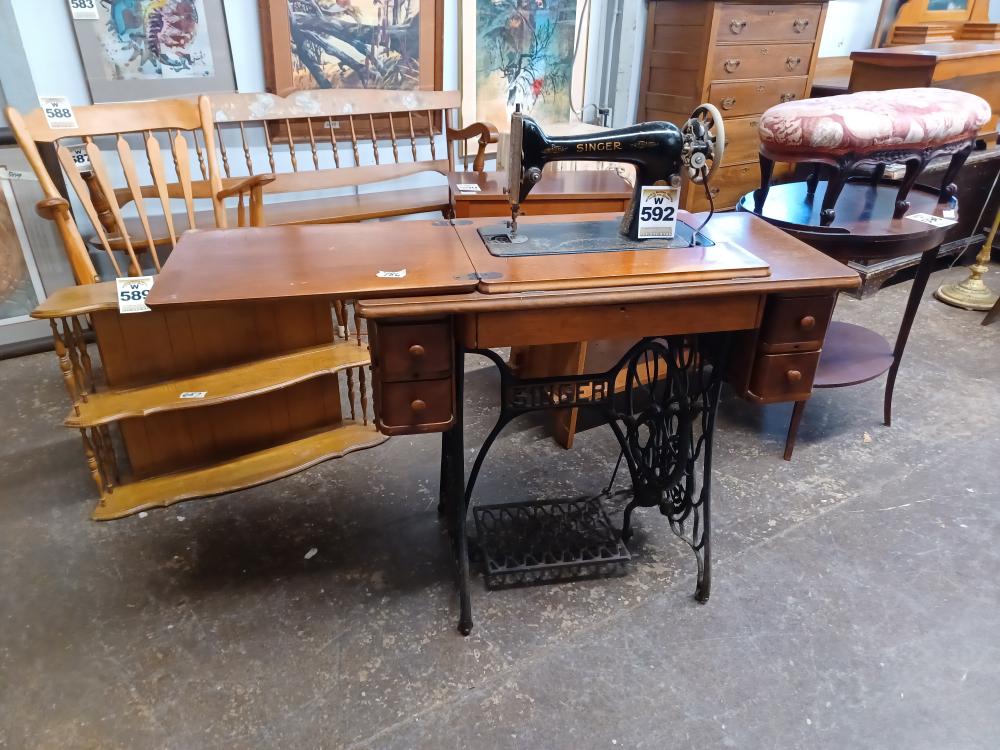 |
Singer Treadle Sewing Machine | Wehrly's Auction Service | 2022-11-29 | 592 | USD 16 (buyer’s-premium treatment unknown) |
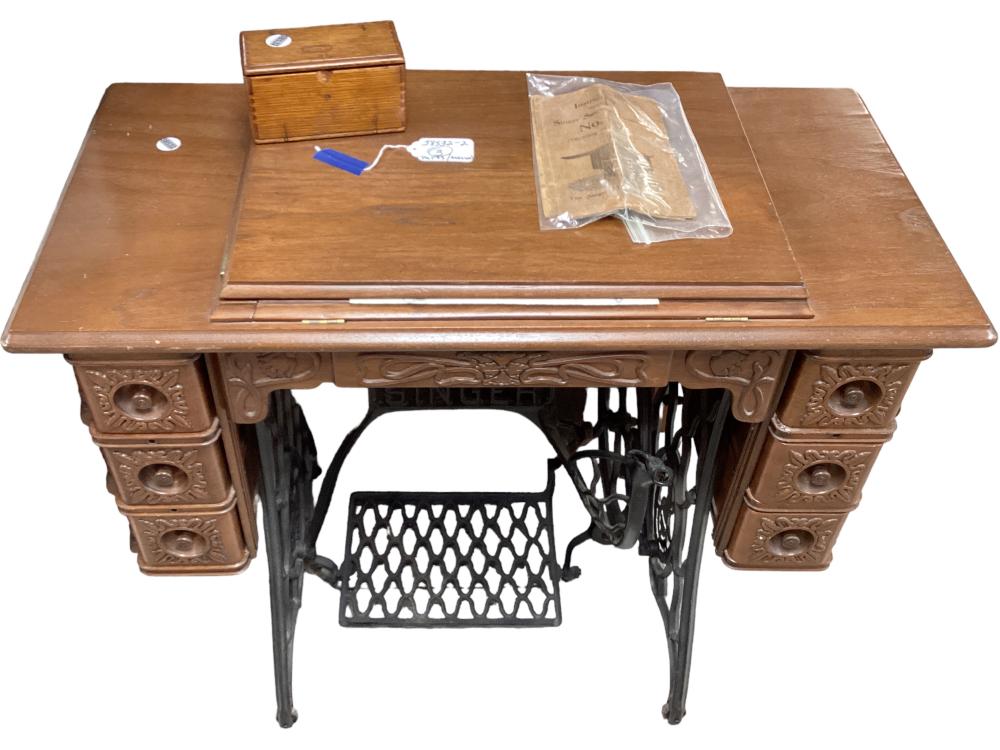 |
Singer Treadle Sewing Machine | Apple Tree Auction Center | 2023-08-17 | 3497 | USD 90 (buyer’s-premium treatment unknown) |
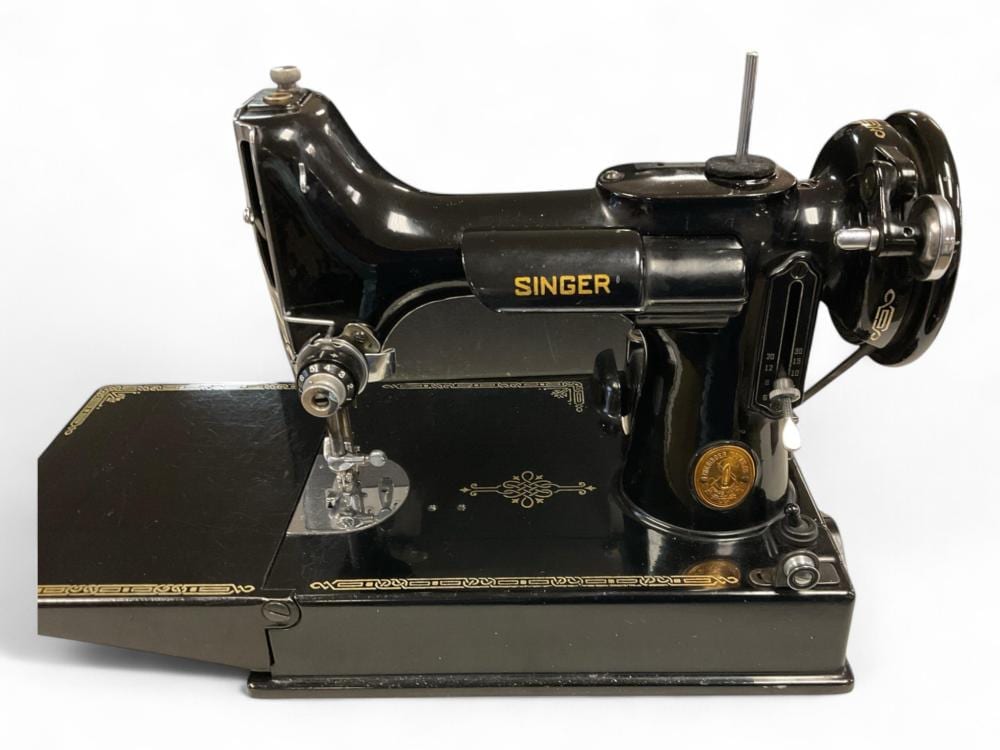 |
**Singer Featherweight Sewing Machine | Apple Tree Auction Center | 2025-05-01 | 4379 | USD 280 (buyer’s-premium treatment unknown) |
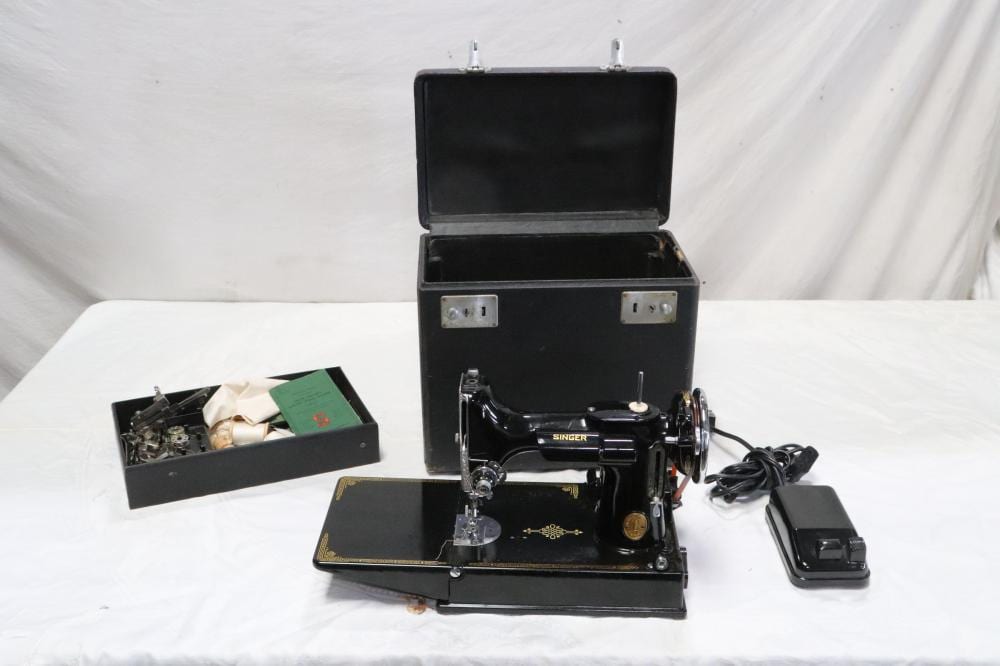 |
A Singer featherweight sewing machine | International Auction Gallery | 2024-02-12 | 49 | USD 290 (buyer’s-premium treatment unknown) |
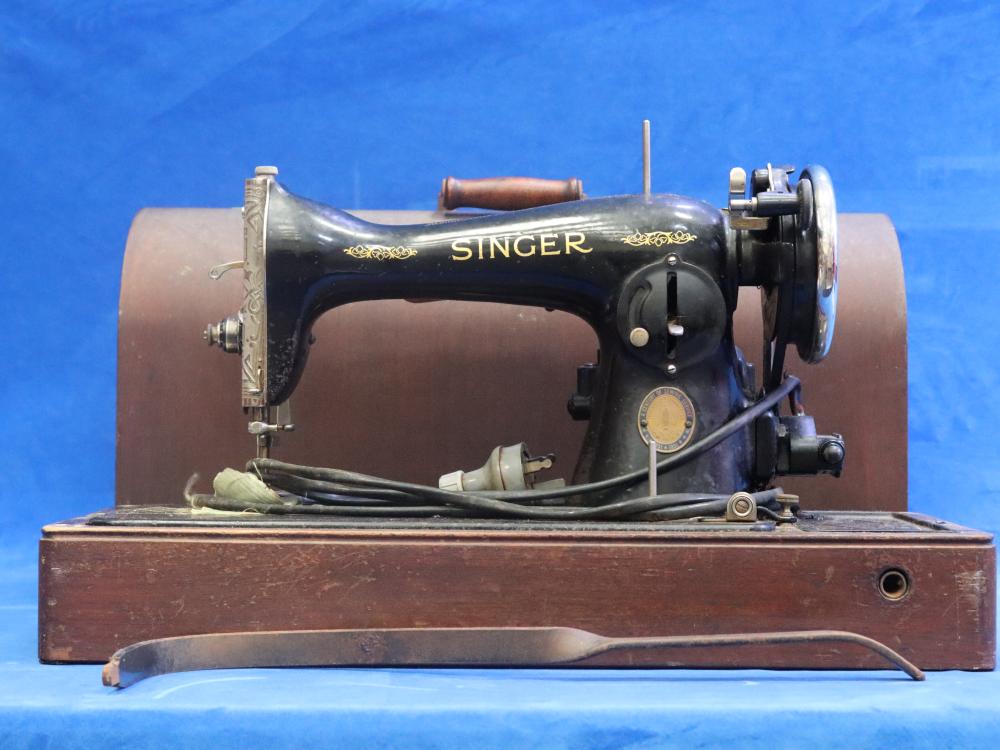 |
SINGER SEWING MACHINE IN CASE | Albion Antique Auction Centre | 2024-05-23 | 648 | AUD 25 (buyer’s-premium treatment unknown) |
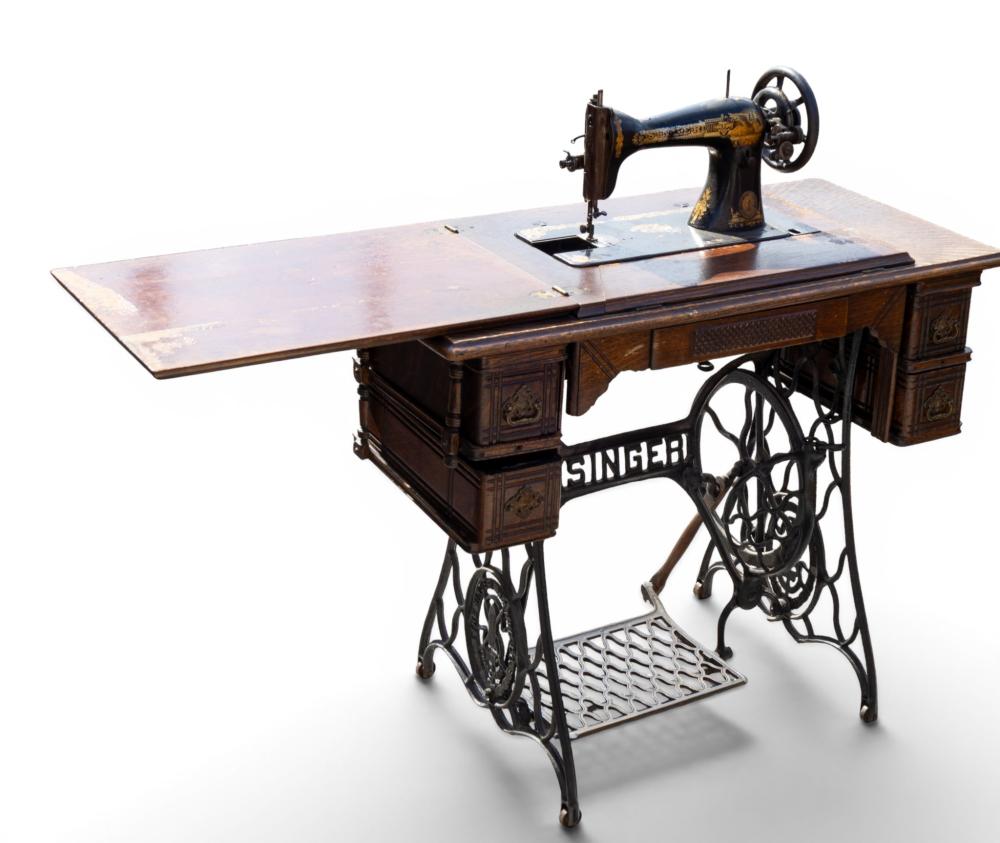 |
Antique Singer Sewing Machine | Keystone Auctions LLC | 2026-05-08 | 200E | USD 35 (buyer’s-premium treatment unknown) |
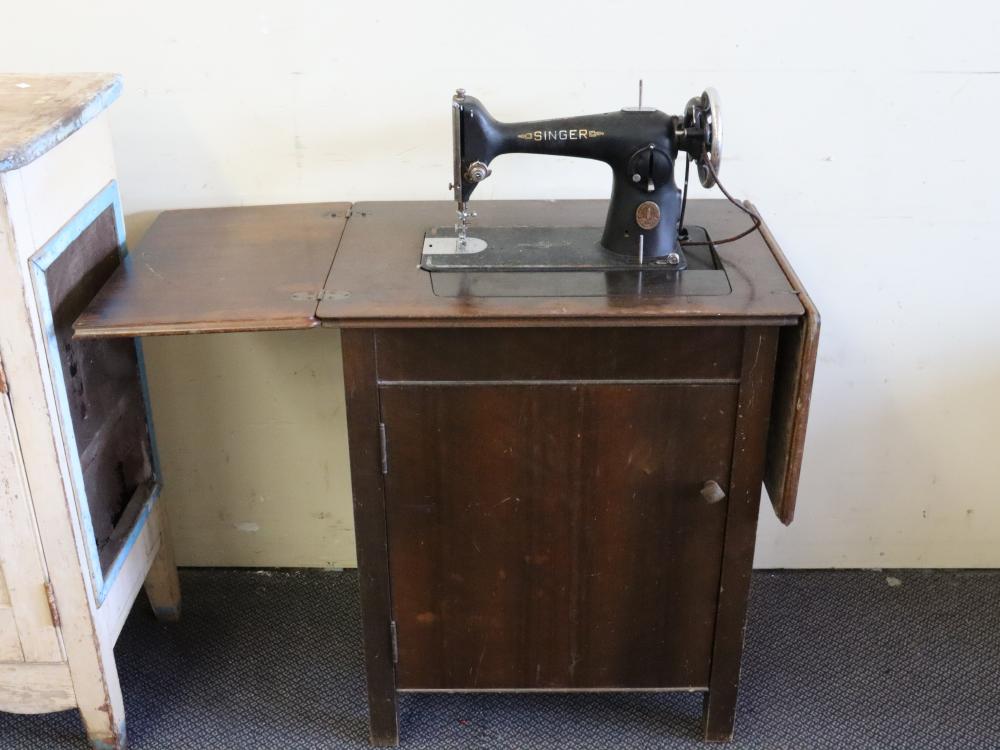 |
SINGER TREADLE SEWING MACHINE | Albion Antique Auction Centre | 2023-01-19 | 993 | AUD 30 (buyer’s-premium treatment unknown) |
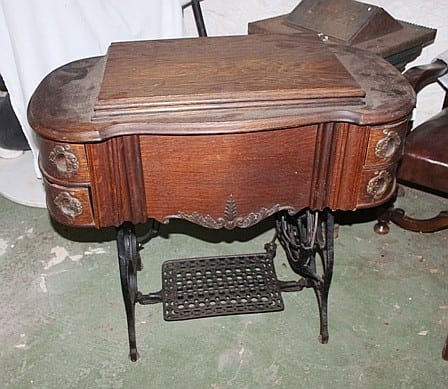 |
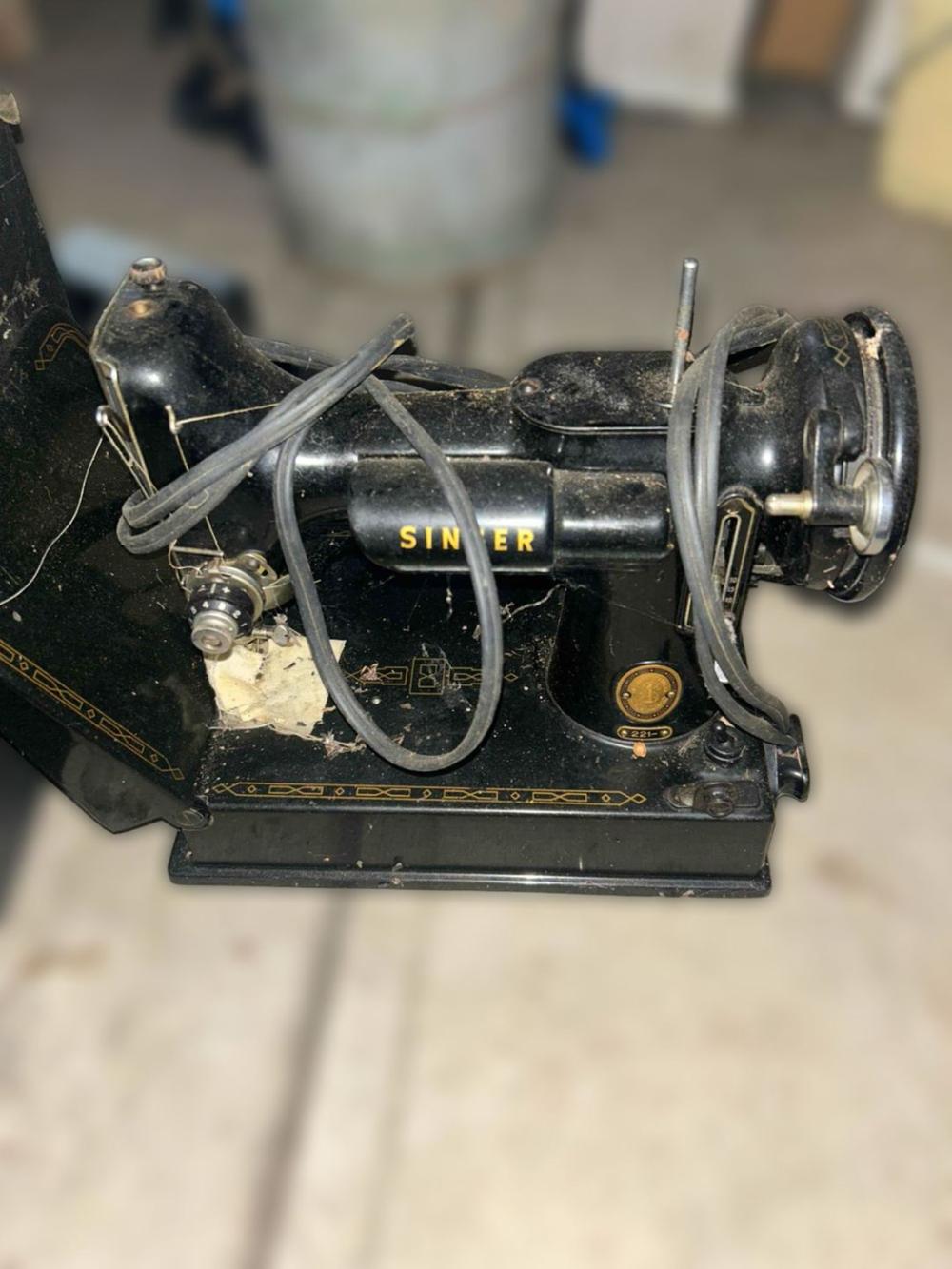
An Unusual Singer Sewing Machine | Ravenswick | 2015-01-18 | 289 | AUD 95 (buyer’s-premium treatment unknown) |
 |
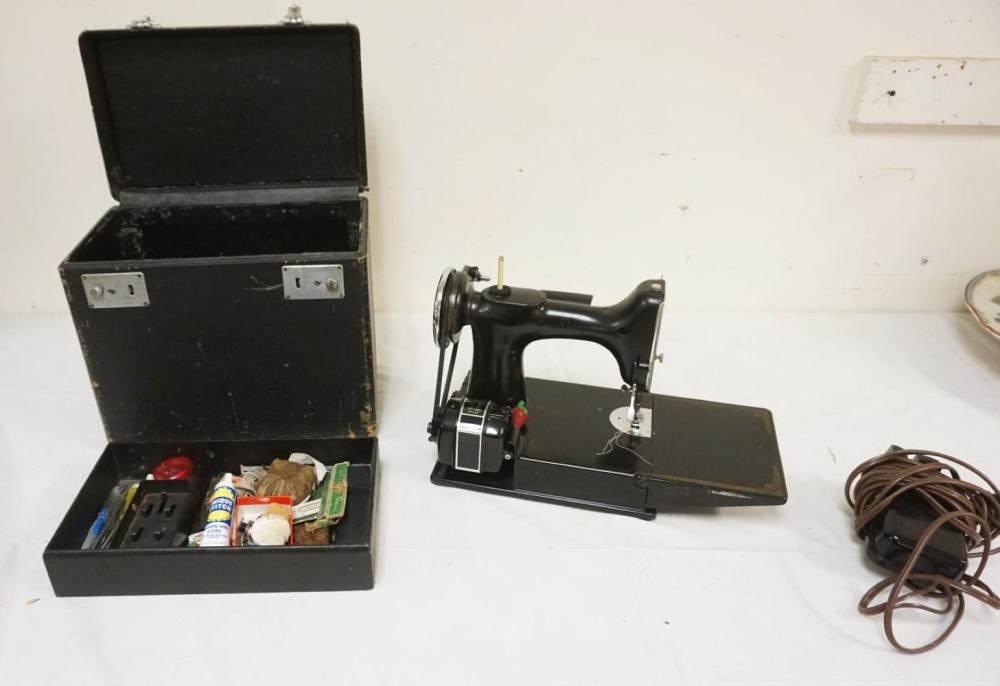
Antique Singer Sewing Machine | Aether Auctions | 2024-01-29 | 309 | USD 80 (buyer’s-premium treatment unknown) |
 |
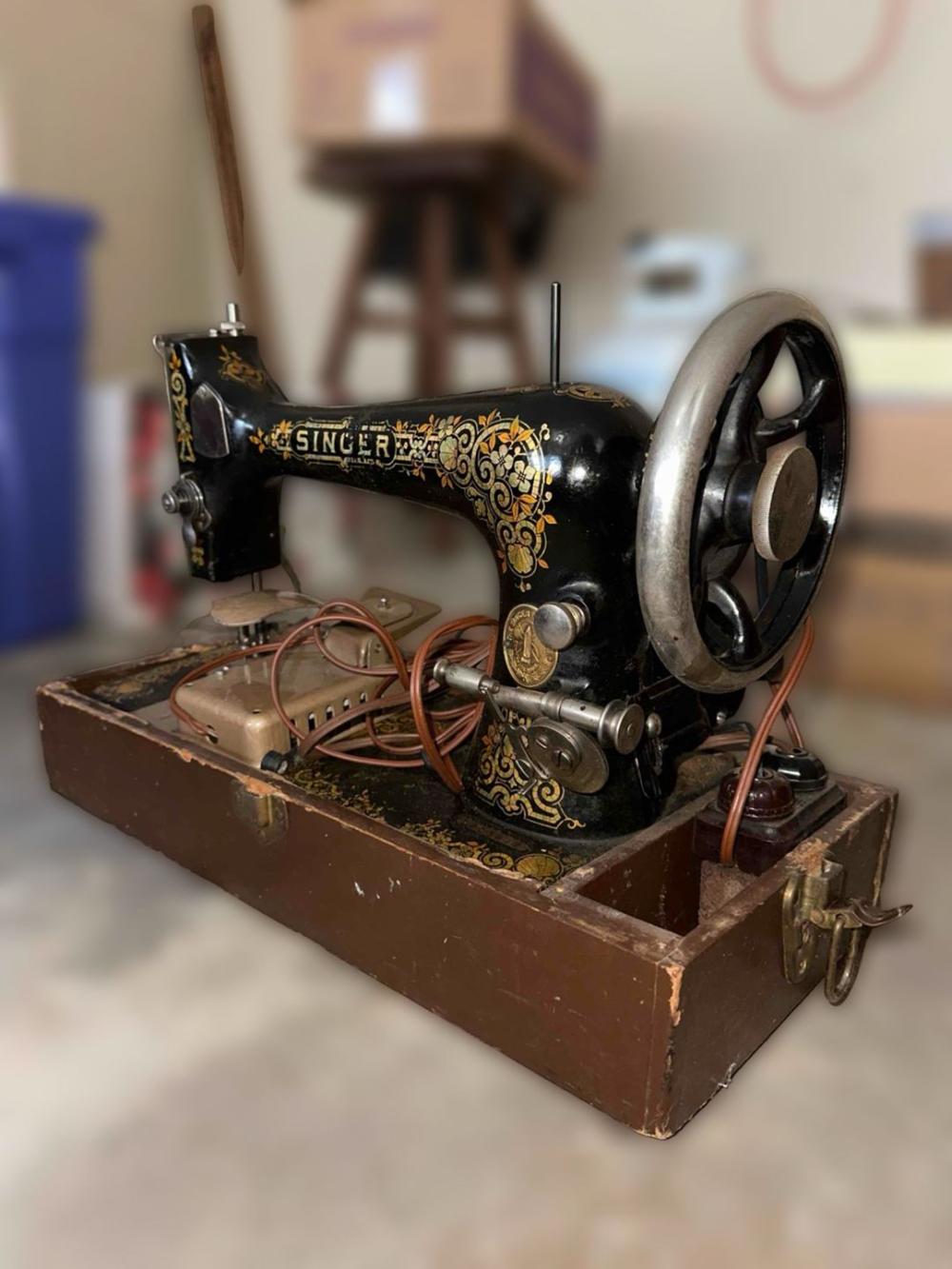
SINGER FEATHERWEIGHT SEWING MACHINE | Dennis Auction Service | 2023-12-15 | 1072 | USD 225 (buyer’s-premium treatment unknown) |
 |
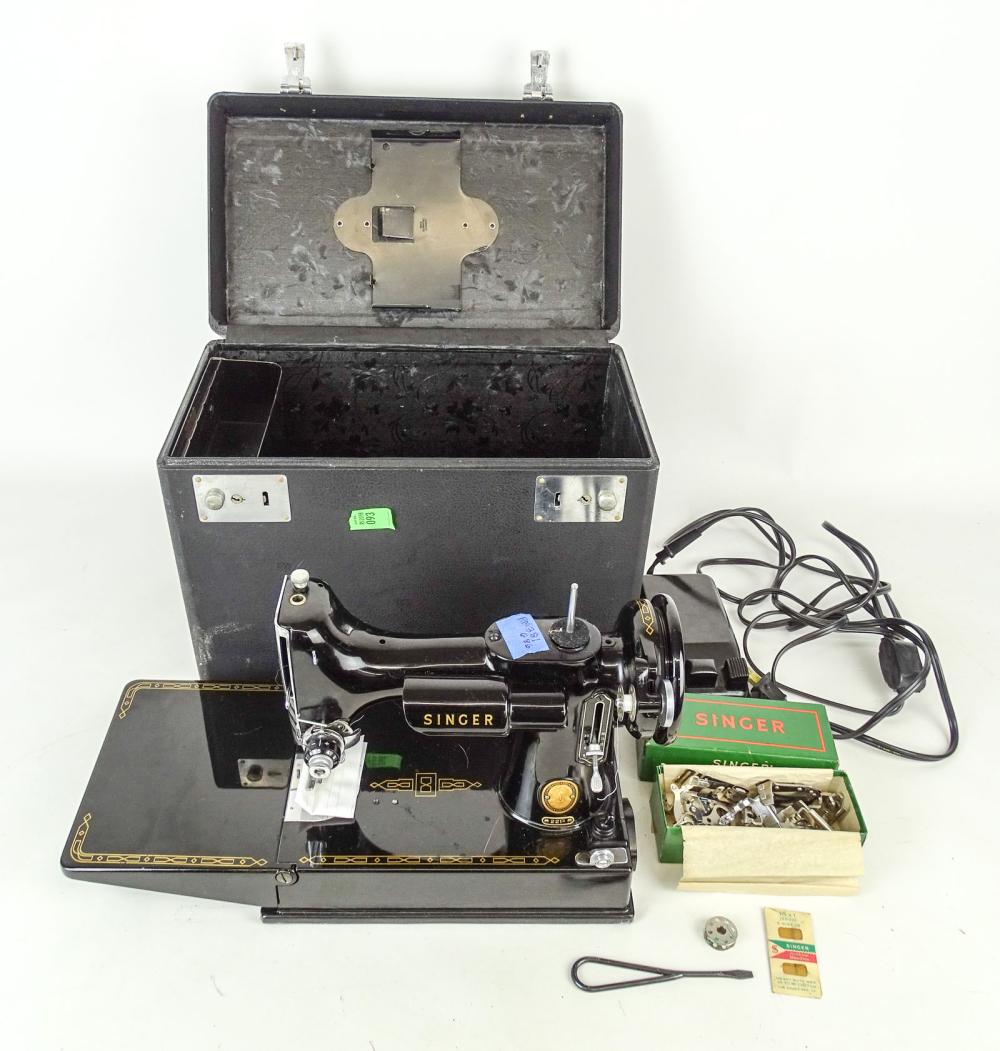
Antique Singer Sewing Machine | Aether Auctions | 2024-01-04 | 381 | USD 12 (buyer’s-premium treatment unknown) |
 |
SINGER FEATHERWEIGHT SEWING MACHINE | Copake Auction Inc. | 2025-11-22 | 528 | USD 225 (buyer’s-premium treatment unknown) |
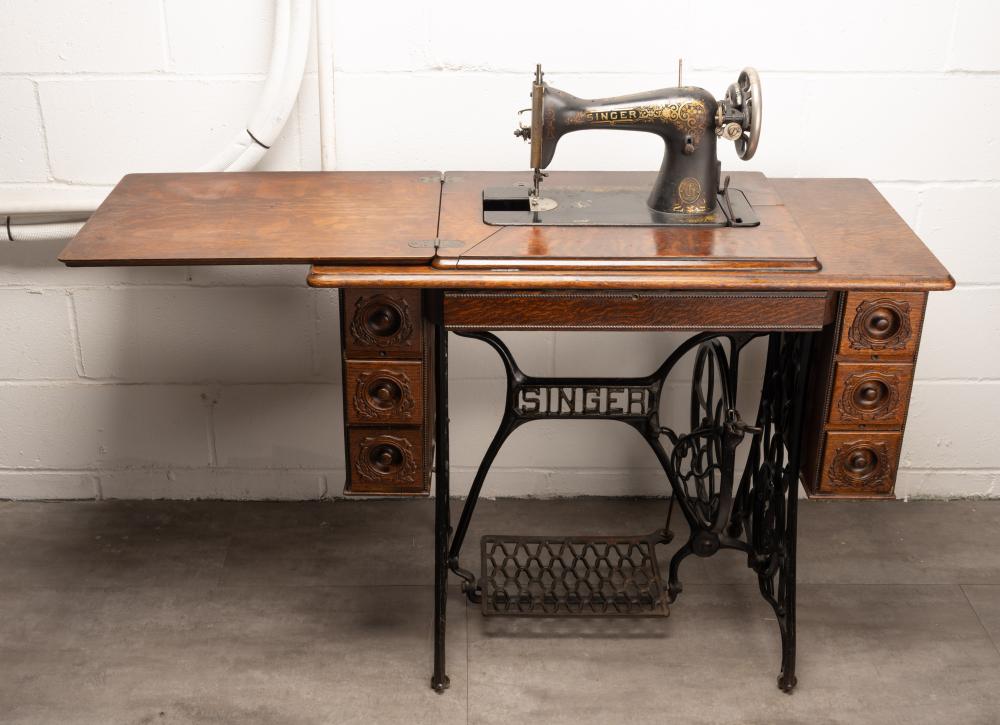 |
19th c. Singer Treadle Sewing Machine | Gold Coast Auctions | 2026-04-26 | 102 | USD 50 (buyer’s-premium treatment unknown) |
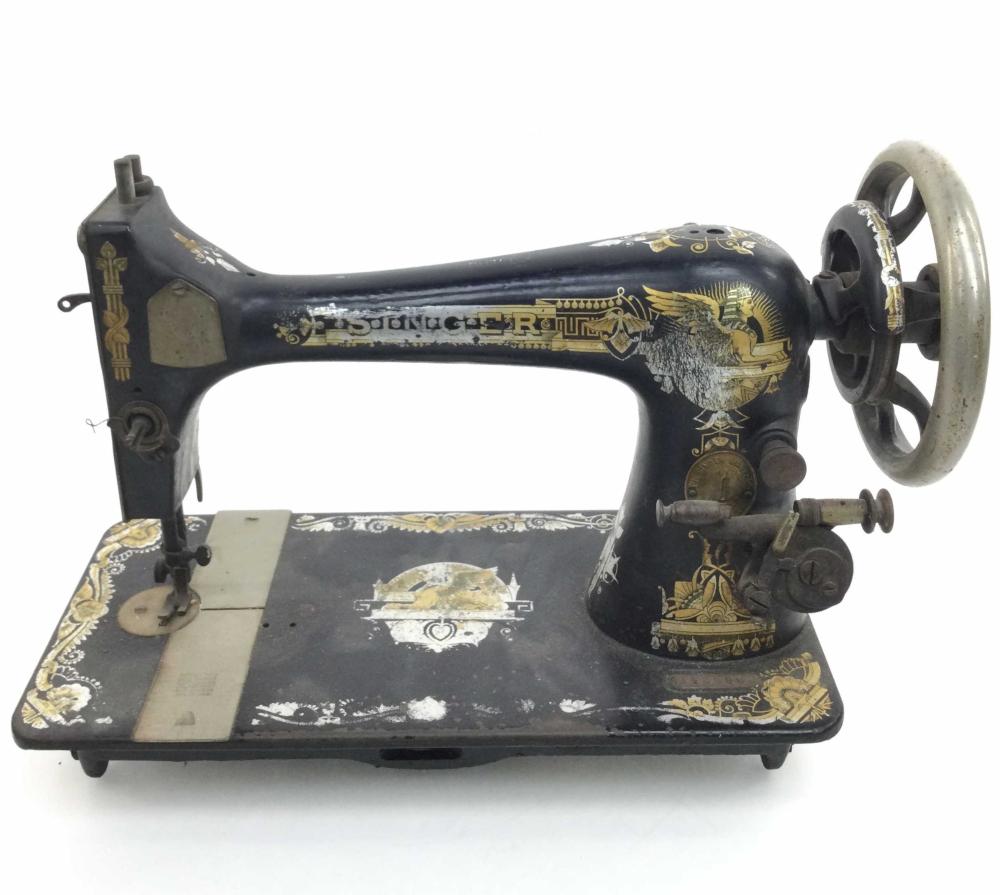 |
Antique Singer Sewing Machine | EJ'S Auction & Appraisal | 2023-12-30 | 2386 | USD 15 (buyer’s-premium treatment unknown) |
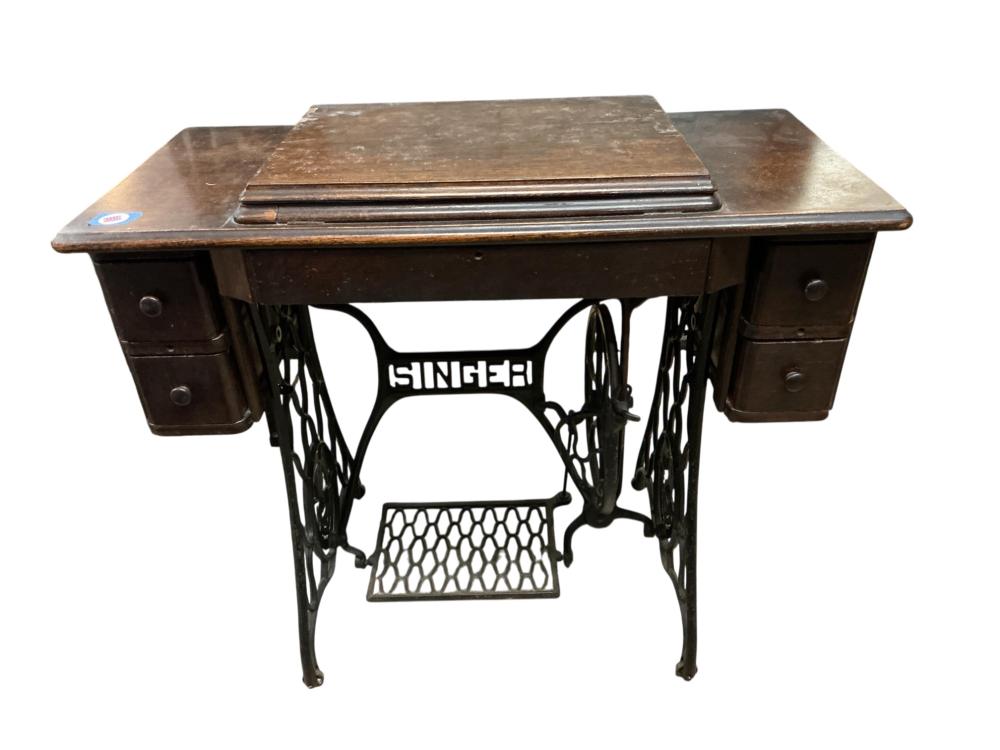 |
Antique Singer Treadle Sewing Machine & Cabinet | Apple Tree Auction Center | 2026-03-04 | 4092 | USD 11 (buyer’s-premium treatment unknown) |
How these auction records were verified
Each row retains its exact source URL, lot identity, retrieval time, access result, and immutable record hash. Inspect the public comparable provenance record.
Disclosure: prices are shown as reported by auction houses and are provided for appraisal context. Learn more in our editorial policy.
Page-specific auction evidence is shown only when exact, source-linked sale records pass the current provenance contract. Otherwise this guide displays an explicit no-evidence state. See Editorial policy.
Start here: identify the Singer before you price it
An old black Singer can be a sturdy sewing machine, an attractive cabinet piece, or a model collectors actively pursue. Those markets overlap, but they do not pay the same way. A Featherweight 221, 222K free-arm, Model 66, Model 201, Model 15, treadle machine, and later electric cabinet machine may look equally “vintage” to a casual seller while attracting very different buyers.
- Serial and model: Photograph the serial plate or stamped number, badge, stitch controls, motor tag, and any model label on the case or cabinet.
- Machine format: Note hand crank, treadle, portable electric, cabinet electric, Featherweight case, industrial head, or later domestic model before comparing comps.
- Decals and finish: Record Red Eye, Lotus, Sphinx, or other decal patterns, paint loss, gold wear, rust, repainting, and over-cleaning.
- Accessories: List case, wooden cabinet, treadle base, foot controller, attachments, bobbins, manuals, oil tin, keys, and original paperwork separately from the head.
- Working state: Confirm whether the hand wheel turns, needle bar moves, motor runs, belt is present, wiring is safe, and the machine stitches under load.
For broader context, compare with old sewing machine identification, antique sewing machine value, and old sewing machines value.
What is an old Singer sewing machine worth?
Use the serial number to narrow the model and production period, then compare sold examples that match the machine in front of you. An asking price shows what a seller hopes to receive; a completed auction result shows that a buyer and seller actually met, though auction terms and fees can still differ.
Use Singer history to identify the machine—not to set the price
Isaac Merritt Singer founded the I.M. Singer & Company in 1851, revolutionizing home sewing with machines that were more practical and accessible than earlier designs. The company quickly grew to dominate the global sewing machine market, producing millions of machines across dozens of models.
Singer Sewing Machine Historical Timeline
-
1851
Singer Company Founded
Isaac Merritt Singer establishes I.M. Singer & Company, introducing innovations that make sewing machines more practical for home use.
-
1856
First Family Machine
Singer introduces the first successful "Family" sewing machine, making home sewing more accessible.
-
1889
Singer Model 66 Introduced
The iconic Model 66 is released, becoming one of the most successful sewing machines ever made, with production continuing into the 1950s.
-
1933
Featherweight 221 Debuts
The lightweight, portable Featherweight model is introduced, becoming one of the most collectible Singer machines today.
-
1950s-60s
Transition to Modern Machines
Singer begins the shift from all-metal construction to incorporating plastic components, marking the end of the "vintage" era.
Find the serial number and confirm the physical clues
Finding the Serial Number
Every Singer sewing machine has a unique serial number that can tell you both the model and when it was manufactured. The location varies by model:
- On treadle machines and early electric models, look for the serial number on the front of the machine, often on a small plate
- On later models, check the bottom or back of the machine
- Some models have the serial number stamped on the motor or light assembly
Once you’ve located the serial number, you can use the Singer Serial Number Database from the International Sewing Machine Collectors’ Society (ISMACS) to determine your machine’s manufacturing date.
Common Vintage Singer Models
Understanding which model you have is crucial for determining value:
- Singer Model 66: First introduced in 1900, known for its “Red Eye” decals
- Singer Model 99: A 3/4-size version of the Model 66, popular for its portability
- Singer Model 221 (Featherweight): Highly collectible portable machine from 1933
- Singer Model 201: Known as Singer’s finest straight-stitch machine
- Singer Model 15: Long production run with numerous variants from 1895 onward
- Singer Treadle Machines: Various models mounted in cast-iron stands with foot pedal operation
Match the factors buyers can see and test
Model and Rarity
Some Singer models are inherently more valuable than others due to their rarity, design features, or collector demand:
- The Singer Featherweight 221 is among the most collectible, particularly the rare black models
- Specialty models like the Singer 222K (free-arm Featherweight) command premium prices
- Machines with unique decal patterns or limited production runs can be worth more
- Early models from the 1850s-1870s with hand-crank mechanisms are valuable for their historical significance
Condition Assessment
Condition is perhaps the most significant factor in determining value:
Singer Sewing Machine Condition Checklist
Use this checklist to assess your machine's condition
- Machine runs smoothly when hand wheel is turned
- Motor runs properly (for electric models)
- Original decals are intact and not significantly worn
- No significant rust or damage to the metal components
- Wooden cabinet or case is in good condition (if applicable)
- Original attachments and accessories are present
- Has original manual and paperwork
Completeness
Complete, model-correct accessories can strengthen buyer interest, but their effect is not a fixed premium. Photograph and list each of these separately:
- Original foot controller
- Bobbin case and bobbins
- Presser feet and attachments
- Original case or cabinet
- Instruction manual and paperwork
- Original belt (for belt-driven models)
Originality and Restoration
Generally, collectors prefer machines in original condition with minimal restoration:
- Light cleaning and careful oiling are acceptable and often necessary
- Full restoration with non-original parts or repainting can decrease value
- Original decals are highly desirable; machines with intact, vibrant decals command premium prices
- For wooden cabinets, gentle restoration that preserves the original finish is preferred
High-value Singer models: how to assess them
Featherweights, early hand-crank and treadle machines, Model 66 variants, Model 201 machines, and unusual factory or finish variations deserve closer identification. For each, confirm the serial number, model designation, correct accessories, finish, cabinet or case, mechanical condition, and evidence of restoration before comparing it with a sale.
Use current comparable sales, not fixed model ranges
A sale must match the model, configuration, condition, completeness, venue, and sale date to be useful.
The reported auction results below are examples of recent, attributable market evidence. They are not a universal price guide: a Featherweight, cabinet machine, treadle, and early hand-crank machine can serve different collectors and sell through different venues.
- Match the exact model and serial-era features before comparing a sale.
- Separate original, complete examples from machines with repainting, missing parts, or non-working mechanisms.
- Use several current, topic-matched sales when available; local demand, shipping constraints, and sale venue can change the result.
Common Singer machines: value depends on the specific example
Document the model plate, serial number, decals, case or cabinet, attachments, and working condition. Compare only against sales of the same configuration, and use a qualified appraiser when the machine appears rare, historically important, or unusually complete.
Build a defensible value range from sold examples
Online Resources
Several online resources can help you determine the value of your Singer sewing machine:
- Recently completed eBay auctions: Search for your specific model and filter by “sold items” to see actual selling prices
- Singer collectors’ forums: Websites like The Quilting Board have dedicated vintage machine sections
- International Sewing Machine Collectors’ Society: The ISMACS website offers valuable resources for identification and valuation
- Singer’s official resources: Singer maintains information about vintage machine value
Professional Appraisal Options
For particularly rare or valuable machines, consider professional appraisal:
- Antique dealers specializing in sewing machines
- Online appraisal services like Mearto
- Auction houses for high-value models
- Local sewing machine repair shops often have expertise in vintage models
Selling Your Vintage Singer
If you’re looking to sell your machine, consider these options:
- Online marketplaces: eBay, Etsy, and Facebook Marketplace are popular for vintage machines
- Specialty collectors’ groups: Finding dedicated Singer collectors may yield better prices
- Antique shops: Some will purchase machines outright or sell on consignment
- Auction houses: For rare, high-value models
Prepare a Singer machine for comparison or sale
- Photograph the full machine, serial number, model plate, decals, bed, bobbin area, motor or treadle, case or cabinet, and all included attachments.
- Record what is original, repaired, replaced, untested, or not working; do not assume a repaint or replacement part is neutral to collector demand.
- Keep manuals, service records, provenance, and close-ups of distinctive features with the listing or appraisal request.
- Compare only against completed sales of the same model and configuration, then account for venue, date, condition, and shipping constraints.
External Singer Sewing Machine Resources
Singer Serial Number Database
Search this comprehensive database from the International Sewing Machine Collectors' Society to determine the manufacturing date of your Singer machine by serial number.
Singer's Official Value Guide
Singer's own guide to determining the value of vintage and antique Singer sewing machines, with tips on assessment and marketplace trends.
Mearto Singer Appraisals
Professional online appraisal service for Singer sewing machines, providing expert valuations based on your machine's model, condition, and features.
eBay Collectible Singer Machines
Browse current listings and recently sold items to gauge the current market value of similar Singer machines to yours.
The Quilting Board
Active forum with a dedicated section for vintage sewing machine enthusiasts, offering identification help and valuation advice from experienced collectors.
Singer Featherweight Shop
Specialized resource for Singer Featherweight owners, offering parts, accessories, and valuable information about these highly collectible machines.
Preserve first; restore only with a clear purpose
Preservation Guidelines
For machines with collector value, preservation is often preferable to restoration:
- Clean gently with appropriate products that won’t damage decals or finishes
- Lubricate moving parts with proper sewing machine oil
- Remove surface rust carefully without damaging the underlying metal
- Avoid harsh chemicals that could damage original finishes
- Preserve original decals rather than attempting to repaint or replace them
When Restoration Makes Sense
In some cases, careful restoration can improve value:
- Non-working machines may benefit from mechanical restoration to working condition
- Heavily damaged wooden cabinets might need professional restoration
- Missing parts that affect functionality can be replaced
- For common models intended for use rather than collection, full restoration may be appropriate
DIY vs. Professional Restoration
Consider the following when deciding between DIY and professional restoration:
- DIY cleaning and basic maintenance is suitable for most machines
- Professional restoration is recommended for rare or valuable models
- Incorrect restoration techniques can permanently damage value
- Documentation of any restoration work should be maintained
Frequently Asked Questions About Vintage Singer Sewing Machine Values
How do I find the serial number on my Singer sewing machine?
What is the most valuable Singer sewing machine?
Are Singer sewing machines from the 1950s and 1960s worth anything?
How can I tell if my Singer is a rare or valuable model?
Does restoring my Singer sewing machine increase or decrease its value?
What's the value of a Singer sewing machine in a wooden cabinet?
Where is the best place to sell a vintage Singer sewing machine?
How important are original accessories to a Singer sewing machine's value?
Decide what to do next without guessing
Take one set of clear photographs before cleaning or moving the machine: full front, back, bed, badge, serial number, bobbin area, motor or treadle, cabinet or case, accessories, and every damaged area. Record whether the hand wheel turns and whether the machine stitches, but do not power brittle wiring merely to test it.
Then sort the evidence into three possible markets. A portable collector model may justify specialist or national exposure. A common but working domestic machine may appeal most to a local sewing buyer. A heavy treadle cabinet may have its strongest demand locally because freight can overwhelm the purchase price. A written appraisal becomes more useful when the machine appears rare, has documented provenance, or must be valued for insurance, an estate, or another formal purpose.
Sources used for identification and pricing
- SINGER: What’s Your Sewing Machine Worth? — model, serial, condition, rarity, and completed-sale guidance.
- SINGER Help Center: What’s my Sewing Machine Worth? — serial and model-number locations by machine type.
- ISMACS Singer serial-number database — model and production-period cross-checking.
Search variations answered in this guide
- What is my old Singer sewing machine worth?
- Value of an old Singer sewing machine in a wood cabinet
- How to value a Singer sewing machine by serial number
- Are 1950s Singer sewing machines worth anything?
- How much is a Singer treadle sewing machine worth?
- What makes a Singer Featherweight valuable?
- Does an original Singer case or cabinet add value?
- Where should I sell an antique Singer sewing machine?
The same rule applies to each question: identify the exact configuration, document condition, and compare genuinely similar completed sales.
Free first look
Not sure whether this Singer sewing machine needs an appraisal?
Photograph the whole object, maker plate, model or serial number, mechanism, accessories, finish, repairs, and working condition. The photo-based Screener can help identify the likely category and visible evidence gaps before you pay for documentation.
Upload photos for a free first lookFree. No card needed. The photo upload usually takes about two minutes.
The free first read is a separate photo-based Screener, not this educational article. Results usually appear within a few minutes; complex items can take longer. From photographs of your Singer sewing machine, it returns a preliminary category or identity read, visible evidence gaps, rough comparable market signals, and whether a human appraisal looks worthwhile; it is not a signed value conclusion. Material or construction can remain uncertain without direct examination, dimensions, provenance, or complete condition details. A written appraisal is useful when your Singer sewing machine needs documented specialist support for insurance, tax, an estate, authentication, litigation, or a consequential sale, but you may not need one.
More Singer sewing machine guides
Readers comparing this topic often check adjacent identification and value guides before deciding whether to upload photos for a free screen.
- Old Singer sewing machine values
- Singer sewing machine table value
- Singer machine in wood cabinet value
Choose your next step
Use the path that matches the decision you need to make about the item.
Not sure it is worth appraising?
Start with a lower-friction screen to understand the likely category, evidence, and next step.
Upload photos for a free first lookWant proof before paying?
See how a signed report documents photos, comparable evidence, condition notes, and value conclusions.
View signed report sampleNeed a signed report?
Use this for insurance, estate, donation, resale, or documented value decisions.
Need documentation now? Start signed appraisalNeed local or specialist help?
Compare directory options when the work needs in-person review or a specialist near you.
Find local specialistsSee what the report looks like
Sample reports show how photos, comparable evidence, condition notes, and a value conclusion are documented.
Get this Singer sewing machine appraised
Upload photos of the full machine, Singer badge, model and serial marks, decals, cabinet or case, attachments, treadle or motor, finish wear, repairs, and working state.
- Expert report with photos and comps
- Fast turnaround
- Fixed, upfront pricing
No obligation. Secure upload.
Continue your valuation journey
Find the right local specialist
Compare antique and art appraisers by location and specialty in one directory.
Antique & art specialists
Browse the Antique & Art Appraisers Directory
Choose a local specialist when the assignment needs in-person inspection or a specific credential.
Machine-readable summaries
Use these machine-friendly references for AI and crawler discovery of Appraisily content.
Quick next move
Get a free first look at your Singer sewing machine
Upload photos. No card needed.
Get my free estimate View signed report sample