Xiongquan Ding Auction Prices and Value Guide
Xiongquan Ding auction prices are tracked in Appraisily's artist market index, with source-directory coverage of 2,833 records. Use this page to review sold-lot activity, market context, and valuation factors before requesting a formal appraisal.
Xiongquan Ding auction prices: quick answer
Xiongquan Ding auction prices depend on medium, size, date, condition, provenance, edition details, attribution confidence, and recent comparable auction sales.
- Artist
- Xiongquan Ding
- Source records
- 2,833
- Market update
- 2026-02-16
Xiongquan Ding market snapshot
Xiongquan Ding shows solid auction liquidity with 66 tracked lots. Median realized sale is around $45,022. Category concentration is still broad or sparse. Last 12 months recorded 0 sales. Latest recorded sale: 2024-02-15.
Realized price distribution
- Under $1,000 (12.5% · 5 sales)
- $1,000 to $10,000 (15.0% · 6 sales)
- $10,000+ (72.5% · 29 sales)
- Median sale (last 12 months)
- $0
- Sales recorded (last 12 months)
- 0
- Median shift vs prior year
- 0.0%
- Latest recorded sale
- 2024-02-15
Artist context
About Xiongquan Ding
Born
1929
Died
2010
Nationality
Chinese, American
Also known as
Walasse Ting, 丁雄泉, Ding Xiongquan, Ting, Hsiung-ch'uan
Walasse Ting (丁雄泉), also known as Xiongquan Ding, was a Chinese-American painter, sculptor, graphic artist, and poet born in Wuxi, China, in 1929 and active in New York from the late 1950s until his death in 2010. He became known for exuberant, color-saturated paintings featuring nude women, cats, birds, and flowers, blending the gestural energy of Abstract Expressionism with figurative subject matter drawn from both Eastern and Western traditions. Ting collaborated with artists such as Pierre Alechinsky and Sam Francis; his landmark publication 1¢ Life (1964) combined his poetry with lithographs by an international group of artists. His work is held in the collections of the Museum of Modern Art in New York, Tate in London, and numerous other institutions worldwide.
Abstract Expressionismoil paintinglithographworks on paperpoetrynude womencatsbirdsanimals
Common works and media
Collectors most often encounter Ting's vibrant acrylic and oil paintings of women, cats, parrots, and flowers, typically rendered in bold, saturated color with loose brushwork. His lithographs and screen prints—especially individual plates from the 1964 artist book 1¢ Life—circulate widely at auction. Ink drawings and works on paper featuring calligraphic line and figurative motifs are also common. Posters and exhibition prints exist in addition to original works.
Market and appraisal context
Walasse Ting's work has a well-established international auction footprint spanning 67 recorded lots across 17 years (2007–2024), with 41 priced results. The market is geographically diverse—lots have appeared at houses in Europe, Asia, and North America, including Christie's, Sotheby's, Poly Auction Hong Kong, Kunsthaus Lempertz, Galerie Kornfeld, and New Art Est-Ouest Auctions. Price dispersion is very wide: realized prices range from approximately €130 for print multiples and small works on paper up to roughly $379,000 for major original paintings, with a median near $45,000. However, liquidity has thinned recently—no priced lots are recorded in the most recent 12-month or prior 12-month windows, which may indicate reduced consignment volume rather than diminished demand. The strongest results cluster around original oil and acrylic paintings on canvas, particularly large figurative works featuring women, parrots, and flowers. Lithographs and 1¢ Life portfolio pages trade at substantially lower price points and appear frequently.
Auction categories and appraisal factors
Common auction categories
- oil painting
- lithograph
- works on paper
- prints and multiples
Value drivers
- Medium is a primary factor: original oil paintings generally command higher values than works on paper, prints, or lithographs.
- Subject matter affects market interest; his distinctive colorful depictions of women, cats, and flowers are among the most recognized.
- Pages from the 1¢ Life portfolio (1964) appear regularly at auction as individual prints.
- Provenance and exhibition history strengthen attribution confidence for unsigned or unstamped works.
- Medium is the dominant value driver: original oil and acrylic paintings on canvas carry the highest results; works on paper and ink drawings trade at lower tiers; prints and lithographs at the most accessible level.
- Subject matter influences collector interest—Ting's vibrant depictions of women, parrots, cats, and flowers are his most sought-after motifs and tend to outperform still lifes or abstract-only compositions.
Appraisal caveats
- Print multiples and portfolio pages from 1¢ Life are widely available; edition number and condition significantly affect value.
- Walasse Ting's prolific output and the variety of media (paintings, drawings, prints, posters) mean attribution and authenticity should be verified against catalogued works.
- No priced lots are recorded in the most recent 24 months, so the current market temperature cannot be assessed from recent auction data alone. Appraisals should supplement with dealer inquiries and gallery asking prices.
- Prices span multiple currencies and auction-house fee structures; direct numerical comparison without normalization is misleading. The Appraisily distribution figures are approximate conversions.
Evidence
Sources for artist context
This source-grounded artist context passed Appraisily's promotion threshold: high confidence, strong sources.
- Wikidata library authority
- VIAF library authority
- Library of Congress library authority
- The Museum of Modern Art museum or university
- Tate museum or university
- RKD library authority
Recent sale records
Selected public auction records currently in the Appraisily lot index. Use them as market context, then request a formal appraisal before you sell, insure, or donate.

walasse ting ding xiongquan usa china 1928 2010 i love summer long · Christie's · 2018-05-26 walasse ting ding xiongquan usa china 1928 2010 i love summer long Christie's · 2018-05-26
walasse ting ding xiongquan 1928 2010 10 sisters acrylic on canvas 202 x · Christie's · 2021-05-24 walasse ting ding xiongquan 1928 2010 10 sisters acrylic on canvas 202 x Christie's · 2021-05-24
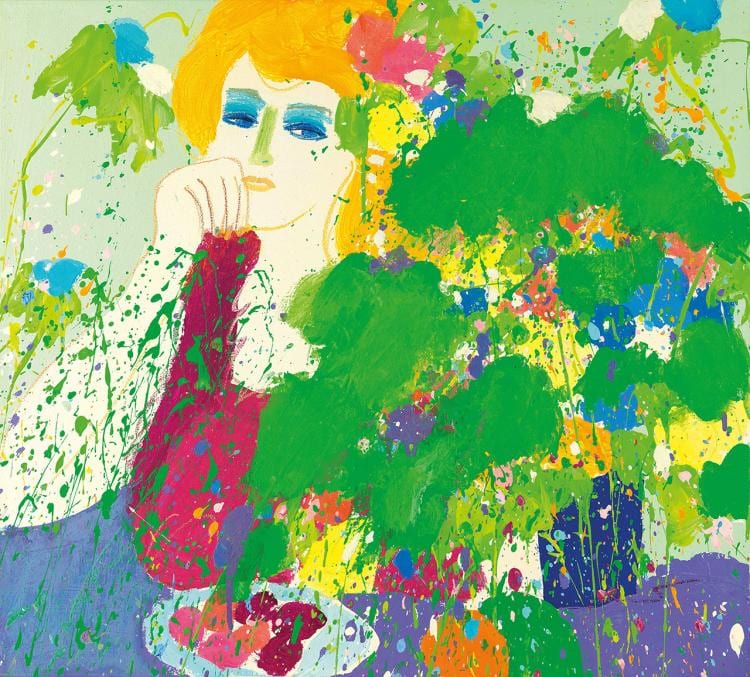
walasse ting chinese american 1929 2010 · Ravenel · 2017-12-03 walasse ting chinese american 1929 2010 Ravenel · 2017-12-03
Data basis
This page is built from Appraisily's public auction market index. Private transactions, incomplete sale feeds, and attribution changes may not be fully represented.
Artist value FAQ
How much is Xiongquan Ding worth?
Comparable public auction sales are the best starting point, but final value depends on the specific artwork, condition, size, medium, provenance, and attribution confidence.
Can Appraisily value my Xiongquan Ding artwork?
Yes. Appraisily can review photos, dimensions, signatures, condition, provenance, and comparable market data to prepare a current valuation.