Willem De Kooning Auction Prices and Value Guide
Willem De Kooning auction prices are tracked in Appraisily's artist market index, with source-directory coverage of 3,379 records. Use this page to review sold-lot activity, market context, and valuation factors before requesting a formal appraisal.
Willem De Kooning auction prices: quick answer
Willem De Kooning auction prices depend on medium, size, date, condition, provenance, edition details, attribution confidence, and recent comparable auction sales.
- Artist
- Willem De Kooning
- Source records
- 3,379
- Market update
- 2026-02-06
Willem De Kooning market snapshot
Willem De Kooning shows very deep auction liquidity with 1,504 tracked lots. Median realized sale is around $18,000. Category concentration is still broad or sparse. Last 12 months recorded 83 sales. Latest recorded sale: 2025-12-18.
Realized price distribution
- Under $1,000 (11.4% · 120 sales)
- $1,000 to $10,000 (30.9% · 326 sales)
- $10,000+ (57.7% · 609 sales)
- Median sale (last 12 months)
- $10,080
- Sales recorded (last 12 months)
- 83
- Median shift vs prior year
- +100.0%
- Latest recorded sale
- 2025-12-18
Artist context
About Willem De Kooning
Born
1904
Died
1997
Nationality
Dutch, American
Also known as
Willem de Kooning, Willem DeKooning, William de Kooning, de Kooning
Willem de Kooning (1904–1997) was a Dutch-American painter and sculptor recognized as one of the central figures of Abstract Expressionism. Born in Rotterdam, he emigrated to the United States in 1926 and became a naturalized citizen in 1962. Settling in New York, he joined the circle of artists associated with the New York School and was identified with the group known as the Irascibles. De Kooning's practice spanned painting, drawing, and sculpture, and he is particularly known for his volatile brushwork and the tension between figuration and abstraction. His Woman series of the early 1950s provoked intense critical debate and became landmarks of postwar American art. Over a career lasting more than five decades, de Kooning remained a dominant presence in postwar and contemporary art, and his works are held in major museum collections worldwide, including the Museum of Modern Art, the Tate, and the Rijksmuseum.
Abstract ExpressionismOil paintingSculptureDrawingFemale figures (Woman series)Abstract compositionsLandscapes
Common works and media
De Kooning's output includes large-scale oil paintings, works on paper (charcoal, pastel, and graphite drawings), and bronze sculptures. The most commonly encountered works at auction are paintings from the Woman series, abstract urban landscapes from the 1950s and 1960s, and untitled drawings. Bronze editions of his sculptural figures also circulate. Prints and lithographs exist but are less common relative to unique works.
Market and appraisal context
Willem de Kooning maintains one of the deepest and most liquid auction markets of any Abstract Expressionist artist, with 1,500 recorded lots and 1,051 priced results spanning from December 2000 to April 2026. The price distribution is exceptionally wide: results range from $39 for lithograph editions and small works on paper to $68.9 million for major oil paintings, with a median of $18,750 and a 75th percentile of $175,000. This dispersion reflects the vast difference in value between prints and minor drawings at one end and canonical 1950s oil paintings at the other. The artist trades predominantly through Christie's and Sotheby's, with regular appearances at Bonhams, Phillips, Swann Auction Galleries, Rago Arts and Auction Center, and regional houses such as STAIR, DuMouchelles, and Abell Auction. The trailing 12-month lot count (63) is roughly half the prior 12-month count (123), which may reflect normal market cyclicality rather than a structural shift, given the consistent presence at top-tier houses. Works most commonly encountered at auction include charcoal and oil-on-paper drawings, Woman-series related works, untitled abstract compositions, lithographs from editions published by Abrams Originals, and bronze sculptures.
Auction categories and appraisal factors
Common auction categories
- Oil painting
- Drawing
- Sculpture
- Prints and multiples
Value drivers
- Period of execution: 1950s Woman-series oils command the highest prices; 1960s abstract landscapes are also strongly valued; late-period 1980s works require heightened attribution scrutiny
- Medium: Oil on canvas or paper typically outperforms charcoal or graphite drawings, which in turn outperform lithographic editions
- Scale: Large canvases trade at substantial premiums; small works on paper and editioned prints cluster at the lower end of the range
- Subject: Woman-series imagery carries a premium over untitled abstract compositions; figural drawings are more sought than purely gestural ones
- Provenance and exhibition history: Named private collections, museum exhibition records, and major-gallery provenance materially increase value
- Condition: De Kooning's heavy impasto and mixed-media techniques make condition assessment critical; paint loss, cracking, or paper degradation can sharply reduce value
Appraisal caveats
- The artist's late-period output (1980s) has been the subject of attribution debates; collectors should verify works against the catalogue raisonné.
- With over 3,000 recorded auction appearances, the market is deep but varies significantly by period, medium, and quality.
- The price range ($39–$68.9M) is extremely wide; median and percentile figures should guide expectations for typical works, not headline auction records.
- Late-period works (1980s) have been the subject of attribution debates; collectors must verify these against the catalogue raisonné and seek expert authentication.
Evidence
Sources for artist context
This source-grounded artist context passed Appraisily's promotion threshold: high confidence, strong sources.
- Wikidata library authority
- Library of Congress library authority
- VIAF library authority
- RKD library authority
- Tate museum or university
- The Museum of Modern Art museum or university
Recent sale records
Selected public auction records currently in the Appraisily lot index. Use them as market context, then request a formal appraisal before you sell, insure, or donate.
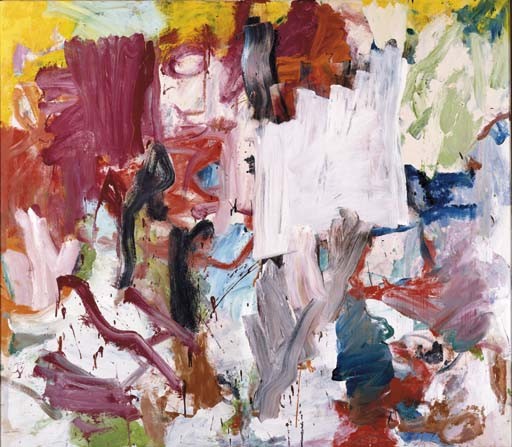
willem de kooning 1904 1997 · Christie's · 2006-11-15 willem de kooning 1904 1997 Christie's · 2006-11-15
Data basis
This page is built from Appraisily's public auction market index. Private transactions, incomplete sale feeds, and attribution changes may not be fully represented.
Artist value FAQ
How much is Willem De Kooning worth?
Comparable public auction sales are the best starting point, but final value depends on the specific artwork, condition, size, medium, provenance, and attribution confidence.
Can Appraisily value my Willem De Kooning artwork?
Yes. Appraisily can review photos, dimensions, signatures, condition, provenance, and comparable market data to prepare a current valuation.