Utamaro (1753) Auction Prices and Value Guide
Utamaro (1753) auction prices are tracked in Appraisily's artist market index, with source-directory coverage of 2,350 records. Use this page to review sold-lot activity, market context, and valuation factors before requesting a formal appraisal.
Utamaro (1753) auction prices: quick answer
Utamaro (1753) auction prices depend on medium, size, date, condition, provenance, edition details, attribution confidence, and recent comparable auction sales.
- Artist
- Utamaro (1753)
- Source records
- 2,350
- Market update
- 2026-02-16
Utamaro (1753) market snapshot
Utamaro (1753) shows developing auction liquidity with 43 tracked lots. Median realized sale is around $400. Category concentration is still broad or sparse. Last 12 months recorded 3 sales. Latest recorded sale: 2025-12-12.
Realized price distribution
- Under $1,000 (71.4% · 15 sales)
- $1,000 to $10,000 (28.6% · 6 sales)
- $10,000+ (0.0% · 0 sales)
- Median sale (last 12 months)
- $20
- Sales recorded (last 12 months)
- 3
- Median shift vs prior year
- 0.0%
- Latest recorded sale
- 2025-12-12
Artist context
About Utamaro (1753)

.jpg)
The current Appraisily record identifies the artist as “Utamaro (1753).” Collected Wikimedia Commons object records credit several color woodcuts and woodblock prints to Kitagawa Utamaro, including images of women, domestic activity, paired figures, and a shamisen player. One candidate belongs to the series Flowers of Edo, Girl Ballad Singers. However, the supplied source pack does not contain a museum biography, scholarly catalogue, library authority record, or canonical entity identifier proving that the auction-directory record and Kitagawa Utamaro are the same entity. It also does not independently establish that 1753 is a birth year. Accordingly, nationality, exact life dates, school, movement, and alternate names remain unstated. Collectors may encounter this record when researching prints or works on paper, but individual objects should be matched through their signatures, inscriptions, subject, dimensions, edition characteristics, provenance, and reliable catalogue references.
Color woodcuts and woodblock printsWorks on paper and printsWomen and female figuresDomestic activityMusic and shamisen players
Common works and media
The strongest object-level evidence in the supplied pack concerns works on paper and prints. Collected image records describe color woodcuts or woodblock prints depicting women, paired figures, domestic activity, and a shamisen player. The Appraisily market page also assigns matched lots to broader categories such as fine art and paintings and decorative art and editions, but those labels are not supported by detailed lot-level evidence in this pack. Until the artist identity and matched-name set are reconciled, medium and category descriptions should be treated as research leads rather than a complete catalogue of the artist's output.
Market and appraisal context
The supplied Appraisily data-basis section reports 33 auction records, including 15 priced records, from 2007 through 2025, with an observed range of US$20 to US$1,800. Another section reports 43 tracked lots and a median near US$400, so the totals require reconciliation before statistical conclusions are drawn. Appraisal should focus on genuinely comparable works sharing the same medium, dimensions, date, subject, condition, edition characteristics, attribution status, and provenance. Reported auction amounts may use different fee conventions, while private sales, incomplete feeds, restoration, and later attribution changes may not appear in the public record.
Auction categories and appraisal factors
Common auction categories
- Works on paper and prints
- Fine art and paintings
- Decorative art and editions
Value drivers
- Medium, dimensions, date, and relationship to the artist's working period
- Condition, restoration history, and surface quality
- Signature, inscriptions, edition details, and attribution confidence
- Provenance, exhibition history, and catalogue references
- Comparable public auction sales for works with similar characteristics
- Subject matter, rarity, and current demand
Appraisal caveats
- Public auction results are reference points rather than complete appraisals.
- Reported prices may not consistently include buyer premiums or other fees.
- Private sales, incomplete auction feeds, and later attribution changes may be absent.
- The supplied record appears to combine several matched names whose equivalence has not been independently established.
Evidence
Sources for artist context
This source-grounded artist context is based on collected public records: low confidence, thin source quality.
- Appraisily appraisily artist page
- Wikimedia Commons wikimedia commons object record
- Wikimedia Commons wikimedia commons object record
- Wikimedia Commons wikimedia commons object record
- Wikimedia Commons wikimedia commons object record
- Wikimedia Commons wikimedia commons image record


.jpg)

Recent sale records
Selected public auction records currently in the Appraisily lot index. Use them as market context, then request a formal appraisal before you sell, insure, or donate.
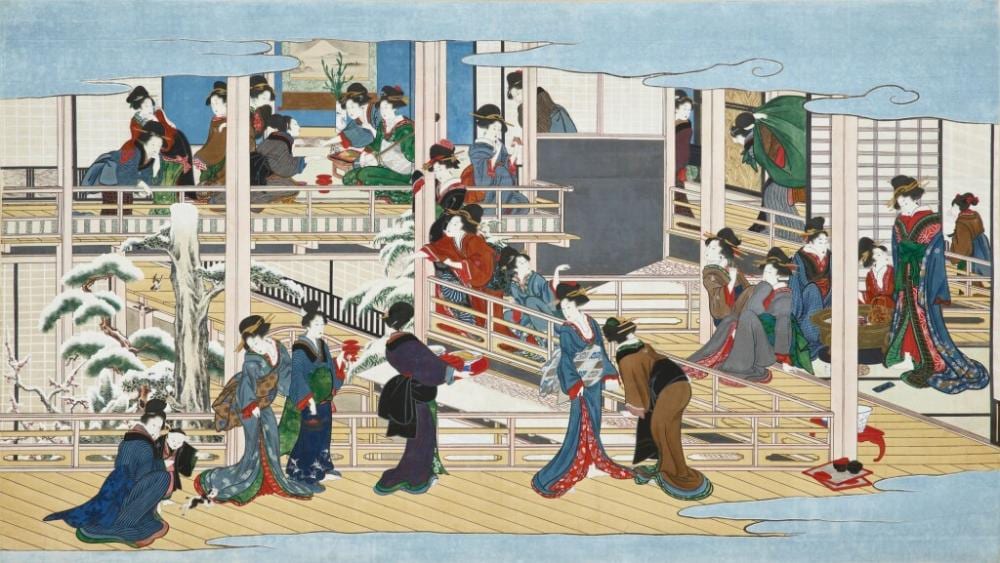
kitagawa utamaro 1754 1806 fukagawa in snow fukagawa no yuki edo period early 19th century 19 · Sotheby's · 2025-11-22 kitagawa utamaro 1754 1806 fukagawa in snow fukagawa no yuki edo period early 19th century 19 Sotheby's · 2025-11-22

kitagawa utamaro 1754 1806 standing geisha edo period early 19th century 19 · Sotheby's · 2025-11-22 kitagawa utamaro 1754 1806 standing geisha edo period early 19th century 19 Sotheby's · 2025-11-22
Data basis
This page is built from Appraisily's public auction market index. Private transactions, incomplete sale feeds, and attribution changes may not be fully represented.
Artist value FAQ
How much is Utamaro (1753) worth?
Comparable public auction sales are the best starting point, but final value depends on the specific artwork, condition, size, medium, provenance, and attribution confidence.
Can Appraisily value my Utamaro (1753) artwork?
Yes. Appraisily can review photos, dimensions, signatures, condition, provenance, and comparable market data to prepare a current valuation.