Paul Cézanne Auction Prices and Value Guide
Paul Cézanne auction prices are tracked in Appraisily's artist market index, with source-directory coverage of 2,967 records. Use this page to review sold-lot activity, market context, and valuation factors before requesting a formal appraisal.
Paul Cézanne auction prices: quick answer
Paul Cézanne auction prices depend on medium, size, date, condition, provenance, edition details, attribution confidence, and recent comparable auction sales.
- Artist
- Paul Cézanne
- Source records
- 2,967
- Market update
- 2026-02-06
Paul Cézanne market snapshot
Paul Cézanne shows deep auction liquidity with 405 tracked lots. Median realized sale is around $19,950. Category concentration is still broad or sparse. Last 12 months recorded 12 sales. Latest recorded sale: 2025-12-07.
Realized price distribution
- Under $1,000 (21.4% · 63 sales)
- $1,000 to $10,000 (23.4% · 69 sales)
- $10,000+ (55.3% · 163 sales)
- Median sale (last 12 months)
- $11,000
- Sales recorded (last 12 months)
- 12
- Median shift vs prior year
- +100.0%
- Latest recorded sale
- 2025-12-07
Artist context
About Paul Cézanne
Born
1839
Died
1906
Nationality
French
Also known as
Cézanne, Paul, Paul Cezanne
Paul Cézanne (1839–1906) was a French painter born in Aix-en-Provence whose work redefined how artists represent visual experience. Associated with Post-Impressionism, Cézanne moved beyond the fleeting effects of light pursued by the Impressionists, seeking instead to construct form through carefully modulated color patches and repeated, searching brushstrokes. His sustained explorations of Mont Sainte-Victoire, still-life arrangements of fruit and domestic objects, portraits of card players, and monumental bather compositions introduced structural approaches that directly influenced the development of Cubism and abstract art in the twentieth century. Both Picasso and Matisse regarded Cézanne as a foundational figure. He worked in oil, watercolor, and drawing throughout a career spanning four decades, returning obsessively to a narrow range of subjects to refine his method of translating perception into paint.
Post-ImpressionismImpressionism (early association; later departure)Proto-Cubism (foundational influence)oil paintingwatercolordrawingprintmaking / graphic artstill life (fruit, kitchen utensils, vessels)landscape (Mont Sainte-Victoire, L'Estaque, Provence)bathers (individual and grouped figures)
Common works and media
Cézanne's body of work includes oil paintings, watercolors, drawings, and a small number of prints. The most frequently encountered subjects at auction are Provençal landscapes (especially views of Mont Sainte-Victoire and L'Estaque), still lifes featuring apples, pears, and ceramic vessels, portraits and figure studies (including the Card Players series), and bather compositions. Works on paper—watercolors and graphite or ink drawings—appear more regularly on the market than major oils. Posthumous prints and reproductive reproductions are widely circulated and should be distinguished from unique works.
Market and appraisal context
Paul Cézanne's auction market is deep and stratified. Appraisily records 412 lots spanning from November 1998 to April 2026, with 301 carrying a realized price. The price distribution is extremely wide: from $36 for posthumous reproductive prints to $59.3 million for major oils, reflecting the gulf between unique works and editioned or reproductive material. The 25th percentile sits at $1,200, the median at $16,000, and the 75th percentile at $301,250—indicating that mid-market Cézanne material (prints, small works on paper, works attributed to the circle of) trades regularly, while genuine oils and important watercolors reach six and seven figures or higher. Christie's and Sotheby's dominate the top end, with strong representation from Swann Auction Galleries, Bonhams, Koller Auctions, and Galerie Kornfeld for prints and works on paper. Recent auction velocity has slowed: 10 priced lots in the trailing 12 months versus 21 in the prior period, consistent with the scarcity of fresh-to-market material noted in the artist profile. Significant recent results include a landscape at Galerie Kornfeld (CHF 2,000,000, September 2024), a small oil portrait at Christie's Hong Kong (HKD 8,255,000, September 2025), and a work at Koller Auctions (CHF 460,000, November 2025). At the lower end, reproductive prints from the Blätter der Marées-Gesellschaft (1918) and after-works appear frequently at houses such as Auktionshaus Schwab, often without a realized price, suggesting they may go unsold or trade at modest sums.
Auction categories and appraisal factors
Common auction categories
- oil painting
- watercolor
- drawing
- printmaking / graphic art
Appraisal caveats
- The Cézanne market is dominated by museum holdings and long-term private collections; fresh-to-market major works are extremely rare.
- Attribution disputes can arise for drawings, watercolors, and lesser-known works; catalogue raisonné verification is essential.
- Prints and reproductive engravings attributed to Cézanne are far less valuable than unique works and require careful distinction from posthumous or reproduction editions.
- The Appraisily auction record set includes works 'after' Cézanne and reproductive prints published posthumously (e.g., Blätter der Marées-Gesellschaft, 1918). These are not original works and trade at a small fraction of unique-work prices. Lot titles should be read carefully to distinguish 'after,' 'from,' and circle-of attributions.
Evidence
Sources for artist context
This source-grounded artist context passed Appraisily's promotion threshold: high confidence, strong sources.
- Library of Congress library authority
- The Museum of Modern Art museum or university
- RKD — Netherlands Institute for Art History library authority
- Wikidata library authority
- VIAF / OCLC library authority
- Tate museum or university
Recent sale records
Selected public auction records currently in the Appraisily lot index. Use them as market context, then request a formal appraisal before you sell, insure, or donate.
paul cezanne 1839 1906 la montagne sainte victoire oil on canvas 25 5 8 x · Christie's · 2022-11-09 paul cezanne 1839 1906 la montagne sainte victoire oil on canvas 25 5 8 x Christie's · 2022-11-09
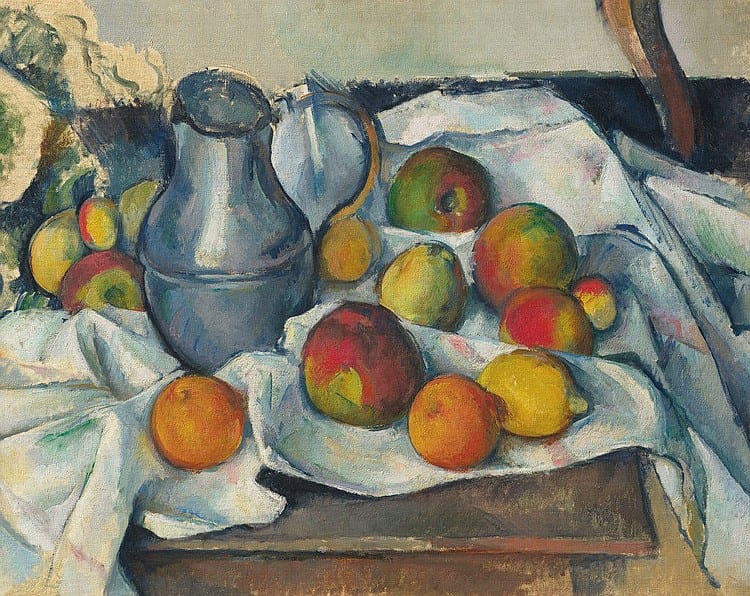
paul c zanne 1839 1906 bouilloire et fruits oil on canvas 19 1 8 x 23 5 8 in 48 6 x 60 cm · Christie's · 2019-05-13 paul c zanne 1839 1906 bouilloire et fruits oil on canvas 19 1 8 x 23 5 8 in 48 6 x 60 cm Christie's · 2019-05-13
paul cezanne 1839 1906 fruits et pot de gingembre oil on canvas 13 1 8 x · Christie's · 2023-11-09 paul cezanne 1839 1906 fruits et pot de gingembre oil on canvas 13 1 8 x Christie's · 2023-11-09
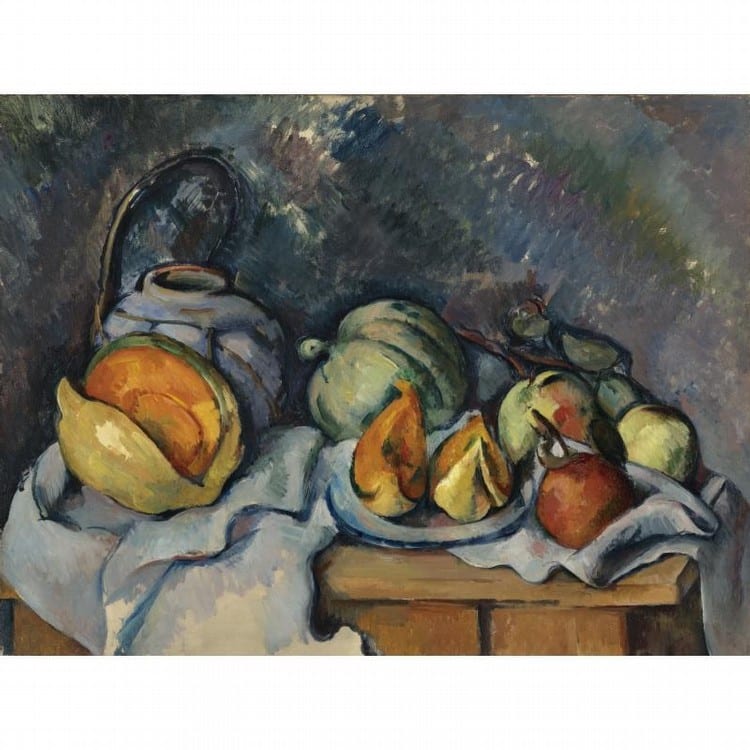
paul c zanne · Sotheby's · 2006-11-07 paul c zanne Sotheby's · 2006-11-07

paul c zanne 1839 1906 nature morte de p ches et poires oil on canvas 15 · Christie's · 2019-02-27 paul c zanne 1839 1906 nature morte de p ches et poires oil on canvas 15 Christie's · 2019-02-27
paul c zanne 1839 1906 la montagne sainte victoire vue des lauves waterco · Christie's · 2024-05-28 paul c zanne 1839 1906 la montagne sainte victoire vue des lauves waterco Christie's · 2024-05-28
Data basis
This page is built from Appraisily's public auction market index. Private transactions, incomplete sale feeds, and attribution changes may not be fully represented.
Artist value FAQ
How much is Paul Cézanne worth?
Comparable public auction sales are the best starting point, but final value depends on the specific artwork, condition, size, medium, provenance, and attribution confidence.
Can Appraisily value my Paul Cézanne artwork?
Yes. Appraisily can review photos, dimensions, signatures, condition, provenance, and comparable market data to prepare a current valuation.