Mark Kostabi Auction Prices and Value Guide
Mark Kostabi auction prices are tracked in Appraisily's artist market index, with source-directory coverage of 9,273 records. Use this page to review sold-lot activity, market context, and valuation factors before requesting a formal appraisal.
Mark Kostabi auction prices: quick answer
Mark Kostabi auction prices depend on medium, size, date, condition, provenance, edition details, attribution confidence, and recent comparable auction sales.
- Artist
- Mark Kostabi
- Source records
- 9,273
- Market update
- 2026-02-06
Mark Kostabi market snapshot
Mark Kostabi shows thin auction liquidity with 5 tracked lots. Median realized sale is around $5,040. Category concentration is still broad or sparse. Last 12 months recorded 0 sales. Latest recorded sale: 2023-03-16.
Realized price distribution
- Under $1,000 (33.3% · 1 sales)
- $1,000 to $10,000 (33.3% · 1 sales)
- $10,000+ (33.3% · 1 sales)
- Median sale (last 12 months)
- $0
- Sales recorded (last 12 months)
- 0
- Median shift vs prior year
- 0.0%
- Latest recorded sale
- 2023-03-16
Artist context
About Mark Kostabi
Born
1960
Nationality
American, Estonian
Also known as
Kalev Mark Kostabi
Mark Kostabi (born Kalev Mark Kostabi, 1960) is an American-Estonian painter, sculptor, and composer who rose to prominence in the 1980s New York art world. Active in New York City, Kostabi became known for a distinctive visual vocabulary of faceless, mannequin-like figures set in surreal, geometric compositions. His work is associated with the Postmodern and Neo-Geo movements that emerged from the East Village art scene of that era. Kostabi's paintings, sculptures, and prints have entered major institutional collections, including the Museum of Modern Art in New York. Beyond visual art, he has pursued composition and has been a persistent and prolific presence in the contemporary art market for over four decades, with thousands of documented works circulated through galleries and auction houses worldwide.
Postmodern artNeo-Geo1980s East Village art sceneoil paintingsculptureprintsfaceless figures in surreal landscapes
Common works and media
Kostabi is best known for oil paintings on canvas featuring faceless figures in bold, Surrealist-inspired compositions, often with geometric or architectural elements. He also produces sculptures, limited-edition silkscreen prints, lithographs, and works on paper. Subjects frequently include faceless human figures, urban landscapes, and allegorical or satirical scenes. His work spans large-format canvases, smaller editioned prints, and sculptural editions, all of which appear in auction and gallery contexts.
Market and appraisal context
Mark Kostabi maintains an active and liquid secondary market, with 26 documented auction lots spanning from February 2007 through March 2026. His work trades across a broad price spectrum: prints and lithographs typically realize between $100 and $300, while unique oil paintings have achieved $1,600 to $2,900 at recent U.S. regional auctions (2025–2026). The recorded ceiling is a Sotheby's London sale in February 2007 that realized £10,200, with a second Sotheby's lot the same day at £5,040—both suggesting that top-tier works at major houses can reach significantly higher levels. The price distribution is heavily skewed: the 25th percentile sits at $200 and the median at $300, reflecting the large volume of editioned prints, while the 75th percentile rises to $2,700 where unique paintings dominate. Notable auction houses in the record include Sotheby's, Forum Auctions (UK), and K&K Auktionen (Heidelberg) alongside active U.S. regional firms such as Sarasota Estate Auction, Bill Hood & Sons, Leonard Auction, and Market Auctions. The recent 12-month lot count of 8 is up from 3 in the prior 12-month period, indicating renewed or strengthening market interest. Works appear across Post-War & Contemporary Art and Prints & Multiples categories, with mediums ranging from oil on canvas, bronze sculpture, lithographs, and screenprints to a documented wool rug design and giclée on paper.
Auction categories and appraisal factors
Common auction categories
- Post-War & Contemporary Art
- Prints & Multiples
Value drivers
- Extremely prolific output (over 9,000 documented works), which means individual works vary widely in market value
- Works in major museum collections (MoMA) support institutional recognition
- Medium, dimensions, date, provenance, edition size (for prints), condition, and whether the work is from a significant period all affect valuation
- Medium is the single strongest price determinant: unique oil paintings on canvas trade well above lithographs, screenprints, and giclées in the auction record
- Dimensions and scale matter significantly—large-format canvases (e.g., 60 × 84 in.) command higher prices than small works on paper
- Date and period: works from the 1980s and early 1990s, coinciding with Kostabi's East Village prominence, may carry premium over later production
Appraisal caveats
- The very large body of work means appraisal requires careful identification of the specific work type, period, and edition status.
- Attribution should be verified through catalogue or expert review, as Kostabi has used studio assistants in his production process.
- The auction record includes lots in three currencies (USD, GBP, EUR); direct price comparisons require currency normalization at the relevant historical exchange rate.
- Eleven of 26 documented lots have no recorded price realized, which means the actual trading range and median may differ from the priced subset.
Evidence
Sources for artist context
This source-grounded artist context passed Appraisily's promotion threshold: high confidence, strong sources.
- Wikidata library authority
- Wikipedia wikipedia
- VIAF library authority
- Library of Congress library authority
- The Museum of Modern Art museum or university
- RKD library authority
Recent sale records
Selected public auction records currently in the Appraisily lot index. Use them as market context, then request a formal appraisal before you sell, insure, or donate.
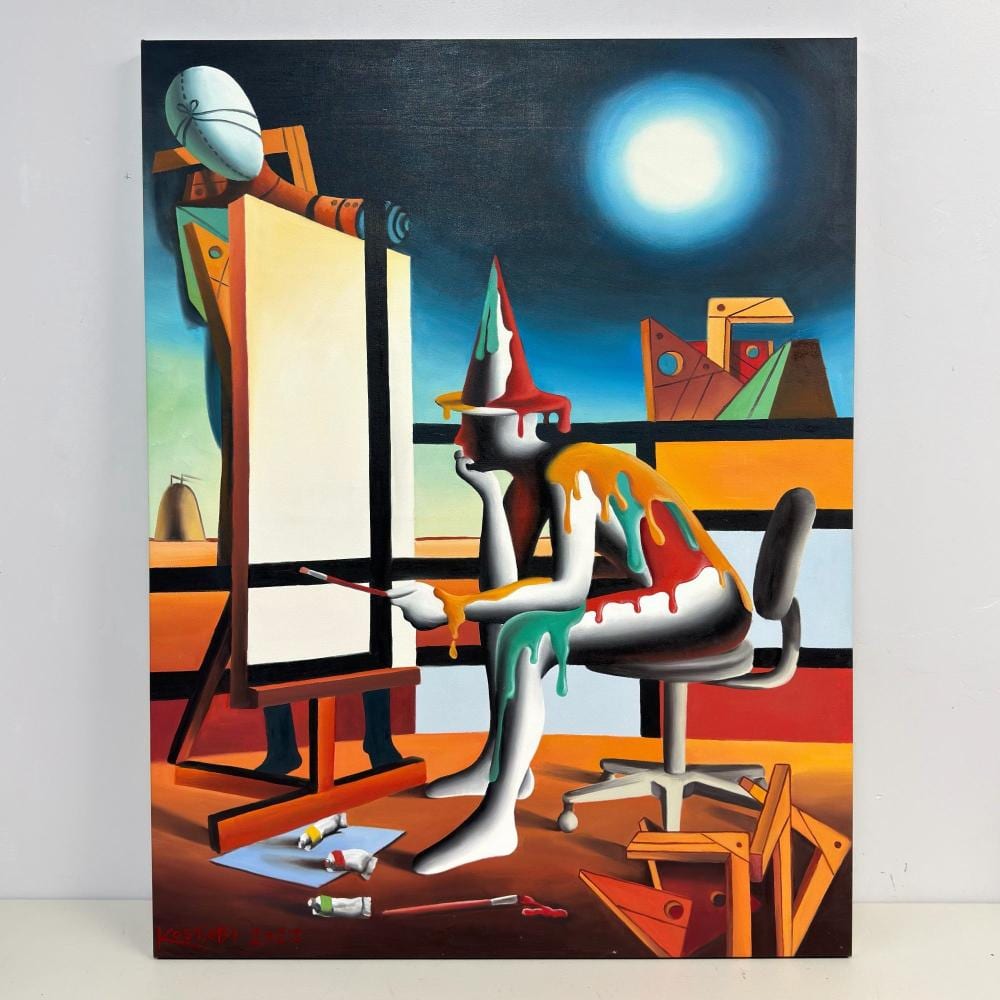
mark kostabi american b 1960 the painter s epiphany 2023 oil on canvas · Lion and Unicorn · 2026-06-24 mark kostabi american b 1960 the painter s epiphany 2023 oil on canvas Lion and Unicorn · 2026-06-24
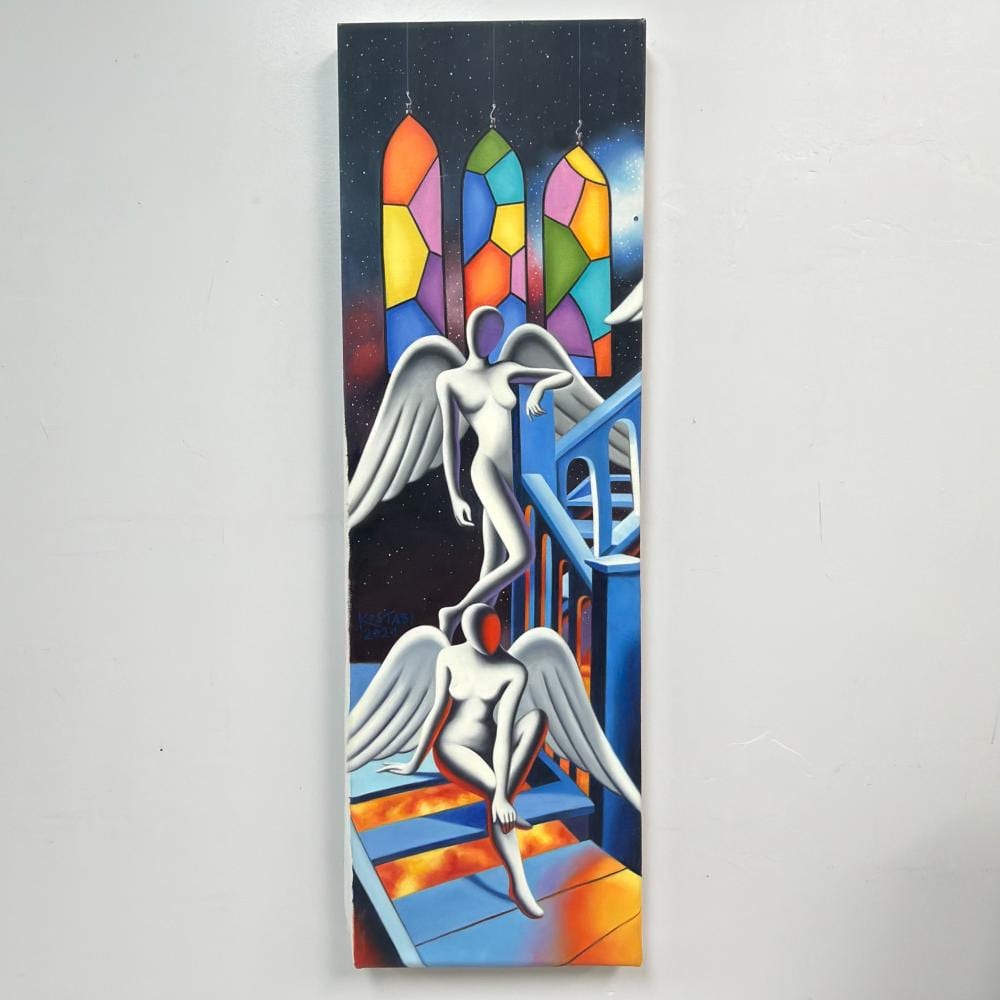
mark kostabi american b 1960 transcendent glory 2024 oil on canvas · Lion and Unicorn · 2026-06-24 mark kostabi american b 1960 transcendent glory 2024 oil on canvas Lion and Unicorn · 2026-06-24
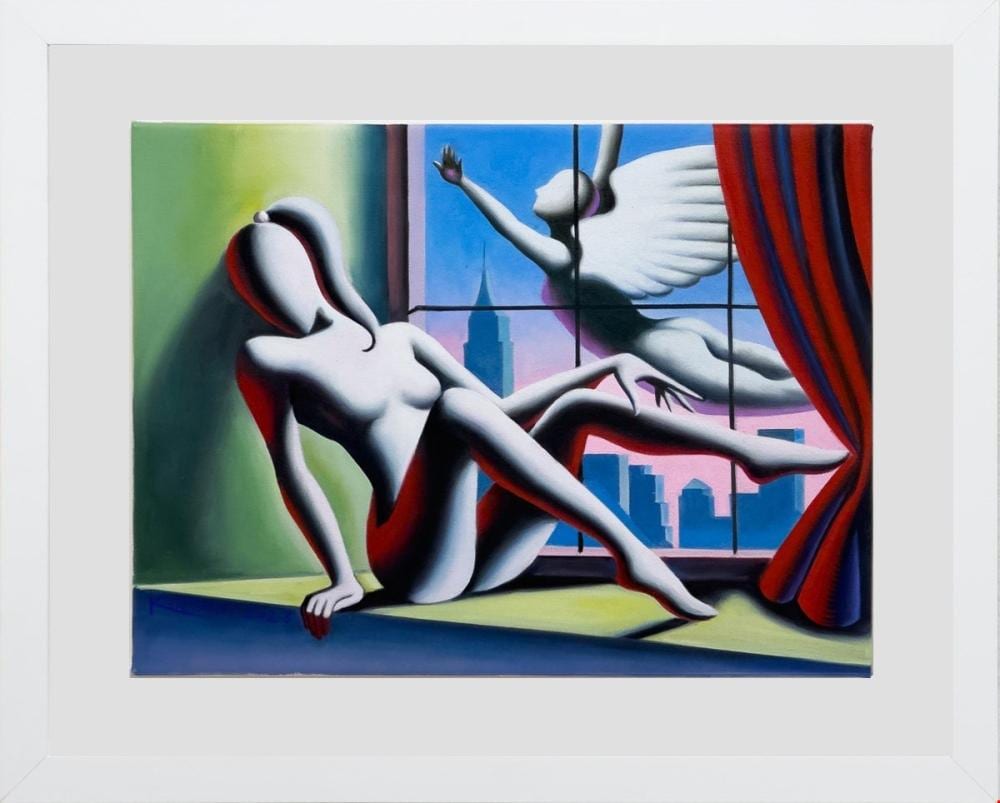
mark kostabi los angeles 1960 passing fantasy 2023 olio su tela 45x60 cm · ArteIn Gallery · 2026-06-20 mark kostabi los angeles 1960 passing fantasy 2023 olio su tela 45x60 cm ArteIn Gallery · 2026-06-20
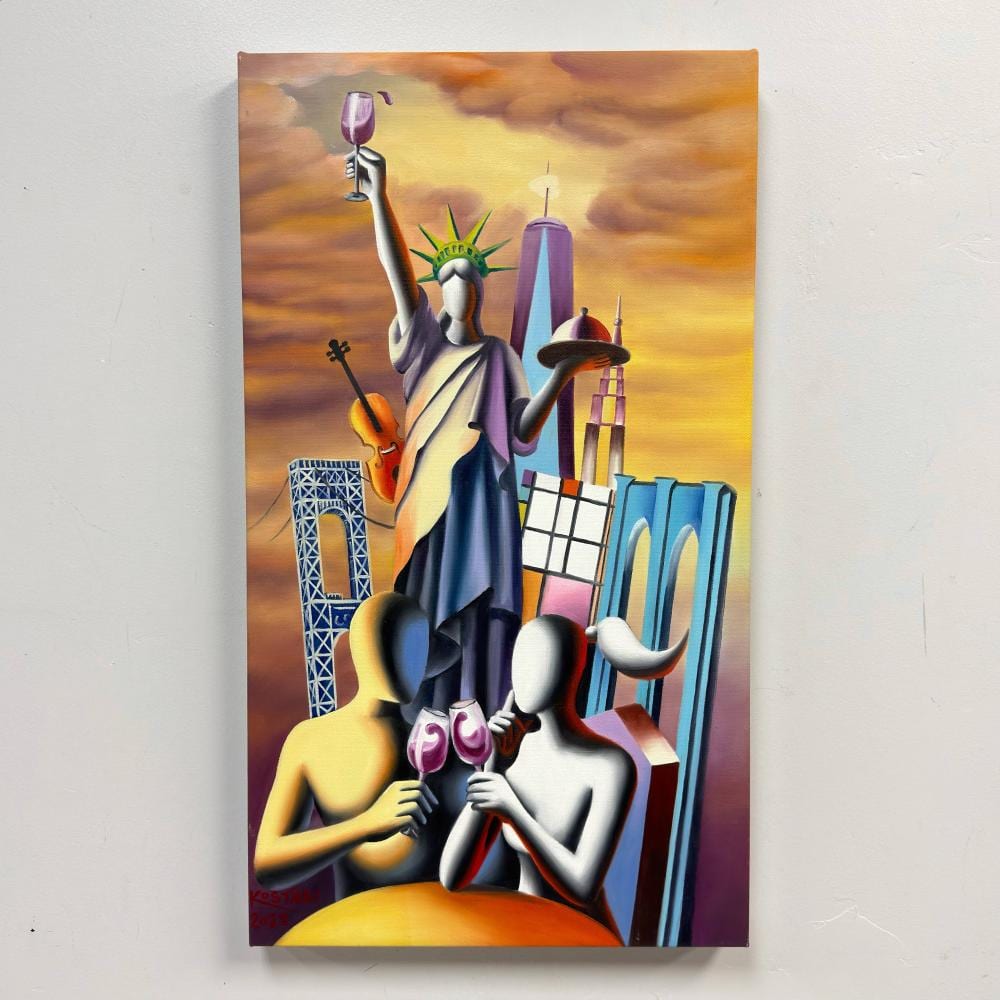
mark kostabi american b 1960 manhattan twilight dream 2023 oil on canvas · Lion and Unicorn · 2026-06-14 mark kostabi american b 1960 manhattan twilight dream 2023 oil on canvas Lion and Unicorn · 2026-06-14
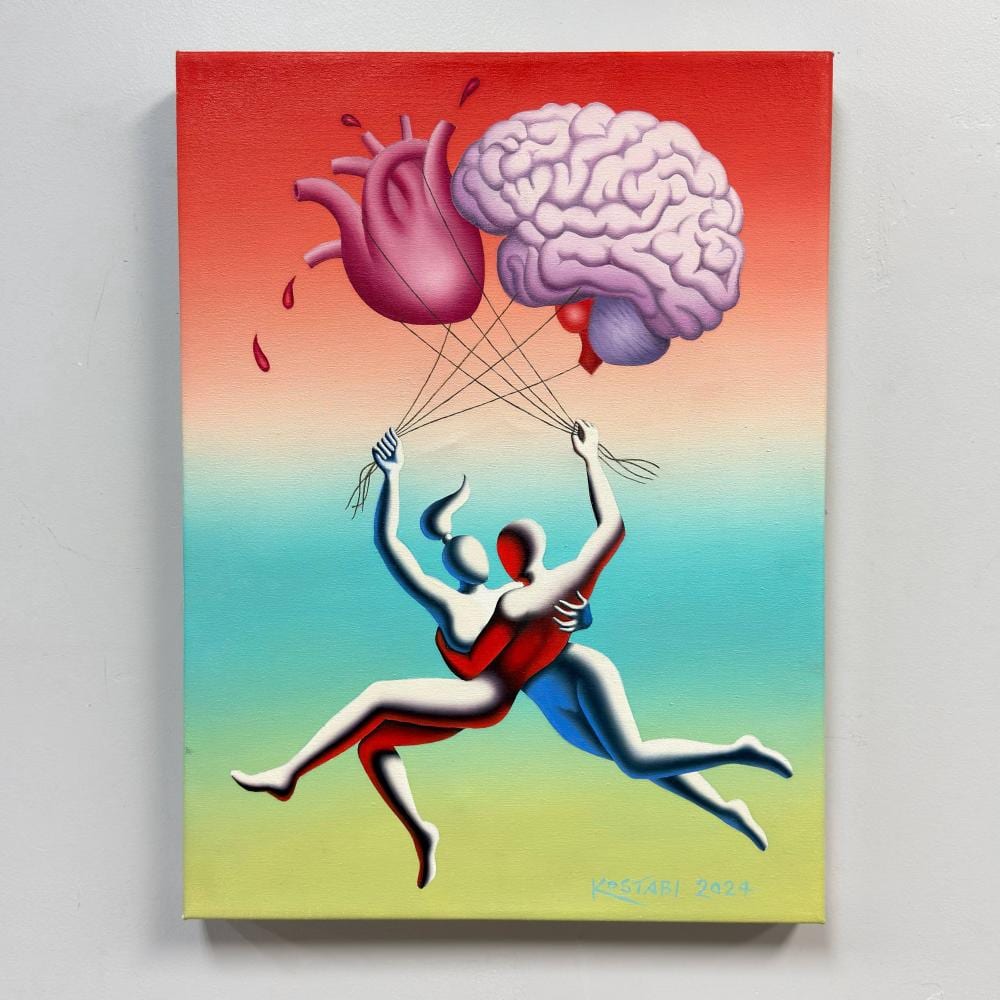
mark kostabi american b 1960 sacred balance 2024 oil on canvas · Lion and Unicorn · 2026-06-14 mark kostabi american b 1960 sacred balance 2024 oil on canvas Lion and Unicorn · 2026-06-14

mark kostabi american b 1960 emotional intelligence 2024 original oil on canvas · Lion and Unicorn · 2026-06-14 mark kostabi american b 1960 emotional intelligence 2024 original oil on canvas Lion and Unicorn · 2026-06-14
Data basis
This page is built from Appraisily's public auction market index. Private transactions, incomplete sale feeds, and attribution changes may not be fully represented.
Artist value FAQ
How much is Mark Kostabi worth?
Comparable public auction sales are the best starting point, but final value depends on the specific artwork, condition, size, medium, provenance, and attribution confidence.
Can Appraisily value my Mark Kostabi artwork?
Yes. Appraisily can review photos, dimensions, signatures, condition, provenance, and comparable market data to prepare a current valuation.